社交媒体禁令

Search documents
借鉴澳英经验,探索对未成年人使用社交媒体立法立规
第一财经· 2026-01-23 12:47
Core Viewpoint - The article discusses the recent legislative actions in the UK and Australia aimed at prohibiting social media use for minors under 16, highlighting the growing concern over the impact of social media on youth mental health and safety [3][4]. Legislative Actions - The UK House of Lords passed an amendment to ban social media use for individuals under 16, with 74% of the British public supporting such a ban according to a December 2025 poll [3]. - Australia implemented the world's first social media ban for users under 16, affecting major platforms like Facebook, Instagram, and TikTok, with penalties for non-compliance reaching up to AUD 49.5 million (approximately CNY 230 million) [3][4]. Impact and Observations - Following the Australian ban, around 4.7 million accounts belonging to minors were closed, indicating a significant impact on user registration [3]. - Other countries, including Denmark and France, are considering similar bans, reflecting a growing trend in global policy towards protecting minors online [4][5]. Concerns and Opposition - There are concerns regarding the effectiveness of such bans in truly preventing minors from accessing social media, and the potential negative impact on educational practices that utilize these platforms [5][6]. - The article notes that while social media can provide conveniences for minors, it also poses risks such as mental health issues, distorted values, and reduced real-life social skills [6][7]. Future Considerations - The UK government has shown reluctance towards the amendment but is open to exploring measures to protect children online, indicating a potential shift in policy [7]. - The article suggests that China should consider developing its own regulatory framework tailored to its unique circumstances regarding minors' social media use [7].

【8点见】600余年城墙安装不锈钢台阶?河北定州回应
Yang Shi Wang· 2026-01-17 00:09
Group 1 - The Ministry of Defense stated that all measures capable of severely punishing "Taiwan independence" elements are options [2] - The recycling and utilization of used power batteries from new energy vehicles will initiate full lifecycle supervision [2] - The China Securities Regulatory Commission emphasized strict investigation and punishment of excessive speculation and market manipulation to prevent significant market fluctuations [2] Group 2 - The new results from China's "Sky Eye" reveal key evidence regarding the origins of fast radio bursts from binary stars [4] - The four departments announced that graduates in 2026 will be allowed to increase the number of one-way student ticket trips [4] - By 2025, the national ecological environment quality is expected to continue improving, with the proportion of days with good air quality reaching nearly 90% [4] Group 3 - The U.S. military unveiled the prototype of the next-generation main battle tank M1E3 "Abrams," which can identify battlefield threats and is user-friendly [7] - Australia has implemented a social media ban for minors under 16, resulting in the closure of over 4.7 million minor social media accounts [7] - The World Meteorological Organization reported that the global abnormal high-temperature trend continues, with ocean warming showing no signs of weakening [7]
澳社媒禁令落地首月,成效如何?
Xin Lang Cai Jing· 2026-01-13 04:19
Core Viewpoint - The Australian government has implemented a ban on social media accounts for individuals under 16 years old to protect minors from harmful content, but the effectiveness of this ban is being questioned by social media companies like Meta [1][2]. Group 1: Government Regulations - The ban includes major platforms such as Facebook, Instagram, TikTok, X, and YouTube, with penalties of up to 49.5 million AUD (approximately 33.19 million USD) for non-compliance [1]. - Meta has removed approximately 550,000 accounts, including 330,000 from Instagram and 173,000 from Facebook, in response to the ban [1]. Group 2: Industry Response - Meta argues that the premise of the law is flawed, as users can still access platforms without logging in, which allows for algorithmic recommendations, albeit less personalized [2]. - The company calls for constructive dialogue with the Australian government to create age-appropriate online experiences rather than a blanket ban [2]. Group 3: Impact on Minors - The ban has led to varied responses among teenagers; some report reduced screen time, while others have found ways to circumvent the restrictions by falsifying their ages [3]. - Reports indicate that some minors are migrating to lesser-known social media platforms to fulfill their social needs, reflecting a compensatory behavior in response to the ban [3].

法国打算禁止15岁以下群体用社交媒体
Xin Lang Cai Jing· 2026-01-02 04:03
Group 1 - France plans to ban social media usage for individuals under 15 years old starting from September 2026, with a draft law to be submitted for legislative review in early January [1] - President Macron has indicated that social media contributes to increased violence among youth and suggests that France will follow Australia's lead in implementing a social media ban [2] - Australia has enacted a social media ban for individuals under 16, effective December 10, 2025, requiring major platforms to prevent this age group from having accounts, with non-compliance penalties reaching up to 49.5 million AUD (approximately 23.2 million RMB) [2] Group 2 - France is also considering expanding the ban on mobile phone usage to high schools, building on a previous law that prohibits phone use in kindergartens, primary, and middle schools, which took effect in September 2018 [2]
新加坡教育部:收紧学生智能设备使用限制
券商中国· 2026-01-02 01:41
Group 1 - Singapore's Ministry of Education announced a stricter ban on the use of smartphones and smartwatches in schools starting January 2026, promoting the mental and physical health of teenagers [1] - Students will be required to store their devices in designated areas during school hours, including breaks and extracurricular activities, effectively creating a "phone-free" environment [1] - The automatic shutdown time for personal learning devices will be adjusted from 11 PM to 10:30 PM to ensure students have adequate time away from screens before bedtime [1] Group 2 - France plans to ban social media use for individuals under 15 years old starting September 2026, in response to the negative impact of social media on children [2] - French President Macron has indicated that social media contributes to increased violence among youth and aims to protect children from screens [2] - Australia has already implemented a similar ban for those under 16, with penalties for non-compliance, setting a precedent for such legislation globally [2]

法国酝酿禁止15岁以下群体用社交媒体
Xin Lang Cai Jing· 2026-01-01 16:39
Core Viewpoint - France plans to ban social media usage for individuals under 15 years old starting September 2026 to address the negative impact of social media on children [1] Group 1: Government Action - The French government will submit a draft for legislative review in early January [1] - President Macron has indicated that social media contributes to increased violence among youth and suggests that France will follow Australia's lead in implementing a social media ban [1]
法国,也打算禁了
Xin Lang Cai Jing· 2026-01-01 15:39
Core Viewpoint - France plans to ban social media usage for individuals under 15 years old starting September 2026 to address the negative impact of social media on children [1][3]. Group 1: Legislative Actions - The French government will submit a draft for legislative review in early January [1]. - This initiative follows Australia's implementation of a social media ban for users under 16, which will take effect on December 10, 2025, requiring major platforms to prevent this age group from having accounts [3]. Group 2: Government Statements - President Macron has indicated that social media contributes to increased violence among youth and has suggested that France will adopt similar measures to Australia [3]. - Macron has committed to protecting children and adolescents from social media and screens, although he did not mention this legislative move in his New Year speech [3]. Group 3: Existing Regulations - France has previously enacted a law in July 2018 that prohibits the use of mobile phones in schools for kindergarten, primary, and middle school students, which took effect in September of the same year [3].
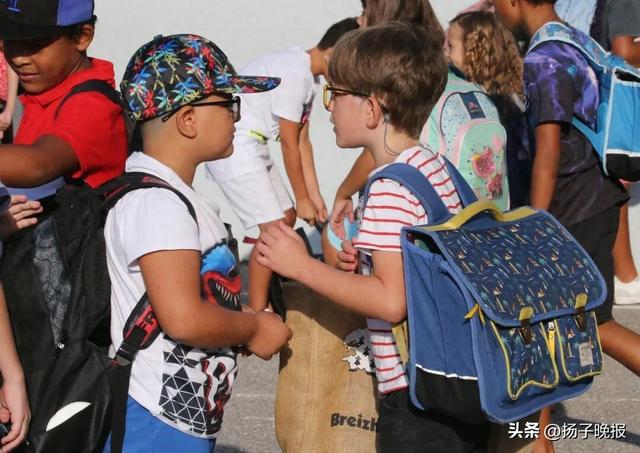
澳专家:社媒禁令不应“放过”网游
Huan Qiu Shi Bao· 2025-12-18 06:16
Core Viewpoint - The article discusses the recent social media ban in Australia for children under 16, highlighting the exclusion of online gaming platforms, which critics argue also pose addiction risks similar to social media [1][2][3]. Group 1: Social Media Ban - Australia has implemented a social media ban for children under 16, prohibiting accounts on platforms like Instagram, Snapchat, and X [1]. - The ban allows children to browse platforms like YouTube but prevents them from registering accounts [1]. - Experts question the exclusion of online gaming platforms from the ban, citing their similar addictive nature [2][3]. Group 2: Addiction Concerns - Dr. Daniela Vichio, who runs a gaming addiction treatment clinic, emphasizes that gaming can lead to addiction and calls for its inclusion in the ban [1][2]. - Approximately 2.8% of Australian children are affected by gaming addiction, according to Macquarie University, with Dr. Vichio suggesting the actual risk is higher [3]. - Kevin Koo, a former patient, shares his experience of gaming addiction, likening it to substance abuse, and supports extending the ban to gaming platforms [2]. Group 3: Regulatory Perspectives - The Australian eSafety Commissioner stated that the ban's criteria were based on whether platforms are primarily for social interaction, which led to the exemption of gaming platforms [3]. - Experts argue that this rationale is flawed, advocating for more nuanced regulations that consider the potential risks of gaming [3]. - Calls for age-appropriate regulations are growing, with concerns about children accessing adult-oriented content on gaming platforms [3]. Group 4: Future of the Ban - The Australian government plans to continuously update the list of banned platforms, indicating that the ban is an evolving measure rather than a one-time solution [4]. - There is increasing pressure to impose stricter requirements on gaming platforms as the demand for help at addiction treatment clinics rises [4].
澳大利亚专家:社媒禁令不应“放过”网游
Huan Qiu Shi Bao· 2025-12-17 22:57
Core Viewpoint - The Australian social media ban for children under 16 excludes online gaming platforms, raising concerns about the similar addictive nature of both mediums [1][2][3] Group 1: Social Media Ban - Australia has implemented a social media ban for children under 16, prohibiting accounts on platforms like Instagram, Snapchat, and X [1] - The ban does not extend to online gaming platforms, which experts argue also pose significant addiction risks [1][2] Group 2: Expert Opinions - Dr. Daniela Viechio, a psychiatrist, emphasizes that gaming can lead to addiction similar to social media, calling for the inclusion of gaming in the ban [1][2] - Kevin Koo, a former patient, reflects on how a social media ban could have altered his online behavior, highlighting the potential harm of unrestricted internet access [2] Group 3: Statistics and Research - The World Health Organization recognizes "gaming addiction" as a formal diagnosis, with approximately 2.8% of Australian children affected, though Dr. Viechio believes the actual risk is higher [3] - The Australian eSafety Commissioner states that the ban criteria are based on whether platforms are primarily for social interaction, which has led to gaming platforms being exempt [3] Group 4: Calls for Regulation - Experts like Marcus Carter and Tama Leaver argue for more nuanced regulations that include gaming platforms, citing the need for age-appropriate guidelines [3] - The Australian government plans to continuously update the list of banned platforms, indicating an evolving approach to online safety [4]
澳大利亚16岁以下人群“社媒禁令”生效
证券时报· 2025-12-10 12:40
Group 1 - Australia has become the first country to implement a social media ban for individuals under 16 years old, affecting approximately 1 million minors [1][2] - The ban, effective from December 10, aims to encourage youth to engage in healthier activities and reduce screen time [1] - Major social media platforms, including X, Facebook, TikTok, and Snapchat, have committed to comply with the new regulations, with fines of up to AUD 50 million for non-compliance [2]