社会消费品零售总额

Search documents
格林大华期货早盘提示:国债-20260323
Ge Lin Qi Huo· 2026-03-23 02:02
1. Report Industry Investment Rating - The investment rating for the bond sector is "oscillation" for TL, T, TF, and TS [1] 2. Core View of the Report - The bond futures are expected to oscillate in the short - term based on various market factors, including economic data, central bank policies, and geopolitical events [1][2] 3. Summary by Relevant Catalogs Market Review - On Friday, most of the main contracts of bond futures opened lower, with the morning session seeing a downward trend and the afternoon session showing horizontal fluctuations. By the close, the 30 - year bond futures main contract TL2606 fell 0.42%, the 10 - year T2606 fell 0.09%, the 5 - year TF2606 fell 0.06%, and the 2 - year TS2606 fell 0.01% [1] Important Information - Open market: The central bank conducted 20.5 billion yuan of 7 - day reverse repurchase operations on Friday, with 37.5 billion yuan of reverse repurchases maturing, resulting in a net withdrawal of 17 billion yuan. The loan prime rate (LPR) announced on March 20th remained stable for the tenth consecutive month, with the 1 - year LPR at 3.0% and the 5 - year and above LPR at 3.5% [1] - Money market: On Friday, the overnight interest rate in the inter - bank money market remained low. The weighted average of DR001 was 1.32% throughout the day, the same as the previous trading day, and the weighted average of DR007 was 1.42%, down from 1.43% in the previous trading day [1] - Cash bond market: On Friday, the closing yields of inter - bank government bonds showed mixed changes compared to the previous trading day. The yield of 2 - year government bonds decreased by 0.19 BP to 1.31%, the 5 - year yield decreased by 0.25 BP to 1.56%, the 10 - year yield increased by 0.47 BP to 1.83%, and the 30 - year yield decreased by 0.29 BP to 2.39% [1] - Fed rate hike probability: According to CME's "FedWatch", the probability of the Fed raising interest rates by 25 basis points in April is 12.4%, and the probability of keeping interest rates unchanged is 87.6%. By June, the probability of a cumulative 25 - basis - point rate hike is 21.9%, the probability of a cumulative 50 - basis - point rate hike is 1.6%, and the probability of keeping interest rates unchanged is 76.5% [1] - Geopolitical situation: Trump demanded that Iran open the Strait of Hormuz within 48 hours, or he would destroy the power plants. Iran's Islamic Revolutionary Guard Corps responded strongly. Iran's Foreign Ministry stated on the 22nd that the Strait of Hormuz was not blocked, and ships could continue to sail under certain conditions [1][2] Market Logic - From January to February, national fixed - asset investment increased by 1.8% year - on - year, against a market expectation of a 2.7% decline. The added value of large - scale industries increased by 6.3% year - on - year, better than the expected 5.2%. Social consumer goods retail sales increased by 2.8% year - on - year, higher than the expected 2.4%. Exports in US dollars increased by 21.8% year - on - year, better than the estimated 7.3%. China's CPI in February increased by 1.3% year - on - year, and PPI decreased by 0.9% year - on - year, both exceeding market expectations. On March 18th, the central bank's Party Committee expanded meeting pointed out that it would guide and regulate interest rates. On Friday, the Wind All - A index opened slightly higher, fluctuated horizontally in the morning, and declined in the afternoon, closing down 1.23% with a trading volume of 2.3 trillion yuan, slightly higher than the previous trading day [2] Trading Strategy - Traders are advised to conduct band operations [2]
行业景气观察:1-2月社零同比增幅扩大,原油价格快速上涨
CMS· 2026-03-18 14:04
Group 1: Overall Economic Trends - The total retail sales of consumer goods in January-February 2026 increased by 2.8% year-on-year, driven by the long Spring Festival holiday, which boosted dining and travel demand, along with new subsidy funds [12][20] - The retail sales excluding automobiles reached 79,827 billion yuan, growing by 3.7% year-on-year, indicating a compound annual growth rate of 3.4% over two years [12][20] Group 2: Consumer Demand Insights - The consumption structure continues to upgrade, with service and dining retail sales growing faster than goods retail sales, and online retail sales of physical goods outpacing overall retail growth [20] - Essential consumption categories showed widespread improvement, with year-on-year growth in staple food, beverages, and clothing, while tobacco sales turned positive [20][16] - The new "trade-in" subsidy program, along with platform subsidies and Spring Festival activities, led to positive growth in home appliances and furniture, while communication equipment maintained high growth [20][16] Group 3: Information Technology Sector - The Philadelphia Semiconductor Index declined, while the Taiwan Semiconductor Industry Index and DXI Index increased [7] - DRAM prices showed a mixed trend, with the DRAM Index rising by 4.13% and NAND Index also increasing, while DDR5 DRAM prices fell [7][10] Group 4: Midstream Manufacturing Sector - The prices in the new energy supply chain mostly declined, and the automotive production turned negative with a year-on-year decline of 7.52% [7][19] - The sales of major engineering machinery companies mostly turned negative in February, indicating a slowdown in the manufacturing sector [7][19] Group 5: Resource Sector Tracking - The average transaction volume of construction steel increased, while coal prices showed mixed trends with some declines in specific regions [5][22] - Brent crude oil prices rose significantly, with a week-on-week increase of 17.15%, contributing to a general rise in chemical product prices [9][24] Group 6: Financial and Real Estate Sector - The monetary market saw a net absorption, with SHIBOR rates declining, while the turnover rate and daily transaction volume in the A-share market decreased [5][29] - The transaction area of new houses and the sales area of commercial housing showed a year-on-year decline, although the decline in real estate development investment narrowed [5][31]
商贸零售行业定期报告:社零+2.8%,开局良好
CAITONG SECURITIES· 2026-03-17 12:41
Investment Rating - The industry investment rating is maintained as "Positive" [2] Core Insights - The total retail sales for January-February 2026 reached 86,079 billion yuan, with a nominal year-on-year increase of 2.8%, exceeding market expectations; retail sales excluding automobiles increased by 3.7% year-on-year [4][12] - In January-February, the retail sales of catering amounted to 10,264 billion yuan, with a year-on-year increase of 4.8%, while commodity retail sales were 75,815 billion yuan, with a year-on-year increase of 2.5% [4][13] - Essential goods showed strong performance due to holiday effects and increased return migration, with year-on-year growth in food and oil (+10.2%), beverages (+6.0%), tobacco and alcohol (+19.1%), and daily necessities (+6.6%) [4][20] - For discretionary goods, textiles and clothing, as well as communication equipment, led the growth, with cosmetics (+4.5%), gold and silver jewelry (+13.0%), textiles and clothing (+10.4%), and communication equipment (+17.8%) showing significant increases [4][22] - The real estate chain remained relatively flat, while the automotive chain continued to be weak, with retail sales of passenger cars declining by 18.9% year-on-year [4][25] - Online retail sales grew by 9.2% in January-February, totaling 32,546 billion yuan, with physical online retail sales reaching 20,812 billion yuan, up 10.3% year-on-year [4][35] Summary by Sections Overall Retail Data - The total retail sales for January-February 2026 were 86,079 billion yuan, with a nominal year-on-year increase of 2.8%, and a 3.7% increase excluding automobiles [4][12] - Urban and rural retail sales increased by 2.7% and 3.2% year-on-year, respectively [4][13] Limited Above Data - The retail sales of limited above units reached 32,218 billion yuan, with a year-on-year increase of 2.7% [4][20] - Retail sales of limited above commodities and catering increased by 2.5% and 4.7% year-on-year, respectively [4][20] Classification Data - Essential consumption categories showed significant growth: food and oil (+10.2%), beverages (+6.0%), tobacco and alcohol (+19.1%), daily necessities (+6.6%) [4][22] - Discretionary consumption categories included textiles and clothing (+10.4%), cosmetics (+4.5%), gold and silver jewelry (+13.0%), and communication equipment (+17.8%) [4][22] Online Retail Data - Online retail sales totaled 32,546 billion yuan, with a year-on-year increase of 9.2% [4][35] - Physical online retail sales reached 20,812 billion yuan, with a year-on-year increase of 10.3% [4][35] - Online service retail sales amounted to 11,734 billion yuan, with a year-on-year increase of 7.3% [4][35]
成材:缺乏驱动震荡运行
Hua Bao Qi Huo· 2026-03-17 02:36
Group 1: Investment Rating - No investment rating provided in the report Group 2: Core View - The steel products are expected to move in a volatile range [4] Group 3: Summary by Relevant Content Economic Data - From January to February 2026, the national fixed - asset investment increased by 1.8% year - on - year, and the growth rate was 5.2% after deducting real estate development investment. Real estate development investment decreased by 11.1%. The added value of industrial enterprises above the designated size increased by 6.3%, and the total retail sales of consumer goods increased by 2.8% [3] - In January - February 2026, China's crude steel output was 160.34 million tons, a year - on - year decrease of 3.6%; steel output was 221.19 million tons, a year - on - year decrease of 1.1% [3] Cost and Profit - On March 16, the average cost of 76 independent electric arc furnace construction steel mills was 3,393 yuan/ton, an increase of 5 yuan/ton compared with last Friday, and the average profit was a loss of 79 yuan/ton [3] Production Resumption - Tangshan lifted the level - II emergency response for heavy pollution weather on March 14. The billet - rolling strip steel enterprises that had stopped production due to environmental protection restrictions began to gradually resume production. It is expected that the weekly output of billet - rolling strip steel enterprises will gradually recover to about 10,000 tons per day [3] Market Situation - The steel products fluctuated slightly yesterday. The Middle - East geopolitical conflict made the market focus on the energy and chemical sectors, which had a certain impact on raw material varieties such as coking coal and iron ore, but the overall impact on the black - goods sector was limited. The steel fundamentals were calm, lacking significant driving factors, and mainly followed the raw material trends. Attention should be paid to downstream demand [3] Later Concerns - Macro - policies and downstream demand conditions [4]
早盘速递-20260317
Guan Tong Qi Huo· 2026-03-17 01:27
Group 1: Hot News - China and the US held economic and trade consultations in Paris, France, reaching new consensuses and agreeing to study the establishment of a cooperation mechanism to promote bilateral trade and investment. China will take necessary measures to safeguard its legitimate rights and interests [2] - China's economic report card for the first two months of the "15th Five - Year Plan" shows that national fixed - asset investment increased by 1.8% year - on - year, excluding real estate development investment which increased by 5.2%, while real estate development investment decreased by 11.1%. Industrial added value of large - scale industries grew by 6.3%, the service production index by 5.2%, and total retail sales of consumer goods by 2.8% [2] - US President Trump said that after attacking military targets on Iran's Kharg Island, attacking the island's oil infrastructure remains an option. Trump hopes European countries, Japan, and South Korea will assist in ensuring the safety of navigation in the Strait of Hormuz, but German Chancellor Merz said Germany will not participate in escorting [2] - China's February housing price data for 70 cities shows that the month - on - month decline in housing prices in all tiers of cities continued to narrow. The number of cities with rising or flat new - home prices increased by 9 compared to January. First - tier cities' new - home prices turned flat from a decline, with Beijing and Shanghai rising 0.2%, Guangzhou flat, and Shenzhen down 0.3%. First - tier cities' second - hand home prices fell 0.1% month - on - month, with the decline narrowing by 0.4 percentage points; second - and third - tier cities' second - hand home prices fell 0.4% and 0.5% respectively [3] - Tangshan lifted the level - II emergency response to heavy pollution weather on March 14, 2026. Affected by this, steel - rolling enterprises that had stopped production due to environmental protection restrictions began to resume production [3] Group 2: Key Focus and Market Performance - Key commodities to focus on are urea, Shanghai copper, caustic soda, crude oil, and PP [4] - Night - session performance of commodity sectors: Non - metallic building materials rose 2.37%, precious metals 28.61%, oilseeds and oils 8.55%, soft commodities 2.42%, non - ferrous metals 23.35%, coal, coke, steel, and minerals 8.55%, energy 7.84%, chemicals 14.77%, grains 0.96%, and agricultural and sideline products 2.58% [4] - Changes in commodity futures sector positions in the past five days are presented for various sectors including agricultural and sideline products, grains, chemicals, energy, coal, coke, steel, and minerals, non - ferrous metals, etc [5] Group 3: Performance of Major Asset Classes - Performance of major asset classes: For equities, the Shanghai Composite Index had a daily decline of 0.26%, a monthly decline of 1.88%, and an annual increase of 2.92%. Other indices like the S&P 500, Hang Seng Index, etc. also had different performance. For fixed - income products, 10 - year, 5 - year, and 2 - year treasury bond futures had different changes. For commodities, the CRB commodity index, WTI crude oil, London spot gold, etc. showed various trends. The US dollar index and CBOE volatility also had their own performance [6] Group 4: Main Commodity Trends - The report shows the trends of various commodities such as the Baltic Dry Index, CRB spot index, WTI crude oil, London spot gold and silver, LME copper, CBOT soybeans and corn, and also presents the relationships like the gold - oil ratio and copper - gold ratio, as well as risk premiums related to stock indices [7]
中国消费第一城,正式易主
虎嗅APP· 2026-03-11 09:55
Core Viewpoint - The urgency of expanding domestic demand and boosting consumption in China is increasingly prominent, with the driving effect of central cities becoming crucial [5]. Group 1: Changes in Consumption Rankings - Chongqing has surged to the top, with a projected retail sales total of 1,668.85 billion yuan by 2025, surpassing Shanghai at 1,660.093 billion yuan, making it the leading consumption city in China [7][12]. - Chengdu has overtaken Guangzhou and Shenzhen, ranking as the fourth largest consumption city in China and the top among sub-provincial cities [7]. - Hangzhou has jumped three places to rank seventh, becoming the second largest consumption city in the Yangtze River Delta [7]. - Other cities like Qingdao and Zhengzhou have each risen by one position, while Fuzhou and Xi'an have each climbed three spots [7]. Group 2: Reasons for Ranking Changes - A significant reason for the ranking changes is the revision of social retail sales totals based on the fifth national economic census, which adjusted figures for various cities, leading to some cities seeing upward adjustments while others faced downward revisions [8]. - For instance, Hangzhou's retail sales total was revised from 788.4 billion yuan to 915.1 billion yuan, an increase of 126.7 billion yuan, resulting in a substantial rise in its ranking [8]. - Conversely, Suzhou's retail sales total was revised down from 1,004.37 billion yuan to 909.22 billion yuan, causing a corresponding drop in its ranking [9]. Group 3: Characteristics of Major Consumption Cities - By 2025, six cities in China are expected to reach a trillion yuan in consumption, including Chongqing, Shanghai, Beijing, Chengdu, Guangzhou, and Shenzhen, marking them as the first tier in the Chinese consumption market [11]. - Chongqing's rise is attributed to its population advantage, with a resident population of 31.905 million in 2024, significantly higher than Shanghai's 24.8 million, supporting a robust consumer market [18]. - Chengdu's growth is similarly supported by its population of 21.474 million, which is higher than Guangzhou and Shenzhen, along with strong commercial development in luxury and fashion sectors [20][21]. Group 4: Factors Contributing to Hangzhou's Growth - Hangzhou's retail sales are projected to reach 949.9 billion yuan by 2025, making it the second largest consumption city in the Yangtze River Delta, driven by its digital economy and high consumer spending power [22][23]. - The city is expected to achieve a live-streaming sales volume exceeding 420 billion yuan in 2025, with residents' disposable income reaching 80,017 yuan and per capita consumption expenditure at 55,592 yuan, bolstering consumption growth [24].


中国消费第一城,正式易主
商业洞察· 2026-03-11 09:33
Core Viewpoint - The urgency to expand domestic demand and boost consumption in China is increasingly prominent, with the driving effect of central cities becoming crucial [4]. Group 1: Consumption Rankings - Chongqing has surged to the top, with a projected retail sales total of 1,668.85 billion yuan by 2025, surpassing Shanghai at 1,660.093 billion yuan, making it the number one consumption city in China [7][11]. - Chengdu has overtaken Guangzhou and Shenzhen, ranking as the fourth largest consumption city in China and the top among sub-provincial cities [7]. - Hangzhou has jumped three places to rank seventh, becoming the second largest consumption city in the Yangtze River Delta [7]. - Other cities like Qingdao and Zhengzhou have each risen by one rank, while Fuzhou and Xi'an have each risen by three ranks [7]. Group 2: Reasons for Ranking Changes - The significant changes in rankings are largely due to the fifth national economic census, which revised the retail sales totals for various cities, with some cities seeing data adjustments upwards and others downwards [8]. - For instance, Hangzhou's retail sales total was revised from 788.4 billion yuan to 915.1 billion yuan, an increase of 126.7 billion yuan, leading to a substantial rise in its ranking [8]. - Conversely, Suzhou's retail sales total was adjusted downwards, resulting in a projected 2025 total of 909.22 billion yuan, causing a drop in its ranking [8]. Group 3: Factors Behind Chongqing and Chengdu's Success - Chongqing's rise to the top is attributed to its population advantage, with a resident population of 31.905 million in 2024, significantly higher than Shanghai's 24.8 million, providing a strong consumer market base [16]. - The city's development in cultural, commercial, and tourism sectors has also contributed, with 473 million domestic tourists in 2024 and a 183.6% increase in inbound tourists, enhancing overall consumption [16]. - Chengdu's ability to surpass Guangzhou and Shenzhen is similarly linked to its population growth, reaching 21.474 million in 2024, and its strong commercial development, particularly in luxury goods and fashion consumption [19]. Group 4: Hangzhou's Position in the Yangtze River Delta - Hangzhou's rise to the second largest consumption city in the Yangtze River Delta is driven by its leadership in the digital economy, high consumer spending power, diverse consumption scenarios, and strong policy support [22]. - The city is projected to achieve over 420 billion yuan in online sales in 2025, with a per capita disposable income of 80,017 yuan and per capita consumption expenditure of 55,592 yuan, bolstering consumption growth [22][23]. - Additionally, Hangzhou's strategy of hosting numerous international events and concerts has effectively converted traffic into consumption [23]. Group 5: Understanding Retail Sales Total - The social retail sales total (社零总额) measures the retail market's sales to individuals and social groups, including dining income, but excludes wholesale markets, service consumption, and real estate sales [26]. - This metric reflects the activity level of a region's offline retail market, focusing on physical goods rather than service consumption or real estate [26].

长三角“双雄”,争夺下一个万亿元消费之城
Mei Ri Jing Ji Xin Wen· 2026-02-11 14:26
Core Insights - By 2025, the total retail sales of consumer goods in China is expected to exceed 50 trillion yuan, contributing 52% to economic growth, with major consumption cities playing a crucial role as economic engines [1] - The ranking of trillion-yuan consumption cities has shifted, with Chongqing surpassing Shanghai to take the top spot, while Beijing remains third, and Chengdu surpasses Guangzhou and Shenzhen to become fourth and the top sub-provincial city [1] Group 1: Consumption City Rankings - In 2025, Chongqing's retail sales are projected to reach 16,688.5 billion yuan, a 3.1% increase, making it the largest consumption city [5] - Shanghai follows closely with 16,600.93 billion yuan, while Beijing, Chengdu, Guangzhou, and Shenzhen rank third to sixth with 13,677 billion, 11,434.1 billion, 11,032.38 billion, and 10,259.93 billion yuan respectively [5] - The competition for the seventh trillion-yuan consumption city is intensifying, with cities like Hangzhou and Suzhou being key contenders [4][7] Group 2: Emerging Contenders - Hangzhou is positioned to potentially become the seventh trillion-yuan consumption city, aiming for a retail sales target of 10,000 billion yuan by 2026, with a growth rate of around 5% [2][6] - Suzhou, which previously announced its entry into the trillion-yuan club, has revised its figures down to 9,092.2 billion yuan for 2025, falling short of the national average growth rate [2][5] - Other cities like Wuhan and Nanjing are also making progress, with Wuhan reaching 9,013.96 billion yuan and Nanjing at 8,135.85 billion yuan, but still lagging behind the trillion-yuan target [7] Group 3: Economic Dynamics - The competition among cities is not just about numbers; it reflects deeper economic dynamics, with cities like Hangzhou focusing on digital consumption and high-end consumption scenarios, while Suzhou relies on its manufacturing base [9][12] - The consumption landscape in Jiangsu province is characterized by a balanced development model, which poses challenges for cities like Suzhou and Nanjing in achieving the trillion-yuan status [11][12] - Jiangsu's total retail sales reached 46,394.2 billion yuan in 2025, surpassing Guangdong, but the absence of a trillion-yuan city raises questions about the province's consumption structure [11][12] Group 4: Future Strategies - Hangzhou's government is actively promoting consumption through new models and digital integration, aiming to enhance market vitality and optimize the consumption ecosystem [10] - Suzhou's government is also focusing on expanding effective demand and ensuring a smooth economic cycle, indicating a strategic push towards consumption growth [9] - The competition between Hangzhou and Suzhou for the next trillion-yuan consumption city remains a focal point, with both cities implementing strategies to boost consumer spending [13]
2025年我国社会消费品零售总额首次突破50万亿元大关
Xin Hua Wang· 2026-02-11 03:57
Group 1 - The core message of the article highlights the significant growth in China's retail sector, with the total retail sales of consumer goods surpassing 50 trillion yuan for the first time in 2025, indicating a strong consumer market [1] - The contribution rate of final consumption expenditure to economic growth reached 52%, which is an increase of 5 percentage points compared to the previous year, reflecting a positive trend in consumer spending [1]
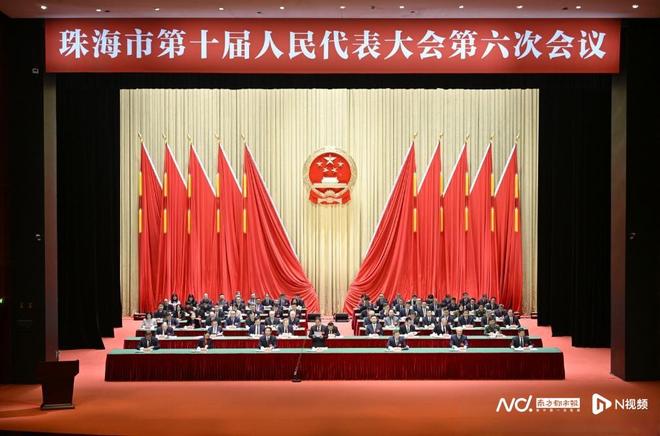
珠海2025年GDP达4573.1亿元,同比增长2.7%
Nan Fang Du Shi Bao· 2026-02-10 10:55
Group 1 - The Zhuhai Municipal Government reported a GDP of 457.31 billion yuan for 2025, with a year-on-year growth of 2.7% [3] - The industrial added value above designated size is expected to grow by 4.1% [3] - Total fixed asset investment is projected to decline by 31.6% [3] - The total retail sales of consumer goods are anticipated to increase by 1.7% [3] - The total foreign trade import and export volume is expected to grow by 3.4% [3] - General public budget revenue is projected to increase by 4% [3] - Per capita disposable income of residents is expected to grow by 3.3% [3]