社区共治

Search documents
丰台以“关键小事”撬动高质量发展
Xin Lang Cai Jing· 2026-01-22 17:07
Group 1 - The core focus of Fengtai District in 2025 is on addressing key issues related to public welfare, such as complaint handling, grassroots governance, property services, and waste classification, aiming for a significant reduction in public grievances [1] - Fengtai District received a total of 593,000 public complaints in 2025, achieving a three-year consecutive decline in complaint volume, with resolution and satisfaction rates reaching historical highs [1] - Four innovative mechanisms, namely "Fengling Action," "People's Livelihood Project Pool," "Pioneer Office," and "Hotline + Grid," have been implemented to enhance grassroots governance and shift from case-by-case resolution to systemic governance [1] Group 2 - In 2025, Fengtai District pioneered the "Street Town Reporting to the Public" initiative, bringing government work closer to the community and allowing residents to review governance outcomes [2] - Over one million residents participated in this initiative, resulting in the collection of 1,319 issues, with nearly 80% of urgent community concerns being addressed [2] - The "Five Neighbors Discussion" brand has established a replicable grassroots governance model, and the "Xianfeng Station" service has conducted over 50,000 services and 3,000 discussions, resolving around 20,000 resident complaints [2] Group 3 - Fengtai District has implemented a comprehensive approach to property management and waste classification, integrating special rectification, departmental collaboration, and community supervision [3] - The "Hotline + Grid" mechanism has enabled proactive problem identification and resolution in waste classification, while the "People's Livelihood Project Pool" has upgraded waste classification facilities and community education [3] - The establishment of the first advanced social worker studio in the city and the implementation of a special inspector system have enhanced professional support and community oversight in governance efforts [3]
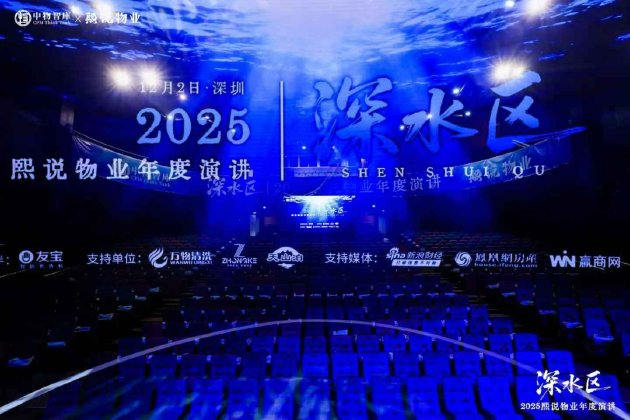
2025熙说物业年度演讲:深水区(演讲全文)
Xin Lang Cai Jing· 2025-12-02 12:22
Core Viewpoint - The 2025 Xi Shuo Property Annual Speech held in Shenzhen focuses on the theme "Deep Water Zone," addressing the challenges and transformations in the property management industry, emphasizing the need for reform and innovation to navigate current difficulties [1][4][7]. Group 1: Historical Context - The property management industry has evolved over 40 years, with total revenue reaching 16.9 trillion yuan and over 60 listed property companies, highlighting its growth and the challenges of maintaining rationality amidst rapid expansion [5]. - The theme "Deep Water Zone" symbolizes the industry's current state, where deeper issues and challenges require more advanced skills and strategies to navigate [9][10]. - Historical issues in the industry include outdated regulations, misalignment of interests among stakeholders, and a lack of effective management mechanisms, which have created systemic challenges [11][12]. Group 2: Current Challenges - The industry faces significant conflicts, including dissatisfaction with service quality, operational difficulties for property companies, and price competition leading to a decline in service standards [11][12]. - The "retreat wave" phenomenon indicates that property companies are exiting unprofitable projects, often due to owners' unwillingness to pay adequate fees, leading to service disruptions and community dissatisfaction [22][23]. - The lack of a strong "client" presence in property management, where owners do not actively participate in governance, exacerbates existing issues and hinders effective decision-making [34][36]. Group 3: Future Directions - The future of the property management industry lies in embracing new technologies and opportunities, such as facility management, asset management, and AI, to address emerging challenges [12]. - The industry must shift from a focus on short-term gains to a long-term service-oriented approach, emphasizing the importance of professional management and community engagement [57][60]. - The need for a comprehensive service model that integrates functionality, emotional value, and social responsibility is crucial for enhancing service quality and community satisfaction [79][81].

发动社会力量 参与社区共治
Ren Min Ri Bao· 2025-10-26 22:19
Core Insights - The article highlights the successful implementation of a mobile application by the Huimingxin community service center in Shanghai's Dongming Road area, aimed at enhancing community engagement and supporting local businesses through digital technology [1][2]. Group 1: Community Engagement - The Huimingxin initiative was established to activate community governance by leveraging social forces, particularly targeting the engagement of younger residents in a predominantly aging community [1]. - The mobile application developed by Huimingxin provides a platform for residents and merchants to access information on discounts, community activities, and entrepreneurial support, thereby fostering a sense of belonging among residents [2]. Group 2: Technological Integration - The application utilizes digital twin technology to recreate the street map, allowing users to interact with various community services and activities [2]. - An AR oral history system was launched in collaboration with Shanghai New York University, transforming community history into interactive digital narratives, enhancing the connection between residents and their local heritage [3]. Group 3: Community Development Initiatives - The community has seen active participation in governance, with residents contributing 1,287 suggestions over two years, leading to 32 implemented proposals [2]. - Six major collaborative plans have been initiated to improve the street environment and strengthen ties between merchants and residents, including initiatives for shared spaces and local volunteer services [3]. Group 4: Recognition and Impact - The practice of promoting youth participation in community governance through digital means has been recognized in the "Shanghai Handbook: 21st Century Urban Sustainable Development Guide - 2025 Annual Report" [4].
麓湖 “神盘” 背后:一位非典型地产商的偏执、折腾、自虐
晚点LatePost· 2025-07-17 08:01
Core Viewpoint - The article discusses the contrasting strategies of real estate companies in China, highlighting how the company 万华, under the leadership of 罗立平, has adopted a long-term, low-leverage approach to development, which has allowed it to thrive in a challenging market while others struggle with high debt and rapid turnover strategies [2][4][20]. Group 1: Market Overview - The top 100 real estate companies in China reduced land acquisition by 30% over the past year, with 85% of land purchased by state-owned enterprises, compared to 61% four years ago [2]. - Major players like 恒大, 碧桂园, and 融创 are facing liquidity crises and are unable to repay significant debts [2]. - 万华, however, has successfully acquired new land and continues to sell properties effectively, with its 麓湖生态城 achieving over 17 billion in sales in 2023, ranking third nationally [2][3]. Group 2: Company Strategy - 万华 has a unique development philosophy, focusing on long-term planning and community integration, contrasting with the high-leverage, high-turnover strategies prevalent in the industry [4][20]. - The company employs a Planned Unit Development (PUD) model, allowing for structured planning and the creation of smaller, manageable units within larger developments [7][30]. - 罗立平 emphasizes the importance of community governance and has initiated a community fund to ensure sustainable management of public spaces [10][44]. Group 3: Leadership and Vision - 罗立平, the president of 万华, has been with the company for 25 years and is known for his hands-on approach and commitment to quality over profit [6][10]. - He aims to create a "civilized and diverse new city" through innovative urban planning, drawing inspiration from successful international models [28][30]. - The company’s focus on community and social value reflects a shift from traditional profit-driven motives to a more holistic approach to real estate development [26][60]. Group 4: Community Engagement - The company has developed a community governance model that encourages resident participation in decision-making processes, fostering a sense of ownership and responsibility among residents [45][49]. - The community fund is designed to manage shared resources and ensure that public spaces are maintained effectively, addressing potential conflicts between residents and visitors [44][46]. - The governance structure includes representatives from various community sectors, ensuring diverse input and accountability [48][49]. Group 5: Future Prospects - 万华 plans to expand its commercial development alongside residential projects, leveraging its existing customer base to enhance profitability [59][60]. - The company is experimenting with retail concepts that prioritize customer experience and community engagement, aiming to create a vibrant commercial ecosystem [60][62]. - Future projects will focus on innovation and adaptability, with a commitment to continuous improvement and learning from past experiences [62][63].