
精益运营

Search documents
万亿蓝海,资本潮涌:以投融资视角解码旅居产业的黄金时代
Sou Hu Cai Jing· 2026-02-26 14:06
Core Insights - The travel residence industry is rapidly emerging as a significant market opportunity, evolving from a niche within the cultural tourism sector to a potential "trillion-level" industry [1] Group 1: Market Dynamics - The travel residence market has a potential demand of 600 million people, with an overall market size expected to approach 3 trillion yuan [5] - The trend of long-term stays is gaining traction, with over 40% of travel residence orders for stays of 7 days or more projected for the summer of 2025 [5] Group 2: Policy and Financial Support - The travel residence industry is receiving unprecedented systematic financial support from both national and local governments, enhancing its growth prospects [3] - Guizhou Province has initiated a special fund to support travel residence projects, including innovative financial products like "travel residence loans" and insurance products [3] Group 3: Investment Trends - The investment logic in the tourism sector is shifting from "heavy asset, scale expansion" to "light asset, lean operation" and "asset securitization," aligning with the core competitiveness of the travel residence industry [6] - Capital is increasingly favoring professional operators that can enhance the value of existing assets rather than merely pursuing new projects [7] Group 4: Technological Integration - Technology and data are becoming essential tools for enhancing operational efficiency and service quality in the travel residence sector, with applications in AI decision-making and IoT [9] Group 5: Company Case Study - Yueju Travel Residence - Yueju Travel Residence exemplifies the industry's investment logic by establishing a standardized operational model that addresses quality assurance and scalability [12] - The company has developed a diverse product line targeting various customer segments, including business, family, and wellness travelers, aligning with market demands for immersive local experiences [14] - Yueju's strategic positioning in resource-rich provinces allows it to leverage local policy support and optimize resource integration [15] Group 6: Future Outlook - The travel residence industry is entering a golden decade driven by consumer upgrades, policy benefits, and rational capital investment [16] - Future industry leaders will be those who enhance asset efficiency through professional operations, innovate service experiences with technology, and build a comprehensive business ecosystem [16][17]

Diebold Nixdorf(DBD) - 2025 Q4 - Earnings Call Transcript
2026-02-12 14:32
Financial Data and Key Metrics Changes - In 2025, Diebold Nixdorf achieved revenue growth, with Adjusted EBITDA reaching $485 million and free cash flow more than doubling to a record $239 million, reflecting a significant improvement in financial stability and predictability [4][9][23] - Adjusted earnings per share (EPS) for fiscal year 2025 was $5.59, more than doubling year-over-year, even when excluding certain non-cash, non-operational tax benefits [10][22] Business Line Data and Key Metrics Changes - In banking, revenue grew 11% year-over-year in Q4, with product revenue increasing by 20% driven by strong ATM recycler adoption [24][25] - Retail revenue increased 12% year-over-year in Q4, with product revenue growing 16% supported by strong point-of-sale and self-checkout performance [25][26] Market Data and Key Metrics Changes - North America showed strong momentum in both banking and retail, with significant wins in grocery and pharmacy sectors, while Europe also demonstrated recovery and growth in ATM technology refresh cycles [12][70] - The Asia-Pacific and Middle East regions reported significant wins, particularly in India, where the company is now certified to participate in all public bank tenders [12][71] Company Strategy and Development Direction - The company is focusing on expanding its role beyond ATMs to encompass the broader branch and transaction ecosystem, emphasizing automation and efficiency [5][10] - Lean operating model initiatives are being implemented to drive cost reductions and improve operational efficiency across the organization [16][17] Management's Comments on Operating Environment and Future Outlook - Management expressed confidence in the company's ability to generate strong and consistent cash flow, with expectations for continued growth in 2026 [4][31] - The company anticipates a revenue range of $3.86 billion to $3.94 billion for 2026, supported by a strong product backlog and improved delivery lead times [28][30] Other Important Information - The company received two credit rating upgrades in 2025, reflecting improvements in its operating and financial models [6][32] - Diebold Nixdorf returned $128 million to shareholders through share repurchases, representing approximately 6% of the company's total shares outstanding [23][32] Q&A Session Summary Question: Insights on Q1 performance expectations - Management indicated strong visibility into Q1 revenues due to a $730 million product backlog and a strong order entry month in January, with expected revenue cadence similar to 2025 [40][41] Question: Context on retail logo wins in the U.S. - The company secured nine new logos, primarily in grocery and pharmacy sectors, with a strong pipeline for future growth driven by AI solutions [46][49] Question: Improvement potential in days sales outstanding (DSO) and days inventory outstanding (DIO) - Management noted opportunities for further improvement in DSO and DIO, with expectations of reducing DSO by an additional 4-5 days and DIO benefiting from local manufacturing strategies [56][58] Question: Capital allocation priorities - The company remains focused on share repurchases as the best return on investment while maintaining flexibility for potential tuck-in acquisitions [60][62] Question: Demand for ATMs across different regions - North America continues to show strong demand for ATMs, with positive momentum in Latin America and Europe, while Asia-Pacific is experiencing significant wins [68][70]

Diebold Nixdorf(DBD) - 2025 Q4 - Earnings Call Transcript
2026-02-12 14:30
Financial Data and Key Metrics Changes - In 2025, Diebold Nixdorf achieved revenue growth, with Adjusted EBITDA expanding to $485 million and free cash flow more than doubling to a record $239 million, reflecting a sustainable free cash flow generation model [4][9] - Adjusted earnings per share (EPS) reached $5.59 for fiscal year 2025, more than doubling year-over-year, even when excluding certain non-cash, non-operational tax benefits [10][21] Business Line Data and Key Metrics Changes - In banking, revenue grew 11% year-over-year in Q4, with product revenue increasing by 20% driven by strong ATM recycler adoption [24][25] - Retail revenue increased 12% year-over-year in Q4, with product revenue growing 16% supported by strong point-of-sale and self-checkout performance [26] Market Data and Key Metrics Changes - North America showed strong momentum in both banking and retail, with significant wins in grocery and pharmacy sectors [49][70] - Europe experienced positive momentum, particularly in Germany and France, with strong wins in the savings and credit union space [70] Company Strategy and Development Direction - The company is focusing on expanding its role beyond ATMs to include broader branch and transaction ecosystems through software-enabled automation and cash management solutions [5][10] - The strategy emphasizes automation, software, and service recurring revenue, which are expected to support higher quality growth over time [10][11] Management's Comments on Operating Environment and Future Outlook - Management expressed confidence in the company's ability to generate strong and consistent cash flow, with a focus on delivering profitable growth and cash generation in 2026 [6][36] - The company anticipates continued improvements in working capital and operational efficiencies, which are expected to enhance financial flexibility [9][32] Other Important Information - The company received two credit rating upgrades in 2025, reflecting improvements in its operating and financial model [6][33] - The company ended 2025 with over $700 million in liquidity and a net debt leverage ratio of 1.1 times, indicating a strong financial position [32] Q&A Session Summary Question: Insights on Q1 expectations and investments in services - Management indicated strong visibility into Q1 revenues with a product backlog of $730 million and expected Adjusted EBITDA margins to be comparable to Q1 of 2025 [41][42] Question: Context on retail logo wins in the U.S. - Management highlighted nine new logos, including significant wins in grocery and pharmacy sectors, with AI playing a crucial role in these successes [46][49] Question: Improvement potential in days sales outstanding (DSO) and days inventory outstanding (DIO) - Management noted opportunities for further improvement in DSO and DIO, with expectations of reducing DSO by an additional 4-5 days and DIO benefiting from local manufacturing strategies [55][58] Question: Capital allocation priorities regarding share repurchases and tuck-in acquisitions - Management reaffirmed a focus on share repurchases as the best return on investment while maintaining flexibility for strategic acquisitions [60][61] Question: Demand for ATMs and growth opportunities - Management reported strong demand in North America and Europe, with a focus on expanding beyond ATMs into the branch ecosystem, and noted significant wins in Asia, particularly in India [67][70]
星盛商业的2025:以精益运营穿越周期,构建可持续增长样本
Xin Lang Cai Jing· 2026-02-11 10:17
Core Insights - The article emphasizes the shift in the retail industry from "scale expansion" to "asset operation quality and capital efficiency," highlighting the emergence of a "quality competition" era in physical commerce [2][35] - Starry Commercial has adopted a focused strategy since 2023, prioritizing customer-centric approaches, asset appreciation, and lean operations to enhance the value of existing projects [2][35] Group 1: Activation of Existing Commercial Spaces - Existing commercial spaces are viewed as the most promising investment return areas, serving as a testing ground for corporate wisdom and capabilities amid homogenized competition and fluctuating consumer willingness [4][36] - Starry Commercial manages 27 projects across 20 cities, with a total commercial area exceeding 2.54 million square meters, featuring various product lines such as COCO Park and COCO City [4][36] - The company focuses on enhancing the quality of existing projects, injecting unique commercial characteristics into each operational project through a lean strategy [5][36] Group 2: First Store Economy 2.0 - The annual brand replacement rate in leading first- and second-tier cities is 20-26%, with Starry Commercial achieving a 26% replacement rate, moving beyond the traditional focus on the quantity of first stores to an "ecological leadership" approach [6][37] - In 2025, Starry Commercial introduced 239 regional and city first stores, with 72 high-quality stores rated A or B, covering diverse sectors such as lifestyle and innovative dining [6][37] - The introduction of flagship stores and themed events has transformed first stores into community platforms, fostering long-term customer loyalty [7][39] Group 3: Enhancements in Main Stores - Upgrading traditional main stores is crucial for existing operations, with Starry Commercial optimizing service and experience to turn supermarkets into traffic magnets [43][44] - The implementation of a self-adjustment model in supermarkets has led to a 25% increase in average daily sales per store, while new community supermarkets have driven foot traffic growth of 15% and 12% respectively [43][44] Group 4: Innovative Marketing Strategies - Starry Commercial's marketing strategy focuses on emotional resonance and value alignment, leveraging nationwide IP events like "Big Grab Festival" and "Hi Star Carnival" to connect with younger generations [47][48] - The company has integrated ESG principles into its operations, launching the "Sustainable Exploration Plan" to enhance both commercial and social value, resulting in a 12.5% increase in foot traffic and a 15% rise in sales during related events [49][50] Group 5: Digital Transformation and Service Enhancement - Digitalization is identified as a core engine for lean operations, with Starry Commercial establishing a digital ecosystem to enhance efficiency, traffic aggregation, and value conversion [52][53] - The company has redefined its service model to create a warm commercial experience, focusing on five friendly systems that cater to various consumer needs, thus transforming commercial spaces into lifestyle hubs [56][57] Group 6: Strategic Expansion in Key Regions - Starry Commercial is committed to a focused expansion strategy, concentrating resources in the Greater Bay Area and Yangtze River Delta, avoiding a scattergun approach to growth [62][64] - The recent opening of the second COCO City in Shenzhen has generated significant consumer interest, with over 400,000 visitors in three days, exemplifying the company's strategic focus on high-quality commercial projects [62][64]

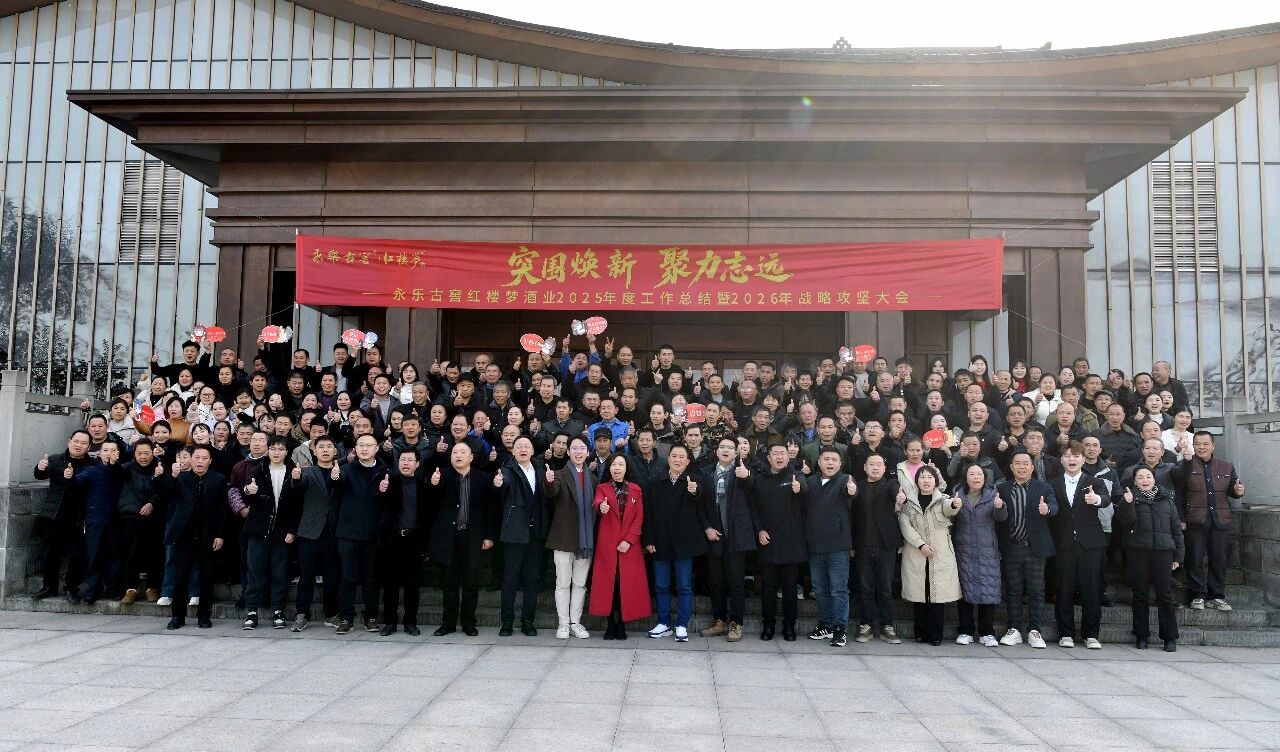
突围焕新,聚力志远:永乐古窖红楼梦酒业2025全国线上年会圆满举行
Xin Lang Cai Jing· 2026-02-09 07:58
Core Viewpoint - The company held an annual meeting themed "Breakthrough, Renewal, Unity, and Ambition," focusing on strategic cohesion during a challenging industry period [1][3]. Summary by Sections Review of 2025 - The white liquor industry faced significant pressure from "prohibition orders" and economic downturns, leading to overall performance declines [3]. - The company maintained its operational foundation and achieved breakthroughs in key areas despite these challenges [3]. - Supply chain improvements led to enhanced raw liquor quality and reduced procurement costs [3]. - The establishment of the "Red Mansion Industry Research Institute" aims to support the integration of intangible cultural heritage craftsmanship and brand culture through systematic innovation [3]. - Marketing strategies successfully developed three growth areas: special channels, large customer collaborations, and customized group purchases, achieving breakthroughs in specific regions [3]. Outlook for 2026 - The chairman emphasized a strategic focus on quality as the foundation for survival, customer-centricity, collaborative efficiency, and long-term cultural leadership [7]. - The company plans to focus on "stabilizing survival, honing internal capabilities, and seeking breakthroughs" with a commitment to a quality revolution and systematic corporate reform [7]. - The marketing system will shift to a "meticulous cultivation" approach, concentrating on core markets and customers, transitioning from scale-oriented to value-oriented strategies [9]. - Supply chain and management systems will continue to deepen lean and digital construction to ensure quality and efficient resource utilization [9]. Team Cohesion and Commitment - The signing of responsibility agreements during the annual meeting aims to further unify the team, emphasizing collective commitment to future goals [9][11]. - Recognition of outstanding employees and their contributions highlights the importance of individual stories in the company's success [11]. - The annual meeting fostered a sense of family and unity among employees, reinforcing the idea that they are all part of the same team [13]. Industry Context - The company recognizes that the industry is entering a competitive phase where only exceptional quality, efficient collaboration, and deep cultural roots will ensure stability and long-term success [15]. - The collective readiness of the company’s workforce is aimed at solidifying foundations and securing future victories in the coming year [15][17].
百胜中国(09987):质地稳健的高股息龙头,维持推荐
Soochow Securities· 2026-02-06 06:19
Investment Rating - The report maintains a "Buy" rating for Yum China (09987.HK) [1] Core Insights - Yum China reported a 4% year-over-year increase in total revenue for the full year 2025, with a 9% increase in Q4 revenue, exceeding previous expectations [7] - The company achieved a net profit growth of 2% for the full year and 24% for Q4, attributed to automation, lean operations, and improved raw material costs [7] - The total number of stores reached 18,100 by the end of 2025, with a net addition of 1,706 stores throughout the year [7] - Same-store sales showed significant improvement, with a 1% increase for the full year and a 3% increase in Q4 [7] - The outlook for 2026 is positive, with plans to exceed 20,000 stores and a capital expenditure of $600-700 million [7] - The company plans to return $1.5 billion to shareholders in 2025, with a dividend yield of nearly 8% [7] - Earnings forecasts for 2026-2028 have been adjusted upwards, with projected net profits of $1.04 billion, $1.14 billion, and $1.26 billion respectively [7] Financial Summary - Total revenue projections for 2024 to 2028 are $11.30 billion, $11.80 billion, $12.69 billion, $13.43 billion, and $14.26 billion respectively, with year-over-year growth rates ranging from 2.96% to 7.54% [1] - Net profit projections for the same period are $911 million, $929 million, $1.04 billion, $1.14 billion, and $1.26 billion, with growth rates from 1.98% to 12.24% [1] - The latest diluted EPS estimates are $2.57, $2.62, $2.94, $3.23, and $3.56 for the years 2024 to 2028 [1] - The current P/E ratios are projected to decrease from 22.10 in 2024 to 15.94 in 2028 [1]
ATS(ATS) - 2026 Q3 - Earnings Call Transcript
2026-02-04 14:32
Financial Data and Key Metrics Changes - Order bookings for Q3 were $821 million, up almost 12% sequentially and down 7% compared to Q3 last year [10][16] - Q3 revenues reached $761 million, representing a 16.7% increase year-over-year, driven by organic growth of 12.6% and a 4.1% benefit from foreign exchange [10][17] - Adjusted earnings from operations in Q3 were $80 million, a 21.6% increase from Q3 last year [10][17] - Gross margin for Q3 was 29.6%, a decrease of 111 basis points from the previous year due to program mix [17] - The company ended the quarter with an order backlog of approximately $2.1 billion [11][18] Business Line Data and Key Metrics Changes - In life sciences, order backlog was $1.1 billion, with revenues for the quarter at $391 million, the second highest in ATS's history [11][12] - In food and beverage, Q3 order backlog was CAD 203 million, with strong funnel activity driven by brand recognition [12] - Energy sector order backlog reached a record CAD 296 million, up 87% over Q3 last year, driven by refurbishment and life extension projects for nuclear reactors [12][13] - Consumer products backlog hit a record CAD 321 million, supported by a large enterprise warehouse packaging automation program [14] Market Data and Key Metrics Changes - The company reported strong demand in life sciences, particularly in radiopharmaceuticals and GLP-1 auto-injectors [11][12] - The energy sector is experiencing growth due to refurbishment projects and new build programs, including both large-scale reactors and small modular reactors (SMRs) [12][13] - The transportation segment continues to reflect smaller-scale opportunities, with a cautious approach to pursuing larger projects [68] Company Strategy and Development Direction - The company is focused on margin expansion, capital allocation, and leveraging its strong lean operating system [5][8] - Recent leadership appointments aim to strengthen operational capabilities in key end markets [6][7] - The strategy includes embedding the growing services business within operating units to enhance accountability and customer alignment [7] Management's Comments on Operating Environment and Future Outlook - Management expressed confidence in the company's ability to execute and deliver long-term value, despite a dynamic macro environment [20] - The company has not been materially impacted by tariffs and continues to adapt to customer needs across different geographies [20] - Management remains optimistic about the outlook for ATS, emphasizing the potential for margin expansion and capital efficiency [29] Other Important Information - The company incurred CAD 5.5 million in restructuring costs during the quarter, with total costs expected to be approximately CAD 20 million [19] - Cash flows from operating activities were CAD 115 million, with non-cash working capital as a percentage of revenues improving to 16.4% [21] - Capital expenditures for the quarter were $16.6 million, with expectations for fiscal 2026 CapEx between $70 million and $90 million [21] Q&A Session Summary Question: Doug's priorities in the first 90 days - Doug highlighted a focus on core end markets, margin expansion potential, and disciplined capital deployment [28][29] Question: Connection between margin improvement and gross margin change - Anne explained that gross margin changes reflect program execution and backlog dynamics, with ongoing opportunities for improvement [34][35] Question: Outlook for nuclear and life sciences segments - Anne discussed strong backlog in nuclear and ongoing growth in life sciences, with new orders contributing to the positive outlook [39][40] Question: Capital allocation and working capital targets - Doug indicated that while it's premature to set new targets, the company is focused on improving working capital efficiency and considering M&A opportunities [44][46] Question: Impact of reshoring and tariffs on business - Doug noted that while reshoring discussions are prevalent, the primary driver for capacity expansion is the increased demand for therapeutics [65] Question: Transportation segment outlook - Doug mentioned a cautious approach to the transportation segment, focusing on targeted niches rather than large-scale projects [68]

ATS(ATS) - 2026 Q3 - Earnings Call Transcript
2026-02-04 14:30
Financial Data and Key Metrics Changes - Order bookings for Q3 were $821 million, up almost 12% sequentially, and revenues were $761 million, up almost 17% from Q3 last year, driven primarily by organic growth [10][11] - Adjusted earnings from operations in Q3 were $80 million, in line with expectations, with earnings per share at $0.48 on an adjusted basis [10][16] - The gross margin for Q3 was 29.6%, a 111 basis point decrease from last year, mainly due to program mix [16] Business Line Data and Key Metrics Changes - In life sciences, order backlog was $1.1 billion, with revenues for the quarter at $391 million, the second highest in ATS's history [11][12] - The food and beverage segment had a Q3 order backlog of CAD 203 million, while the energy segment's order backlog reached a record CAD 296 million, up 87% over Q3 last year [12] - Consumer products backlog reached a record CAD 321 million, supported by a large enterprise warehouse packaging automation program [13] Market Data and Key Metrics Changes - The company reported strong demand in life sciences, particularly in radiopharma and GLP-1 auto-injectors, with ongoing customer engagement [11][12] - The energy sector is seeing significant growth due to refurbishment and life extension projects for nuclear reactors, alongside new build programs [12][13] - The transportation segment continues to reflect smaller-scale opportunities, with a cautious approach to larger projects [67] Company Strategy and Development Direction - The company is focused on margin expansion, capital allocation, and leveraging its strong lean operating system to drive sustained results [4][7] - Recent leadership changes aim to strengthen accountability and improve customer alignment, particularly in the services business [6] - The company plans to deploy capital with a high level of discipline, emphasizing margin improvement and new technologies [29][46] Management's Comments on Operating Environment and Future Outlook - Management expressed confidence in the depth and capability of the organization, highlighting a healthy and diversified order backlog [14][21] - The macro environment remains dynamic amid geopolitical and trade uncertainty, but the company has not been materially impacted by tariffs [19] - Management remains optimistic about the outlook for ATS, with a focus on core end markets and margin expansion potential [30] Other Important Information - The company incurred CAD 5.5 million in restructuring costs during the quarter, with total costs expected to be approximately CAD 20 million [18] - Cash flows from operating activities were CAD 115 million, with non-cash working capital as a percentage of revenues improving to 16.4% [20] Q&A Session Summary Question: Doug's priorities in the first 90 days - Doug emphasized focusing on core end markets, realizing margin expansion potential, and disciplined capital deployment [28] Question: Correlation between margin improvement and gross margin change - Management indicated that gross margin changes reflect program execution and backlog dynamics, with ongoing opportunities for improvement [31][35] Question: Insights on nuclear and life sciences segments - Management noted strong backlog in nuclear life extension projects and ongoing growth in life sciences, particularly in radiopharma [39][42] Question: Working capital targets and M&A plans - Doug mentioned that while it's premature to set new working capital targets, there is a focus on disciplined capital allocation, including M&A opportunities [45][46] Question: Updates on GLP-1 and other therapies - Management confirmed ongoing strong demand for GLP-1 therapies while also diversifying the pipeline with new applications in radiopharma and oncology [54][56] Question: Transportation segment outlook - The transportation segment is viewed cautiously, with a focus on targeted niches rather than large-scale projects [66] Question: Context on bookings growth - Management expressed confidence in a healthy pipeline and robust bookings outlook despite timing impacts [88]
兖矿能源董秘黄霄龙:多产业协同跳出煤炭周期波动
Da Zhong Ri Bao· 2026-01-26 09:11
Core Viewpoint - The article discusses the significant transformation and structural adjustments in China's energy sector, particularly focusing on Yanzhou Coal Mining Company Limited (Yankuang Energy), which has undergone a systematic change over the past five years, achieving substantial growth in scale and efficiency [2]. Group 1: Strategic Transformation - Yankuang Energy's development trajectory over the past five years can be summarized by three keywords: strategic transformation, resource aggregation, and international development [2]. - The company has established five major industrial layouts: mining, high-end chemical new materials, new energy, high-end equipment manufacturing, and smart logistics, breaking away from a single coal enterprise model [2][3]. Group 2: Resource Aggregation and Internationalization - Since the restructuring with Shandong Energy Group in 2020, Yankuang Energy has completed significant strategic mergers and acquisitions, adding approximately 32 billion tons of resource volume and 3.6 billion tons of recoverable reserves over five years [3]. - The company is the only domestic energy enterprise listed in six locations globally, including Shanghai, Hong Kong, New York, Sydney, Frankfurt, and Munich, which has facilitated a unique international governance system and operational stability [3]. Group 3: Financial Performance - Key financial metrics have shown significant changes: total assets increased from 258.9 billion yuan at the end of 2020 to 358.6 billion yuan by the end of 2024, a growth of 38.5%; net assets grew by 52.7% [4]. - The net profit attributable to shareholders rose from 7.1 billion yuan in 2020 to 14.4 billion yuan in 2024, totaling 88.72 billion yuan over five years [4]. Group 4: Industry Resilience and Strategic Decisions - The most critical strategic decision was the establishment of a "five major industries" ecosystem, which allows the company to escape the cyclical nature of the coal industry and pursue a path of multi-industry collaboration and sustainable development [6]. - The company has implemented a proactive approach to industry cycle fluctuations, utilizing a combination of strategies to maintain profitability and operational efficiency [7]. Group 5: Future Directions and Goals - For the "15th Five-Year Plan," the core direction is to cultivate new productive forces, focusing on a new development model and governance structure [10]. - By 2030, the company aims to achieve a coal production target of over 300 million tons and ensure that high-end chemical new materials account for over 70% of its portfolio [11]. Group 6: Technological Innovation and Competitive Advantage - The core competitive advantage of Yankuang Energy lies in its systematic capabilities formed by professional accumulation, capital operation, and international development [9]. - The company has established a "3+N" high-end innovation platform, implementing 170 technology projects, achieving world-leading levels in deep mining and intelligent mining construction [9]. Group 7: Commitment to Sustainability - Yankuang Energy is committed to green transformation, with goals to exceed 10 million kilowatts of new energy installed capacity by 2030 and to develop multiple green intelligent mines and "zero-carbon parks" [11]. - The company is also exploring integrated solutions for wind, solar, and hydrogen storage, aiming to enhance its sustainability efforts [11]. Group 8: Information Disclosure and Investor Relations - The company has upgraded its information disclosure practices from compliance to value transmission, significantly enhancing transparency and investor relations [12][13]. - Yankuang Energy has established a proactive investor management model, engaging in over 200 communication activities annually to foster a better understanding of its value among investors [13].


博腾股份预计2025年净利8000万元至1.05亿元,同比扭亏
Bei Jing Shang Bao· 2026-01-22 12:49
Core Viewpoint - Boteng Co., Ltd. (300363) forecasts a revenue of 3.35 billion to 3.5 billion yuan for 2025, representing a year-on-year growth of 11% to 16%, and expects a net profit attributable to shareholders of 80 million to 105 million yuan, marking a turnaround from loss to profit [1] Group 1 - The company anticipates steady growth in operating revenue, leading to the gradual realization of business scale effects [1] - Boteng Co., Ltd. is committed to cost reduction and efficiency enhancement, which has resulted in improved operational efficiency and an increase in overall gross margin compared to the previous year [1] - The company has maintained a stable decline in overall expenses, contributing to better financial performance [1] Group 2 - As the company's business recovers, the efficiency of asset utilization is gradually improving [1] - Based on preliminary impairment tests, the company expects a significant reduction in asset impairment losses compared to the previous year [1]
