
科技成果转移转化

Search documents
赋能新质生产力,国家技术转移东部中心盐城分中心2026年行动发布会举行
Yang Zi Wan Bao Wang· 2026-01-13 05:29
Core Insights - The National Technology Transfer Eastern Center's Yancheng Branch aims to enhance innovation and technology transfer in the region, promoting economic development through scientific advancements [1][2] Group 1: Event Overview - The event was co-hosted by the Yancheng Science and Technology Bureau and the People's Government of Tinghu District, focusing on the 2026 action plan for the Yancheng branch of the National Technology Transfer Eastern Center [1] - The Yancheng branch has served over 2,000 enterprises since its establishment, facilitating numerous technology transfer and industry-academia-research cooperation projects [1] Group 2: Key Initiatives and Goals - The Yancheng branch aims to gather innovation resources from the Yangtze River Delta to promote the transfer and transformation of scientific achievements, supporting Yancheng's role as a key area for new productivity in the province [1] - The event included the launch of the "Yancheng Technology Achievement Transformation Fund" and the unveiling of the "Technology Finance Station," along with the promotion of the "Yankebao" WeChat mini-program [2]
海南自贸港国际科技大市场启动运营
Hai Nan Ri Bao· 2025-12-20 23:40
Core Viewpoint - The Hainan Free Trade Port International Technology Market has officially commenced operations, aiming to enhance the efficiency of technology transfer and commercialization through a specialized and international service platform [1]. Group 1: Market Launch and Objectives - The Hainan Free Trade Port International Technology Market was launched on December 20, with a focus on promoting innovation in the pharmaceutical and medical sectors [1]. - The market aims to become the preferred destination for the introduction of international technology achievements and the export of domestic technology, leveraging Hainan's favorable policies such as zero tariffs and low tax rates [1]. Group 2: Operational Framework - The market is built on a comprehensive technology transfer system that includes an online platform, physical entities, incubation services, and innovation policy packages, covering the entire process from showcasing and trading to incubation and industrialization [2]. - This system is designed to effectively address the bottlenecks in technology transfer, providing a one-stop service for innovation entities [2].
南昌科技大市场正式揭牌
Ke Ji Ri Bao· 2025-10-28 04:54
Core Points - The Nanchang Science and Technology Market officially commenced operations following a ceremony held on October 26, marking a significant step in the region's technology transfer and commercialization efforts [1] - The market operates under the principles of "market-led, government-guided, open cooperation, and mutual benefit," focusing on the entire chain from research and development to industrialization [1] - The market aims to establish a comprehensive service system for technology transfer in Nanchang, integrating various functions such as result display, value assessment, technology demand, and transaction facilitation [1] Summary by Categories - **Market Structure and Functionality** - The Nanchang Science and Technology Market is designed to create a service system characterized by "1+7+N" for technology transfer, featuring eight functional matrices [1] - It has launched seven online service platforms to facilitate intelligent matching of technology resources, online transactions, and one-stop services [1] - **Collaboration and Development** - The market is a collaborative effort between the Nanchang Municipal Science and Technology Bureau and the Jiangxi Provincial Center for Technology Transfer, aligning with the provincial technology transfer service system [1] - The center has already collected over 740 valid technology demands and screened more than 3,500 industrializable results, leading to a signed contract amount exceeding 1.158 billion yuan [1] - **Future Prospects** - The Nanchang Science and Technology Market is expected to accelerate the gathering of technological elements and promote the transformation of more research outcomes, contributing to technological innovation and industrial development in Jiangxi [1]
广西打造面向东盟的科技成果转移转化集聚地
Zhong Guo Xin Wen Wang· 2025-10-15 13:34
Core Points - Guangxi aims to become a technology achievement transfer and transformation hub targeting ASEAN countries, integrating high-quality technology resources and fostering innovation cooperation [1] - The "Three-Year Action Plan for Technology Achievement Transformation in Guangxi (2025-2027)" was released, focusing on enhancing the region's capacity to gather quality technology achievements and establishing a collaborative innovation ecosystem [1] Group 1 - Guangxi will leverage its industry cooperation centers in Beijing, Shanghai, and Shenzhen to deepen collaboration with high-level universities and research institutions, establishing liaison stations for technology achievement transformation [1] - The region plans to create technology innovation zones in alignment with international and regional technology innovation centers, supported by concept verification funds to select and gather quality technology achievements [1] - Guangxi will strengthen connections with the Guangdong-Hong Kong-Macao Greater Bay Area's technology transfer service system and enhance cross-regional transaction information sharing [1] Group 2 - The region has been actively promoting technology transfer cooperation with ASEAN countries, including Vietnam, Malaysia, Cambodia, and Myanmar, through the establishment of the China-ASEAN Technology Transfer Center [2] - A notable collaboration between Guangxi Beitou Xinchuan Technology Investment Group and a Malaysian company resulted in the development of "Zhong-Ma Certificate Pass," significantly improving personnel mobility between the two regions [2]
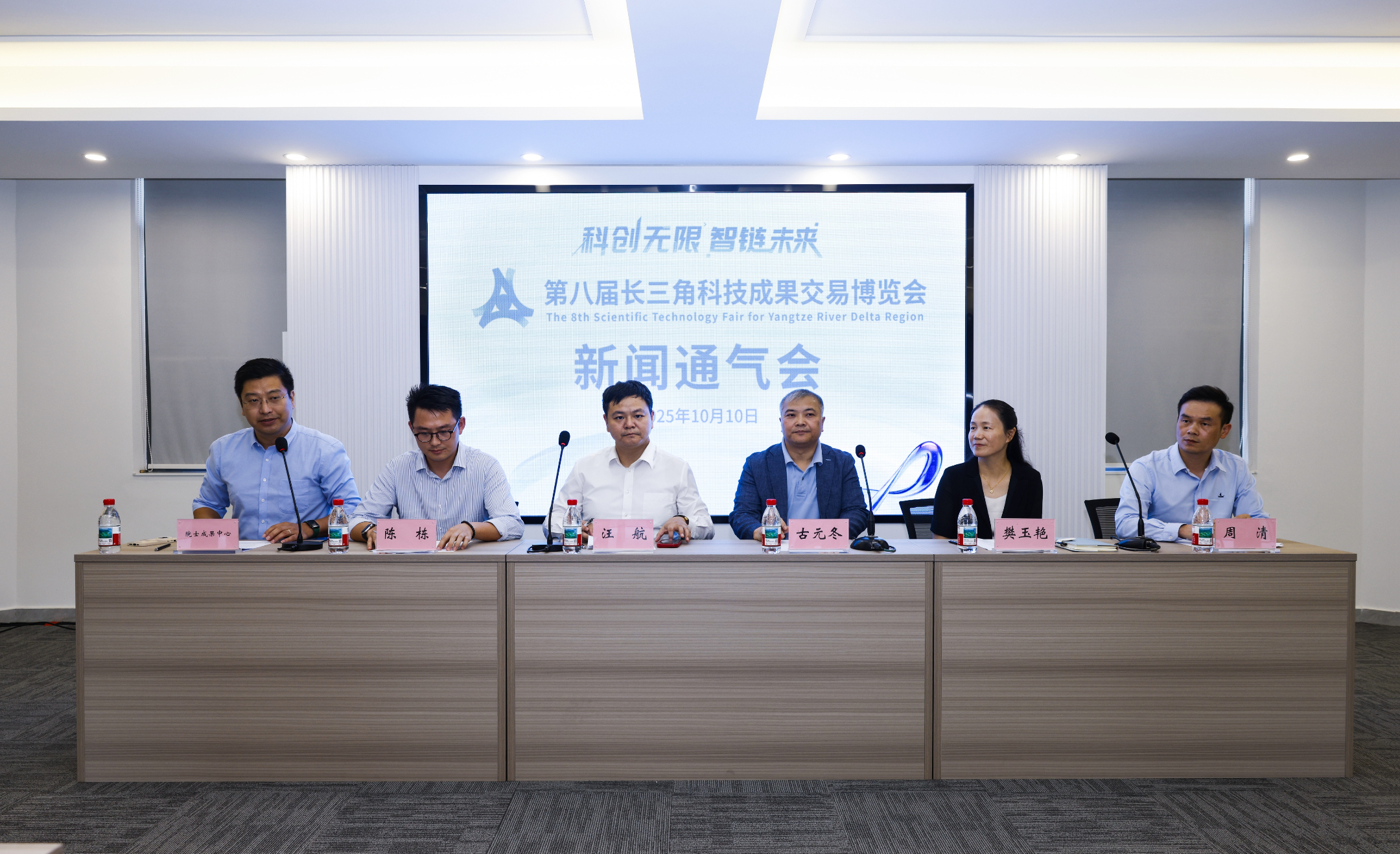
五大未来产业齐聚!第八届长三角科交会10月15日开幕
Guo Ji Jin Rong Bao· 2025-10-10 13:58
Core Insights - The 8th Yangtze River Delta Science and Technology Achievements Trading Expo will be held from October 15 to 17 in Shanghai, featuring a theme exhibition area exceeding 10,000 square meters with participation from 41 core cities in the Yangtze River Delta [1][2] Group 1: Event Overview - The expo focuses on five future industry tracks: future intelligence, future energy, future materials, future health, and future space, aiming to showcase new achievements and cases [2][5] - The event will include five major exhibition areas: Yangtze River Delta Cooperation City Area, National Innovation Center Area, Technology Transfer and Transformation Area, Frontier Technology Demonstration Area, and Technology Ecosystem Area [2][5] Group 2: Exhibition Areas - The Yangtze River Delta Cooperation City Area will display local industrial development and technological innovation achievements from cities like Nantong, Kunshan, and Taicang [4] - The National Innovation Center Area will focus on enterprise technology demand matching, crowdfunding research, and concept verification center construction, showcasing new mechanisms and achievements [5] - The Technology Transfer and Transformation Area will integrate various technology transfer service institutions to facilitate technology trading and investment matching [5] - The Frontier Technology Demonstration Area will highlight innovative achievements from universities and research institutions, promoting collaboration with different industries [5] - The Technology Ecosystem Area will involve technology parks, incubators, and industry associations to create a comprehensive technology service exchange platform [5] Group 3: Strategic Goals - The expo aims to enhance the regional innovation chain and industrial chain integration, providing strategic support for improving the technological competitiveness of the Yangtze River Delta [7] - It will feature approximately 60 brand activities, including forums and competitions, to foster dialogue among technology, industry, academia, and investment sectors [8] Group 4: Long-term Initiatives - The event will continue to promote a "3+365" technology service model, facilitating ongoing technology transactions and collaborations across the region [9] - Since its inception in 2018, the expo has become a significant platform for advancing international innovation center construction and collaborative innovation in the Yangtze River Delta [10]

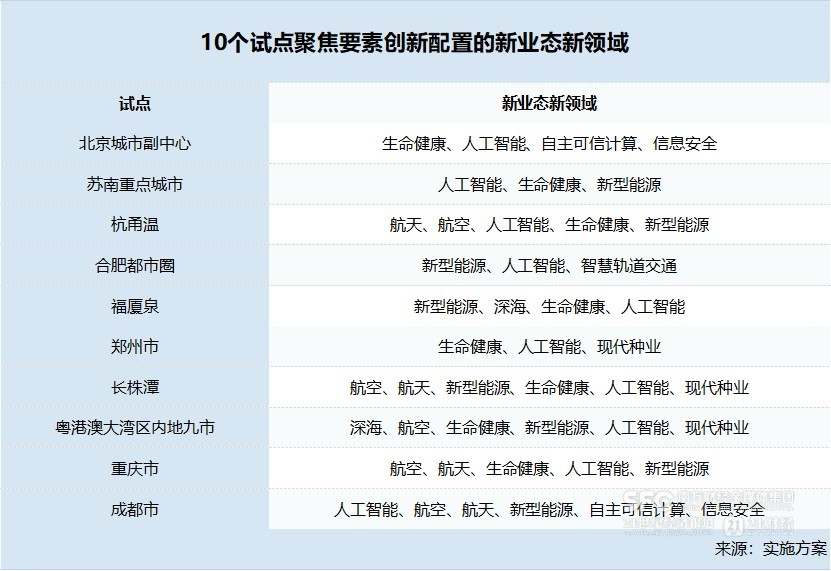
从“睡城”到创新之城:北京城市副中心的要素配置试验
2 1 Shi Ji Jing Ji Bao Dao· 2025-09-19 05:17
Group 1 - The opening ceremony of over 6,000 graduate students at Renmin University marks the official operation of the Tongzhou campus, contributing to the educational landscape in Beijing's sub-center [1] - Prior to this, Tongzhou had only three undergraduate institutions with fewer than 2,000 graduate students, indicating a significant increase in higher education capacity in the area [2] - The Beijing sub-center is set to maintain an investment intensity of 100 billion annually throughout the 14th Five-Year Plan, facilitating the aggregation of various resources [3] Group 2 - The State Council has approved a pilot implementation plan for market-oriented allocation of factors in several regions, with Beijing's sub-center being one of the ten pilot areas [4] - The sub-center is already a national green development demonstration zone and is exploring innovative reforms, such as establishing a state-owned enterprise R&D reserve fund system [4][12] - The construction of the Tsinghua University Tongzhou Financial Development and Talent Training Base is underway, expected to become a high-end financial talent training hub [7][8] Group 3 - The financial sector's value added is projected to maintain around 10% of Tongzhou's GDP from 2022 to 2024, with significant projects like Xiaomi Auto and SMIC driving growth in automotive manufacturing and integrated circuits [8] - The digital economy's core industry revenue is expected to exceed 60 billion, with growth rates leading the city [8] - The pilot areas emphasize the importance of new industries and service sector resource allocation, focusing on strategic needs and current industrial foundations [10] Group 4 - The Beijing sub-center aims to attract global talent and enhance international cooperation in financial services, with specific measures to broaden the recognition of overseas professional qualifications [14][15] - The region is positioned as a bridge for coordinated development in the Beijing-Tianjin-Hebei area, with ongoing efforts to enhance institutional frameworks and mechanisms [18] - The establishment of a large-scale elderly care community in neighboring Hebei reflects the focus on integrating various service sectors, including healthcare and elder care [19][20]
服贸会教育服务专题多项成果发布,科技成果转化直通车受关注
Xin Jing Bao· 2025-09-11 13:51
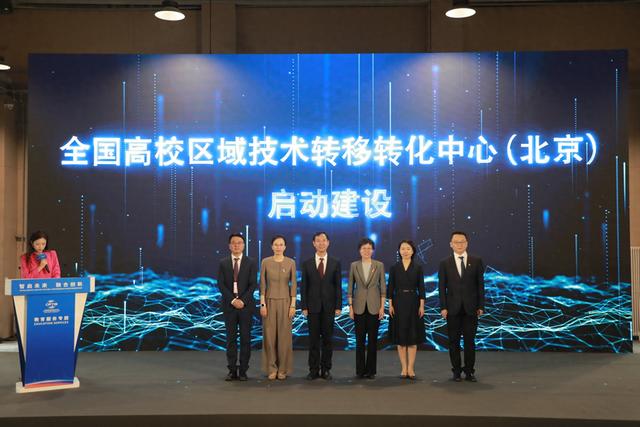
Core Insights - The 2025 Service Trade Fair's education section opened with the theme "Intelligent Future, Integrated Innovation," attracting over 13,000 attendees on its first professional audience day [1] - Key initiatives announced include the launch of an AI-driven education consumption framework, a new study abroad promotion system, and the establishment of a national technology transfer center [1][2] Group 1: AI and Education - The "AI-driven education new consumption framework" was introduced, focusing on high-quality educational datasets and AI-based services to create a new educational ecosystem [1] - An AI empowerment education forum was held, discussing the future of education reshaped by AI and releasing various ethical guidelines and evaluation systems [4] Group 2: Technology Transfer and Innovation - The establishment of the National Higher Education Technology Transfer Center in Beijing aims to facilitate rapid commercialization of university research, with a focus on AI and green energy sectors [2][3] - The center has identified nearly 2,100 projects, with 40 registered companies and a total transaction value of 701 million yuan [3] Group 3: Infrastructure and Support - The AI regional center in Haidian will provide a comprehensive platform for technology transfer, with a focus on collaboration with top institutions like Tsinghua University [3] - The green energy center in Fangshan is set to cover approximately 700,000 square meters, with policies in place to support enterprise development and talent acquisition [3]
全国高校区域技术转移转化中心在京启动建设
Bei Jing Ri Bao Ke Hu Duan· 2025-09-11 10:29
Core Insights - The establishment of the National University Regional Technology Transfer and Transformation Center in Haidian and Fangshan districts aims to enhance collaboration between universities and enterprises, focusing on regional advantageous industries and facilitating the transition of scientific achievements from research to market [1][3]. Group 1: Artificial Intelligence Center - The National University Artificial Intelligence Regional Transfer and Transformation Center will focus on artificial intelligence, connecting resources from Haidian District and leveraging institutions like Tsinghua University and Peking University to create a comprehensive platform for technology transfer [3]. - Nearly 2,100 projects have been identified through deep collaboration with key institutions, with 40 projects already registered as companies [3]. Group 2: Green Energy Center - The National University Green Energy Regional Technology Transfer and Transformation Center will be located in Liangxiang University Town and aims to cover an area of nearly 700,000 square meters, focusing on the entire chain of technology transfer from discovery to application [4]. - Fangshan District hosts over 100 green energy companies and has developed a robust industrial cluster, supported by policies that promote technology upgrades and talent acquisition [4].
决胜“十四五” 打好收官战|释放创新潜能!我国科技体制改革稳步推进
Xin Hua She· 2025-08-26 15:20
Group 1 - The core viewpoint emphasizes the importance of deepening the reform of the science and technology system to achieve high-level self-reliance and strength in technology, which is crucial for building a strong technological nation [1] - During the "14th Five-Year Plan" period, China has been breaking down institutional barriers that hinder innovation, establishing a foundational institutional framework for technological innovation, and further stimulating the innovative vitality of society [1][2] - The number of high-tech enterprises in China exceeds 460,000, with 169,000 of them being above-scale industrial high-tech enterprises, indicating a robust growth in the technology sector [2] Group 2 - The establishment of a mechanism to cultivate and grow leading technology enterprises is underway, supporting collaboration between enterprises and research institutions to promote innovation across the industrial chain [3] - A series of reforms have been implemented to accelerate the transformation of scientific and technological achievements, facilitating a seamless connection between the innovation chain and the industrial chain [4] - The transaction volume of national technology contracts has increased from 2.8 trillion yuan in 2020 to 6.8 trillion yuan in 2024, surpassing the target set in the "14th Five-Year Plan" [5] Group 3 - Human resources are identified as the most critical factor in technological innovation, with China having the largest total of scientific and technological human resources in the world [7] - Reforms aimed at stimulating the innovative and entrepreneurial vitality of talent include establishing a talent evaluation system focused on innovation capability and contribution, as well as supporting young talent in leading roles [7][8] - Approximately 80% of projects funded by the National Natural Science Foundation are awarded to researchers aged 45 and below, highlighting the increasing involvement of young individuals in national technological innovation [8]
释放创新潜能!我国科技体制改革稳步推进
Shang Hai Zheng Quan Bao· 2025-08-26 11:43
Group 1: Core Insights - The article emphasizes the importance of deepening the reform of the technology system in China to achieve high-level technological self-reliance and build a strong technological nation [1] - During the "14th Five-Year Plan" period, China is breaking down institutional barriers that hinder innovation, establishing a foundational framework for technological innovation, and enhancing the overall innovative vitality of society [1] Group 2: Strengthening Corporate Innovation - Qingdao Delton General Environmental Technology Co., Ltd. utilizes a cloud platform to match technical needs with research teams from universities, showcasing a new model of "cloud-based R&D" [2] - The government is enhancing the role of enterprises in technological innovation by supporting their participation in major national research tasks, with about 80% of key R&D projects led or participated in by enterprises [2] - Tax incentives for R&D have been improved, with the deduction rate for R&D expenses increased from 75% to 100% [2] - There are over 460,000 high-tech enterprises in China, with 169,000 in the industrial sector, and nearly a quarter of the global top 2500 R&D spending companies are Chinese [2] Group 3: Accelerating Technology Transfer - The transformation of scientific and technological achievements is crucial for connecting the innovation chain with the industrial chain [4] - A series of reforms have been implemented to facilitate the transition from laboratory to market, including the establishment of verification centers and platforms for demonstration applications [4] - The total value of technology contracts in China increased from 2.8 trillion yuan in 2020 to 6.8 trillion yuan in 2024, surpassing the target of 5 trillion yuan set for the "14th Five-Year Plan" [5] Group 4: Fostering Talent Innovation - The article highlights the importance of human resources in technological innovation, with China having the largest pool of scientific talent globally [6] - Reforms in talent evaluation systems and support for young researchers are being implemented to stimulate innovation [7] - Approximately 80% of projects funded by the National Natural Science Foundation are awarded to researchers aged 45 and below, indicating a focus on nurturing young talent [7]