基因编辑

Search documents
“老外来华就医热”,中国医疗凭实力“圈粉” | 新京报快评
Xin Lang Cai Jing· 2026-02-11 08:24
Core Viewpoint - The trend of foreign patients seeking medical treatment in China has surged, with a significant perception of efficiency and cost-effectiveness compared to Western countries, marking a reversal in the global healthcare resource flow [2][3]. Group 1: Patient Trends - In 2025, international patients treated in key Chinese hospitals reached 1.28 million, a 73.6% increase from three years prior, indicating a shift from outbound medical tourism to inbound [2]. - The perception of Chinese healthcare has changed, with foreign patients now recommending it for its high efficiency and low costs, with some reporting a cost difference of up to 10 times compared to their home countries [2][3]. Group 2: Efficiency and Cost Advantages - Chinese hospitals have significantly shorter waiting times, with average outpatient wait times under 30 minutes and emergency response times of about 5 minutes, contrasting sharply with the long wait times in public hospitals in countries like the UK [3]. - The cost of medical services in China is reported to be up to 10 times lower than in developed countries, making it particularly attractive for foreign patients, especially those from middle-income backgrounds [3]. Group 3: Technological Advancements - China has made notable advancements in cutting-edge medical technologies, including robotic surgery and gene editing, which have contributed to its growing reputation in the global healthcare market [3]. - Chinese doctors have accumulated extensive clinical experience, particularly in rare diseases and complex surgeries, positioning them competitively against international standards [3]. Group 4: Challenges and Opportunities - Despite the growth, challenges remain, such as insufficient brand recognition, lack of standardized services, and barriers in international insurance and payment systems [3][4]. - To overcome these challenges, there is a need for market-driven improvements in service quality, the establishment of unified service standards, and the promotion of traditional Chinese medicine on an international scale [4]. Group 5: Future Outlook - The influx of foreign patients is seen as a reflection of the success of China's healthcare reforms, which have improved access and affordability for domestic patients, laying a foundation for internationalization [4]. - Continued systematic reforms and innovations in the healthcare sector could position China as a leading destination for medical treatment globally [4].


老外来华就医热”,中国医疗凭实力“圈粉
Xin Jing Bao· 2026-02-11 06:31
Core Viewpoint - The trend of foreign patients seeking medical treatment in China has significantly increased, with a reported 73.6% rise in international patients visiting domestic hospitals from three years ago, indicating a shift in global healthcare dynamics and perceptions of quality medical care [1][2]. Group 1: Reasons for Foreign Patients Choosing China - The primary reasons for foreign patients selecting China for medical treatment are the efficiency and cost advantages of domestic healthcare services, with average waiting times in Chinese hospitals being significantly lower than in Western countries [2]. - The cost of medical services in China can be up to 10 times lower than in developed countries, making it particularly attractive for foreign patients, especially those from middle-income backgrounds or without insurance coverage [2]. - China's advancements in cutting-edge medical technologies, such as robotic surgery and gene editing, have established a strong reputation, allowing foreign patients to trust Chinese healthcare providers with their health [2]. Group 2: Challenges in China's Medical Internationalization - Despite notable achievements, China's healthcare internationalization faces challenges, including insufficient brand recognition, lack of standardized services, and barriers in foreign exchange settlements and cross-border insurance [2]. - There is a need for market-driven mechanisms to enhance service quality and establish unified service standards and regulatory frameworks to address these challenges [3]. Group 3: Impact of Healthcare Reforms - The influx of foreign patients is a reflection of the successful reforms in China's healthcare system, which have improved access and affordability for domestic patients, thereby laying a foundation for internationalization [3]. - Continuous systemic reforms and innovations in the healthcare sector are essential for China to transition from a major healthcare provider to a leading healthcare powerhouse, making "medical treatment in China" a rational choice for more foreigners in the future [3].
青侨阳光25年度总结及展望
青侨阳光投资交流· 2026-01-13 11:56
Core Viewpoint - The article emphasizes the investment potential in the domestic high-value medical consumables and innovative pharmaceuticals sectors, highlighting significant growth opportunities and market undervaluation in these areas [1][6][34]. Group 1: Investment Logic of Core Assets - The primary investment direction for the fund is domestic high-value medical consumables, which have substantial growth potential and are currently undervalued in the market. The market capitalization disparity between domestic and international players is significant, with domestic high-value consumables having a maximum market cap of over 30 billion RMB compared to nearly 1 trillion RMB for their international counterparts [1][3]. - The penetration rate of high-value consumables in China is still low, indicating a potential for significant growth as domestic adoption increases and international markets are explored [3]. - The "innovation + internationalization" logic driving the revaluation of innovative drugs also applies to domestic high-value consumables, with rapid growth in overseas revenues for listed cardiovascular high-value consumables companies, indicating increasing international recognition [4]. Group 2: Domestic Innovative Pharmaceuticals - Domestic innovative pharmaceuticals represent the second major investment direction, driven by strong market momentum. The revenue for Hong Kong-listed innovative drugs is expected to grow from less than 10 billion RMB in 2020 to nearly 100 billion RMB by 2026 [6]. - The deep medical reform initiated in China since 2015 is expected to create a long-term growth cycle for innovative pharmaceuticals, similar to the one experienced in the U.S. after its reforms in the 1980s [6][8]. - The transition from the first half of the cycle (2015-2025) to the second half (2025-2035) will require identifying underpriced potential blockbuster products to sustain excess returns in innovative drug investments [7][8]. Group 3: U.S. Biotechnology - The third major investment direction is U.S. biotechnology, where many early-stage biotech companies have not yet been fully valued despite their significant growth potential. The focus is particularly on intracellular therapies, which have seen dramatic price fluctuations [10][11]. - The fund prioritizes liver-targeted siRNA and gene editing technologies, with the former showing clearer commercialization prospects and rapid valuation recovery [11]. Group 4: Undervalued/Barrier Assets - The fourth major investment direction is undervalued barrier assets, which are currently less popular compared to innovative pharmaceuticals. These assets are expected to experience a trend of recovery in the next three years, making them attractive for investment [13][14]. - The fund has adjusted its structure to focus on undervalued assets in the pharmaceutical distribution sector, which are expected to have clear value propositions due to anticipated performance acceleration [14]. Group 5: Investment Review and Reflection - In 2025, the fund underestimated the revenue growth pressures on non-innovative pharmaceutical assets and the scale of innovative drug licensing deals [16]. - The fund's performance was impacted by lower-than-expected revenue growth in domestic high-value consumables, highlighting the need for better research efficiency and timely coverage of promising stocks [20][21]. Group 6: Industry Trends and Outlook - The pharmaceutical industry's profitability is expected to restart rapid growth, with current market valuations not reflecting this potential, indicating possible investment opportunities [34]. - The overall pharmaceutical sector may shift from being dominated by innovative drugs to a more balanced growth model that includes a wider range of pharmaceutical assets [34][31].

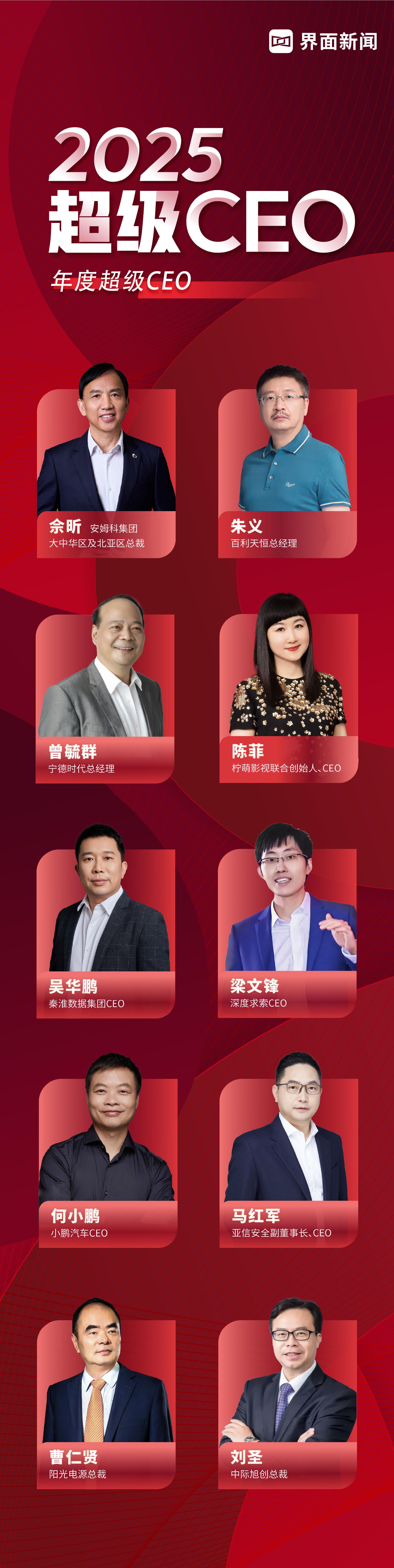
界面新闻揭晓2025年度超级CEO榜单:以远见破局,以实干领航
Xin Lang Cai Jing· 2025-12-16 08:08
Group 1: Economic Overview - In 2024, China's GDP exceeded 134.9 trillion yuan, growing by 5.0% year-on-year, ranking among the top major economies globally [2] - The economic structure continues to optimize, with the primary, secondary, and tertiary industries accounting for 6.8%, 36.5%, and 56.7% of GDP, respectively [2] - Consumption, investment, and net exports contributed 2.2, 1.3, and 1.5 percentage points to GDP growth, respectively [2] Group 2: Technological Advancements - China has made significant breakthroughs in cutting-edge technologies such as 6G communication, AI large models, and quantum computing [3] - The first international 6G field test network was established in July 2024, demonstrating potential 6G transmission capabilities [3] - China ranks second globally in the number of open-source participants, with rapid growth in the sector [3] Group 3: New Energy and Carbon Neutrality - The new energy sector has become a growth engine, with China accounting for over 60% of global new wind and solar installations in 2024 [4] - The installed capacity of new energy storage exceeded 70 million kilowatts, with leading companies like CATL and BYD holding a 65.5% market share in the global power battery market [4] - Solid-state battery technology has achieved mass production breakthroughs, with energy density exceeding 400 Wh/kg [4] Group 4: Healthcare Sector - The healthcare market is expanding due to aging population and rising health consumption demands, with government spending in the sector reaching 2.03 trillion yuan in 2024 [5] - AI-assisted diagnosis, gene editing, and telemedicine technologies are accelerating breakthroughs and applications in the industry [5] - Leading companies like WuXi AppTec and Mindray are actively pursuing globalization strategies to capture high-end medical equipment and biopharmaceutical markets [5] Group 5: Financial and Consumer Trends - The total assets of China's financial institutions reached 495.59 trillion yuan in 2024, growing by 7.5% year-on-year [6] - The banking sector's total assets were 444.57 trillion yuan, with a growth rate of 6.5% [6] - The rise of new retail and domestic brands is reshaping the consumer market, with companies like Luckin Coffee and Pop Mart leveraging data-driven strategies [6] Group 6: Emerging and Future Industries - Emerging industries such as new energy, aerospace, and quantum technology are driving economic growth and international competitiveness [7] - The low-altitude economy is projected to reach a market size of 1.5 trillion yuan by 2025 and 3.5 trillion yuan by 2035 [7] - The embodied intelligence market is expected to exceed 480 billion yuan in 2024, with potential to surpass one trillion yuan by 2031 [7] Group 7: Super CEO Recognition - The "Super CEO" list highlights leaders across various sectors, including healthcare, new energy, entertainment, and technology, showcasing their exceptional leadership and performance [8] - These CEOs have demonstrated resilience and strategic vision in navigating industry challenges and driving company growth [8]



21专访丨复星国际陈启宇:源头创新,产品之外商业化能力亦是核心
2 1 Shi Ji Jing Ji Bao Dao· 2025-11-11 23:11
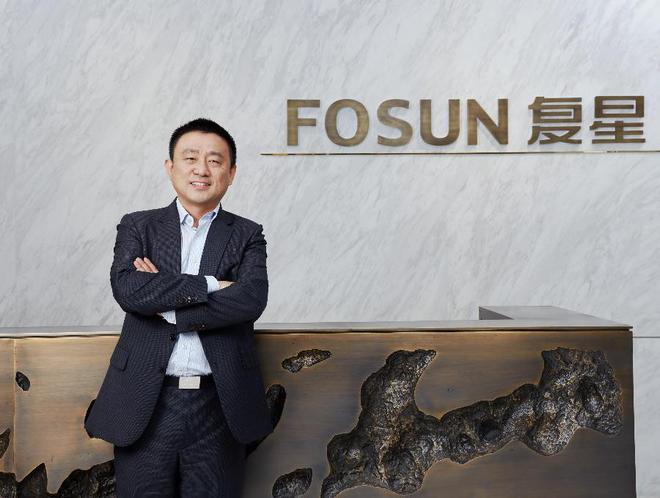
Core Insights - The Chinese pharmaceutical innovation sector has seen a significant increase in transaction amounts, surpassing $100 billion in overseas deals, indicating a robust growth in the industry [1][2] - The National Medical Products Administration (NMPA) approved 43 new drugs in the first half of 2025, with domestic drugs accounting for 40, showcasing an acceleration in the pace of innovation [1] - Shanghai has emerged as a key hub for biopharmaceuticals, with 9 innovative drugs approved for overseas markets in 2023, reflecting a shift from single breakthroughs to batch outputs [2][3] Industry Trends - The total number of global pharmaceutical transactions reached 682, with a total value of $191 billion in the first three quarters of 2025, indicating a strong upward trend [1] - Chinese pharmaceutical companies are transitioning from being participants in the global market to becoming significant contributors to global health [3][4] - The focus on "source innovation" is critical for Chinese companies to differentiate themselves and avoid homogenization in drug development [2][4] Challenges and Opportunities - Despite the growth, the Chinese pharmaceutical industry faces challenges such as weak foundational research and a predominance of "follow-up" innovation, leading to issues with target homogenization [2][6] - There is a pressing need for differentiation in innovation to create value, as highlighted by industry leaders [2][5] - The industry must address the affordability of innovations for the Chinese population, necessitating a shift in cost strategies compared to Western markets [5][6] Strategic Directions - Companies are encouraged to adopt a rational approach to innovation, focusing on unmet clinical needs and leveraging emerging technologies to address these demands [7][8] - The ability to sell drugs globally is becoming a key competitive advantage, with companies needing to build strong commercial capabilities alongside their R&D efforts [9][10] - Collaborative approaches and localized strategies are essential for navigating international markets effectively [10][11] Future Outlook - The potential for "source innovation" to drive the next wave of growth in the Chinese pharmaceutical industry is recognized, contingent on overcoming existing barriers [11]

专访复星国际陈启宇:源头创新,产品之外商业化能力亦是核心
2 1 Shi Ji Jing Ji Bao Dao· 2025-11-10 09:36
Core Insights - China's pharmaceutical innovation is experiencing a significant increase in transaction volume, with overseas transactions exceeding $100 billion, indicating a robust growth in the sector [1][5] - The National Medical Products Administration (NMPA) has approved 43 new drugs in the first half of 2025, with a notable acceleration in the pace of innovation drug approvals [1][4] - Despite the growth in quantity, the quality of innovation remains a concern, with a predominance of "follow-up" innovation and issues of target homogeneity [2][6] Industry Trends - The global pharmaceutical transaction volume reached $191 billion in the first three quarters of 2025, with China contributing $937 billion, showcasing its competitive position in the global market [1][5] - Shanghai has emerged as a key hub for biopharmaceuticals, with 9 innovative drugs approved for overseas markets in 2023, leading the nation in this regard [4][5] - The shift from "single product authorization" to a focus on systemic capabilities and deep collaboration reflects a changing strategy among Chinese pharmaceutical companies [13] Challenges and Opportunities - The industry faces challenges such as weak foundational research, a trust crisis in collaborations, and funding difficulties, which hinder the development of truly innovative products [8][9] - There is a pressing need for differentiation in innovation, with a focus on "source innovation" to avoid the pitfalls of homogeneous competition [2][6][12] - Companies are encouraged to adopt a cost-effective approach to innovation, particularly in the context of China's large population and healthcare affordability [7][10] Strategic Directions - Companies must recognize unmet clinical needs and maintain a rational approach to innovation, avoiding overcrowding in competitive areas [9][10] - The ability to sell innovative drugs globally is becoming a critical measure of a company's success, surpassing mere research capabilities [12][14] - Building strong global commercialization capabilities through partnerships and localized teams is essential for navigating international markets [13][14]
帮主郑重:十五五规划藏玄机!未来5年财富地图看这几条主线
Sou Hu Cai Jing· 2025-10-09 17:51
Group 1 - The 14th Five-Year Plan (2026-2030) is crucial for achieving the modernization goals set for 2035, focusing on tackling key challenges in various sectors [3] - The main theme is "new quality productivity," emphasizing technological innovation as a core driver, with AI expected to see significant growth by 2026, alongside opportunities in renewable energy and biomedicine [3] - The green transition is highlighted as a continuing opportunity, with the plan aiming for comprehensive economic greening, leading to maturity in clean energy and storage sectors, and new opportunities in traditional industries like construction materials [3] Group 2 - Consumer stability is emphasized, with traditional sectors like food and retail expected to rebound due to policy support, while new trends in service consumption, such as medical aesthetics and smart healthcare, are anticipated to grow with rising incomes [4] - The importance of aligning investment with policy implementation and industry cycles is stressed, particularly in areas like food and energy security, which may benefit the non-ferrous metals sector [4] - The overall investment strategy should follow clear policy directions: new quality productivity as the leader, green transition as the foundation, and consumer recovery as the basic support [4]

生物医学新技术迎新规:法治化护航产业高质量发展
2 1 Shi Ji Jing Ji Bao Dao· 2025-09-15 08:28
Core Viewpoint - The introduction of the "Regulations on the Management of Clinical Research and Clinical Application of Biomedical New Technologies (Draft)" marks a new era of legal regulation for China's biomedical industry, providing systematic institutional support for high-quality development [1][2]. Summary by Relevant Sections Regulatory Framework - The draft regulations aim to standardize clinical research and application of biomedical technologies, addressing challenges such as privacy breaches, biological safety risks, and ethical controversies [1][2]. - The regulations categorize biomedical new technologies as those that have completed preclinical research and are intended for disease diagnosis, prevention, treatment, and health improvement [2]. Approval Process - The draft specifies a two-tier management system based on risk levels, with provincial authorities required to complete reviews for medium and low-risk technologies within 60 days, significantly enhancing approval efficiency [3]. - High-risk projects will undergo national-level approval, ensuring a clear path for cutting-edge technologies like cell and gene therapy [3][4]. Innovation and Collaboration - The regulations are expected to foster cross-disciplinary collaboration, promoting integration between medicine and engineering, and enhancing the pace of technological innovation and results transfer [4]. - By aligning with international standards, the regulatory framework aims to improve the global competitiveness of China's biomedical industry [4]. Ethical and Safety Considerations - The draft emphasizes the importance of ethical reviews and requires that clinical applications pass academic and ethical assessments, ensuring safety and compliance with informed consent protocols [4][5]. - Transparency in the approval process is mandated, enhancing public trust and regulatory credibility [4]. Implementation Challenges - Potential challenges include uneven regulatory resources across regions, difficulties in establishing unified standards, and the need for clear qualifications for clinical research personnel [5][6]. - To ensure effective implementation, the industry must focus on internal quality control, external oversight, and robust technical support systems [6][7].
第33届广州博览会:服务全国统一大市场建设 书写高质量发展新篇章
Ren Min Ri Bao· 2025-08-21 22:03
Core Viewpoint - The 33rd Guangzhou Expo, scheduled from August 22 to 24, aims to empower high-quality economic and social development in Guangzhou with the theme "Dual Empowerment Promotes Circulation, New Quality Innovations Create the Future" [1] Group 1: Historical Development - The Guangzhou Expo has evolved over 30 years, transitioning through three stages: - Stage 1 (1993-2002): Established a foundation for comprehensive exhibitions focusing on Guangzhou's urban development and trade relations [2] - Stage 2 (2003-2013): Innovated the "comprehensive exhibition + professional exhibition" model, leading to the incubation of specialized exhibitions [2] - Stage 3 (2014-2023): Achieved significant success with specialized exhibitions, including the Guangzhou International Health Industry Expo, certified by the International Exhibition Alliance [2] - From 2024, the Expo will enter a market-oriented reform phase, focusing on strategic emerging industries and aiming for zero financial input from the municipal budget by 2025 [2] Group 2: Highlights of the Current Expo - The current Expo features five major highlights, including: - Expansion and enhancement of exhibition areas, covering diverse fields with a total area of approximately 180,000 square meters, a year-on-year increase of over 50% [3] - The introduction of international collaboration, with over 300 guests from more than 30 countries and organizations participating, showcasing over 2,000 inventions [3] - A focus on domestic demand and regional collaboration, promoting local specialties and tourism resources through dedicated exhibition areas [4] - Presentation of cutting-edge technologies and innovative products, including a special area for robotics and advanced biopharmaceutical technologies [4] Group 3: Economic Collaboration and Development - The Expo aims to build a "dual empowerment" platform to enhance cooperation and economic collaboration among various regions [5] - A strategic framework agreement was signed to strengthen domestic circulation and promote new quality productivity through technology sharing and market connectivity [5] - The Expo serves as a vital platform for activating innovation and supporting the construction of a modern industrial system in Guangzhou, contributing to the coordinated development of the Guangdong-Hong Kong-Macao Greater Bay Area [6]
大国科技竞争的本质矛盾是什么?
Hu Xiu· 2025-07-10 00:36
Group 1 - Richard R. Nelson's contributions to the National Innovation System (NIS) theory have reshaped the understanding of technological competitiveness globally [1][9] - The NIS theory emphasizes the interaction between various entities such as enterprises, universities, government agencies, and financial institutions in forming a network for technological accumulation and capability enhancement [7][8] - Different countries exhibit significant variations in their innovation systems, with the U.S. characterized by market-driven and enterprise-led innovation, while Japan and Germany rely more on collaboration between enterprises and government [8][9] Group 2 - Nelson's NIS theory has faced criticism for being a form of techno-nationalism, attributing different technological performances to specific national institutions and policies [10][12] - The rise of globalization has blurred the boundaries of national innovation systems, leading to a call for a reconstruction of a global multi-level innovation system theory [12][14] - The interplay between techno-nationalism and techno-globalism has become a central topic in global technology governance and policy debates [14][20] Group 3 - Nelson's perspective on technology nationalism is nuanced, recognizing the need for emerging industrialized nations to adopt such policies to enhance their technological capabilities [20][23] - The concept of "strategic public goods" in technology suggests that certain critical technologies may require government intervention for development and protection [26][30] - The current global landscape shows a resurgence of technology nationalism, which could lead to a "technological cold war" if not managed properly [32][34] Group 4 - The NIS theory highlights the importance of a robust national innovation system as a foundation for sustainable innovation in the face of global competition [27][29] - The diversity of innovation systems across countries indicates that there is no one-size-fits-all model for innovation, emphasizing the need for effective coordination of innovation elements [29][30] - Promoting inclusive innovation on a global scale is essential to balance national security concerns with technological openness [31][34]