
移动智能空间

Search documents
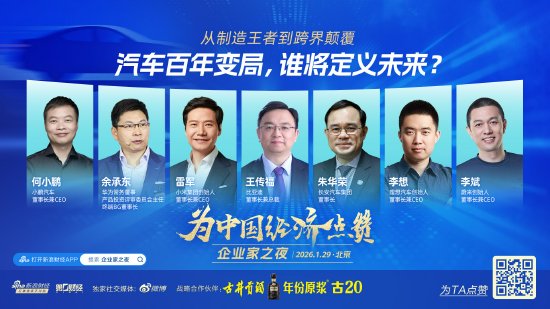
汽车行业百年变局,谁将定义未来?
Xin Lang Cai Jing· 2025-12-24 07:39
Core Viewpoint - The automotive industry is undergoing unprecedented changes, transitioning from traditional manufacturing competition to disruptive innovation through cross-industry integration, presenting both opportunities and challenges for the future. Group 1: Company Highlights - Xiaopeng Motors, led by He Xiaopeng, is focusing on three growth trajectories: integration of AI and automotive technology, globalization, and deep integration of humanoid robots with the automotive industry. In Q3 2025, Xiaopeng's delivery volume reached 116,007 units, a year-on-year increase of 149.3% and a quarter-on-quarter increase of 12.4%, marking a historical high for quarterly deliveries [3][7]. - Huawei, under the leadership of Yu Chengdong, has empowered the automotive sector with its strong R&D capabilities, achieving over 1 million deliveries of its HarmonyOS-powered vehicles in just 43 months. In November, the total deliveries reached 81,864 units, a year-on-year increase of 89.61%, securing the top position among new forces in vehicle deliveries [3][7]. - Xiaomi, led by Lei Jun, has entered the automotive market with an internet-driven approach, achieving over 500,000 cumulative deliveries since April 3, 2024. In November, deliveries exceeded 40,000 units, surpassing the annual target of 350,000 units for 2025 [3][7]. - BYD, under Wang Chuanfu, has established itself as a leader in the global electric vehicle market, leading Tesla in global pure electric sales for four consecutive quarters from Q4 2024 to Q3 2025 [3][8]. - Changan Automobile, led by Zhu Huarong, reported total sales of 2.0661 million units in the first three quarters of 2025, a year-on-year increase of 8.46%, with overseas sales reaching 465,300 units [4][8]. - Li Auto, led by Li Xiang, has delivered a total of 1,431,021 vehicles as of September 30, 2025, with 542 retail centers covering 157 cities and 3,420 charging stations in operation [4][8]. - NIO, under Li Bin, has built a high-end smart electric vehicle brand with a battery swap network covering 800 cities. As of September 20, 2025, NIO has established over 8,200 charging and battery swap stations, with users completing over 86 million battery swaps [5][8]. Group 2: Industry Trends - The automotive industry is shifting from merely providing transportation to creating "mobile intelligent spaces," emphasizing the importance of chips, algorithms, ecosystems, and user experience in the competitive landscape [5][8].

自驾游因何火热?
Zheng Quan Ri Bao· 2025-12-10 16:10
Group 1 - The rapid development of self-driving tourism is attributed to the improvement of transportation networks, evolving consumer perceptions, and the restructuring of the industrial ecosystem [1][2] - By the end of 2024, China's total road mileage is expected to reach 5.49 million kilometers, with 33 national expressway main lines essentially connected and expressway mileage reaching 191,000 kilometers, covering 99% of cities with populations over 200,000 [1] - The shift in consumer perception from "sightseeing" to "experience" has made self-driving a vehicle for deeper exploration, leading to the emergence of new consumption scenarios and business models, such as the "road economy" [1] Group 2 - The automotive industry's technological transformation has significantly enhanced the self-driving experience, with the rapid adoption of new energy vehicles reducing travel costs [2] - By the end of 2024, the coverage rate of charging piles in national expressway service areas is expected to reach 98.4%, alleviating "range anxiety" and making "green driving" a reality, with the proportion of new energy vehicles on highways increasing to around 20% [2] - Digital platforms are becoming the "hub" for ecological collaboration, integrating information on traffic conditions, charging, parking, and hotel bookings, while companies collaborate to offer comprehensive services including vehicle rental and route customization [2]
这个时间窗口,会决定小米汽车的非凡或平凡
晚点LatePost· 2025-01-15 14:20
以下文章来源于晚点Auto ,作者特约作者 晚点Auto . 从制造到创造,从不可能到可能。《晚点LatePost》旗下汽车品牌。 尽快收购产能可能是小米汽车规模化更务实的选择。 特约作者丨昭暄 2024 年至少有两件事物的发展和结果深刻影响到了整个汽车行业固有的产品认知和思维定势,那就是问界 M9 的月销量连续 9 个月稳定在 1.5 万辆以上的规模,以及小米 SU7 在 9 个月时间里累计销量达 13.6 万辆 的超预期表现。 前者以一己之力帮助中国自主品牌汽车首次改写了 50 万元以上豪华车市的竞争格局,后者以势如破竹的 发展势头刷新了新晋汽车品牌从 0 到 1 的成长速度。 但这两件事物都让一些传统汽车人感到困惑和不解。 这篇文章将以此为切入点,来试着探讨关于上述两件事物所映射出的汽车消费新潮流的变化内涵。 并以此来聚焦小米汽车的发展态势,通过展现其核心性价比的能力由来,以及其 SU7 车型的产品策略和逻 辑考量,以此大致预判小米 YU7 车型将来可能会面对的市场前景和竞争态势,进而从财务视角来看小米 汽车未来的大致盈利拐点和可能的 IPO 进程,最后再从产能的角度来试着展现小米汽车未来可能的扩产动 ...
