粤港澳大湾区金融融合

Search documents
广东金融总量继续领跑全国
第一财经· 2026-01-16 04:53
Core Viewpoint - The article highlights the significant role of Guangdong's financial sector in supporting the province's economy, showcasing strong growth in loans and deposits, and emphasizing the importance of financial resources in driving economic modernization and stability [3][5]. Financial Support for the Real Economy - Guangdong's financial total has consistently grown during the "14th Five-Year Plan" period, providing robust support for the real economy [5]. - As of the end of November 2025, Guangdong's social financing scale reached 42.3 trillion yuan, with a year-on-year growth of 6.9%, surpassing the nominal economic growth rate [6]. - The province's deposits and loans also showed significant increases, with deposits growing by 5.7% and loans by 5.4% year-on-year [6]. Loan and Deposit Growth - By the end of 2025, household deposits increased by 1.29 trillion yuan, while non-financial enterprise deposits rose by 356.9 billion yuan [6]. - The growth in demand deposits indicates an increase in economic activity, with a 9.7% year-on-year growth in demand deposits [7]. - Corporate loans saw a substantial increase, particularly in medium to long-term loans, reflecting accelerated project investments [7]. Financial Structure Optimization - The financial structure in Guangdong has been optimized to better align with high-quality economic development, focusing on strategic areas and weak links [9]. - Loans in key sectors such as technology, green finance, and digital economy have outpaced overall loan growth, with technology loans growing by 10.7% and green loans by 24.2% [10]. Manufacturing Sector Support - The manufacturing sector in Guangdong has seen significant financial backing, with loans reaching 3.6 trillion yuan, a year-on-year increase of 11.7% [11]. - The financial system plays a crucial role in supporting the growth of specialized and innovative enterprises within the manufacturing sector [11]. Innovation and Financial Support - Guangdong has established various financial products to support innovation, including special loan programs aimed at agriculture and small businesses, which have mobilized significant additional credit [12]. - The average interest rate for new loans in Guangdong has decreased to 3.32%, reducing the financial burden on enterprises [12]. Cross-Border Financial Integration - The financial integration within the Guangdong-Hong Kong-Macao Greater Bay Area has progressed, with new policies facilitating cross-border financial services [14][15]. - Initiatives such as the "Cross-Border Wealth Management Connect" have enabled significant capital flows, with over 17,000 investors participating and transactions amounting to 131.3 billion yuan [16]. Future Outlook - The People's Bank of China Guangdong Branch plans to continue implementing a moderately loose monetary policy to support economic growth and optimize supply [17]. - There will be a focus on directing financial resources towards key areas such as technological innovation, advanced manufacturing, and green development [17].


存款余额38.7万亿、贷款余额29.9万亿:广东金融总量继续领跑全国
Di Yi Cai Jing· 2026-01-16 04:42
Core Insights - Guangdong's financial development plays a crucial role in supporting the economy, with significant growth in loans and deposits, indicating a robust financial ecosystem [1][2][3] Financial Performance - As of the end of 2025, Guangdong's loan balance reached 29.9 trillion yuan, an increase of 10.3 trillion yuan, while deposit balance hit 38.7 trillion yuan, up by 12.0 trillion yuan, maintaining the highest financial volume in the country [1] - The social financing scale in Guangdong accumulated to 42.3 trillion yuan by November 2025, with a year-on-year growth of 6.9%, surpassing the nominal economic growth rate [2] - The average annual growth rates for deposits and loans were 7.7% and 8.9%, respectively, both exceeding the nominal economic growth during the same period [1] Sectoral Analysis - By the end of 2025, household deposits increased by 1.29 trillion yuan, while non-financial enterprise deposits rose by 3.57 trillion yuan, indicating a positive trend across various sectors [3] - The growth in loans to enterprises was significant, with a total increase of 1.34 trillion yuan, primarily driven by medium to long-term loans [3] Investment and Policy Impact - The acceleration of project investments is evident, with stable growth policies playing a vital role in this development, expected to enhance capital stock and investment expenditures in 2026 [4] - Financial resources in Guangdong are increasingly focused on major strategies and key sectors, aligning with high-quality economic development [5][6] Innovation and Support - Guangdong's financial sector has established a safety net for innovation, with various financial products aimed at supporting agriculture, small businesses, and technological advancements [7] - The average interest rate for newly issued loans in Guangdong was 3.32%, reflecting a decrease of 71 basis points from the beginning of the year, which helps reduce financing burdens for enterprises [7] Cross-Border Financial Integration - The financial integration within the Guangdong-Hong Kong-Macao Greater Bay Area has progressed from product interconnectivity to regulatory alignment, enhancing cross-border financial services [8][10] - Initiatives such as the "Cross-Border Wealth Management Connect" have facilitated significant capital flows, with 177,900 individual investors participating and a total of 131.3 billion yuan in fund transfers by the end of December 2025 [10] Future Outlook - The People's Bank of China Guangdong Branch plans to continue implementing a moderately loose monetary policy, focusing on directing financial resources towards innovation, advanced manufacturing, and green development in the upcoming "15th Five-Year Plan" [11]
9周年,深港通累计成交131万亿元
Zheng Quan Shi Bao· 2025-12-05 00:02
Core Insights - The Shenzhen-Hong Kong Stock Connect has been operational for 9 years, contributing significantly to the development of an open and inclusive capital market ecosystem, enhancing collaboration in the Guangdong-Hong Kong-Macao Greater Bay Area, and supporting the growth of new productive forces [1] Group 1: Mechanism Optimization and Trading Growth - The Shenzhen-Hong Kong Stock Connect has continuously improved its mechanism design, enhancing cross-border trading convenience and market attractiveness [1] - As of December 4, 2023, the total trading volume of the Shenzhen-Hong Kong Stock Connect reached 131 trillion yuan, with the Shenzhen Stock Connect accounting for 103 trillion yuan and the Hong Kong Stock Connect for 28 trillion yuan [1] - Daily average trading volume since 2025 has been 1.111 billion yuan for the Shenzhen Stock Connect, reflecting a 73% annual growth, and 46.7 billion HKD for the Hong Kong Stock Connect, showing a 94% annual growth [1] Group 2: Support for New Economic Development - The Shenzhen market is characterized by a strong focus on technology innovation, with over 70% of companies being high-tech enterprises and nearly 50% in strategic emerging industries [2] - The Shenzhen-Hong Kong Stock Connect has facilitated the accumulation of cross-border funds in new economic sectors, with net purchases of high-tech and strategic emerging industry stocks reaching 630.7 billion yuan and 478.8 billion yuan, respectively [2] - Since the reform and pilot registration system of the ChiNext board, the proportion of ChiNext stocks in the trading volume of the Shenzhen Stock Connect has increased to 38%, indicating a clear trend of international funds flowing into innovative sectors [2] Group 3: Financial Integration in the Greater Bay Area - The Shenzhen Stock Exchange is leveraging its geographical advantage to deepen cooperation and innovate collaboration models, aiming to accelerate the development of the Guangdong-Hong Kong-Macao Greater Bay Area into a world-class bay area [3] - Initiatives such as the launch of the Shenzhen-Hong Kong Stock Connect Advanced Manufacturing Index and the Green Low-Carbon Index are aimed at optimizing resource allocation in the capital market [3] - The Shenzhen Stock Exchange, in collaboration with the Hong Kong Stock Exchange and other partners, is actively promoting the development of financial technology in the Greater Bay Area, contributing to the enhancement of Hong Kong's status as an international financial center [3]
9周年!深港通累计成交131万亿元
Zheng Quan Shi Bao· 2025-12-05 00:01
Core Insights - The Shenzhen-Hong Kong Stock Connect has been operational for 9 years, contributing significantly to the development of an open and inclusive capital market ecosystem, enhancing collaboration in the Guangdong-Hong Kong-Macao Greater Bay Area, and supporting the growth of new productive forces [1] Group 1: Mechanism Optimization and Trading Growth - The Shenzhen-Hong Kong Stock Connect has continuously improved its mechanism design, enhancing cross-border trading convenience and market attractiveness [1] - As of December 4, 2023, the total transaction amount of the Shenzhen-Hong Kong Stock Connect reached 131 trillion yuan, with the Shenzhen Stock Connect accounting for 103 trillion yuan and the Hong Kong Stock Connect for 28 trillion yuan [1] - Daily average transaction amounts since 2025 have shown significant growth, with Shenzhen Stock Connect averaging 111.1 billion yuan (73% annual growth) and Hong Kong Stock Connect averaging 46.7 billion HKD (94% annual growth) [1] Group 2: Support for New Economic Development - The Shenzhen market is characterized by a strong focus on technology innovation, with over 70% of companies being high-tech enterprises and nearly 50% being strategic emerging industries [2] - The Shenzhen-Hong Kong Stock Connect has facilitated the accumulation of cross-border funds in new economic sectors, with net purchases of high-tech and strategic emerging industry stocks reaching 630.7 billion yuan and 478.8 billion yuan, respectively [2] - Since the reform and pilot registration system of the ChiNext board, the proportion of ChiNext stocks in the Shenzhen Stock Connect trading volume has increased to 38%, indicating a clear trend of international funds flowing into innovative sectors [2] Group 3: Financial Integration in the Greater Bay Area - The Shenzhen Stock Exchange is leveraging its geographical advantage to deepen cooperation and innovate collaboration models, aiming to enhance the connectivity of capital markets in the Greater Bay Area [3] - Initiatives such as the launch of the Shenzhen-Hong Kong Stock Connect Advanced Manufacturing Index and the Green Low-Carbon Index are aimed at optimizing resource allocation in the capital market [3] - The Shenzhen Stock Exchange, in collaboration with the Hong Kong Stock Exchange and other partners, is actively promoting the development of financial technology in the Greater Bay Area, contributing to the establishment of a global financial technology center [3]

交行新增一位高管,唐朔履新公司业务总监
2 1 Shi Ji Jing Ji Bao Dao· 2025-09-04 08:05
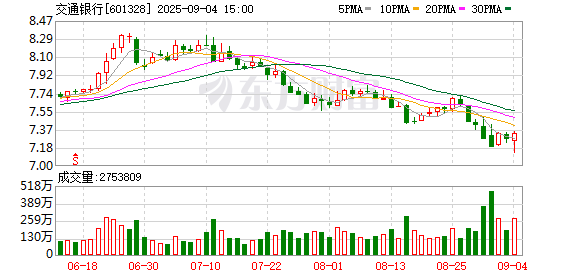
Core Viewpoint - The appointment of Tang Shuo as the new business director for corporate and institutional business at Bank of Communications fills a vacancy that has existed since December 2022, indicating a strategic move to strengthen leadership in key business areas [1][5]. Group 1: Appointment and Background - Tang Shuo, born in 1978, is the youngest among the current business directors at Bank of Communications, having a career that began within the bank itself [1]. - He has held significant positions in various branches, including Beijing, Guangdong, and Jiangxi, showcasing a diverse experience in both corporate and retail banking [1][2]. - His educational background includes a law degree from Xi'an Jiaotong University and a master's degree in engineering from Beijing Jiaotong University [1]. Group 2: Strategic Initiatives - During his tenure as the head of the Jiangxi branch, Tang Shuo emphasized the importance of aligning with the "2+6+N" industrial action plan, aiming to provide tailored financial services and a substantial credit line of 600 billion yuan over three years [2]. - In Guangdong, he focused on financial integration within the Greater Bay Area, advocating for mechanisms that enhance connectivity and collaboration among financial institutions [2][3]. - His proposed initiatives include improving financial infrastructure, enhancing regulatory efficiency, and fostering innovation while managing risks [3]. Group 3: Financial Performance - Bank of Communications reported a revenue of 133.368 billion yuan for the first half of 2025, reflecting a year-on-year growth of 0.77%, with a net profit of 46.016 billion yuan, up 1.61% from the previous year [5]. - The corporate financial business contributed significantly, with revenues of 64.594 billion yuan, accounting for 48.43% of total revenue, and net profits of 25.101 billion yuan, representing 53.51% of total profits [5]. - The bank's non-performing loan ratio stood at 1.28%, a slight decrease of 0.03 percentage points from the end of the previous year, indicating improved asset quality [5].

交行新增一位高管 唐朔履新公司业务总监
2 1 Shi Ji Jing Ji Bao Dao· 2025-09-04 08:00
Group 1 - The core point of the article is the appointment of Tang Shuo as the new business director for corporate and institutional business at Bank of Communications, filling a vacancy that has existed since December 2022 [2][6] - Tang Shuo, born in 1978, is the youngest among the current business directors at the bank, having a career that started at Bank of Communications and includes significant leadership roles in various branches [2][3] - His previous positions include serving as the president of the Jiangxi and Guangdong branches, where he focused on integrating financial services with regional economic development initiatives [3][4] Group 2 - During his tenure in Guangdong, Tang Shuo emphasized the financial integration of the Guangdong-Hong Kong-Macao Greater Bay Area, proposing mechanisms for regulatory alignment and cross-border financial services [4][5] - The bank's recent performance shows a revenue of 133.368 billion yuan, a year-on-year increase of 0.77%, and a net profit of 46.016 billion yuan, up 1.61% from the previous year, indicating a stable financial position [6] - The corporate financial business contributed 64.594 billion yuan to the bank's total revenue, accounting for 48.43%, with net profit contribution at 251.01 billion yuan, representing 53.51% of total profit, highlighting the importance of corporate finance in the current low-interest-rate environment [6]