思政课

Search documents
历史的现场 生动的课堂(解码·思政课怎么上)
Ren Min Ri Bao· 2026-01-21 22:35
Core Viewpoint - Shanxi Province is innovatively integrating red resources and traditional Chinese culture into ideological and political education, breaking classroom boundaries and enhancing the appeal and effectiveness of these courses through new media [1][2][9] Group 1: Innovative Teaching Approaches - A special ideological and political class was held at the school history museum in Taiyuan, allowing students from different grades to engage in mutual questioning and collective thinking [2] - The "walking ideological and political class" is part of Shanxi's "New Era Soul Cultivation Project" and aims to promote integrated reforms in ideological education across all educational levels [2][8] - Shanxi has developed 67 "Great Ideological and Political Class" practical teaching bases, supporting collaboration between schools and museums to enhance course quality [4] Group 2: Thematic Education - In Yangquan City, ideological education is categorized into three themes: red for patriotism, green for ecological civilization, and blue for industrial technology [6][7] - Teachers are designing courses that allow students to engage with local resources, such as tea picking, to better understand new development concepts [6] - The integration of ideological education into various subjects is being promoted, with a focus on moral education through practical experiences [7] Group 3: Experiential Learning - Students participate in immersive experiences, such as visiting historical sites related to the Anti-Japanese War, to deepen their understanding of national history and ideals [8] - Activities like hiking to memorial sites and performing revolutionary plays in the community are being organized to instill patriotism and moral values [8][9] - The provincial education department is promoting the "walking ideological and political class" initiative to enhance students' connection to their national identity and historical consciousness [8][9]
北京市出台10条支持措施 推进高校马克思主义学院高质量发展
Xin Lang Cai Jing· 2026-01-03 22:20
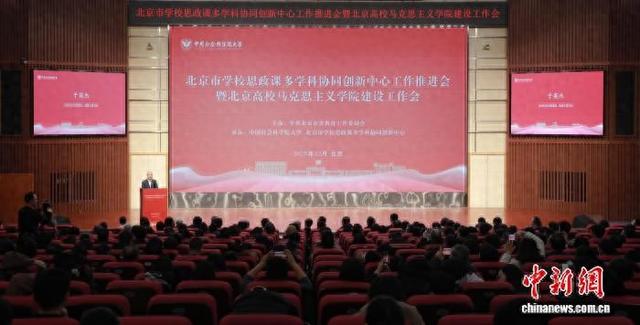
Group 1 - The Beijing Municipal Education Commission and the Municipal Propaganda Department have released measures to enhance the high-quality development of Marxist colleges in Beijing, focusing on strengthening the leadership of the Party in these institutions [1] - The new measures consist of 10 key initiatives that include 37 specific actions aimed at improving the construction and research capabilities of Marxist theory disciplines, enhancing the quality of ideological and political education, and fostering high-level talent development in Marxist theory [1] - The measures also emphasize the integration of Marxist colleges into the broader development strategy of the capital, including the construction of Marxist colleges in private, vocational, and art institutions [1] Group 2 - The Beijing School Ideological and Political Course Multidisciplinary Collaborative Innovation Center will be upgraded and is set to be established in June 2024, leveraging resources from the Chinese Academy of Social Sciences to support the development of Marxist theory disciplines and ideological education [2] - Starting in 2026, the center will initiate six actions to facilitate collaboration between experts from various disciplines and ideological course teachers, creating workshops for in-depth discussions on innovative theories of the Party [2] - The center will also select ideological course teachers for visiting studies at research institutes, promoting cross-disciplinary training and public lectures to enhance the teaching and understanding of ideological education [2][3] Group 3 - The center will focus on addressing significant theoretical and practical issues in ideological education, establishing interdisciplinary teams to produce teaching and academic outcomes that effectively address students' ideological concerns [3] - An annual development report will be created to provide strategic planning and insights for the construction of ideological courses in the capital [3]
北京出台支持高校马克思主义学院高质量发展“十条措施”
Xin Lang Cai Jing· 2025-12-27 05:19
Core Viewpoint - The meeting aims to enhance the quality development of Marxist education in Beijing's higher education institutions by leveraging the resources of the Chinese Academy of Social Sciences [1][3]. Group 1: Establishment of the Multidisciplinary Center - The "Multidisciplinary Center for Ideological and Political Education in Beijing Schools" will be established in June 2024, relying on the Chinese Academy of Social Sciences [3]. - The center will utilize expertise in political science, economics, and law to support the construction of Marxist theory disciplines and reform of ideological education [3]. Group 2: Key Actions and Initiatives - The center will implement six major actions aimed at enhancing the quality of Marxist education, including multi-disciplinary visiting programs for teachers and public courses on "Chinese Governance" [3]. - Specific projects include the "Multi-disciplinary Collaborative Innovation Research Project" and the promotion of high-quality ideological courses [3]. Group 3: Measures for Development - The measures jointly issued by the Beijing Municipal Education Commission and the Propaganda Department include 10 measures and 37 specific actions to strengthen the leadership of Marxist education [4]. - These measures focus on improving the research capabilities of Marxist theory, enhancing the quality of teaching, and integrating Marxist education into the broader development of the capital [4].

夯基固本练内功 提高思政课的针对性和吸引力
Si Chuan Ri Bao· 2025-12-21 21:55
Core Viewpoint - The significance of ideological and political education (思政课) is being re-evaluated in the context of rapid technological advancements and the evolving landscape of knowledge production and information dissemination, necessitating a philosophical exploration of its foundational relevance in contemporary society [1][2]. Group 1: The Role of Ideological and Political Education - Ideological and political education serves as a dynamic theoretical framework that integrates Marxist principles into individual cognition, helping to overcome the challenges posed by fragmented knowledge and emotional expressions in the digital age [2][3]. - The purpose of ideological and political education is not merely to achieve simple agreement on content but to guide students in understanding the broader trends of world development and the historical necessity of socialism with Chinese characteristics [2][3]. - This education is essential for fostering a scientific worldview and moral values, ensuring that individuals can navigate the complexities of modern society while maintaining a cohesive cognitive framework [2][3]. Group 2: Addressing Social Challenges - Ideological and political education acts as a primary channel for promoting socialist ideology, effectively combating erroneous thoughts and fostering social stability and consensus [3][4]. - It provides individuals with a theoretical foundation to understand their responsibilities as members of the nation, linking personal happiness with societal development [4][5]. - The education also plays a crucial role in evaluating public events, establishing a value framework for understanding complex social issues [5][6]. Group 3: Practical Application and Cultural Identity - The practical nature of ideological and political education emphasizes the importance of applying theoretical knowledge to real-world situations, encouraging critical thinking and innovation among individuals [6][7]. - The integration of cultural identity into ideological and political education is vital for nurturing cultural confidence and ensuring that educators can effectively convey these values to students [8][9]. - Strengthening the cultural subjectivity of educators is essential for fostering a sense of cultural identity and self-confidence among students, which is crucial for the overall mission of ideological and political education [9][10]. Group 4: Synchronizing with Party Innovation Theory - The construction of ideological and political education must align with the innovative theories of the Party, ensuring that the latest theoretical advancements are incorporated into educational content [12][13]. - This synchronization involves enhancing theoretical learning, academic research, and curriculum development to reflect the latest Party innovations, thereby improving the educational impact [13][14]. - Innovative teaching methods, including digital and immersive approaches, are necessary to effectively convey the practical significance of Party theories to students [14][15].
基层来了一群“政务实习生”
Zhong Guo Qing Nian Bao· 2025-09-21 02:43
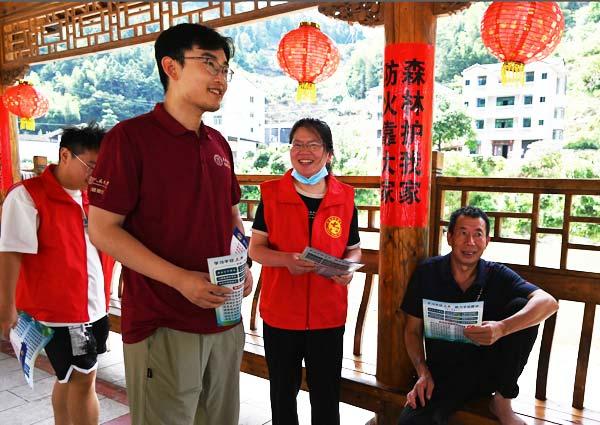
Group 1 - The "Governance and Administration" internship program by Renmin University aims to cultivate talents with political integrity and public service aspirations, allowing students to engage in practical training at grassroots government and enterprises for at least six weeks [1][17] - In 2023, a significant number of students participated in government internships across various provinces, with Dalian having 1,756 interns and Ningbo reporting a competitive ratio of 44:1 for popular positions [2][17] - The program emphasizes the importance of understanding grassroots governance and the practical application of theoretical knowledge in real-world settings [1][10] Group 2 - Students like Li Peizhe and Yao Yao have shared their experiences of working in different communities, highlighting the unique challenges and learning opportunities they encountered [5][10] - The internships serve as a platform for students to gain insights into local governance, community engagement, and the socio-economic dynamics of different regions [6][12] - The program has a structured approach, including training sessions on China's administrative system and governance modernization, followed by practical assignments in various localities [17][18] Group 3 - The initiative has been recognized as a valuable channel for local governments to attract talent and enhance their workforce by collaborating with universities [15][17] - Participants have reported that the experience has deepened their understanding of public service and the impact of policies on community development [10][12] - The program encourages students to reflect on their career aspirations and the suitability of public service roles, allowing them to make informed decisions about their future [10][19]
讲好“大思政课”,让伟大抗战精神滋养时代新人
Huan Qiu Wang· 2025-09-05 07:24
Core Viewpoint - The integration of the great spirit of the Anti-Japanese War into ideological and political education aims to cultivate a strong sense of national identity and responsibility among the youth, ensuring they are equipped to contribute to the nation's future [1][2][3] Group 1: Historical Context - The year marks the 80th anniversary of the victory in the Anti-Japanese War and the World Anti-Fascist War, emphasizing the importance of remembering this history [1] - The Anti-Japanese War is portrayed as a significant period where the Chinese people demonstrated resilience and unity against foreign aggression, creating a rich narrative of patriotism [2] Group 2: Educational Approach - The educational initiative includes immersive teaching methods such as VR/AR technology and visits to historical sites to engage students in learning about the Anti-Japanese War [1] - The curriculum will feature stories of anti-Japanese heroes to instill a sense of patriotism and national pride among students [2] Group 3: Goals for Youth Development - The program aims to strengthen the youth's faith in socialism with Chinese characteristics and cultivate a sense of responsibility to contribute to national rejuvenation [3] - It encourages students to appreciate the current era of peace and prosperity while recognizing the sacrifices made during the war, fostering a spirit of hard work and dedication [3]
好评中国|讲好“大思政课”,让伟大抗战精神滋养时代新人
Huan Qiu Wang· 2025-09-05 02:37
Core Viewpoint - The articles emphasize the importance of integrating the spirit of the Anti-Japanese War into ideological and political education for youth, aiming to strengthen their faith, patriotism, and determination to strive for national rejuvenation [1][2][3] Group 1: Integration of Anti-Japanese War Spirit - The integration of the great Anti-Japanese War spirit into ideological education is seen as a way to guide youth in solidifying their beliefs and ideals, which are crucial for the future of the country [1] - The teaching methods include using historical narratives, immersive technologies like VR/AR, and visits to historical sites to create an engaging learning environment [1] - The articles highlight the significance of recounting heroic stories from the Anti-Japanese War to instill a sense of national pride and patriotism among the youth [2] Group 2: Cultivating Patriotism and Determination - The articles stress that the stories of Anti-Japanese heroes serve as vital materials for patriotism education, encouraging youth to appreciate the sacrifices made for the nation [2] - The spirit of the Anti-Japanese War is portrayed as a guiding force for youth to cherish the current peace and prosperity, motivating them to contribute to national development [3] - The call to action for youth includes the importance of hard work, resilience, and taking initiative to become pillars of national strength and rejuvenation [3]
走进红色场馆 聆听革命故事(解码·思政课怎么上)
Ren Min Ri Bao· 2025-06-22 22:10
Core Viewpoint - The article highlights the integration of revolutionary culture into education in Chongqing, emphasizing the importance of experiential learning through visits to historical sites related to the Red culture and the spirit of the revolution [2][4]. Group 1: Educational Initiatives - Chongqing Municipal People's Primary School has developed a series of courses titled "Revolutionary Culture in the Streets," utilizing local historical sites to enhance students' understanding of revolutionary history [2]. - The curriculum includes activities such as "Exploring Zhou's Residence" and "Visiting Guiyuan," encouraging students to engage in deep learning through storytelling and historical artifact analysis [2][4]. Group 2: Student Engagement - Students actively participate in discussions about the revolutionary spirit, expressing their commitment to share learned stories with their families [4]. - The educational approach aims to instill a sense of historical awareness and connection to the revolutionary past among students, making the Red culture more relatable and impactful [4]. Group 3: Community and Cultural Integration - The Yuzhong District has established a linkage mechanism between schools and red practice bases, promoting a collaborative educational environment focused on the "Red Spirit" [4]. - The initiative includes the formation of teams such as "Red Rock Teachers" and "Red Rock Speakers," aimed at fostering a new generation that embodies the revolutionary spirit [4].
将志愿服务教育融入思政课
Ren Min Ri Bao· 2025-06-02 21:43
Group 1 - Volunteer service is an important symbol of social civilization progress and plays a significant role in promoting local education, national unity, and economic development in western regions of China [1] - The integration of volunteer service education into ideological and political courses is emphasized, highlighting its importance in fostering students' sense of responsibility and contribution to society [1][2] - The need for a comprehensive approach to volunteer service education across different educational stages is stressed, ensuring continuity and relevance to students' growth [4] Group 2 - The importance of combining classroom education with practical experience in volunteer service is highlighted, encouraging students to understand the social significance and practical value of their contributions [3] - The narrative of youth volunteers' impactful stories should be incorporated into teaching to instill a sense of national pride and humanitarian concern among students [2] - The focus on developing a broad perspective and moral character in students through volunteer service education is essential, linking national identity with global humanitarian efforts [2]
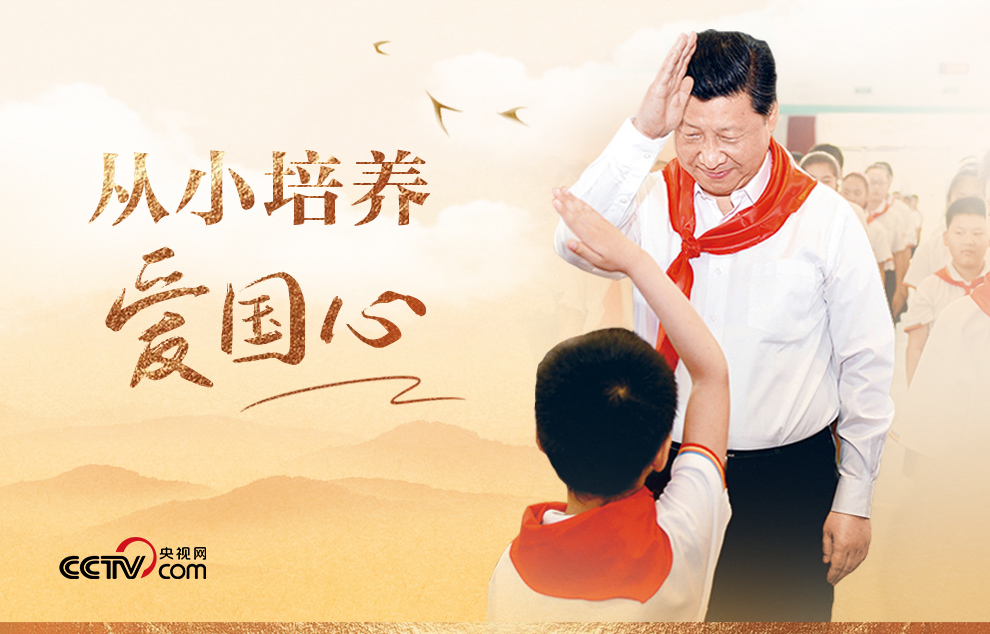
人民领袖|从小培养爱国心
Yang Shi Wang· 2025-05-27 12:22
Group 1 - The core message emphasizes the importance of education in cultivating patriotism and moral values among youth, as highlighted by General Secretary Xi Jinping's remarks during various events [2][4][6] - Xi Jinping stresses the necessity of integrating ideological and political education (思政课) into the curriculum at all educational levels to ensure the development of future socialist builders and successors [2][4][10] - The concept of "Big Ideological and Political Course" (大思政课) is introduced, which aims to reform and innovate the teaching of ideological education by incorporating real-life experiences and societal interactions [10][9] Group 2 - In 2023, the total number of students enrolled in various educational institutions across China reached 291 million [7] - The government has issued multiple documents to promote the reform of ideological and political education in schools, indicating a strong commitment to enhancing this aspect of education [10][8] - Xi Jinping's emphasis on the role of education in shaping individuals from a young age reflects a strategic focus on nurturing a generation that is committed to national rejuvenation and socialist values [11][2]