经济增长极

Search documents
一廊串联 三城驱动 多圈联动 青岛全力打造科创走廊
Jing Ji Ri Bao· 2026-01-31 22:09
Core Viewpoint - Qingdao is actively constructing a Science and Technology Innovation Corridor, aiming to become a significant innovation hub in Northern China, covering an area of approximately 190 square kilometers [1][2] Group 1: Corridor Structure and Goals - The corridor will feature a spatial layout of "one corridor linking, three cities driving, and multiple circles interacting" to stimulate regional innovation resources [1] - The "one corridor linking" aspect will create a central axis for innovation, while "three cities driving" will serve as innovation engines, focusing on Laoshan District, Licang District, and Blue Valley [1] - The initiative aims to foster integrated development and promote resource connectivity through six ecological circles, including innovation sourcing and talent cultivation [1] Group 2: Current Developments and Achievements - The Qingdao Science and Technology Innovation Corridor is currently the most concentrated area for innovation resources in Qingdao, housing 1 national laboratory, 8 national key laboratories, 8 universities, 21 provincial-level new R&D institutions, and 998 high-tech enterprises [2] - The northern Blue Valley region includes over 50 national-level research institutions and universities, such as the Laoshan Laboratory and the National Deep Sea Base [2] - By 2025, the Laoshan Laboratory aims to achieve globally influential research results in deep-sea environments and related fields, with expected outcomes including 64 national invention patents and 15 software copyrights [2]
青岛启动科创大走廊建设
Zhong Guo Jing Ji Wang· 2026-01-16 08:09
Core Viewpoint - The Qingdao Science and Technology Innovation Corridor aims to enhance original innovation and key core technology breakthroughs, integrating technological and industrial innovation while promoting the development of education, technology, and talent [1] Group 1: Corridor Overview - The Qingdao Science and Technology Innovation Corridor officially launched on November 7, 2025, and spans 53 kilometers along the coastal road, covering an area of approximately 190 square kilometers [1] - The corridor connects major districts such as Laoshan District, Licang District, and Qingdao Blue Valley, featuring a well-developed transportation network and showcasing unique natural landscapes [1] - It is home to leading enterprises like Haier, Hisense, and GoerTek, with 20 listed companies, 998 high-tech enterprises, and 25 specialized "little giant" companies [1] Group 2: Future Development Goals - By 2027, the corridor aims to achieve significant breakthroughs in innovation platforms, talent, and enterprises, with key laboratories and new research institutions accounting for over 45% of the city's resources [2] - The number of effective invention patents per ten thousand people, total innovation talent, and high-tech enterprises is expected to grow by over 15% [2] - By 2035, the corridor is projected to lead in transformative technology results, attract world-class leading enterprises, and establish itself as a national leader in technological innovation and a global marine technology innovator [2] Group 3: Organizational and Policy Support - A collaborative mechanism will be established to enhance communication and resource integration across departments, regions, and industries [3] - Policies will be implemented to support the development of the Youth Innovation City, Smart Industry City, and Marine Technology City, creating a synergistic effect [3] - The corridor will serve as a testing ground for technology transfer, leveraging educational resources and promoting innovation ecosystems [4]
从“末梢”到“枢纽” 广湛高铁即将开启粤西新格局
Zhong Guo Jing Ji Wang· 2025-12-05 03:16
Core Insights - The Guangzhan High-Speed Railway has entered the trial operation phase and is set to open by the end of the year, marking a significant transformation for the western Guangdong region from a transportation network periphery to a key hub linked to multiple national strategies [1][2] Group 1: Economic Impact - The railway, with a total investment of 99.8 billion yuan, will reduce travel time between Guangzhou and Zhanjiang from 3 hours to 1.5 hours, enhancing the economic geography of the region [1] - It is projected that the Guangzhan High-Speed Railway will drive over 200 billion yuan in fixed asset investment along its route and generate over 10 billion yuan in annual economic benefits for western Guangdong [2] - The railway will facilitate efficient supply chains, enabling local products like Yangjiang's hardware and Maoming's lychees to access the Greater Bay Area market more effectively [2] Group 2: Strategic Positioning - The Guangzhan High-Speed Railway serves as a core engine for deep integration with the Guangdong-Hong Kong-Macao Greater Bay Area and connects to the Beibu Gulf city cluster and ASEAN markets [2] - The new railway will transform western Guangdong from a marginal area of regional development to a strategic "crossroads" linking major national strategies, supported by the "golden cross" framework formed with the Guangshan High-Speed Railway [2] Group 3: Future Considerations - The transition from a "transport hub" to an "economic growth pole" will depend on factors such as the affordability of high-speed rail tickets, the convenience of last-mile connections, and the simultaneous upgrade of industrial and public services [3] - The Guangzhan High-Speed Railway represents a historical opportunity for western Guangdong to redefine itself and enhance its competitiveness, marking the end of its previous status as a peripheral area [3]
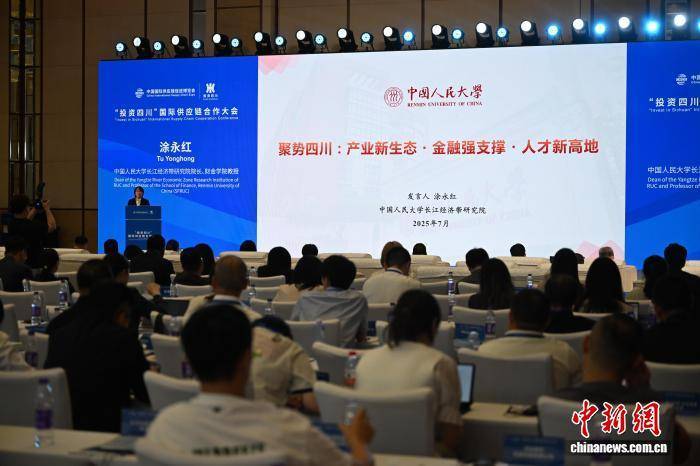
中国人民大学长江经济带研究院院长:投资四川就是投资未来
Sou Hu Cai Jing· 2025-07-18 07:50
Core Viewpoint - Sichuan is positioned as a strong investment destination due to its industrial foundation, innovation ecosystem, and supportive policies, attracting significant international capital, particularly in the context of the Chengdu-Chongqing economic region [1][3]. Investment Environment - The Chengdu-Chongqing area is emerging as China's fourth economic growth pole, providing vast opportunities and platforms for investment [3]. - Sichuan's industrial ecosystem includes both traditional and emerging industries, with strong sectors such as electronic information, equipment manufacturing, food and textiles, energy and chemicals, advanced materials, and healthcare [3]. Financial Support - Chengdu ranks fourth among major Chinese cities in financial development, providing robust support for industrial growth and acting as an "accelerator" for innovation and green development [4]. - The financial sector in Sichuan is crucial for supporting technological innovation and sustainable development, with a strong emphasis on fostering a conducive environment for startups and young entrepreneurs [4][5]. Talent and Innovation - Sichuan offers a fertile ground for young talent to unleash creativity, supported by a trillion-level emerging industry and various industrial parks and high-tech zones [5]. - The region's favorable policies regarding funding, talent recognition, and business environment contribute to a strong sense of belonging for newcomers, promoting entrepreneurial aspirations [5].