
经济大省

Search documents
于613篇推文,见动能之变
Mei Ri Jing Ji Xin Wen· 2025-12-31 13:22
Core Insights - The year 2025 is characterized as "extraordinary" by the Central Economic Work Conference, highlighting significant developments in various sectors, particularly in artificial intelligence and human investment [2][3] Group 1: Artificial Intelligence - Artificial intelligence has transitioned from being labeled as "laboratory technology" to being deeply integrated into various industries, marking the beginning of the "AI+ era" [2] - The "Hangzhou Six Dragons" emerged as a key term in the AI sector, with significant developments such as the approval of local regulations for embodied intelligent robotics in Hangzhou [4] - The AI industry is projected to grow from 486.2 billion yuan in 2026 to 1 trillion yuan by 2030, with a compound annual growth rate of 19.8% [4] Group 2: Investment in People - The government has emphasized "investment in people" for the first time in its work report, focusing on initiatives like childcare subsidies and free preschool education [7] - This shift towards prioritizing human capital is seen as a long-term strategy to enhance economic growth and address the challenges of a declining population [8] Group 3: Trade Connectivity - China's exports have shown resilience, with ASEAN, the EU, and Belt and Road countries becoming key growth engines for foreign trade [3][9] - The central government has initiated measures to enhance domestic and foreign trade integration, with a focus on expanding market diversity [10] Group 4: Economic Powerhouses - Economic powerhouses like Guangdong, Jiangsu, and Zhejiang contribute over 60% of the national GDP, playing a crucial role in stabilizing the economy [14] - The central government has reiterated the importance of these provinces in achieving national modernization goals [14] Group 5: Hainan Free Trade Port - The Hainan Free Trade Port, which officially commenced operations on December 18, 2025, represents a significant step in China's openness, encompassing various sectors including trade, finance, and talent [15][16] - The establishment of this free trade port is seen as a pioneering experiment in systemic openness, with the potential to set precedents for national policies [16]
年度报告 | 于613篇推文,见动能之变
Mei Ri Jing Ji Xin Wen· 2025-12-31 12:40
Group 1: Economic Trends and Developments - The year 2025 is characterized as "extraordinary" by the Central Economic Work Conference, highlighting significant economic transformations and developments [1] - China’s exports have shown resilience despite a complex external environment, with ASEAN, EU, and Belt and Road countries becoming key growth engines for foreign trade [2] - The "14th Five-Year Plan" is nearing completion, with new development strategies focusing on expanding domestic demand, high-level openness, and innovation-driven growth [2] Group 2: Artificial Intelligence and Innovation - The term "Hangzhou Six Dragons" has emerged as a key phrase in the artificial intelligence sector, marking a significant development in AI applications across various industries [3][4] - The introduction of local regulations for the embodied intelligent robot industry in Hangzhou signifies a growing focus on AI, with predictions indicating that the AI industry will grow from 486.2 billion yuan in 2026 to 1 trillion yuan by 2030, with a compound annual growth rate of 19.8% [4] - The Central Economic Work Conference has emphasized the establishment of international technology innovation centers in major regions, aiming to integrate innovation resources across broader areas [5] Group 3: Investment in Human Capital - The government has explicitly stated the importance of "investing in people," with initiatives such as childcare subsidies and free preschool education reflecting a shift towards prioritizing human development [6][7] - This focus on human capital is seen as a strategic adjustment to stimulate domestic demand and enhance economic growth, especially as the country transitions from a "demographic dividend" to a "talent dividend" [7] Group 4: Trade Connectivity and Foreign Trade - Trade is identified as a crucial mechanism for connecting domestic and international economic cycles, with traditional foreign trade provinces continuing to play a significant role [9] - The central government has initiated measures to enhance the integration of domestic and foreign trade, with a focus on diversifying markets and fostering new competitive advantages [10] Group 5: Infrastructure and Logistics - The revival of inland river shipping is highlighted as a strategic focus, with plans to increase the share of inland cargo transport in the overall transportation system by 2030 [11][12] - The development of inland shipping is seen as a means to lower logistics costs and enhance the efficiency of resource allocation across the country [12] Group 6: Economic Powerhouses - Economic powerhouses such as Guangdong, Jiangsu, and Zhejiang are expected to contribute significantly to national GDP, with the central government reiterating the importance of these provinces in driving economic growth [13][14] - The "15th Five-Year Plan" emphasizes the need for these provinces to lead development efforts, with specific targets set for GDP growth and modernization [14] Group 7: Hainan Free Trade Port - The establishment of the Hainan Free Trade Port is marked as a significant step in China's openness, with the port being the largest and most diverse in the world [15] - The operationalization of the free trade port is seen as a systemic experiment in opening up various sectors, including trade, finance, and talent [15][16]

不只山东、河南,河北也想争“经济大省”
Mei Ri Jing Ji Xin Wen· 2025-12-04 15:24
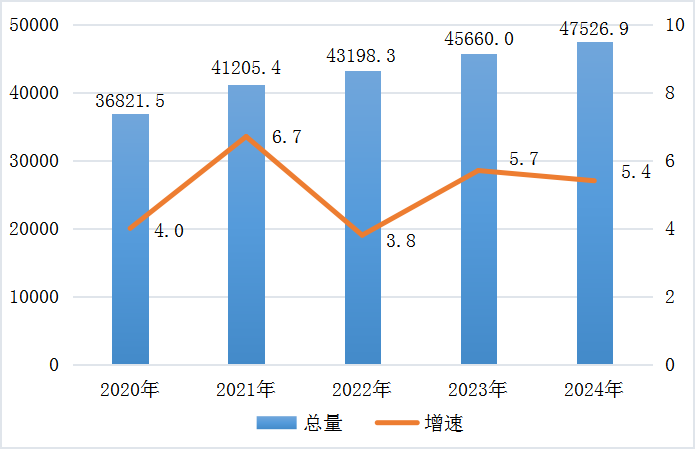
Core Viewpoint - Hebei province is aiming to become an "economic powerhouse" as it approaches a GDP of 5 trillion yuan, with plans to exceed national average growth rates and significantly enhance its economic, technological, and comprehensive strength by 2035 [1][2][4]. Economic Growth and Goals - The "15th Five-Year Plan" for Hebei emphasizes achieving an average annual growth rate of major economic indicators above the national average and reaching new economic milestones [1][4]. - In 2024, Hebei's GDP is projected to reach 4.75 trillion yuan, ranking 13th nationally, with aspirations to reclaim a position among the top ten provinces [2][5]. Historical Context and Challenges - Historically, Hebei was once ranked 6th in GDP due to its heavy industries but has seen a decline since 2012, dropping to 13th place due to structural transformation pains and the "siphoning effect" from Beijing and Tianjin [3][4]. - The province's reliance on high-energy, high-pollution industries has contributed to its economic slowdown, particularly after stringent environmental policies were implemented [3][10]. Urban Development and Strategic Adjustments - The development of urban clusters and metropolitan areas is crucial for Hebei's economic resurgence, with a focus on enhancing the capabilities of cities like Shijiazhuang and Tangshan [6][7]. - The "15th Five-Year Plan" includes support for the development of Shijiazhuang as a modern urban center and aims to integrate more closely with the Beijing-Tianjin metropolitan area [7][11]. Industrial Strength and Transition - Hebei has established two trillion-yuan-level industries and several hundred-billion-yuan industries, with steel production remaining a cornerstone of its economy [9][10]. - The province is transitioning its steel industry from raw material production to higher-value materials, aiming to improve competitiveness in global markets [10]. Collaboration and Future Directions - Hebei is focusing on collaborative innovation and industrial cooperation with Beijing and Tianjin, particularly in emerging sectors like new energy and smart vehicles [11]. - The province's leadership is committed to fully integrating with the capital region's development strategies to accelerate its own growth [11].
不止山东、河南 这个北方省份也想争“经济大省”
Mei Ri Jing Ji Xin Wen· 2025-12-02 14:31
Core Viewpoint - Hebei province is aiming to become an "economic powerhouse" by surpassing a GDP of 5 trillion yuan, as outlined in the recently released "15th Five-Year Plan" [1][2][3] Economic Growth and Goals - Hebei's GDP is projected to reach 4.75 trillion yuan in 2024, ranking 13th nationally, down from a peak of 6th place due to reliance on heavy industries like steel and coal [2][4] - The province aims for average annual economic growth rates to exceed the national average during the "15th Five-Year" period, with a significant increase in economic strength by 2035 [1][8] Historical Context - Hebei was once a leading economic province, ranking 6th in GDP until 2012, but has since fallen behind due to structural transformation challenges and the "siphoning effect" from Beijing and Tianjin [4][5] Industrial Structure and Challenges - The province's economy has been heavily reliant on high-energy, high-pollution industries, which constituted 50% of its industrial value added [5][18] - Recent environmental policies have forced a reduction in steel production capacity, leading to slower economic growth as new industries have not filled the gap [5][19] Urban Development and Center Cities - The development of urban clusters and metropolitan areas is crucial for Hebei's economic rise, with a focus on enhancing the capabilities of its capital city, Shijiazhuang, and other regional centers like Tangshan [10][12][16] - Shijiazhuang has been designated as a national-level urban cluster, expected to play a significant role in driving economic growth in the central and southern regions of Hebei [16] Industrial Upgrading and Innovation - Hebei is focusing on upgrading its steel industry from raw material production to material-level competitiveness, with significant growth in industrial value added [18][19] - The province is also encouraged to leverage technological innovation to drive industrial transformation and maintain its traditional industries as a foundation for future growth [19] Collaboration with Beijing and Tianjin - Hebei plans to enhance its integration with Beijing and Tianjin, aiming to attract more enterprises and facilitate the transfer of non-capital functions from the capital [19] - The province is set to strengthen collaborative innovation and industrial cooperation, particularly in emerging sectors like new energy and artificial intelligence [19]
不止山东、河南,这个北方省份也想争“经济大省”
Mei Ri Jing Ji Xin Wen· 2025-12-02 14:05
Core Insights - Hebei is aiming to become an "economic powerhouse" with a GDP target exceeding 5 trillion yuan, as outlined in the "14th Five-Year Plan" [2][3] - The province plans to achieve an average annual economic growth rate higher than the national average during the "15th Five-Year Plan" period [2][8] - The goal is to significantly enhance Hebei's economic, technological, and comprehensive strength by 2035, positioning it among the top economic provinces in China [2][3] Economic Context - In 2024, Hebei's GDP is projected to reach 4.75 trillion yuan, ranking 13th nationally, a decline from its previous 6th position due to industrial restructuring challenges and competition from neighboring provinces [3][6] - The province's economic decline has been attributed to its reliance on heavy industries like steel and coal, which constituted 50% of its industrial value added [7][8] Regional Development Strategy - The "15th Five-Year Plan" emphasizes the importance of urban agglomeration and metropolitan area integration, with a focus on enhancing the role of central cities [11][12] - Hebei's strategy includes strengthening the development of Shijiazhuang and Tangshan as key urban centers to drive regional growth [12][17] - The province aims to integrate more closely with the Beijing-Tianjin metropolitan area to leverage economic synergies [12][21] Industrial Transformation - Hebei has established two trillion-yuan industries in advanced steel and high-end equipment manufacturing, with several billion-yuan industrial clusters recognized at the national level [18][20] - The steel industry remains a cornerstone of Hebei's economy, with a 12.7% increase in industrial value added in the first three quarters of the year, outperforming the national average [20][21] - Despite the growth, the province faces challenges in transitioning from traditional heavy industries to more sustainable and innovative sectors [20][21]
进度条过半!5000亿元新型政策性金融工具加速落地
券商中国· 2025-10-20 15:28
Core Viewpoint - The new policy financial tools introduced by major Chinese policy banks aim to support economic development, particularly in key provinces, and are expected to significantly boost overall investment in various sectors [1][2][4]. Group 1: Investment and Financial Tools - As of October 17, the National Development Bank has allocated 189.35 billion yuan through new policy financial tools, which is expected to stimulate a total investment of 2.8 trillion yuan [1]. - The Export-Import Bank reported that 83% of its funding has been directed towards major economic provinces, with 40% allocated to projects involving private capital and sectors like digital economy and artificial intelligence [1]. - The Agricultural Development Bank has distributed 100.11 billion yuan of its 150 billion yuan quota, supporting 562 projects and anticipating a total investment of over 1.26 trillion yuan [1]. Group 2: Policy Framework and Implementation - The new policy financial tools have a total scale of 500 billion yuan, specifically aimed at supplementing project capital [2]. - The three policy banks have established dedicated funding entities, with registered capital of 20 billion yuan, 10 billion yuan, and 5 billion yuan respectively [2]. - The investment pace has been rapid, with the Agricultural Development Bank deploying over 60% of its allocated funds within a short timeframe [2]. Group 3: Focus on Major Economic Provinces - The term "major economic provinces" was first introduced in the 2022 government work report, highlighting the focus on provinces with the highest economic output [3]. - The distribution of local government debt has increasingly favored major economic provinces, reflecting a trend towards supporting high-efficiency investment regions [3]. - The new financial tools emphasize support for private investment, with the National Development Bank allocating 54.52 billion yuan to private projects, representing 28.8% of its total investments [3]. Group 4: Expected Impact - The new policy financial tools are projected to leverage approximately 4 to 5 trillion yuan in total investment, corresponding to a credit demand of about 3 to 4 trillion yuan [4].
