
经济封锁

Search documents
乌克兰威胁斯洛伐克和匈牙利,断电前想清楚后果,欧盟选择拉偏架
Sou Hu Cai Jing· 2026-02-24 14:19
Core Viewpoint - The conflict between Ukraine and its neighboring countries Slovakia and Hungary centers around the "Friendship" oil pipeline, which has become a tool for political leverage amid energy shortages caused by the ongoing war [1][3]. Group 1: Pipeline and Energy Supply - The "Friendship" pipeline, crucial for oil supply from Russia to Eastern Europe, has a daily capacity of 2 million barrels and is vital for the economies of Slovakia and Hungary [3]. - The pipeline's sudden halt in January 2026 has led to severe energy shortages in Slovakia and Hungary, with both countries accusing Ukraine of deliberately delaying repairs [5][8]. - Slovakia and Hungary's oil reserves are running low, prompting threats to cut off electricity and diesel supplies to Ukraine if oil transit is not restored [5][8]. Group 2: Ukraine's Response and Strategy - Ukraine has firmly rejected the accusations from Slovakia and Hungary, labeling their actions as "extortion" and emphasizing that they are inadvertently aiding Russia [10][12]. - Ukraine's strategy includes invoking the EU-Ukraine Association Agreement's "alert mechanism," elevating the dispute to a broader EU issue [12][13]. - The Ukrainian government aims to cut off Russian oil transit to weaken Russia's war funding and to politically pressure Hungary and Slovakia, who have been resistant to supporting Ukraine [17][19]. Group 3: EU's Role and Internal Dynamics - The EU's response has shown a clear bias towards Ukraine, with statements indicating that Hungary and Slovakia's energy reserves are sufficient, thus downplaying their crisis [15][19]. - The situation highlights the structural fractures within the EU, where Western countries can easily access alternative energy sources, while Eastern European nations remain heavily reliant on Russian oil [19][21]. - The potential for Slovakia to cut off electricity to Ukraine poses significant risks, not only economically but also politically, as it could lead to isolation within the EU [19][21]. Group 4: Historical Context and Future Implications - The "Friendship" pipeline, originally built to bind Eastern European countries together, has now become a source of division and manipulation [21][23]. - The ongoing energy crisis reflects the complexities of modern warfare, where economic and infrastructure leverage plays a critical role in geopolitical conflicts [21][23].


古巴外长:美经济封锁致古巴1年损失超70亿美元
Xin Lang Cai Jing· 2026-02-20 03:08
Core Viewpoint - The Cuban Foreign Minister condemned the U.S. economic blockade, stating it caused over $7 billion in losses to the Cuban economy within a year, describing the impact as "devastating" [1] Group 1: Economic Impact - The U.S. blockade resulted in losses exceeding $7 billion for Cuba from March 2024 to February 2025 [1] - The blockade has been in place for 67 years, significantly affecting Cuba's economic stability [1] Group 2: Resilience and Response - Cuba has demonstrated resilience through its political, economic, and social systems, managing to allocate limited resources based on priority [1] - The government aims to protect the most vulnerable groups while maintaining fairness and justice despite the severe restrictions [1]
古巴外长:美经济封锁致古巴一年损失超70亿美元
Yang Shi Xin Wen Ke Hu Duan· 2026-02-20 02:28
Core Viewpoint - The Cuban Foreign Minister Rodriguez strongly condemns the U.S. economic blockade against Cuba, stating it has caused over $7 billion in losses to the Cuban economy from March 2024 to February 2025, describing the impact as "devastating" [1] Group 1 - The U.S. actions have resulted in significant economic damage to Cuba, with losses exceeding $7 billion within a one-year period [1] - The blockade has been in place for 67 years, highlighting the long-term nature of the economic challenges faced by Cuba [1] - Despite these challenges, Cuba has managed to allocate limited resources based on priority principles, aiming to protect the most vulnerable groups and maintain social justice under severe constraints [1]
“游客少得让我焦虑”,美国封锁“窒息”古巴旅游业
Xin Lang Cai Jing· 2026-02-13 23:52
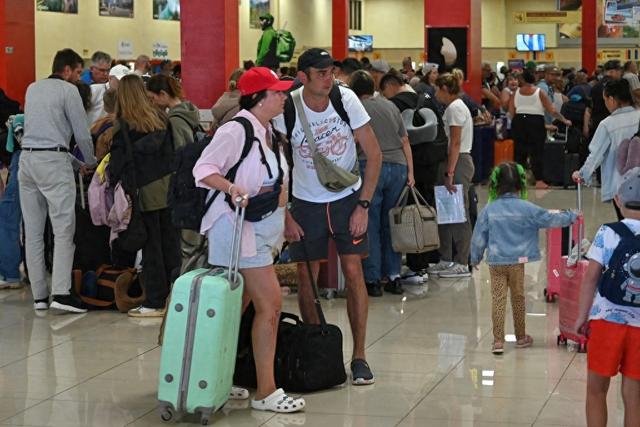
Core Viewpoint - The tourism industry in Cuba is severely impacted by the recent U.S. oil embargo and restrictions, leading to fuel shortages and flight cancellations, which have disrupted travel plans for many tourists [1][5][19]. Group 1: Impact on Tourism - The U.S. government has threatened to impose tariffs on countries supplying oil to Cuba, prompting the Cuban government to implement fuel rationing measures [1][5]. - International airlines, including Air Canada, have suspended flights to Cuba due to fuel shortages, affecting approximately 3000 travelers [5][19]. - The number of tourists visiting Cuba has significantly declined, with only 1.9 million visitors recorded in 2025, a 14% decrease from the previous year, marking the lowest level in nearly 20 years [19][21]. Group 2: Responses from Other Countries - Several countries, including China and Mexico, have expressed support for Cuba, condemning the U.S. sanctions and offering humanitarian assistance [2][11]. - Russia has also indicated a desire for constructive dialogue with the U.S. regarding the oil embargo affecting Cuba [2][11]. Group 3: Domestic Consequences - The fuel shortage has led to the closure of gas stations across Cuba, causing significant disruptions in daily life and increasing waste management issues due to a lack of operational vehicles [11][19]. - The scarcity of essential goods, including food and medical supplies, has intensified, with reports of long queues for basic necessities [21][24]. - The overall economic situation in Cuba is deteriorating, with many citizens struggling to meet basic living standards due to the compounded effects of the embargo and the pandemic [19][26].
特朗普掐死古巴能源命脉,油快用完,古巴开始陷入黑暗
Sou Hu Cai Jing· 2026-02-13 10:46
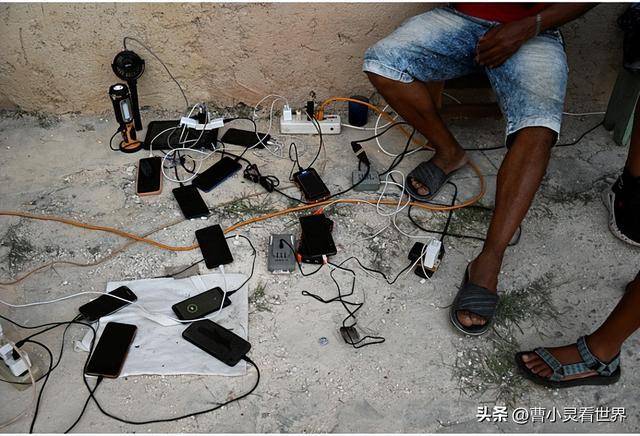
Core Viewpoint - Cuba is facing a severe energy crisis due to the U.S. oil embargo, leading to a fuel rationing system and significant disruptions in daily life and essential services [1][3][6]. Group 1: Energy Crisis and Government Response - The Cuban government has implemented emergency measures including a four-day workweek for state enterprises and significant reductions in public transport services [3][6]. - Daily oil needs for Cuba are approximately 120,000 barrels, with domestic production only meeting 40,000 barrels, leaving a shortfall of 80,000 barrels reliant on imports [1][6]. - Current oil reserves in Cuba are estimated to last only 15 to 20 days, exacerbating the crisis [1]. Group 2: Historical Context and Current Isolation - Historically, Cuba relied on allies like Venezuela and Russia for oil, but current geopolitical pressures have left it isolated, with Venezuela unable to provide support due to its own crises [6][10]. - The U.S. embargo has intensified, with recent measures being more severe than past sanctions, effectively cutting off Cuba's lifeline [6][12]. Group 3: Humanitarian Concerns - The United Nations has warned that Cuba's energy shortages could lead to a humanitarian disaster, particularly affecting vulnerable populations such as children and the elderly [7][13]. - The Cuban government has expressed willingness to engage in dialogue with the U.S. to alleviate the crisis, but insists on not compromising under external pressure [12][13]. Group 4: Social Stability and Future Outlook - The current situation poses a significant threat to social stability in Cuba, with increasing public discontent due to power outages, food shortages, and transportation breakdowns [10][12]. - The recent changes in immigration policy in Nicaragua have further restricted escape routes for Cubans, compounding the crisis [10].
美切断石油供应致燃料短缺,古巴采取紧急应对措施
Huan Qiu Shi Bao· 2026-02-08 22:53
Group 1 - The Cuban government announced emergency measures to address fuel shortages caused by the U.S. cutting off oil supplies, with the primary goal of ensuring national survival and basic service provision while continuing development [1] - Starting from September 9, Cuba will further restrict fuel sales, limit administrative work to Monday through Thursday, promote remote work, and shorten school hours [1] - The fuel shortage will impact national transportation, leading to reduced interprovincial train and bus services, and some tourist facilities will be closed to conserve energy [1] Group 2 - Since 1962, Cuba has been under an economic blockade by the U.S., which has intensified this year by cutting off oil supplies and pressuring Mexico to stop oil shipments [2] - The United Nations expressed extreme concern over the humanitarian situation in Cuba, warning that failure to meet oil demand could worsen the situation [2] - Cuba's President Diaz-Canel announced plans to actively develop solar power to meet electricity needs in hospitals, nursing homes, and remote areas, with solar capacity reaching 1,000 megawatts, accounting for 38% of daytime electricity generation [2] Group 3 - Cuba aims to reduce dependence on oil imports by developing its solar industry as part of a long-term national strategy, with a goal to increase renewable energy's share of electricity generation to 30% by 2030 [3] - Currently, Cuba's electricity generation heavily relies on coal plants, and domestic heavy oil production meets only about 40% of energy consumption, indicating a continued high dependence on imports [3]
古巴称做好准备应对美国石油封锁
Xin Lang Cai Jing· 2026-01-31 07:08
Core Viewpoint - Cuba is preparing to respond to a new round of oil sanctions imposed by the United States, as emphasized by President Díaz-Canel during a meeting in Havana [1] Group 1: U.S. Sanctions and Cuba's Response - The U.S. has shifted its strategy to impose tariffs on countries supplying oil to Cuba, attempting to undermine Cuba's ability to acquire oil, which is essential for economic development and social stability [1] - President Díaz-Canel stated that Cuba has withstood various extreme pressures from the U.S. and is determined to face these challenging times with courage [1] - Cuba plans to continue exposing the new U.S. sanctions in the international community and believes that the global community will condemn the U.S. actions and support Cuba [1] Group 2: Historical Context - Since the victory of the Cuban Revolution in 1959, the U.S. government has maintained a hostile policy towards Cuba, including an economic, financial blockade, and trade embargo initiated in 1962 [1] - Since 1992, the United Nations General Assembly has annually reviewed Cuba's request for the U.S. to lift the blockade, with resolutions consistently receiving overwhelming support [1]
古巴副外长:美国企图胁迫他国加入对古封锁
Yang Shi Xin Wen· 2026-01-30 04:48
Core Viewpoint - The Cuban Deputy Foreign Minister, Carlos Fernández de Cossío, responded to the U.S. threat of imposing tariffs on countries supplying oil to Cuba, indicating that the U.S. is tightening its blockade against Cuba after decades of economic warfare that have not succeeded [2] Group 1 - The U.S. is attempting to coerce other sovereign nations into joining its economic blockade against Cuba [2] - The ongoing economic war by the U.S. has not achieved its intended goals over several decades [2] - The recent threats signify an escalation in the U.S. strategy to isolate Cuba economically [2]
1983年,美军入侵格林纳达遭全球声讨
Xin Lang Cai Jing· 2026-01-16 06:42
Group 1 - Grenada, a small Caribbean island nation, experienced significant political turmoil and foreign intervention during the late 20th century, particularly involving the United States and Cuba [1][2] - The U.S. accused Grenada of facilitating Soviet and Cuban military presence in the Caribbean, leading to economic sanctions and military threats against the island [2][3] - Following a coup that resulted in the assassination of Prime Minister Maurice Bishop, the U.S. launched a military invasion under "Operation Urgent Fury" to remove the new anti-American leadership [3][4] Group 2 - The U.S. invasion of Grenada on October 25, 1983, involved 7,000 American troops against a much smaller Grenadian force of approximately 1,500, leading to a swift military victory for the U.S. [3] - The invasion faced international condemnation, with countries like the UK and Canada criticizing the U.S. for violating international law, and the UN General Assembly passing a resolution against the invasion [4] - Domestic opposition to the invasion in the U.S. included large anti-war protests, with over 50,000 participants in Washington, D.C. [4]
【史海回眸】1983年,美军入侵格林纳达遭全球声讨
Huan Qiu Shi Bao· 2026-01-15 22:42
Core Viewpoint - The article discusses the historical context of Grenada's political turmoil and the U.S. military intervention in 1983, highlighting the geopolitical dynamics between Grenada, the U.S., and other nations like Cuba and the Soviet Union [1][2][3][4]. Group 1: Historical Background - Grenada, an island nation in the Caribbean, gained independence from British colonial rule in 1974, leading to economic decline and public discontent under Prime Minister Eric Gairy [1]. - In 1979, a coup led by Maurice Bishop established a revolutionary government, which sought alliances with socialist countries, including Cuba and the Soviet Union, amidst U.S. attempts to influence Grenada [1][2]. Group 2: U.S. Response and Military Action - The construction of a new airport in Grenada, supported by Cuba, raised U.S. concerns about military implications, leading to economic sanctions and military exercises in the region [2]. - Following internal strife and the assassination of Bishop, the U.S. launched Operation Urgent Fury on October 25, 1983, deploying 7,000 troops against Grenada's 1,500-man military [3]. Group 3: International Reaction - The U.S. invasion faced widespread international condemnation, with countries like the UK and Canada criticizing the violation of Grenada's sovereignty, and the UN passing a resolution against the U.S. actions [4]. - Domestic opposition in the U.S. included significant anti-war protests, indicating public dissent against the military intervention [4].