肥胖防治

Search documents
柳叶刀重磅:每四个成年人,就有一个应接受GLP-1药物治疗肥胖!
GLP1减重宝典· 2026-02-01 09:48
Core Viewpoint - Obesity is becoming one of the most systemic public health risks globally, significantly increasing the incidence of non-communicable diseases such as type 2 diabetes and cardiovascular diseases, thus straining healthcare systems and financial resources [4] Group 1: GLP-1 Receptor Agonists - GLP-1 receptor agonists have evolved from diabetes treatment drugs to key tools in managing obesity and its complications, showing clear weight loss and cardiometabolic benefits in multiple randomized controlled trials [4] - A recent study published in The Lancet Diabetes & Endocrinology assessed the potential population size for GLP-1 receptor agonists in obesity treatment, integrating health survey data from 99 countries covering over 810,000 non-pregnant adults aged 25 to 64 [5] - The study defined eligibility for GLP-1 receptor agonists based on BMI thresholds, with a general standard of BMI ≥ 30 kg/m² or BMI ≥ 27 kg/m² with hypertension and/or diabetes, adjusting thresholds for Southeast Asia, East Asia, and South Asia due to increased metabolic risks at lower BMI levels [5] Group 2: Potential Patient Population - Approximately 27.0% of adults globally meet the medical criteria for GLP-1 receptor agonists for weight management, translating to a potential population size of about 799 million people, indicating that one in four adults may be medically suitable for this treatment [6] - The proportion of individuals who should use GLP-1 receptor agonists varies significantly by income level, with high-income countries at 41.8% and low-income countries at 11.7%, while nearly four-fifths of the potential patient population is concentrated in middle-income countries [6] - The regional distribution shows the highest applicability in Europe and North America at 42.8%, while Southeast Asia, East Asia, and South Asia, despite a lower applicability rate of 23.1%, have the largest absolute number of potential patients, approximately 639 million [6] Group 3: Demographic Characteristics - Among demographic characteristics, the proportion of women meeting medication standards is 28.5%, higher than men's 25.5%, with the percentage increasing significantly with age, reaching 38.3% in the 55 to 64 age group [7] - Income and education levels correlate with medication eligibility, showing a contrasting trend in different economies: higher income correlates with higher eligibility in low and middle-income countries, while in high-income countries, lower-income groups have the highest eligibility [7] Group 4: Challenges and Recommendations - The study highlights the substantial theoretical and medical demand for GLP-1 receptor agonists in global obesity prevention and treatment, but real-world implementation faces significant challenges, particularly in middle-income countries where data on drug accessibility and usage is limited [7] - The high cost of these medications poses a barrier to widespread adoption in the short term, with uncertain long-term impacts on healthcare budgets [7] - The authors emphasize that GLP-1 receptor agonists should not be viewed as a singular solution to obesity; a multifaceted approach combining drug treatment with structural long-term strategies is necessary to address the global obesity epidemic [8]

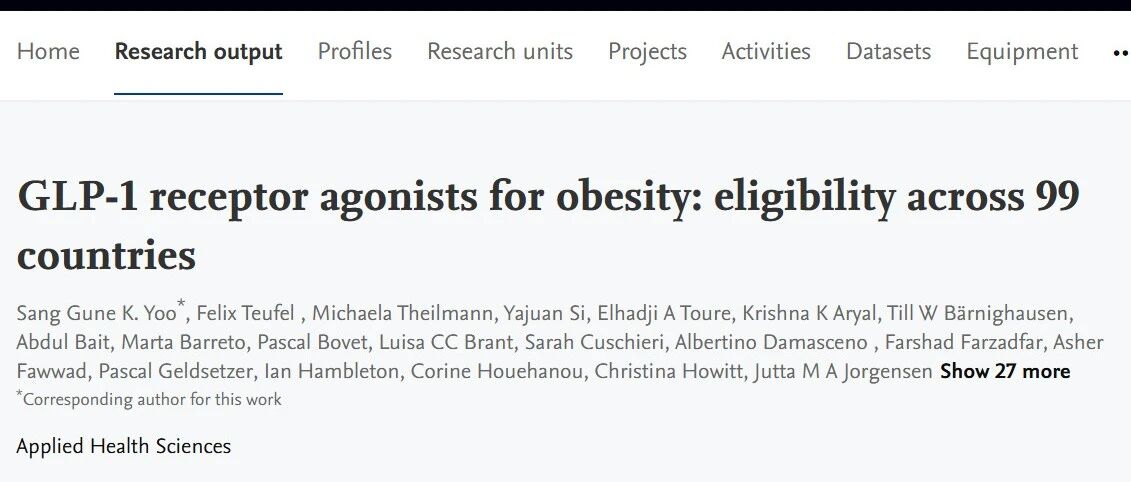
专家:科学减重需基于个性化评估,不应忽视个体差异
Bei Ke Cai Jing· 2025-12-01 08:09
Core Viewpoint - Scientific weight loss should be based on personalized assessments, as many individuals overlook personal differences and blindly follow others' weight loss plans, leading to poor results or health risks [1][3]. Group 1: Obesity Statistics and Health Impact - The overweight rate among Chinese adults has reached 34.3%, with an obesity rate of 16.4%, making obesity a significant public health threat [1]. - Overweight and obesity are major contributing factors to various chronic diseases, prompting the launch of a three-year "Weight Management Year" initiative by the National Health Commission and 16 other departments [1]. Group 2: Weight Management Encyclopedia - The "National Weight Management Encyclopedia" is the first comprehensive weight management resource aimed at the general public, focusing on the "medical, dietary, exercise, and behavioral" health system [2]. - The encyclopedia consists of three volumes: "Medical," "Diet," and "Management," addressing key issues in weight management with scientific backing and practical knowledge [2]. Group 3: Personalized Weight Management Approach - Effective weight management requires a multi-dimensional improvement in lifestyle habits, including medical evaluations to rule out secondary obesity factors and tailored plans based on age, underlying conditions, and lifestyle [3]. - The event included interactive sessions and body composition testing to help the public transition from understanding science to applying it in daily life [3]. - Obesity prevention and treatment is a systemic project that necessitates community involvement and the establishment of a multidisciplinary treatment model for comprehensive intervention [3].
肥胖需长期科学管理,多学科团队协作助推医学减重规范化、系统化
Xin Jing Bao· 2025-11-17 07:17
Core Viewpoint - The conference emphasized that obesity is a complex chronic disease involving multiple factors such as metabolism, genetics, behavior, and diet, requiring long-term scientific management and multidisciplinary collaboration for effective prevention and treatment [1] Group 1: Medical Nutrition Treatment - Medical nutrition therapy is fundamental in treating obesity, serving as a core measure for prevention and control of obesity and related complications [2] - The "14th Five-Year Plan" highlights the importance of comprehensive prevention and control of chronic diseases, while the "Healthy China 2030" plan emphasizes individual responsibility for health and the "three reductions" (reducing oil, salt, and sugar) [2] - The concept of "medical weight management" was promoted, focusing on safe and effective weight management under medical supervision to improve metabolic conditions [2] Group 2: Multidisciplinary Collaboration - Obesity requires a multidisciplinary approach, with different specialties focusing on various aspects of patient care, including endocrinology, nutrition, and exercise medicine [2] - After diagnosing obesity, collaboration among various departments is essential to create scientific treatment plans that not only focus on weight loss but also on improving related health conditions [2] Group 3: Development of Weight Management Products - The development of medical nutrition weight loss products should be based on nutritional intervention principles, balancing nutritional needs with individual requirements [3] - The emerging health weight management centers provide personalized and scientific weight management solutions through evidence-based medicine and multidisciplinary collaboration [3] Group 4: National Initiatives and Guidelines - In 2024, a joint implementation plan for "Weight Management Year" encourages healthcare institutions to establish weight management clinics or obesity prevention centers [4] - The latest "Obesity Diagnosis and Treatment Guidelines (2024 Edition)" provides systematic norms from etiology and diagnostic assessment to multidisciplinary collaborative treatment [4] - The establishment of a comprehensive weight management service system across the country is supported by various industry standards and guidelines, facilitating clinical practice [4]
Nature旗下子刊引爆热议:减肥潮流下,主食迎来新机遇!上海交通大学贾伟平团队重磅发布“肠道菌群联动代谢组”新突破
GLP1减重宝典· 2025-10-25 09:01
Core Viewpoint - The article discusses a recent study published in *Nature Metabolism* by a team from Shanghai Jiao Tong University, which demonstrates that resistant starch (RS) can significantly aid overweight or obese individuals in weight loss and metabolic health improvement through its effects on gut microbiota and metabolism [6][8]. Group 1: Research Highlights - The study integrates multi-omics analysis, combining microbiome and metabolomics data to comprehensively assess the impact of resistant starch on gut microbiota structure and human metabolism [6]. - An innovative clinical trial design was employed, utilizing a randomized, placebo-controlled, crossover approach, which effectively reduced confounding variables and enhanced the reliability of results [6]. - The research reveals that resistant starch influences multiple pathways, including bile acid metabolism, inflammation reduction, gut barrier repair, and lipid absorption inhibition, providing a new theoretical basis for future obesity prevention and treatment strategies [6][8]. Group 2: Clinical Trial Details - The study included participants aged 18 to 55 years who were overweight or obese, defined as BMI ≥ 24 kg/m² or waist circumference ≥ 85 cm for men and ≥ 80 cm for women. Exclusion criteria included acute diseases, recent antibiotic or probiotic use, and certain metabolic disorders [9]. - The trial involved 37 overweight or obese participants over an 8-week intervention period, with a 4-week washout phase between treatments. Results indicated that resistant starch effectively reduced weight, fat mass, and waist circumference while improving insulin sensitivity [11]. Group 3: Mechanisms and Findings - Resistant starch supplementation led to an increase in beneficial gut bacteria such as *Bifidobacterium* species, enhancing gut barrier function and reducing inflammation levels [11][13]. - The study found that *Bifidobacterium adolescentis* was highly correlated with reductions in BMI, waist circumference, and other metabolic markers, suggesting its critical role in alleviating obesity [14]. - Animal studies demonstrated that gut microbiota from resistant starch-fed humans could reduce obesity and improve glucose metabolism in mice, indicating the potential of RS to reshape gut microbiota for weight management [16]. Group 4: Inflammatory Response and Gut Barrier - The RS-induced gut microbiota significantly lowered systemic inflammation markers in mice, with reductions in MCP-1, IL-1β, and IL-6, while increasing anti-inflammatory IL-10 levels [18]. - The study showed that RS improved gut barrier integrity, reducing the permeability to lipopolysaccharides (LPS) and thereby alleviating obesity-related chronic inflammation [19]. Group 5: Role of *B. adolescentis* - The proliferation of *B. adolescentis* due to RS was linked to a decrease in abdominal obesity, with active *B. adolescentis* enhancing the expression of ANGPTL4, which mitigated weight gain and fat accumulation in mice [21]. - Metabolomic analysis indicated that *B. adolescentis* treatment led to a decrease in primary bile acids and an increase in secondary bile acids, contributing to improved metabolic profiles [21].

Nature旗下子刊引爆热议:减肥潮流下,主食迎来新机遇!上海交通大学贾伟平团队重磅发布“肠道菌群联动代谢组”新突破
GLP1减重宝典· 2025-09-29 10:38
Core Viewpoint - The article discusses a recent study published in *Nature Metabolism* by a team from Shanghai Jiao Tong University, which demonstrates that resistant starch (RS) can significantly aid overweight or obese individuals in weight loss and improving metabolic health through modulation of gut microbiota and metabolic pathways [6][8]. Group 1: Research Highlights - The study integrates microbiome and metabolomics data to comprehensively assess the impact of resistant starch on gut microbiota structure and human metabolism [6]. - It employs a randomized, placebo-controlled crossover trial design, enhancing the reliability of results by minimizing confounding variables [6]. - The research reveals that resistant starch affects bile acid metabolism, reduces inflammation, repairs gut barriers, and inhibits lipid absorption, providing a new theoretical basis for obesity prevention and treatment [6][8]. Group 2: Study Methodology - The study included participants aged 18 to 55 years, classified as overweight or obese (BMI ≥ 24 kg/m²), and excluded those with acute diseases or recent antibiotic use [9]. - A randomized controlled crossover design was used to evaluate the effects of resistant starch on weight control and insulin resistance, combined with metagenomic and metabolomic techniques to analyze gut microbiota changes [10]. Group 3: Key Findings - The intervention with resistant starch resulted in significant weight loss, reduced fat mass, and improved insulin sensitivity among 37 overweight or obese participants over an 8-week period [11]. - Resistant starch increased the abundance of beneficial bacteria such as *Bifidobacterium*, enhancing gut barrier function and reducing inflammation [11][13]. - In animal models, the transplantation of gut microbiota from resistant starch-fed humans led to lower body weight and fat mass, indicating the effectiveness of RS-modulated gut microbiota in weight management [16]. Group 4: Mechanisms of Action - The study found that resistant starch-induced gut microbiota changes lowered systemic inflammation markers and improved gut barrier integrity, which is crucial for managing obesity-related chronic inflammation [18][19]. - The increase in *Bifidobacterium adolescentis* was closely linked to the alleviation of abdominal obesity, suggesting its potential role in metabolic health [21].

减重门诊加速落地:破解肥胖防治难题
2 1 Shi Ji Jing Ji Bao Dao· 2025-04-11 10:18
Core Viewpoint - The National Health Commission and the National Administration of Traditional Chinese Medicine have issued a notification encouraging the establishment of weight management outpatient clinics in qualified hospitals to address the growing obesity issue in China, which poses significant public health risks [1][4]. Group 1: Background and Statistics - The prevalence of overweight and obesity among adults in China was reported at 34.3% and 16.4% respectively in 2018, with projections indicating that by 2030, these rates could rise to 70.5% if current trends continue [1]. - Obesity is recognized as an independent disease that increases the risk of premature death and is a significant factor in cardiovascular and chronic diseases [3]. Group 2: Implementation of Weight Management Clinics - The establishment of weight management outpatient clinics is being promoted as a multi-disciplinary effort, requiring collaboration across various sectors and disciplines [3]. - The notification outlines a comprehensive approach to guide the development of these clinics, emphasizing the need for a systematic and collaborative framework [2][3]. Group 3: Current Developments - Several hospitals have already launched weight management outpatient services, employing a multi-disciplinary team approach to provide comprehensive care for patients with obesity [4]. - The notification aims to accelerate the establishment of these clinics, with a target for comprehensive coverage by June 2025 in qualified hospitals [4]. Group 4: Future Directions and Strategies - The notification emphasizes the importance of enhancing the capabilities of weight management clinics, including the training of healthcare professionals and the establishment of management protocols [6]. - There is a call for increased public awareness and improved referral mechanisms to guide individuals with weight issues to appropriate services [7]. - The focus is shifting from treatment-centered approaches to health-centered strategies, promoting preventive measures and comprehensive care for obesity management [7].
引领“体重管理年”,南方财经全媒体集团全方位构筑健康生态新格局
21世纪经济报道· 2025-03-12 10:35
Core Viewpoint - The article emphasizes the increasing prevalence of obesity and related chronic diseases in China, highlighting the government's initiative to implement a "Weight Management Year" program starting in 2024 to promote healthy lifestyles and weight management awareness among the population [2][5][21]. Group 1: Government Initiatives - The National Health Commission and 16 other departments have developed a plan to establish a supportive environment for weight management, aiming for significant improvements in public awareness and skills related to weight management over the next three years [2][3]. - During the National People's Congress, the director of the National Health Commission reiterated the commitment to promote weight management and healthy lifestyle habits across society [2][3]. Group 2: Public Health Concerns - Obesity is identified as a major public health issue, with projections indicating that by 2030, the overweight and obesity rate among adults in China could reach 65.3%, leading to medical costs of approximately 418 billion yuan, which accounts for 21.5% of the total national medical expenses [5][21]. - The article stresses the urgent need for a multi-departmental and interdisciplinary approach to effectively address the obesity epidemic and its economic burden [5][21]. Group 3: Collaborative Efforts - The establishment of the China Obesity Alliance, initiated by leading experts, aims to enhance public health through various activities, including the China Obesity Conference and the "Scientific Weight Loss" campaign [6][7]. - The Southern Finance Media Group has actively engaged in social mobilization to promote healthy living and weight management, contributing to the "Healthy China 2030" initiative [3][5][21]. Group 4: Educational and Community Engagement - The article highlights various community events and initiatives, such as the "Weight Down, Health Up" campaign, aimed at encouraging public participation in weight management and healthy lifestyle practices [9][10]. - The Southern Finance Media Group has organized health education activities, including expert consultations and public health campaigns, to raise awareness about obesity and its management [13][19]. Group 5: Standardization and Professional Development - The article discusses the importance of establishing standardized weight management centers and multidisciplinary weight loss clinics to provide comprehensive care for obesity patients [22][24]. - Efforts are being made to enhance the professional skills of healthcare providers and to utilize digital tools for effective weight management [24][26].