
能动性

Search documents
AI时代,只会听指挥的人最先被淘汰:如何用大模型填补你的“能力级差”?
3 6 Ke· 2025-12-15 23:17
Core Insights - The article emphasizes that "agency" or proactivity is a crucial trait that influences career success more than intelligence or social skills. It illustrates this through a comparison between two team members, Hannah and Lance, highlighting how Hannah's proactive approach led to better outcomes [3][4][10]. Group 1: Understanding Agency - Agency is defined as the belief in one's ability to shape their environment and achieve goals through action rather than waiting for ideal conditions [4][10]. - The article contrasts low agency behavior, exemplified by Lance, who waits for instructions and avoids decision-making, with high agency behavior, demonstrated by Hannah, who takes initiative and drives progress [7][10]. Group 2: Cultivating Agency - To cultivate agency, individuals should focus on what they can control instead of making excuses, assume they can accomplish tasks unless proven otherwise, and avoid waiting for permission to act [11][14][16]. - The article suggests that agency can be developed like a muscle, requiring practice and initial small victories to build confidence and speed in action [10][65]. Group 3: Practical Applications of Agency - In career development, individuals should proactively seek feedback and opportunities rather than waiting for their managers to provide them [17][20]. - The article provides specific strategies for demonstrating agency in various work scenarios, such as taking initiative in problem-solving, managing projects, and engaging stakeholders effectively [19][25][40]. Group 4: Utilizing AI to Enhance Agency - The article discusses how AI can assist in enhancing agency by providing structured feedback, evaluating opportunities, and streamlining communication with managers [21][42][51]. - It emphasizes the importance of using AI tools to create prototypes and models that facilitate decision-making and reduce ambiguity in project discussions [56][62].

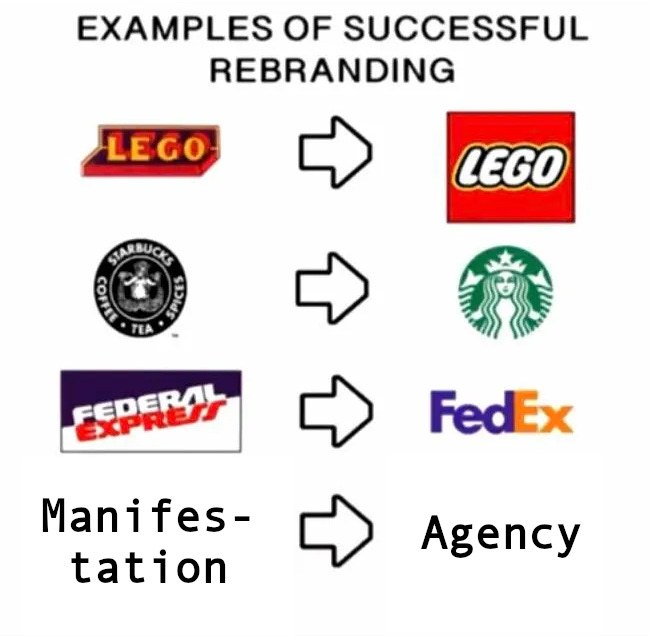
生命的意义在哪?基因不是全部答案
Guan Cha Zhe Wang· 2025-11-16 09:28
Core Insights - The conversation highlights the evolving understanding of biology, particularly the role of genes and DNA, challenging traditional views that consider them as the sole controllers of life [4][9][10] Group 1: Understanding of Genes and DNA - The author Philip Ball argues that genes and DNA should be viewed as "molecular resources" that cells utilize based on their environment rather than as strict instructions governing all biological processes [9][10] - The historical perspective of genes as a "code" directing all biological functions is deemed outdated, with a shift towards understanding the complex interactions within cells [8][9] - The concept of "selfish genes" is critiqued, suggesting that it oversimplifies the intricate regulatory mechanisms at play in biological systems [12][19] Group 2: Medical Implications - Ball emphasizes the need for a more holistic approach to medicine, moving beyond genetic-level interventions for diseases that may not primarily stem from genetic issues [10][11] - The discussion points out that many common diseases are influenced by higher-level biological processes rather than solely by genetic factors [10][11] - The author suggests that current medical practices often resemble trial-and-error methods rather than being based on a deep understanding of biological mechanisms [11][12] Group 3: Complexity of Biological Systems - The conversation addresses the complexity of cellular environments, likening them to crowded nightclubs rather than orderly factories, highlighting the chaotic interactions among molecules [27][29] - The role of biomolecular condensates in cellular processes is introduced, emphasizing the importance of understanding these structures for effective medical interventions [24][26] - The need for advanced imaging techniques, such as cryo-electron microscopy, is discussed as a means to better visualize and understand cellular dynamics [27][29] Group 4: Emergence and Agency in Biology - The concept of "agency" in biological systems is explored, suggesting that organisms, including cells, exhibit decision-making capabilities that go beyond mere genetic programming [30][32] - Ball argues that understanding the agency of living organisms is crucial for comprehending the essence of life, distinguishing it from non-living entities [32][34] - The discussion touches on the philosophical implications of human decision-making and its divergence from evolutionary imperatives, indicating a complex interplay between instinct and conscious choice [34][36] Group 5: Future Directions in Biological Research - The potential of AI in biological research is acknowledged, particularly in predicting gene regulation and understanding complex biological phenomena [21][23] - However, concerns are raised about the limitations of AI in providing mechanistic explanations for biological processes, emphasizing the need for a deeper understanding of underlying mechanisms [23][24] - The conversation concludes with a call for better narratives in biology that reflect its complexity and the agency of living systems, moving away from simplistic explanations [49][50]

AI时代值得分享的是“问题,而非“答案”
Hu Xiu· 2025-07-05 11:33
Group 1 - The article discusses the shift in information disparity from platform-based to motivation-based, emphasizing the importance of critical reading and the use of emerging technologies to expand one's knowledge base [2][4][5] - It highlights that the barriers to knowledge and skills are dissolving, leading to a significant leverage difference among individuals using the same tools, which is often underestimated [5][6] - The concept of agency is presented as a rare super-competitive advantage in the current landscape, marking a pivotal moment in how individuals engage with information and technology [6] Group 2 - The article suggests that the approach to learning and skill acquisition is evolving, with a focus on practice and persistence rather than innate talent [7][8] - It emphasizes the importance of asking the right questions to deepen understanding and facilitate better decision-making in various contexts [3][4] - The narrative indicates a shift in the value of knowledge from mere accumulation to the structure and taste of knowledge, suggesting that individual value is now defined by how knowledge is organized and utilized [25][26]