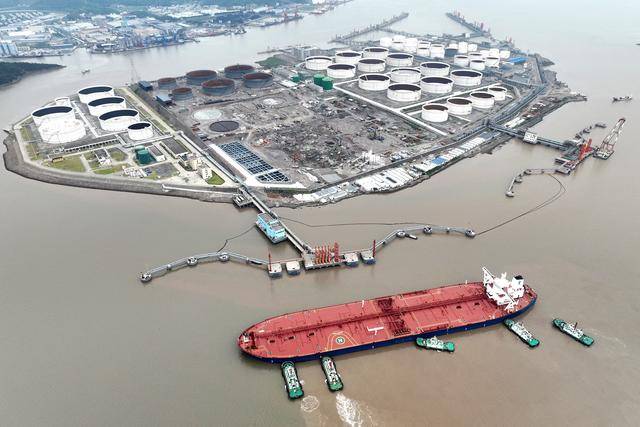
能源战略储备

Search documents
能源开采|2026策略报告
2025-12-16 03:26
Summary of Key Points from Conference Call Records Industry Overview - **OPEC Strategy**: OPEC announced a pause in production increases in Q4 2025 and plans to continue this in Q1 2026, which is better than market expectations and helps support oil prices above $65 per barrel [1][2][9]. - **Refining Industry**: The refining sector has been at a low point since 2022, with some products experiencing long-term losses. A potential upcycle is expected in the next 3-5 years, contingent on the balance sheets of China and global markets [1][3]. - **Coal Market**: The coal market is expected to see a price center higher than in 2025, with a lower limit of 700 RMB/ton and a potential high of around 850 RMB/ton, indicating that the bottom has passed for thermal coal [1][5]. - **Natural Gas Market**: Significant changes in the natural gas market have been noted, with the Henry Hub price rising and the price gap between the US and Europe narrowing, which requires further monitoring [1][6]. Core Insights and Arguments - **Oil Market Outlook for 2026**: A relatively optimistic view is held for the oil market in 2026, with expectations for contract prices to remain at $65 or above. The market is seen as bottoming out despite some supply pressures [2][12]. - **Predictions on Supply and Demand**: Global oil supply is expected to increase in 2026, with OPEC potentially halting production increases. The US shale oil production remains resilient, contributing to a projected supply increase of about 1.6 million barrels per day [12][14]. - **Demand Growth**: Demand growth for oil is forecasted at around 1 million barrels per day, with varying predictions from major institutions [13][14]. Additional Important Insights - **China's Strategic Reserves**: China has engaged in significant strategic reserve replenishment in 2025 and shows a strong intent to continue this, with plans to increase storage capacity by 170 million barrels [10][11]. - **Refining Sector Dynamics**: The refining industry is expected to see a shift towards more profitable products like aromatics, while ethylene and propylene markets are anticipated to improve around 2027 [3][19][25]. - **Impact of Policies**: Anti-involution policies are limiting new capacity in the petrochemical sector, while older facilities are being phased out, which may have a limited impact on actual capacity reduction [18]. - **International Market Influence**: The overseas refined oil market is tightening, which is expected to support the demand for aromatics and other petrochemical products [24][28]. This summary encapsulates the key points from the conference call records, highlighting the current state and future expectations of the energy and petrochemical industries.
视频丨进度条刷新 塔里木盆地最大储气库地面扩建工程完工
Yang Shi Xin Wen· 2025-12-03 07:16
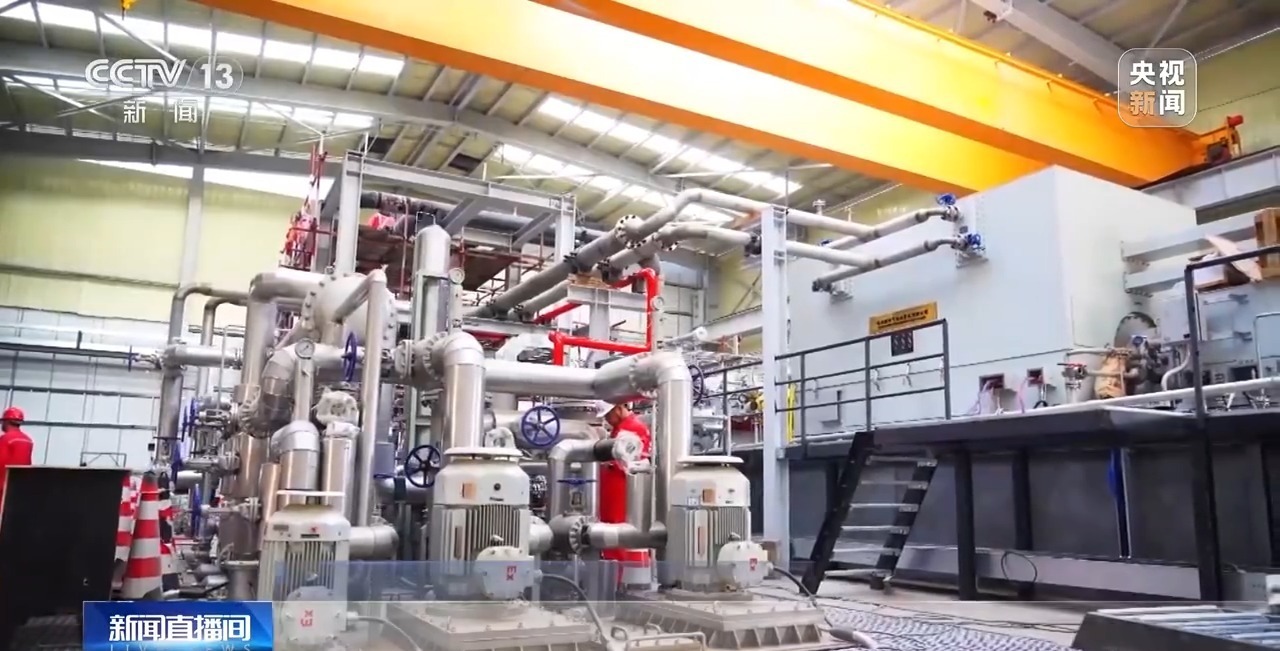
Core Insights - The Tarim Basin's largest gas storage facility, the Yaha Gas Storage, has completed its surface expansion project, increasing its daily gas injection capacity by 10 million cubic meters [1] - The Yaha Gas Storage is built on the Yaha condensate gas field, with an average burial depth exceeding 5,100 meters, making it the largest gas storage facility in China at depths over 5,000 meters [1] - The new gas collection station at Yaha can achieve a maximum daily gas output of 20 million cubic meters, playing a crucial role in seasonal peak regulation, emergency supply, and national energy strategy reserves for the West-to-East Gas Transmission project [1] Gas Injection and Technology - The gas storage facility operates for 7 months of gas injection and 4 months of gas extraction annually, utilizing domestically developed 40 MPa high-pressure large-capacity centrifugal gas injection compressors, achieving 100% localization of equipment [3] - The mechanical performance and testing indicators of the compressors have reached international advanced levels, filling a domestic gap in technology [3] Annual Injection Achievement - Concurrently with surface construction, the Tarim Oilfield has proactively initiated annual gas injection for four gas storage facilities around the Tarim Basin, achieving a record gas injection volume of 1.2 billion cubic meters [5]


从沉寂到复兴,煤制天然气为何迎来第二春?
Tianfeng Securities· 2025-11-11 09:16
Investment Rating - Industry Rating: Outperform the Market (Maintained Rating) [4] Core Viewpoints - The coal-to-gas industry is experiencing a revival due to improved market conditions, including a market-oriented pricing mechanism, fair access to national pipelines, and advancements in coal chemical technology [1][2][13] - There are currently 12 coal-to-gas projects planned in China, with a total capacity of 44 billion cubic meters per year, indicating a renewed interest in the sector [1][13] - The cost structure of coal-to-gas production shows that coal and depreciation account for approximately 73% of total costs, making coal prices and investment costs critical to competitiveness [2][31] Summary by Sections 1. Historical Context and Current Landscape - Prior to 2017, China planned 70 coal-to-gas projects, but only 4 were realized due to various constraints, including high coal prices and low gas prices [10] - As of 2025, only 4 companies are operational in the coal-to-gas sector, with a total capacity of about 7.5 billion cubic meters per year [10] 2. Catalysts for Industry Growth 2.1 Technological Advancements - Significant improvements in coal gasification technology have been made, enhancing the efficiency and economic viability of coal-to-gas projects [16][17] - The development of large-scale gasification equipment has reduced costs and improved operational efficiency [17] 2.2 Policy Changes - The introduction of a market-oriented pricing mechanism for coal-to-gas has improved profitability potential for projects [20] - The national pipeline reform has facilitated fair access for coal-to-gas companies, enhancing competition and operational viability [21][22] 2.3 Resource Availability - Xinjiang is identified as a major coal resource area, providing sufficient raw materials for coal-to-gas projects [24][25] - The region's coal production has increased significantly, supporting the growth of coal-to-gas initiatives [25] 2.4 Market Demand - The demand for natural gas in China is projected to grow significantly, providing a favorable market environment for coal-to-gas projects [28] - The expected annual increase in natural gas demand during the 14th Five-Year Plan period is estimated at 20.7 billion cubic meters [28] 3. Cost Competitiveness - The cost structure analysis indicates that coal prices significantly influence the profitability of coal-to-gas projects, with a stable low coal price being essential for economic viability [31][38] - A coal price of 200 RMB per ton allows for a production cost of approximately 1.46 RMB per cubic meter of gas, leading to a potential net profit of around 1.6 billion RMB for a 2 billion cubic meter project [2][36][38]
中国正在大量囤油,一度吞掉世界九成库存,是有啥大事要发生吗?
Sou Hu Cai Jing· 2025-11-03 08:57
Core Viewpoint - The global oil market in 2025 is characterized by stable prices but increased trading activity, primarily driven by China's significant role as a major buyer, accounting for nearly 90% of the global increase in oil inventory in certain months [1]. Group 1: Strategic Energy Policy - China's recent oil procurement is part of a systematic preparation under the new Energy Law effective from January 1, 2025, which mandates national, corporate, and local participation in strategic energy reserves [3][5]. - The law has transformed oil storage from a business consideration to a national obligation, linking performance to state-owned energy companies and requiring cooperation from local governments [5]. Group 2: Storage Capacity and Management - China's strategic and commercial oil reserves total nearly 2 billion barrels, with an overall utilization rate of about 60%, indicating significant remaining capacity for additional storage [5]. - The operational system for oil procurement, transportation, storage, and management is well-coordinated between the state and enterprises, contrasting with the declining strategic reserves in some Western countries [7]. Group 3: Diversification and Risk Management - China's oil purchases are diversified across multiple countries, including Russia, Indonesia, Brazil, and the Middle East, allowing for flexible transportation routes and reducing the impact of potential disruptions [11]. - The shift in oil trade settlement methods, with 70% of transactions between China and Russia now conducted in RMB instead of USD, reflects a strategic move to reduce reliance on a single currency system [11]. Group 4: Global Market Influence - China's large-scale oil procurement is not only for domestic use but is also reshaping global energy market dynamics, as its purchasing data is now considered by OPEC+ when adjusting production plans [15]. - The diversification of supply sources and partnerships with countries like Iran and Venezuela helps mitigate the impact of Western energy sanctions, enhancing China's role in global pricing discussions [16]. Group 5: Long-term Strategic Vision - The current oil procurement strategy aligns with a long-standing Chinese philosophy of proactive preparation, ensuring energy security and stability amid global uncertainties [19][21]. - This approach emphasizes the importance of physical reserves over financial instruments for risk management, allowing China to maintain stability regardless of market fluctuations [19]. Group 6: Conclusion - China's oil procurement strategy is a quiet yet significant move to secure energy resources and maintain market stability, reflecting a comprehensive understanding of national capability, institutional efficiency, and strategic foresight [23][24].