能源政治

Search documents
大摩闭门会-我们的-10-大全球主题预测-人工智能应用落地与工作的未来-格陵兰相关关税敞口及影响-中日贸易紧张局势评估-2026-年日本临时大选
2026-01-23 15:35
Summary of Key Points from Conference Call Industry and Company Involvement - **Industry**: Energy, Defense, Technology, Labor Market, Currency Management - **Companies Mentioned**: Bloom (fuel cell company) Core Insights and Arguments 1. **Surge in Data Center Power Demand**: The rapid increase in power demand for data centers is causing policy changes, leading to project delays, which benefits off-grid power solution companies like Bloom [1][2] 2. **AI Impact on Labor Market**: The introduction of AI is reshaping the labor market, creating a demand for skill retraining and educational programs, presenting investment opportunities for companies in this sector [2] 3. **Valuation of Future Energy and Defense Stocks**: Despite high valuations, the underlying themes in future energy and defense sectors remain strong, particularly for off-grid power solutions due to political uncertainties [3] 4. **US vs. Global Employment Trends**: A Morgan Stanley survey indicates that the US is experiencing job growth through AI, contrasting with job losses in other countries, with the full impact expected to unfold by 2026 [3] 5. **Japanese Election Impact on Stock Market**: The recent Japanese election has led to a sell-off in the yen and Japanese bonds, while technology and defense stocks have outperformed, driven by expectations of the ruling party's victory [4][5] 6. **Japan's Fiscal Health**: Japan's fiscal deficit is relatively low at 0.5% of GDP, projected to rise to 1.9% by 2026, with manageable public debt levels compared to the US [6] 7. **Market Concerns Over Japan's Fiscal Management**: Concerns regarding Japan's public finance management are deemed excessive, with expectations that the government will not lose control over fiscal policies [7] 8. **Impact of Rising Japanese Bond Issuance**: Increased issuance of Japanese government bonds may not necessarily boost the stock market due to the current low-interest environment and attractive valuations compared to global standards [8] 9. **Fiscal Policy and GDP Growth**: Fiscal policy is expected to support nominal GDP growth, with the Bank of Japan maintaining a cautious approach to interest rate hikes to foster re-inflation [9][10] Other Important but Potentially Overlooked Content - **Chinese Currency Management**: The People's Bank of China is managing the yuan's exchange rate from a mid-term perspective, with expectations that the yuan may appreciate against the dollar due to a weaker dollar, but not significantly due to ongoing deflationary pressures [7] - **Investor Sentiment on Currency Appreciation**: There is skepticism among investors regarding whether yuan appreciation will aid in economic rebalancing, as it may exacerbate deflationary pressures and negatively impact corporate profitability [7]
特朗普的“唐罗主义”:是战略收缩,还是霸权变种?| 维港观天下
Xin Lang Cai Jing· 2026-01-07 16:10
Group 1 - The core viewpoint of the article highlights the resurgence of U.S. interventionism in Latin America, particularly through military actions against Venezuela, which reflects a broader strategy of "New Monroe Doctrine" under the Trump administration [1][7][8] - The U.S. military action against Venezuela is seen as a precursor to potential interventions in other Latin American countries, increasing the urgency for regional cooperation among nations like Cuba and Colombia [4][12] - The strategic logic behind U.S. actions combines both a retreat from global leadership and an expansion of influence in its "home region," indicating a shift in focus towards energy politics and traditional industries [9][10][11] Group 2 - The immediate effects of U.S. intervention are expected to lead to chaos in Venezuela, with implications for energy markets and potential benefits for U.S. domestic industries focused on traditional energy sources [12][13] - The long-term strategy aims to control Venezuela's oil resources, which could significantly benefit U.S. re-industrialization efforts, as the country seeks to leverage its energy assets for economic and political gains [12][14] - The timing of the U.S. actions is closely linked to domestic political pressures and economic challenges, suggesting that the intervention is not only about foreign policy but also about addressing internal issues [14]


欧盟做出一个“狠辣”决定,要与俄罗斯天然气彻底“划清界限”
Sou Hu Cai Jing· 2025-10-26 14:40
Group 1 - The EU has decided to completely sever ties with Russian natural gas, marking a significant political stance with substantial financial implications [1][2] - From January 1, 2026, the EU will not sign new gas contracts with Russia, with existing short-term contracts ending by June 17, 2026, and long-term contracts by January 1, 2028 [2] - The economic cost of this decision is immense, with the EU having spent over €544 billion in the past three years due to the refusal to use cheaper Russian gas, significantly impacting its economy [2][4] Group 2 - The high energy costs have led to a decline in industrial competitiveness within the EU, exemplified by BASF's layoffs and relocation of production to China [4] - Rising household energy expenses have caused significant hardship for EU citizens, with statistics indicating that 1 in 10 people face heating difficulties during winter [4] - The primary beneficiaries of the EU's decision are the United States, Norway, and Qatar, with the U.S. accounting for 46% of LNG imports into the EU in 2023 [6] Group 3 - The decision was not unanimously supported within the EU, facing opposition from countries like Hungary, which rely heavily on Russian gas [7] - The EU's plan faces challenges including dependency on new suppliers, high costs, and internal discord among member states [7][8] - The overall impact of the decision is politically motivated but economically disadvantageous, leading to industrial outflow and increased living costs [8]
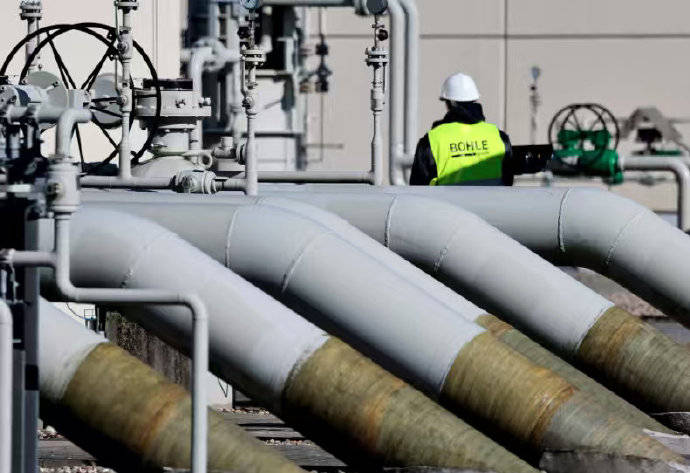
不给美国面子!土耳其将继续购入俄天然气,能源安全才是硬指标
Sou Hu Cai Jing· 2025-10-05 18:12
Group 1 - Turkey's Energy Minister Arpaçlan Bayraktar stated that Ankara will continue to procure natural gas from all available suppliers, including Russia, without plans to comply with U.S. demands to cut off Russian gas [1][3][10] - The backdrop of this situation is complex, as Trump had previously signaled that Turkey might agree to stop purchasing Russian oil and gas in exchange for new sanctions against Moscow [2][6] - Turkey's stance prioritizes energy security and supply stability over political considerations, emphasizing the need to ensure uninterrupted gas supply for its citizens [3][5][10] Group 2 - Turkey's energy consumption is high, and the country aims to diversify its energy sources while still relying heavily on Russian gas, indicating a pragmatic approach rather than a simple alignment with one side [5][9] - The U.S. is dissatisfied with Turkey's decision, as Trump's plan would allow the U.S. to increase its energy exports to replace Russian supplies, but Turkey finds the U.S. alternatives costly and less reliable [6][9] - The geopolitical dynamics within NATO are complicated, with Turkey maintaining energy ties with Russia while being a key NATO member, creating a delicate balance between the two [8][10] Group 3 - The Kremlin views Trump's intentions as a way to force global markets to pay more for U.S. oil and gas, highlighting the economic motivations behind U.S. energy policies [7][9] - Turkey's geographical position as a critical energy transit hub complicates its ability to follow U.S. directives, as cutting off Russian supplies could harm its energy security and regional influence [8][10] - The ongoing energy strategies of Turkey, Russia, and the U.S. reflect a broader geopolitical struggle, with Turkey seeking to maintain its energy partnerships while navigating pressures from both the U.S. and the EU [9][10]