自助模式

Search documents
餐饮行业热门赛道盘点:背后的爆款逻辑是什么?
虎嗅APP· 2026-03-06 09:59
Core Insights - The article discusses the trends and dynamics of the Chinese restaurant industry as it enters a phase of stock competition, with a focus on innovation in products and business models to adapt to changing consumer demands and market conditions [4][6]. Group 1: Industry Growth and Trends - In 2025, China's restaurant industry is projected to achieve a revenue of 5.8 trillion yuan, reflecting a year-on-year growth of 3.2%, with the revenue from large-scale dining units reaching 1.63 trillion yuan, up by 2.0% [6]. - The overall market size continues to expand, but the growth rate is slowing, indicating a shift from expansion-driven growth to a focus on efficiency and quality [6][11]. - The number of restaurant outlets in China is expected to exceed 7.7 million by the end of 2025, marking a 3.1% increase from the previous year [8]. Group 2: Popular Product Trends - In 2025, several popular food items are emerging, including butter rice cakes and milk skin sugar-coated hawthorn, which gained significant traction on social media platforms [16][17]. - The popularity of these products is rooted in their familiarity to consumers, allowing for quick understanding and acceptance, while brands enhance them through innovative ingredient combinations and presentation [17][21]. Group 3: Innovative Business Models - The rise of "beautiful meals" and "mountain wild" dining concepts reflects a growing consumer demand for visually appealing and health-oriented dining experiences [23][24]. - Self-service models are gaining traction, with brands expanding their offerings to include semi-self-service options, catering to consumer desires for diverse experiences and budget control [35]. - Large store formats are becoming a strategic focus for brands, shifting from merely selling products to offering immersive dining experiences that enhance brand value [32]. Group 4: Regional and Niche Market Growth - Jiangxi stir-fry is rapidly gaining popularity, with a 287.5% increase in related business registrations in 2025, and over 20,000 outlets nationwide [39][40]. - The fried chicken market is projected to reach 113 billion yuan by 2026, with a year-on-year growth of 20.2%, driven by a surge in brand expansion and consumer interest [42]. - Freshly made ice cream is experiencing significant growth, with brands leveraging local ingredients and high visual appeal to attract consumers [44]. - The "Benbang" noodle segment is also gaining traction, characterized by its fresh cooking methods and diverse toppings, with several brands achieving chain development [46]. Conclusion - The restaurant industry is evolving towards a more innovative and diversified landscape, where the ability to adapt to consumer preferences and enhance product offerings will be crucial for sustained competitiveness [49].

2025年餐饮行业热门赛道盘点报告
Hong Can Chan Ye Yan Jiu Yuan· 2026-03-05 01:30
Investment Rating - The report does not explicitly provide an investment rating for the restaurant industry in 2025 Core Insights - The restaurant industry in China is projected to reach a revenue of 5.8 trillion yuan in 2025, with a year-on-year growth of 3.2%. The growth rate is slowing down, indicating a shift from expansion-driven growth to a more rational focus on efficiency and quality [3][10] - Popular products in the restaurant sector are emerging rapidly, with items like butter rice cakes and corn egg tarts gaining significant traction on social media platforms [3][29] - Six major trends in restaurant models are identified, including "experience and scene innovation," "efficiency and cost optimization," and "social and value empowerment," which are reshaping consumer dining experiences [3][36] Summary by Sections Industry Overview - The restaurant industry is experiencing steady growth, with a focus on brand innovation and the emergence of popular concepts. The market is transitioning to a more rational growth phase, emphasizing efficiency and quality [5][10] - The revenue for limited-scale restaurants is expected to reach 1.63 trillion yuan, growing by 2.0% year-on-year [3][10] Popular Products - The report highlights a variety of trending products, including butter rice cakes, Thai milk tea, and stinky tofu hot pot, which have gained popularity through social media [3][29] - The peak popularity of certain products on platforms like Douyin (TikTok) has reached over 200 million views [29][30] Popular Models - Six key models are identified in the restaurant industry, including: - "Beautiful Rice" focusing on aesthetic presentation and social media appeal [37][39] - "Mountain Wild" emphasizing natural ingredients and a relaxed dining atmosphere [46][47] - "Store-in-Store" models that allow brands to test new concepts with lower risk [48][54] - "Large Store" models that shift focus from product sales to experiential and brand value [55][57] - "Board-Front" models that enhance consumer interaction through visible cooking processes [58][60] - "Self-Service" models that are expanding in various dining categories [61][63] Popular Categories - Strong growth is observed in categories such as black duck pot, Jiangxi stir-fry, and local noodle dishes, driven by supply chain advantages and consumer demand for regional flavors [3][64][66] - The Jiangxi stir-fry segment is particularly notable, with a 287.5% increase in related business registrations in 2025, indicating a shift towards standardization and branding [66][70] - The vegetarian food segment is also rapidly developing, with over 4,000 vegetarian restaurants and a market size of approximately 8 billion yuan by 2025 [71]
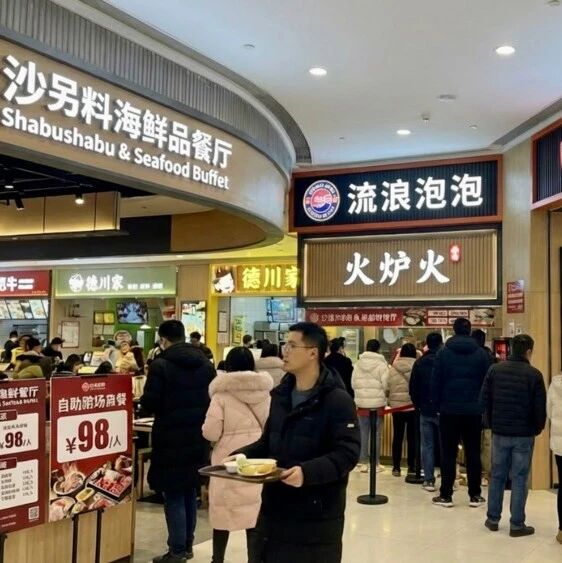
一个商场,全是自助,餐饮人其实也很无奈
虎嗅APP· 2026-01-12 09:23
Core Viewpoint - The article discusses the rapid growth and popularity of the self-service restaurant model in China, highlighting its appeal to consumers and the strategic shifts by various brands to adopt this model for better customer engagement and operational efficiency [5][10][11]. Group 1: Market Trends - By the end of 2025, the total number of self-service restaurant outlets in China is expected to reach approximately 79,000, with 33,000 new openings in the past year [6]. - In key monitored shopping centers, the proportion of self-service dining outlets is projected to average 15.7% in 2025, an increase of about 0.8 percentage points from 2024 [6]. - Self-service restaurants are increasingly dominating shopping malls, with instances of up to 15 self-service restaurants coexisting in a single mall [7]. Group 2: Consumer Preferences - Consumers are shifting towards self-service dining due to improved quality and environment, with many expressing a preference for self-service options during holidays and gatherings [9]. - The new generation of consumers appreciates the variety and experience offered by self-service dining, viewing it as a way to enjoy diverse culinary options [10]. Group 3: Business Strategies - Major restaurant brands are increasingly integrating self-service models to enhance customer attraction and retention, particularly targeting family and young adult demographics [8][13]. - The self-service model is seen as a solution for various brands facing operational challenges, with some brands launching new self-service concepts to revitalize their offerings [11][15]. - Successful self-service restaurants focus on maintaining high quality and cost-effectiveness, with operational efficiencies allowing for better customer service and management [14][17]. Group 4: Competitive Landscape - The self-service dining market is becoming highly competitive, with many brands offering similar products, leading to a need for differentiation through quality and unique offerings [23]. - Brands are moving away from the traditional "all-you-can-eat" model to focus on quality over quantity, emphasizing a curated selection of high-quality ingredients [24]. - The rise of self-service dining is also seen in various sectors, including hotels and corporate cafeterias, which are adapting to consumer demand for affordable and quality dining experiences [21].
山野模式,正在成为其他品类的“万能解”
东京烘焙职业人· 2025-07-07 07:38
Core Viewpoint - The "Shan Ye" dining model is rapidly reshaping consumer experiences in the restaurant industry, with a focus on integrating natural elements and local ingredients into various dining formats [4][60]. Group 1: Popularity and Expansion of "Shan Ye" Dining - "Shan Ye" hotpot has gained immense popularity, leading to a surge in the number of chain restaurants expanding their locations [4][5]. - The "Shan Ye + Hotpot" model has become a trending format, with significant social media engagement, including over 100,000 posts on Xiaohongshu and over 100 million views on Douyin [6][7]. - Other dining formats, such as "Shan Ye" barbecue and small hotpot, are also emerging, attracting younger consumers with unique flavors and experiences [9][19]. Group 2: Characteristics of "Shan Ye" Dining - The "Shan Ye" dining brands often incorporate natural elements like mountains, stones, and trees into their decor, creating an immersive dining environment [11][41]. - The product offerings emphasize local ingredients, such as wild vegetables and mushrooms, aligning with the "nature's transporter" concept [42]. - Many brands adopt a self-service or semi-self-service model, with average customer spending ranging from 30 to 80 yuan, making dining more accessible [56][58]. Group 3: Market Trends and Innovations - The rise of "Shan Ye" dining reflects a broader trend of integrating traditional dining concepts with innovative models, creating new pathways for growth in the restaurant sector [62]. - The "Shan Ye" model serves as an emotional refuge for consumers, allowing them to escape urban life and connect with nature [63]. - Various dining formats are evolving, such as rotating hotpot and self-service breakfast, which cater to the demand for convenience and unique experiences [70][76]. Group 4: Future Directions - Brands must go beyond superficial visual elements and genuinely engage with the outdoor spirit to resonate with consumers seeking authenticity [84]. - The essence of the "Shan Ye" model lies in addressing consumer fatigue with artificial experiences, emphasizing a sincere dialogue with nature [84].