自由主义国际秩序

Search documents
“麻烦的伙伴关系”再现重大裂痕(国际观澜)
Ren Min Ri Bao· 2026-02-09 23:46
Core Viewpoint - The transatlantic relationship is undergoing its most profound rift since World War II, highlighted by the U.S. criticism of Europe regarding issues of freedom and democracy, marking a significant turning point in U.S.-Europe relations [4] Group 1: Changes in Transatlantic Relations - The rift reflects deep changes in the international landscape, characterized by the overall decline of Western countries and the rise of global southern nations [4] - Recent themes of the Munich Security Conference indicate growing anxiety in the West, particularly Europe, about its diminishing global influence [4] Group 2: Economic Factors - The U.S. National Security Strategy report criticizes Europe for its economic decline and decreasing share of global GDP, viewing Europe through the lens of military spending inadequacies and economic stagnation [5] - The era of U.S. hegemony is perceived to be over, leading to demands for Europe to take on greater responsibility for its own security [5] Group 3: Divergence in Values and Security Perspectives - There is a significant fracture in the long-standing shared values between the U.S. and Europe, with the U.S. government adopting anti-immigration stances and skepticism towards climate change, viewing Europe as deviating from fundamental values [6] - The common security perspective is also fracturing, with differing perceptions of threats and a growing skepticism towards collective defense mechanisms like NATO [6] Group 4: Erosion of Shared Order - The U.S. government is prioritizing "America First" policies, leading to a collapse of the liberal international order that the U.S. and Europe jointly maintained post-World War II [6] - The future trajectory of U.S.-Europe relations remains uncertain, with historical precedents indicating that disputes have always existed, but the current rift may be more than a temporary phenomenon [7]

矛头直指美国外交政策,强调法国不会袖手旁观,马克龙谴责“新帝国主义”
Huan Qiu Shi Bao· 2026-01-09 22:42
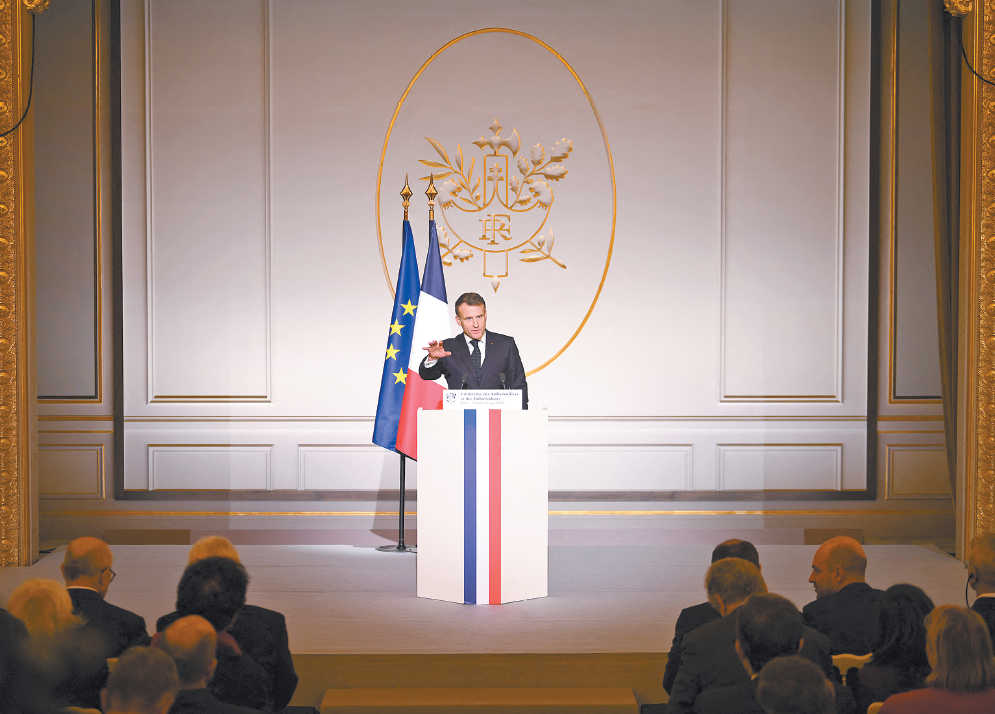
Group 1 - French President Macron condemned the spread of "new imperialism" and "new colonialism" in international relations, specifically targeting U.S. foreign policy [1][2][4] - Macron emphasized the need for France and Europe to enhance their strength and influence in a world increasingly dominated by great powers, warning against becoming subservient to power logic [4][5] - The upcoming G7 presidency in 2026 is seen as an opportunity for France to promote global multilateralism reforms, rejecting the notion of G7 as an anti-China or anti-BRICs club [5][6] Group 2 - Trump's remarks indicated a belief that his personal moral standards are the only constraints on U.S. global power, suggesting a shift away from adherence to international law [6][7] - The perception of the U.S. as an unreliable partner has increased in Germany, with 76% of respondents believing the U.S. is no longer a trustworthy ally, marking a 3% rise since June 2025 [8] - The shift in U.S. foreign policy under Trump could lead to a breakdown of the rules-based international order, prompting other nations to adopt similar aggressive postures, thereby increasing the risk of military conflicts globally [9]
中国学者谈“马杜罗事件”:美国战略调整的涟漪将对2026年中国周边形势带来风险
Xin Lang Cai Jing· 2026-01-07 11:01
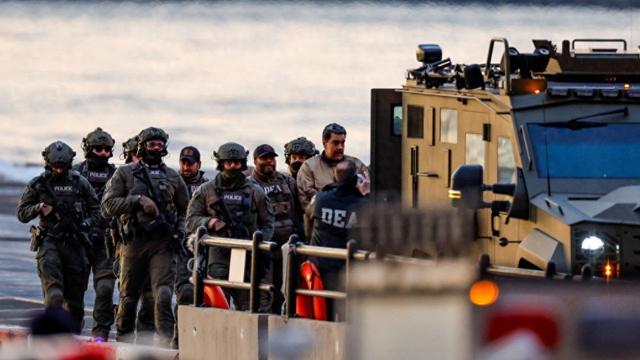
Core Viewpoint - The recent actions of the United States regarding Venezuela, including the forceful control of President Maduro, challenge the fundamental principles of the United Nations Charter and expose U.S. hegemonic tendencies, potentially destabilizing the current international order [2][3][5]. Group 1: U.S. Actions and International Reactions - The U.S. military's forceful control of Venezuelan President Maduro has drawn significant international attention, with experts highlighting that this reflects U.S. hegemonic behavior and could inspire similar actions from other nations, further undermining global peace and stability [3][5]. - Chinese officials have condemned the U.S. actions as a violation of Venezuela's sovereignty and a serious threat to international relations, calling for the immediate release of Maduro and his wife [3][4]. - The incident is seen as a practical application of the Monroe Doctrine under Trump's administration, with experts noting that while the U.S. demonstrates military strength, it also depletes its resources and raises questions about future developments [3][4]. Group 2: Implications for International Order - The U.S. actions in Venezuela signify a severe challenge to the liberal international order established post-World War II, with experts warning that the world may revert to a state of power politics reminiscent of the 19th century [4][5]. - The recent U.S. National Security Strategy report indicates a shift in U.S. foreign policy that could lead to increased instability in international relations, as unilateral actions may undermine multilateral governance [5][6]. - Analysts suggest that the U.S. strategy may embolden traditional allies in the Asia-Pacific region, leading to increased military and political activities that could provoke tensions with China [6].
委内瑞拉“被斩首”,旧秩序的面纱彻底粉碎
虎嗅APP· 2026-01-04 09:47
Core Viewpoint - The article discusses the implications of Trump's alleged capture of Venezuelan President Maduro and his wife, suggesting it could be a significant political victory for Trump and may lead to a shift in the political landscape of Latin America [4][6]. Group 1: Event Overview - On January 3, 2026, Trump announced on social media that Maduro and his wife had been captured and sent out of the country, which quickly became a major news story globally [4]. - The operation involved U.S. military airstrikes targeting key political and military facilities in Venezuela, leading to speculation about a potential U.S. military intervention [5][6]. Group 2: Potential Outcomes - The article outlines several possible scenarios following the event: the collapse of Maduro's government, fragmentation of the political landscape leading to civil war, or the continuation of a Maduro government without Maduro himself [6][8]. - The likelihood of a successful transition to a pro-American government is considered high due to the structural disadvantages faced by anti-Maduro forces [8]. Group 3: Economic and Social Context - Venezuela's GDP has fallen to levels not seen since before Chavez's presidency, exacerbated by U.S. sanctions and internal corruption, leading to a humanitarian crisis with over 3.4 million Venezuelans fleeing the country [7][8]. - The internal situation in Venezuela is dire, with a weak manufacturing sector unable to provide essential goods, making the population's living conditions increasingly difficult [7]. Group 4: International Implications - Trump's actions are seen as a challenge to the existing international order, signaling a shift towards a more power-based realism in international relations, where military intervention becomes a viable option for political gain [9][10]. - The article suggests that this event could lead to a fragmentation of the international order, with countries feeling empowered to pursue military solutions to political problems [11][12]. Group 5: Strategic Considerations for China - The article emphasizes the need for China to adapt to the changing international landscape, focusing on enhancing economic resilience and supply chain stability in response to the evolving geopolitical environment [12][13]. - As the international order shifts, China must find a balance between moral responsibility and the assertion of power to navigate the challenges posed by this new reality [13].