自营电商

Search documents
仅运营3个月!小红书关停「最短命」项目,商家斥责「交钱后没人管」
Xin Lang Ke Ji· 2025-12-10 00:56
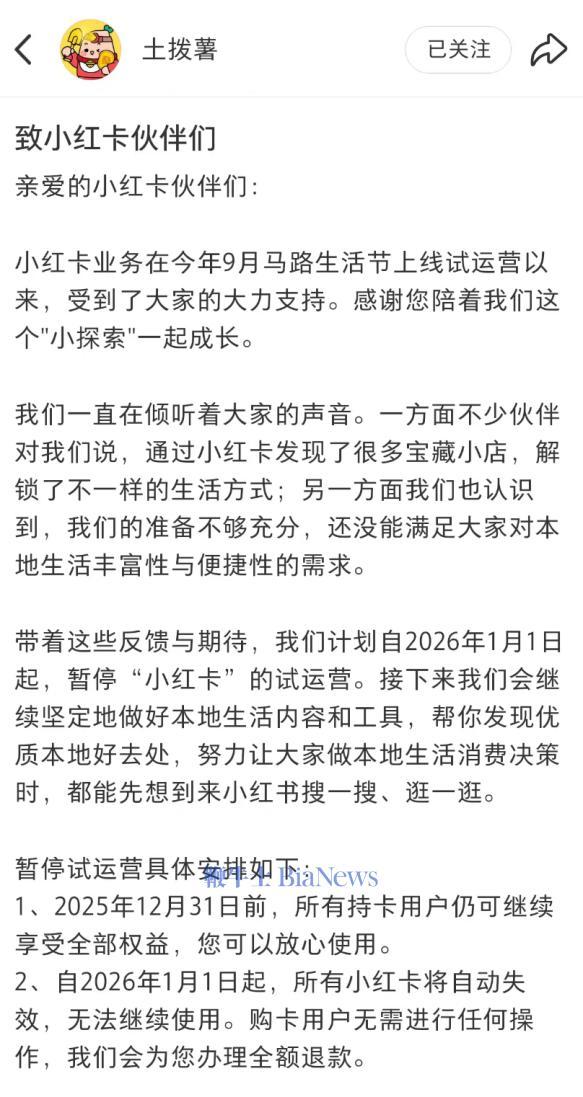
Core Insights - Xiaohongshu's "Xiaohong Card" project will be suspended from January 1, 2026, after only three months of trial operation, indicating a significant setback in its local lifestyle services initiative [1][7] - The company cited insufficient preparation and failure to meet user and merchant expectations as reasons for the suspension, highlighting widespread dissatisfaction among both users and merchants [2][5] Group 1: Project Overview - The "Xiaohong Card" was launched in September 2025 in Shanghai, Hangzhou, and Guangzhou, aimed at providing discounts for users at selected stores for an annual fee of 168 yuan [1][4] - Users reported poor experiences, including lack of communication regarding card benefits and expiration, leading to dissatisfaction and loss of rights [4][2] Group 2: Merchant Feedback - Merchants expressed frustration over the lack of service and support after paying for certification to become part of the program, with complaints about unfulfilled promises and inadequate follow-up [2][5] - A specific case highlighted a merchant's experience of paying nearly 600 yuan for certification but receiving no support or training, leading to significant disappointment [4][5] Group 3: Market Analysis - Analysts suggest that the rapid failure of the "Xiaohong Card" reflects a misjudgment by Xiaohongshu regarding the local lifestyle market, where convenience and cost-effectiveness are crucial [7][12] - The company's attempt to implement a high-threshold membership model contrasts with competitors like Meituan and Douyin, which offer free options and a wider selection, indicating a potential misalignment with consumer preferences [7][12] Group 4: Broader Business Challenges - The suspension of the "Xiaohong Card" is part of a broader trend of Xiaohongshu facing challenges in its commercialization efforts, including the recent shutdown of its self-operated e-commerce platforms [8][10] - Industry experts note that Xiaohongshu's attempts to integrate e-commerce with social media have not translated into sustainable revenue, as users often prefer to purchase from established platforms like Taobao and JD after being influenced by Xiaohongshu [10][12]

拿下支付牌照,小红书迈向交易平台
3 6 Ke· 2025-11-06 23:25
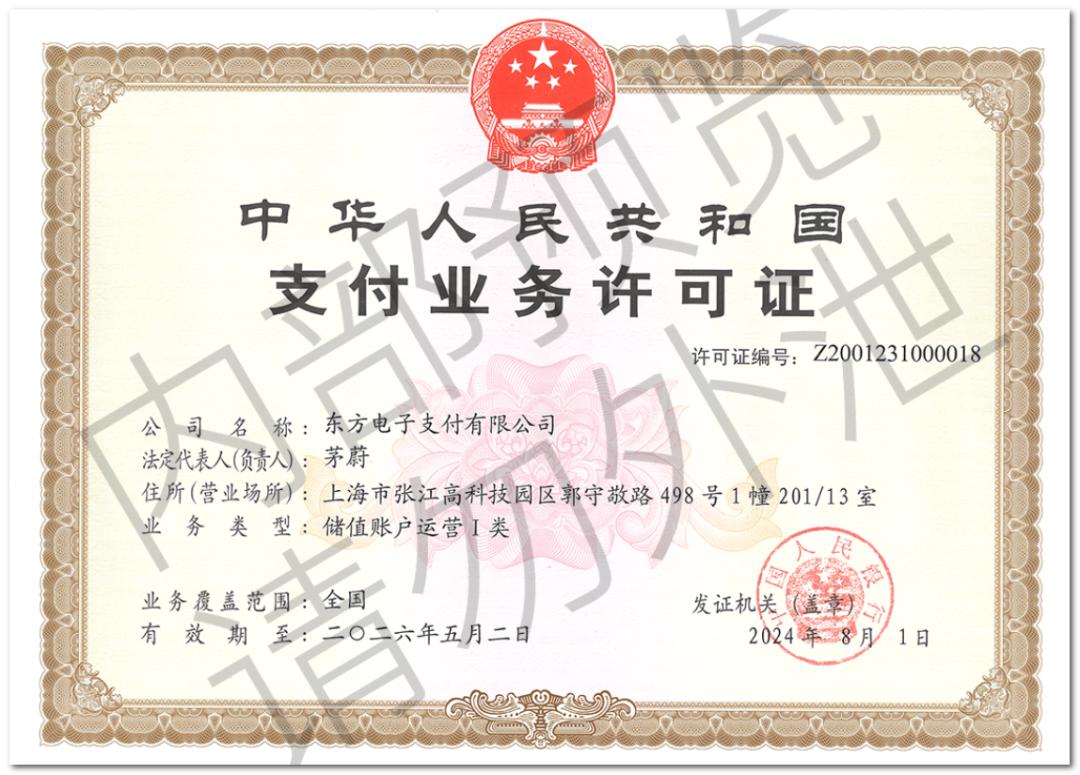
Core Insights - The article discusses the recent acquisition of a payment license by Xiaohongshu through its subsidiary Dongfang Electronic Payment Co., which is a significant step towards transforming the platform into a transaction-oriented entity [1][2]. Group 1: Company Developments - Dongfang Electronic Payment Co. completed a legal entity change and capital increase on November 13, indicating Xiaohongshu's strategic move to enhance its payment capabilities [1]. - Xiaohongshu has been recognized as a platform that showcases a refined lifestyle for the middle class and is now aiming to evolve from a content-driven platform to a transaction platform [1][4]. Group 2: Payment License Acquisition - The payment license obtained is categorized under Internet payment, which is crucial for Xiaohongshu's operational framework, allowing it to reduce payment processing costs significantly [2][3]. - The license enables Xiaohongshu to save on transaction fees, which could amount to approximately 2.4 billion RMB based on a 0.6% fee rate on a projected GMV of over 400 billion RMB in 2024 [3]. Group 3: Future Strategies - There is speculation about Xiaohongshu's potential pursuit of additional licenses, such as for Internet micro-lending, which could enhance its revenue streams and customer acquisition [3][4]. - The company aims to create a closed-loop experience by integrating payment services with lending options, thereby increasing user engagement and monetization opportunities [3][4]. Group 4: Business Vision - Xiaohongshu's founder, Zhai Fang, envisions a balance between e-commerce and content, with the goal of ensuring that monetization does not compromise the community aspect of the platform [4]. - The successful acquisition of the payment license is seen as a critical step in Xiaohongshu's journey towards becoming a comprehensive transaction platform, necessitating careful management of its commercial and content strategies [4].
上线官方自营旗舰店 快手要做自营电商?
Zhong Guo Jing Ying Bao· 2025-08-13 13:12
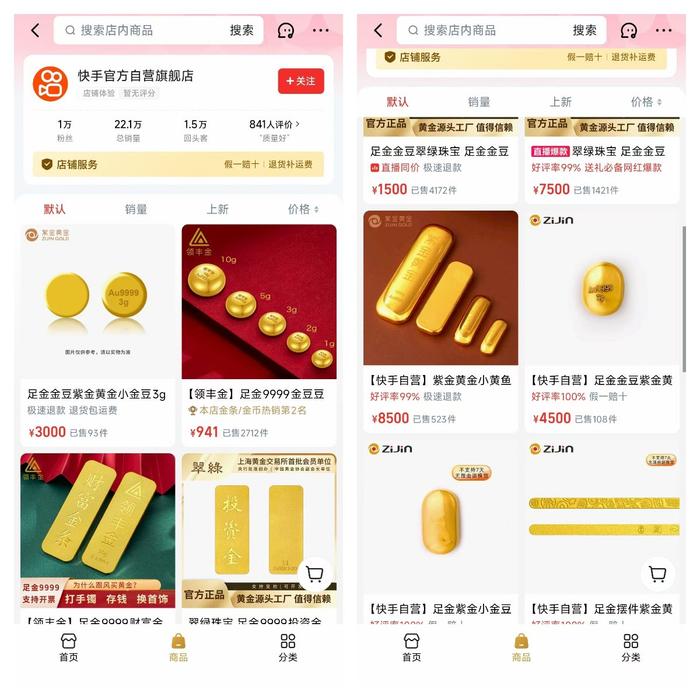
Core Viewpoint - Kuaishou is expanding into self-operated e-commerce by launching the "Kuaishou Official Self-Operated Flagship Store" within its app, aiming to enhance its e-commerce ecosystem and improve service capabilities [2][3]. Group 1: Business Model and Operations - The flagship store is operated by Chengdu Pinong Technology Co., Ltd., which is 100% controlled by a Kuaishou affiliate, and has achieved over 220,000 sales with a fan base exceeding 10,000 [2]. - The store utilizes a factory-direct shipping model, reducing intermediaries, but lacks a nationwide warehousing network, which may affect delivery efficiency [2][4]. - Kuaishou's self-operated model is designed to attract price-sensitive consumers by offering competitive pricing through direct partnerships with factories [3][4]. Group 2: Market Position and Financial Performance - Kuaishou's e-commerce segment is becoming increasingly significant, with a reported GMV of 3,323.252 billion yuan in Q1 2025, up from 2,880.725 billion yuan in the same period last year [4]. - The company reported Q1 2025 revenue of 32.61 billion yuan, a 10.9% year-on-year increase, with an adjusted net profit of 4.58 billion yuan, reflecting a net profit margin of 14.0% [4]. Group 3: Competitive Landscape - The launch of the self-operated flagship store is seen as a complement to Kuaishou's existing third-party merchant and live-streaming sales model, potentially enhancing overall user trust and driving third-party sales [4]. - The self-operated model is expected to provide valuable quality control and operational experience that can benefit the management of third-party merchants, promoting a more standardized e-commerce ecosystem [4].

快手要做自营电商了吗?
Xin Lang Cai Jing· 2025-08-13 11:08
Core Viewpoint - Kuaishou is rumored to be entering self-operated e-commerce through the launch of the "Kuaishou Official Self-Operated Flagship Store," but internal sources indicate that there are no comprehensive plans for self-operated e-commerce at this time [1][3] Group 1: Kuaishou's E-commerce Strategy - The "Kuaishou Official Self-Operated Flagship Store" has launched dozens of gold jewelry products, with many marked as "Kuaishou Self-Operated," indicating a potential shift towards self-operated e-commerce [1] - Kuaishou's e-commerce has previously introduced a managed model, including semi-managed and fully managed options, allowing the platform to handle various operational tasks for merchants [3] - The self-operated model allows Kuaishou to endorse product quality under its name, potentially increasing consumer trust [3] Group 2: Market Context and Performance - The overall e-commerce industry primarily relies on third-party merchants, as this model is less operationally intensive and enhances product variety [4] - Kuaishou's e-commerce GMV (Gross Merchandise Volume) grew by 15.4% year-on-year in Q1, reaching 332.3 billion, with monthly active buyers increasing to 135 million [4] - The focus for Kuaishou's e-commerce in the past year has been on optimizing product supply and improving operational efficiency to meet user demands [4] Group 3: Challenges and Competitive Landscape - The investment in self-operated e-commerce requires significant resources and poses higher operational risks, making it a less favorable option compared to enhancing platform ecology and collaboration with external supply chains [5] - Competitors like Douyin have attempted self-operated e-commerce but faced challenges, leading to the closure of several self-operated stores [5] - Kuaishou is advised to concentrate on refining its platform operations rather than aggressively pursuing self-operated e-commerce at this stage [5]