
芬太尼危机

Search documents
中国复购美国大豆?外交部回应
证券时报· 2025-10-29 10:36
Core Viewpoint - The article discusses China's responses to various international trade and diplomatic issues, particularly regarding soybean imports from the U.S., AI chip exports, and the fentanyl crisis, emphasizing China's consistent stance and openness to cooperation [2][3][4]. Group 1: Soybean Imports - China has resumed purchasing soybeans from the U.S. for the first time this harvest season after a period of zero imports in September [2]. Group 2: AI Chip Exports - The Chinese government has reiterated its position on the export of AI chips from the U.S. to China, suggesting that inquiries should be directed to relevant authorities [3]. Group 3: Fentanyl Crisis - China expresses sympathy for the fentanyl crisis affecting the U.S. and highlights its strict drug control policies, indicating a willingness to continue cooperation with the U.S. on this issue [4].


中方:对美国人民遭受的芬太尼危机表示同情,美方应为合作创造必要条件
Zhong Guo Xin Wen Wang· 2025-10-29 07:53
Core Viewpoint - China expresses sympathy for the American people affected by the fentanyl crisis and calls for the U.S. to create necessary conditions for cooperation [1] Group 1: China's Position on Drug Control - China maintains a consistent and clear stance on drug control, being one of the countries with the most stringent regulations and the highest number of controlled substances [1] - The Chinese government has a strong record in drug prohibition and has previously provided assistance to the U.S. regarding the fentanyl issue, achieving positive results [1] Group 2: Call for Cooperation - China is open to continuing cooperation with the U.S. on the fentanyl crisis and urges the U.S. to take practical actions to facilitate this collaboration [1]
外交部:中方对美国人民遭受芬太尼危机表示同情,对继续同美方开展合作持开放态度
Huan Qiu Wang· 2025-10-29 07:36
Core Viewpoint - The Chinese government maintains a consistent and clear stance on the issue of fentanyl, emphasizing its commitment to drug control and expressing sympathy for the American public affected by the fentanyl crisis [1] Group 1: China's Position on Drug Control - China is recognized as one of the countries with the most stringent drug control policies and the highest number of regulated substances [1] - The Chinese government has a strong record in drug prohibition and has previously provided assistance to the U.S. in addressing the fentanyl crisis, achieving positive results [1] Group 2: Cooperation with the U.S. - China expresses an openness to continue cooperation with the U.S. on the fentanyl issue, urging the U.S. to take practical actions to create necessary conditions for collaboration [1]
贝森特预计最高法院将支持特朗普关税,但也在考虑备选方案
Hua Er Jie Jian Wen· 2025-09-02 03:00
Group 1 - The core viewpoint is that U.S. Treasury Secretary Becerra expresses confidence that the Supreme Court will support Trump's tariffs, while also preparing alternative legal options in case the lower court's ruling is upheld [1][2] - The Federal Circuit Court ruled 7-4 that the International Emergency Economic Powers Act (IEEPA) does not grant Trump the authority to impose "fentanyl tariffs" and "reciprocal tariffs," with the decision effective before October 14 to allow for an appeal [1][2] - Becerra emphasizes the urgency of addressing trade imbalances and the fentanyl crisis, which results in approximately 70,000 American deaths annually, framing it as a reasonable basis for declaring a national emergency [2] Group 2 - Becerra plans to submit a legal brief highlighting the growing trade deficit, which he compares to the 2008-2009 financial crisis, suggesting that proactive measures could have prevented that disaster [2] - Alternative legal tools are available, including the Smoot-Hawley Tariff Act of 1930, which allows the President to impose tariffs of up to 50% on countries deemed discriminatory against U.S. commerce [2] - The Federal Circuit Court's ruling does not affect tariffs imposed under other legal authorities, such as those on steel and aluminum imports [3]
特朗普承认,中国帮了美国大忙,但中方的核心关切,他却绝口不提
Sou Hu Cai Jing· 2025-07-22 03:58
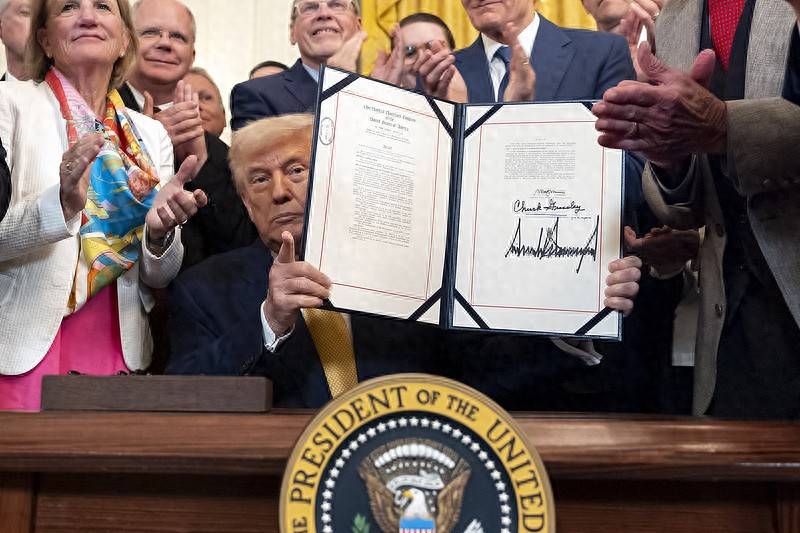
Core Points - The article discusses the contradictory statements made by President Trump regarding China's role in the fentanyl crisis, highlighting his fluctuating stance that aligns with trade tariff policies [1][3] - It emphasizes that despite Trump's claims, evidence shows a significant reduction in fentanyl from China since 2019, coinciding with China's strict regulatory measures [3][5] - The article critiques the U.S. healthcare system's failure to address the root causes of the opioid crisis, attributing it to domestic pharmaceutical practices rather than foreign supply [5][7] Summary by Sections U.S.-China Relations and Fentanyl - Trump's comments on China’s efforts to combat fentanyl are inconsistent, reflecting a broader strategy tied to trade tariffs [1] - The signing of the fentanyl trafficking law coincided with Trump's reversion to blaming China for the majority of fentanyl supply [1][3] Impact of China's Regulatory Measures - China's 2019 regulations led to a notable decrease in fentanyl-related deaths in the U.S., with a 20%-25% reduction in overdose fatalities [3][5] - U.S. reports indicate that since 2019, there has been "almost no detection" of fentanyl from China, contradicting Trump's narrative [3][5] Domestic Issues in the U.S. - The article highlights systemic failures in the U.S. healthcare system, where 80% of the world's opioids are consumed by only 5% of the global population [5] - Trump's proposed solutions, such as executing drug traffickers in China, are criticized as superficial and failing to address domestic pharmaceutical lobbying and prescription practices [5][7] - The ongoing opioid crisis in the U.S. is framed as a public health issue that cannot be resolved through political posturing or foreign blame [7]
美国对中国最大的不满,终于真相大白,中国救了美国上千条人命
Sou Hu Cai Jing· 2025-05-27 05:03
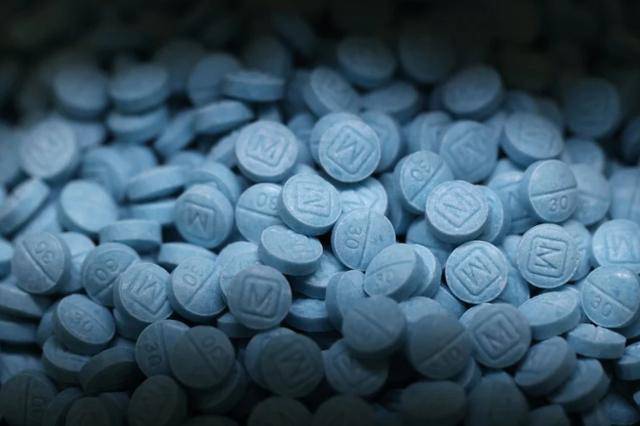
Group 1 - The core argument of the articles highlights the contradiction in the U.S. government's stance on fentanyl, where it blames China for the crisis while evidence suggests that China's regulations have actually saved lives in the U.S. [1][3] - A recent study indicates that China's 2019 ban on fentanyl exports has prevented nearly a thousand American deaths, challenging the narrative that China is the main culprit behind the fentanyl crisis in the U.S. [3][9] - The U.S. has imposed a 245% tariff on China, claiming it is a measure against fentanyl, but the reality is that the majority of fentanyl in the U.S. comes from Mexican drug cartels, not China [3][5] Group 2 - Despite China's proactive measures, the U.S. has not permanently classified fentanyl as a controlled substance, leading to ongoing issues with opioid prescriptions and misuse within the country [5][7] - The articles argue that the fentanyl crisis in the U.S. is largely a result of internal issues, including the pharmaceutical industry's profit motives and regulatory failures, rather than external factors related to China [7][9] - The economic impact of the trade war, including losses exceeding $1.5 trillion, is contrasted with the lives saved due to China's cooperation in drug control, suggesting that the U.S. has mismanaged the situation [9]
美以芬太尼为借口滥施关税,纯属“内病外治”(钟声)
Ren Min Ri Bao· 2025-04-26 21:58
Core Viewpoint - The recent comments by a U.S. mayor about distributing fentanyl to the homeless highlight the severity of the fentanyl crisis in the U.S., which is often blamed on China, undermining cooperation in drug control between the two nations [1][4]. Group 1: U.S. Fentanyl Crisis - The U.S. has not permanently classified fentanyl, leading to worsening drug abuse and overdose issues, with synthetic opioids causing 75,000 overdose deaths in 2023, accounting for nearly 70% of all drug overdose deaths [2]. - The U.S. consumes 80% of the world's opioids despite having less than 5% of the global population, indicating a significant public health crisis [2]. - A poll by the Sihe Zhiyuan Foundation shows that most Americans believe drug cartels, users, and the government are responsible for the fentanyl crisis, suggesting a need for comprehensive policy reform [2]. Group 2: China's Drug Control Efforts - China maintains a "zero tolerance" policy towards drugs, including fentanyl, and has taken significant steps in drug control, including the comprehensive classification of fentanyl in 2019, making it the first country to do so [3]. - Since China's classification of fentanyl, there have been no reported cases of fentanyl smuggling from China to the U.S., as acknowledged by the U.S. State Department [3]. - China continues to enhance its control over precursor chemicals and collaborates with countries like the U.S. and Mexico to combat the issue of fentanyl and its precursors [3]. Group 3: U.S.-China Cooperation - The establishment of the U.S.-China drug control cooperation working group in 2024 provides a platform for both countries to address global drug issues collaboratively [4]. - Ongoing technical exchanges and regular communication between the two nations' drug enforcement agencies aim to strengthen cooperation in tackling the fentanyl crisis [4]. - China's strong opposition to the U.S. imposing tariffs under the pretext of the fentanyl issue emphasizes the need for mutual respect and factual acknowledgment in bilateral relations [4].