全球产供链稳定

Search documents
外交部:美国悍然对委使用武力威胁全球产供链稳定
Xin Lang Cai Jing· 2026-01-07 07:56
Core Viewpoint - The Chinese government strongly condemns the recent U.S. military actions against Venezuela, which it views as a direct threat to global energy cooperation and stability in supply chains [1] Group 1: China-Venezuela Cooperation - China considers its cooperation with Venezuela as a partnership between sovereign nations, protected by international law and the laws of both countries [1] - China has made significant investments in Venezuela, recognizing it as an important partner in oil production and supply chains [1] Group 2: U.S. Actions and Implications - The U.S. has imposed illegal unilateral sanctions on Venezuela's oil industry for a long time, which have severely impacted Venezuela's economic and social order [1] - The recent use of military force by the U.S. against Venezuela is seen as a serious disruption to the stability of global supply chains [1]
关税突发!美国拟对中国半导体产业征税,外交部回应
Xin Lang Cai Jing· 2025-12-24 08:25
Group 1: US-China Semiconductor Tariffs - The Chinese government firmly opposes the US's plan to impose tariffs on China's semiconductor industry starting in 2027, arguing that it unjustly suppresses Chinese industries and disrupts global supply chains [1][4] - The Chinese government urges the US to correct its actions and resolve concerns through dialogue based on equality, respect, and mutual benefit, to maintain stable and healthy US-China relations [1][4] - If the US continues its unilateral actions, China will take necessary measures to protect its legitimate rights and interests [1][4] Group 2: Japan's Nuclear Policy and Security Concerns - A senior official from the Japanese Prime Minister's office made pro-nuclear comments that have sparked significant domestic and international backlash, with many criticizing the remarks as unacceptable [2][5] - The current Japanese Prime Minister, since taking office, has accelerated military expansion and has made controversial statements regarding Taiwan, indicating a dangerous trend towards militarization [2][5] - The Chinese government emphasizes the need for Japan to fulfill its nuclear safety responsibilities and accept international supervision, especially following a recent radioactive water leak incident at a nuclear facility in Japan [3][6]
中德经贸互动有哪些新看点?德外长:愿在安世半导体问题上发挥作用
Di Yi Cai Jing· 2025-12-09 10:22
Group 1: China-Germany Economic Relations - The Chinese government hopes that the German and European automotive associations will influence the European Commission to resolve the electric vehicle anti-subsidy case promptly [1] - Recent interactions between China and Germany have been frequent, with discussions focusing on economic relations and cooperation in the automotive sector [1][2] - German companies continue to invest in China, indicating a commitment to the Chinese market despite operational challenges [1][2] Group 2: Semiconductor Supply Chain Issues - The Chinese government emphasizes the importance of stabilizing the semiconductor supply chain, particularly in light of the issues surrounding ASML and export controls [4][5] - The German government is willing to enhance dialogue and cooperation with China to address supply chain disruptions and maintain free trade [5] - The semiconductor supply chain crisis has led to temporary work reductions in German companies, highlighting the impact of chip shortages on the automotive and machinery sectors [6] Group 3: Automotive Industry Dynamics - German automotive companies are increasing their investments in China and deepening strategic partnerships, reflecting a robust collaboration in the automotive supply chain [7] - Despite competitive pressures, German car manufacturers are innovating in production processes to maintain their advantages in quality and efficiency [7] - The German automotive industry is facing challenges but remains focused on the Chinese market, with ongoing discussions about the EU's regulations on combustion engine vehicles [7][8] Group 4: Economic Sentiment and Recovery - Germany's economic recovery is slow, with the Sentix index indicating a decline in investor confidence, marking it as a "stumbling block" for the Eurozone [8] - The establishment of a special fund of around €500 billion aims to boost infrastructure investment, although its effects may not be felt until 2026 [9] - The revival of the military industry is seen as a significant factor in Germany's economic growth, contributing positively to GDP recovery [9]


德国新政府外长首访华,中方希望“为合作而来”,中德高官就外交经贸交换意见
Huan Qiu Shi Bao· 2025-12-08 23:06
Core Points - The visit of German Foreign Minister Baerbock to China is deemed essential for direct and in-depth communication between the two nations, highlighting the importance of cooperation over conflict [1][2] - The discussions during the visit focus on economic relations, addressing export restrictions affecting German industries, and the need for stable global supply chains [3][4][5] Group 1: Diplomatic Engagement - Baerbock's visit is characterized as a "deep diplomatic journey," emphasizing the significance of direct communication amid complex geopolitical dynamics [4][7] - The meetings with Chinese officials, including the Foreign Minister and Commerce Minister, reflect a mutual commitment to enhancing understanding and cooperation [2][3] Group 2: Economic Cooperation - The core focus of the visit is on strengthening economic ties, with both sides recognizing the importance of a stable and reliable global trade relationship [5][6] - Germany views China as its most important trading partner, with ongoing discussions about semiconductor and rare earth supply chains being critical to both economies [6][8] Group 3: Strategic Issues - The discussions also touch upon broader strategic issues, including the need for cooperation in addressing global challenges such as climate change [6][8] - The visit aims to restore normal diplomatic relations and enhance Germany's leadership role in EU-China relations, which is seen as vital for both parties [7][8]
德国外长:感谢中国
第一财经· 2025-12-08 14:16
Core Viewpoint - The meeting between Chinese Commerce Minister Wang Wentao and German Foreign Minister Baerbock emphasizes the importance of strengthening China-Germany economic and trade relations, supporting free trade, and maintaining a multilateral trade system centered around the WTO [2][3][4]. Group 1: China-Germany Economic Relations - Wang Wentao highlighted the need to implement the important consensus reached by the leaders of both countries, focusing on opportunities presented by China's "14th Five-Year Plan" [3]. - The Chinese side encourages German companies to deepen cooperation in traditional sectors and explore new emerging fields, transforming the "opportunity list" into a "results list" [3]. - The Chinese government seeks a fair, open, and non-discriminatory policy environment for Chinese enterprises in Germany [3]. Group 2: Global Supply Chain Stability - Wang Wentao pointed out the rising trend of politicization and security concerns in economic issues, which severely disrupts global supply chain stability [3]. - The Chinese government is addressing German concerns regarding export controls and semiconductor issues, implementing a general licensing system for rare earths, and providing exemptions for semiconductor export licenses [3]. - The emphasis is placed on the need for the Dutch government to cease inappropriate administrative interventions to stabilize the semiconductor supply chain and prevent risks in the global automotive and consumer goods industries [3]. Group 3: Cooperation on Common Interests - Baerbock acknowledged China as Germany's most important economic partner, expressing a willingness to strengthen dialogue and practical cooperation on WTO reform, circular economy development, and climate change [4]. - The German government appreciates China's efforts in implementing a general licensing system for rare earths and is willing to collaborate on semiconductor issues to find long-term effective solutions [4].
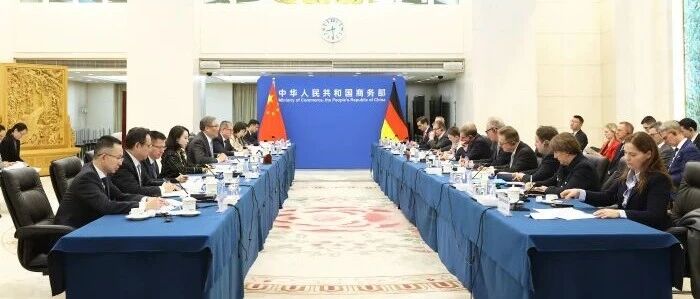
王文涛部长会见德国外长瓦德富尔
Shang Wu Bu Wang Zhan· 2025-12-08 13:24
Group 1 - The core viewpoint emphasizes the importance of deepening China-Germany economic and trade relations, as indicated by the recent meeting between Chinese Commerce Minister Wang Wentao and German Foreign Minister Baerbock [2][3] - Wang Wentao highlighted the need to implement the consensus reached by the leaders of both countries, advocating for free trade and the maintenance of a multilateral trade system centered around the WTO [3] - The Chinese side welcomes German companies to seize new opportunities presented by China's 14th Five-Year Plan and aims to convert the "opportunity list" into a "results list" through strengthened cooperation in both traditional and emerging sectors [3] Group 2 - Baerbock acknowledged China as Germany's most important economic partner, expressing a desire to enhance dialogue and pragmatic cooperation, particularly in areas like WTO reform and climate change [4] - The German government appreciates China's efforts in stabilizing the global supply chain, particularly regarding the implementation of a general licensing system for rare earths [4] - Both parties are committed to addressing semiconductor supply chain issues and finding long-term solutions collaboratively [4]
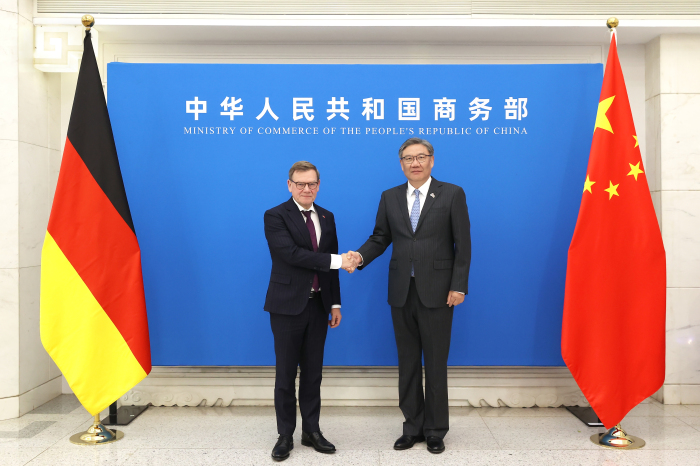
事关安世半导体、稀土、中美经贸磋商 商务部最新发声→
Guo Ji Jin Rong Bao· 2025-11-06 15:43
Group 1: ASML Semiconductor Issue - The Chinese Ministry of Commerce criticized the Dutch government's interference in ASML Semiconductor's internal affairs, claiming it has caused turmoil in the global semiconductor supply chain [2] - China has approved export license applications from Chinese exporters related to ASML, aiming to stabilize supply and promote the resumption of ASML Semiconductor (China) operations [2] - China urges the Netherlands to adopt a responsible attitude and cease interference in corporate matters to find constructive solutions to the ASML issue [2] Group 2: Rare Earth Export Control - The Ministry of Commerce stated that rare earths have dual-use properties, and China conducts licensing reviews in accordance with laws and regulations [3] - China emphasizes its willingness to enhance communication and cooperation with all parties to optimize the licensing process and ensure compliance in trade of controlled items [3] Group 3: China-US Economic Cooperation - The Ministry of Commerce announced recent outcomes from China-US economic consultations, covering topics such as fentanyl tariffs, agricultural trade, and maritime logistics [4] - China expresses its willingness to work with the US to implement the agreements reached during the consultations and the meeting between the two countries' leaders [4] Group 4: China-EU Cooperation - The Ministry of Commerce noted the EU's efforts to diversify export markets through free trade agreements and highlighted China's commitment to high-level opening-up [5] - China is open to deepening mutually beneficial cooperation with the EU and exploring various economic agreements, including investment agreements, to enhance trade and investment facilitation [5]
商务部新闻发言人就安世半导体相关问题应询答记者问
Shang Wu Bu Wang Zhan· 2025-11-01 01:22
Core Viewpoint - The Chinese government emphasizes that the Dutch government's inappropriate interference in corporate affairs has led to global supply chain disruptions, and it expresses a willingness to assist companies facing difficulties [1] Group 1 - The Chinese government has previously responded to inquiries regarding ASML Semiconductor-related issues [1] - China, as a responsible major country, considers the stability and security of domestic and international supply chains [1] - The Chinese government encourages companies facing actual difficulties to contact the Ministry of Commerce or local commerce authorities for assistance [1] Group 2 - The Chinese government will comprehensively consider the actual circumstances of companies and may grant exemptions for eligible exports [1]
中国复购美国大豆?外交部回应
Zheng Quan Shi Bao· 2025-10-29 11:00
Group 1 - China has resumed purchasing soybeans from the United States for the first time this harvest season after a complete halt in September [1] - The Chinese government maintains a consistent stance on issues related to soybean imports and suggests inquiries be directed to relevant authorities [1] Group 2 - Regarding AI chip exports to China, the Chinese government emphasizes the need for the U.S. to stabilize global supply chains and suggests that specific inquiries should be directed to relevant authorities [2] Group 3 - On the issue of fentanyl, the Chinese government reiterates its strong anti-drug policies and expresses sympathy for the American public affected by the crisis, indicating a willingness to continue cooperation with the U.S. [3] - The Chinese government has previously provided assistance in addressing the fentanyl crisis, achieving positive results [3]
中国复购美国大豆?外交部回应
证券时报· 2025-10-29 10:36
Core Viewpoint - The article discusses China's responses to various international trade and diplomatic issues, particularly regarding soybean imports from the U.S., AI chip exports, and the fentanyl crisis, emphasizing China's consistent stance and openness to cooperation [2][3][4]. Group 1: Soybean Imports - China has resumed purchasing soybeans from the U.S. for the first time this harvest season after a period of zero imports in September [2]. Group 2: AI Chip Exports - The Chinese government has reiterated its position on the export of AI chips from the U.S. to China, suggesting that inquiries should be directed to relevant authorities [3]. Group 3: Fentanyl Crisis - China expresses sympathy for the fentanyl crisis affecting the U.S. and highlights its strict drug control policies, indicating a willingness to continue cooperation with the U.S. on this issue [4].