融资保证金上调

Search documents
可转债周报20260117:政策讯号下看当前转债估值-20260127
Changjiang Securities· 2026-01-27 06:34
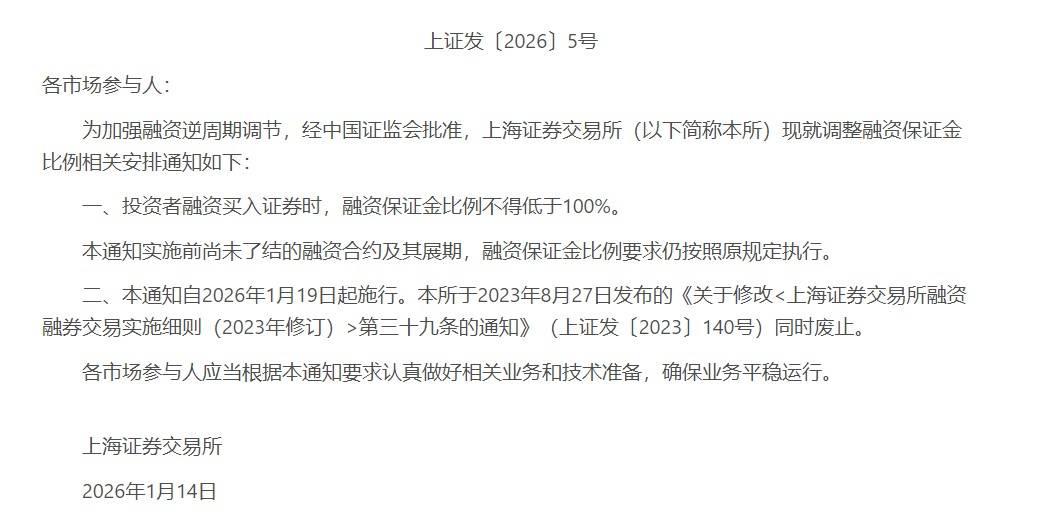
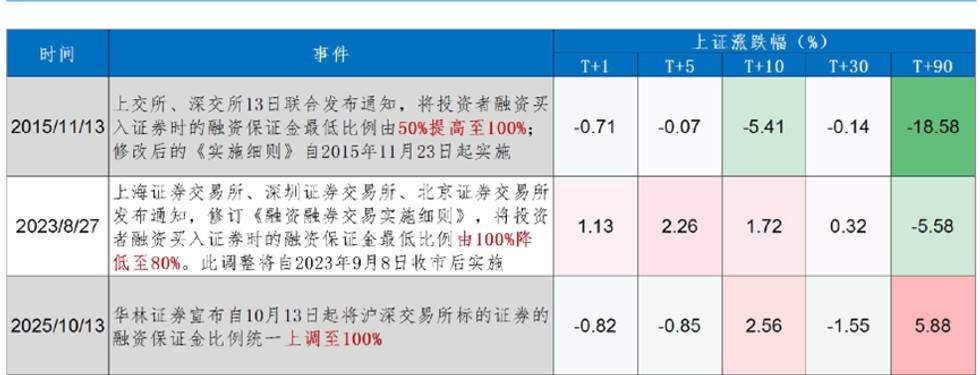
1. Report Industry Investment Rating - The document does not mention the industry investment rating. 2. Core View of the Report - The increase in the margin ratio for margin trading may suppress the short - term sentiment of convertible bonds. With the market premium rate approaching the previous high, there is a need to be vigilant about the risk of a correction. Structurally, medium - and large - cap convertible bonds have led the valuation increase after the new year, the valuation of low - rated varieties has increased, while the valuation of small - cap and high - rated varieties is relatively underestimated. In a high - valuation market, it is necessary to prevent the premium compression caused by forced redemptions. [2][4] - The A - share market was volatile and differentiated during the week, with the mid - cap and science and technology innovation indices outperforming. Sectors such as media and computer in the technology growth direction led the gains, and the congestion degree was differentiated. [2][4] - The convertible bond market strengthened, with small - and medium - cap convertible bonds outperforming large - cap ones. The valuation generally stretched, the implied volatility and the median market price remained at a high level, and some high - price and high - premium targets led the gains. [2][4] - The primary market issuance was relatively stable with sufficient reserves. Clause games remained the focus, with a weak willingness to lower the conversion price and intensified redemption games. Attention should be paid to the forced redemption risk of large - scale high - rated varieties. [2][4] 3. Summary According to the Directory 3.1 Policy Signals and Convertible Bond Valuation - Historically, the convertible bond market has been more cautious about adjustments to the margin ratio for margin trading. On January 14, 2026, the Shanghai, Shenzhen, and Beijing Stock Exchanges announced an increase in the minimum margin ratio for margin trading from 80% to 100%. In the past, the convertible bond market was generally cautious in the short - term regarding such adjustments, with only a rise on the first trading day after the margin ratio was lowered in September 2023. [15] - The market - wide par - value premium rate has approached the previous high. In 2026, it has widened again, indicating that the overall valuation of the convertible bond market is at a relatively high level. [16] - Currently, the valuation of small - cap and high - rated convertible bonds is relatively low. Medium - and large - cap convertible bonds (over 500 million) have been the main force driving the market valuation up in 2026, with their premium rates significantly widening and remaining above 30%. The valuation of small - cap convertible bonds has been compressed to around 20%. In terms of credit ratings, the market risk appetite has increased, the valuation of low - credit - rated convertible bonds has risen significantly, while the premium rate of high - rated varieties is relatively low. [19] - In the current high - valuation context, the market is more sensitive to forced - redemption - counting varieties. The significant compression of the premium rate often occurs in the last five trading days of convertible bonds with forced - redemption counting. [22] 3.2 Market Theme Weekly Review - From January 11 to January 17, 2026, the equity market strengthened overall. Themes in the Internet and computer directions performed strongly, while those in the commercial aerospace direction, such as the large - aircraft index, aerospace technology index, and aerospace science and industry index, were under pressure. [24] 3.3 Market Weekly Tracking 3.3.1 Main Index Differentiation, Strong Performance of Science and Technology Innovation and Mid - cap Indices - The main A - share indices strengthened during the week. The Shenzhen Component Index and the ChiNext Index oscillated upwards, while the Shanghai Composite Index rose first and then fell. In terms of style, the CSI 500 Index and the Science and Technology Innovation 50 Index outperformed other major scale indices. [27] - In terms of capital, the average daily trading volume of the market increased significantly, and the net outflow of main funds expanded slightly. [27] - The technology - growth sectors in the A - share market were strong during the week. Sectors such as media, computer, electronics, and machinery and equipment led the gains, while banks, agriculture, forestry, animal husbandry, and fishery, and non - bank finance performed weakly. The trading volume was mainly concentrated in the computer, electronics, and power equipment sectors, with the electronics sector accounting for over 15% of the average daily trading volume. [30] - The market sector congestion degree was still significantly differentiated. The congestion degree in the media, computer, communication, and social service directions rebounded, while that in manufacturing sectors such as automobiles, basic chemicals, and petroleum and petrochemicals declined. [33] 3.3.2 The Convertible Bond Market Strengthened Overall, with the Small - Cap Index Performing Strongly - From January 11 to January 17, 2026, the convertible bond market strengthened. The CSI Convertible Bond Index rose, with the small - cap convertible bond index performing relatively strongly and the large - cap convertible bond index under some pressure. The trading volume expanded, and the average daily trading volume exceeded 10 billion. [36] - In terms of valuation, the convertible bond market valuation stretched overall. By par - value range, the conversion premium rates in the 120 - 130 yuan and 140 - 150 yuan par - value ranges were compressed, and those in the ranges below 90 yuan and above 150 yuan were significantly compressed. By market - price range, the conversion premium rates in the 110 - 120 yuan and 130 - 140 yuan market - price ranges were compressed, while those in the 100 - 110 yuan and over 150 yuan ranges stretched significantly. [39] - The weighted implied volatility of the convertible bond market balance oscillated weakly and remained at a historically high level. The median market price of convertible bonds oscillated upwards and reached a previous high. [42][43] - Convertible bonds in technology - growth sectors were more elastic. Sectors such as communication, computer, media, machinery and equipment, and electronics led the gains. The trading volume was mainly concentrated in the electronics, pharmaceutical biology, and power equipment sectors, with the combined trading volume of these three sectors accounting for over 30%. [47] - Most individual convertible bonds recovered during the week. The number of convertible bonds with a range increase of 0 or more was 294, accounting for 76.0% of the total number of outstanding convertible bonds in the market. The top five convertible bonds in terms of cross - week gains were Huayi Convertible Bond, Shengxun Convertible Bond, Weice Convertible Bond, Haohan Convertible Bond, and Zhenhua Convertible Bond. The top five in terms of cross - week losses were Saili Convertible Bond, Songsheng Convertible Bond, Guanglian Convertible Bond, Tianjian Convertible Bond, and Zai 22 Convertible Bond. The top five gainers generally had the characteristics of high market price and high conversion premium rate. [49] 3.4 Convertible Bond Issuance and Clause Tracking 3.4.1 Primary Market Issuance Plan - From January 11 to January 17, 2026, 3 convertible bonds were listed (Jin 05 Convertible Bond, Aohong Convertible Bond, and Shuangle Convertible Bond), and 2 were available for subscription (Naipu Zhuan 2 and Shangtai Convertible Bond). [53] - A total of 15 listed companies updated their convertible bond issuance plans during the week, including 4 in the approved - for - registration stage, 4 in the exchange - acceptance stage, 3 in the shareholders' - meeting - passed stage, and 4 in the board - of - directors' - plan stage. The total scale of projects in the exchange - acceptance and subsequent stages has reached 8.1 billion yuan. [54][55] 3.4.2 Clause - Related Announcements - **Lower - conversion - price announcements**: 6 convertible bonds announced that they were expected to trigger a lower conversion price, with a market - value - weighted average PB of the underlying stocks of 2.2; 4 announced that they would not lower the conversion price, with a market - value - weighted average PB of 5.4; 1 proposed to lower the conversion price, with a PB of the underlying stock of 2.0. [59][60][61] - **Redemption - related announcements**: 7 convertible bonds announced that they were expected to trigger redemption; 4 announced that they would not redeem in advance; 4 announced early redemption. [64][65][67]
融资保证金上调,慢牛底色仍不变?
Sou Hu Cai Jing· 2026-01-22 12:13
Core Viewpoint - Recent policy changes regarding margin requirements for financing purchases have caused market fluctuations, but historical data suggests that macroeconomic fundamentals are the primary drivers of market direction rather than short-term policy adjustments [1][14]. Group 1: Policy Changes and Market Reactions - The Shanghai, Shenzhen, and Beijing stock exchanges have raised the minimum margin requirement for financing purchases from 80% to 100%, leading to concerns about market stability [1]. - Historical analysis shows that similar policy changes have had varying impacts on market performance, with the 2015 increase coinciding with a downturn in economic conditions, while the 2025 increase occurred during a recovery phase [14]. Group 2: Quantitative Data Analysis - Utilizing quantitative data tools can help investors discern the true state of market participation by large-scale funds, which is crucial for making informed decisions [4]. - The "institutional inventory" data indicates whether large-scale funds are actively participating in the market, providing insights beyond mere inflow and outflow metrics [4][8]. Group 3: Macroeconomic Fundamentals - Current macroeconomic indicators show a positive trend, with A-share companies experiencing revenue growth and improved net profit forecasts, particularly in AI and new energy sectors [14]. - Key macroeconomic data, such as the manufacturing PMI returning to expansion territory and rising CPI and PPI, support the notion that the market's fundamental strength remains intact despite short-term policy adjustments [14]. Group 4: Investor Behavior and Decision-Making - Emotional responses to market fluctuations often lead to poor investment decisions; thus, relying on quantitative data can mitigate emotional biases [15]. - Investors are encouraged to focus on the participation of large-scale funds and the overarching macroeconomic trends to maintain a rational approach to market movements [15].

融资保证金升至100%,杠杠资金降温!近期高融资个股名单曝光!
私募排排网· 2026-01-14 12:00
Core Viewpoint - The recent policy adjustment by the Chinese securities regulatory authority has raised the minimum margin requirement for investors engaging in margin trading from 80% to 100%, which will require investors to use more of their own funds as collateral [2]. Group 1: Market Impact - As of January 13, 2026, the margin trading balance in A-shares reached a historical high of 2.67 trillion yuan, an increase of over 800 billion yuan compared to the end of 2024 [2]. - In the first seven trading days of 2026, the net financing scale approached 140 billion yuan, indicating a significant acceleration in the pace of leveraged funds entering the market [2]. - The policy change is expected to reduce the influx of new funds, particularly impacting high-volatility sectors such as popular themes and small-cap stocks, which may face short-term funding pressure and potential corrections [2]. Group 2: High Financing Stocks - There are 48 stocks with financing balances increasing by over 100% in the past month, with the top three being Xinghuan Technology-U, Shaoyang Hydraulic, and Meihua Medical [3]. - The financing balance for Xinghuan Technology-U increased by 335.83% in the last month, while Shaoyang Hydraulic and Meihua Medical saw increases of 270.83% and 250.99%, respectively [3]. - In contrast, 85 stocks experienced a decrease in financing balance of over 20% in the last three months, indicating a divergence in market performance among different stocks [3][5].



融资保证金上调,大雷背后都是资金猫腻
Sou Hu Cai Jing· 2026-01-14 06:45
Group 1 - The core viewpoint of the article is that the recent adjustment of the minimum margin ratio for financing securities from 80% to 100% by the Shanghai and Shenzhen Stock Exchanges is a regulatory counter-cyclical measure aimed at reducing leverage and protecting investors' rights [1] - The adjustment only affects new financing contracts, while existing contracts and extensions remain unaffected, indicating a targeted approach by regulators [1] - The article emphasizes the importance of using quantitative data to understand market dynamics rather than reacting emotionally to news [1][9] Group 2 - The article discusses how many investors are often deterred by market fluctuations, which can lead to premature exits from potential investments [2] - It highlights that significant price movements can be misinterpreted as sell signals, but a deeper analysis using quantitative data reveals the underlying trading behaviors [2][4] - The "dominant momentum" data, represented by colored bars, provides insights into market activities such as buying, selling, and institutional participation, which are crucial for understanding market trends [4][5] Group 3 - The article explains that when "dominant momentum" shows a blue "buyback" behavior alongside active institutional inventory, it indicates that institutional funds are actively participating in the market, which is a positive sign for future price movements [5] - Conversely, a lack of institutional participation in buybacks suggests that any price recovery may not be sustainable, as it could be driven by retail investors [5][8] - The article stresses that understanding the true intentions behind market movements through quantitative data can help investors maintain a rational perspective and avoid emotional decision-making [9][10] Group 4 - The article concludes that successful investing requires a focus on data-driven insights rather than emotional reactions to market news, which can lead to poor investment decisions [10] - It advocates for the continuous optimization of investment strategies through the use of quantitative data to build a more objective understanding of market conditions [11] - The emphasis is placed on the long-term development of investment capabilities by tracking real-time market behaviors and institutional activities [11]