
语音AI

Search documents
速递|红杉资本领投,语音AI独角兽ElevenLabs融资5亿美元,估值冲至110亿
Z Potentials· 2026-02-05 03:34
Core Insights - ElevenLabs has raised $500 million in a new funding round led by Sequoia Capital, increasing its valuation to $11 billion, more than three times its valuation from January 2025 [2] - The company has raised over $781 million to date and plans to use the funds for research, product development, and expansion into international markets such as India, Japan, Singapore, Brazil, and Mexico [2] - ElevenLabs aims to develop intelligent agents beyond voice technology, integrating video capabilities, and enhancing creative product services [3] Funding and Valuation - The recent funding round saw existing investors like a16z and Iconiq significantly increasing their investments, with a16z tripling its investment and Iconiq doubling its contribution [2] - New investors in this round include Lightspeed Venture Partners, Evantic Capital, and Bond [2] Revenue Growth - ElevenLabs reported a strong growth trajectory, with annual recurring revenue reaching $330 million by the end of last year, up from $200 million to the $300 million range in just five months [3] - The competitive landscape for voice AI models is intensifying, with other companies like Deepgram also securing significant funding [3]


CB Insights:《2026年技术趋势研究报告》
欧米伽未来研究所2025· 2026-01-27 04:02
Core Insights - The report by CB Insights outlines significant technological transformations across various sectors, emphasizing the shift from experimental technologies to commercial applications, with 11 out of 14 trends validated by the market compared to last year's predictions [1] Group 1: Enterprise Operations - The return on investment for AI agents is a moving target, with 63% of executives prioritizing productivity and 58% focusing on time and cost savings, yet quantifying revenue impact remains challenging [2] - New startups are emerging to address measurement challenges, such as Span, which raised $25 million for its AI code detection model, and Workhelix, which secured $15.3 million to help businesses quantify automation impacts [2] Group 2: AI Deployment - Over half of the 1261 AI agent companies have reached the deployment stage, with the financial services sector leading at 21% of AI partnerships in 2025 [3] - Compliance and fraud detection projects in financial services have seen 83% and 81% fully deployed, respectively, indicating a competitive advantage for companies adopting AI-native operations [3] Group 3: Private Markets - Among over 1300 unicorns, 12 have valuations exceeding the S&P 500 median of $39 billion, with notable companies like SpaceX and OpenAI valued at $400 billion and $500 billion, respectively [4] - The average age for tech IPOs has increased from 12.2 years in 2015 to 15.9 years in 2025, with unicorns dominating significant acquisition deals [4] Group 4: Regulatory Changes - The regulatory environment is evolving, with the U.S. government facilitating access to alternative assets for 401(k) investors, prompting Wall Street to enhance its private market infrastructure [6] - AI and data-driven methods are now outperforming traditional venture capital approaches in predicting future unicorns, with CB Insights' Mosaic score proving significantly more effective [6] Group 5: Stablecoins in Finance - The stablecoin ecosystem is maturing, with 49% of funded stablecoin companies in deployment or expansion stages, driven by regulatory clarity from the GENiuS Act [7] - Major banks have begun supporting stablecoin startups, with significant acquisitions reflecting rising interest in integrating stablecoins into corporate finance workflows [7][8] Group 6: Data Centers and Energy - The power consumption of U.S. data centers is projected to more than double by 2030, leading to innovations in infrastructure as companies seek on-site power solutions [9] - Flexibility in demand is becoming essential, with legislation allowing grid operators to disconnect data centers during crises, highlighting the need for responsive energy management [9][10] Group 7: Sovereign AI Initiatives - Governments are prioritizing local AI development, with significant investments from countries like China and Japan, positioning companies like NVIDIA to benefit from sovereign AI strategies [11] - Regional AI leaders are emphasizing data sovereignty and compliance, with companies like Mistral AI and Cohere focusing on partnerships that align with local regulations [12] Group 8: Voice AI in Healthcare - The voice AI development platform is reaching commercial readiness, with a record number of equity transactions in 2025, indicating strong market interest [13] - Voice AI is being integrated into healthcare workflows, addressing staffing shortages and enhancing patient care efficiency [14] Group 9: World Models and Robotics - World models are emerging as the next frontier in AI, with significant investments and developments from major tech companies, indicating a shift towards understanding physical interactions [15][16] - Robotics coordination is advancing, with companies like Amazon deploying new models to optimize robot movements, reflecting a transition from rule-based to learning-based systems [17][18] Group 10: Future Outlook - The report highlights interconnected trends, suggesting that the prosperity of private markets and the acceleration of AI innovation are mutually reinforcing [19] - Companies must adapt to these trends by leveraging data-driven analytics and proactive market tracking to gain a competitive edge in the evolving landscape [19]

速递|AI语音Deepgram以13亿美元估值融资1.3亿美元,并收购YC初创公司OfOne
Z Potentials· 2026-01-14 03:55
Core Insights - The article highlights the significant rise in the use of voice AI across various sectors, leading to increased interest from investors and substantial funding for companies like Deepgram, which recently raised $130 million in a Series C round, achieving a valuation of $1.3 billion [1][4]. Funding and Investment - Deepgram's recent funding round was led by AVP, with participation from existing investors such as Alkeon, In-Q-Tel, Madrona, Tiger, Wing, and Y Combinator, as well as new investors including Alumni Ventures, Columbia University, Princeville Capital, Twilio, and SAP [1]. - The company has raised over $215 million to date, continuing a trend of significant financing in the voice AI sector, which includes notable rounds for other companies like Sesame and ElevenLab [1]. Market Trends and Applications - Voice AI technology is increasingly being applied in business processes such as call centers and sales development, with Deepgram being a key provider of these technologies [2][3]. - The market for voice AI is projected to grow at an annual rate exceeding 30%, potentially reaching a value between $14 billion and $20 billion by 2030, indicating a strong growth trajectory for model and API providers [8]. Company Strategy and Future Plans - Deepgram's CEO, Scott Stephenson, noted that the company achieved positive cash flow last year and did not actively seek funding, but recognized the need to invest early to accelerate growth in a market with increasing demand [4]. - The new funding will be used to expand global operations and enhance multilingual support, with a particular focus on the restaurant industry, exemplified by the acquisition of OfOne, which developed a voice AI ordering solution with over 93% accuracy [4]. Challenges in the Industry - Despite the potential of voice AI in the restaurant sector, challenges remain, as evidenced by Taco Bell's previous halt of a pilot project due to an extreme ordering incident [5].
AI专题:AI智能体圣经:智能体颠覆性变革终极指南
Sou Hu Cai Jing· 2026-01-05 16:21
Core Insights - The AI agent landscape is rapidly evolving, with over 500 startups founded since 2023, marking a significant wave of innovation in the tech industry [1][5][11] - AI agents, based on large language models (LLMs), are designed to perform tasks autonomously, with applications spanning various sectors including finance, healthcare, and legal services [1][6][10] - The commercial adoption of AI agents is accelerating, particularly in customer service and software development, with a notable increase in organizations planning to implement these technologies [57] Industry Trends - The rise of voice AI is a key trend, with early-stage companies focusing on voice agent development experiencing significant headcount growth, indicating a shift towards conversational interfaces [27][31] - Mergers and acquisitions (M&A) in the AI agent space are increasing, with notable deals highlighting the industry's consolidation efforts [32][33] - Economic pressures are affecting AI agent startups, leading to a reevaluation of pricing models and operational strategies as reasoning costs rise [34][36] Technological Developments - The AI agent ecosystem is becoming more complex, with a complete tech stack emerging that includes foundational models, development platforms, and orchestration tools [1][54] - The payments infrastructure for AI agents is still nascent, but startups are working on solutions to enable secure transactions, which is crucial for the future of agentic commerce [37][41] - Data access and integration challenges are prompting a "data moat" phenomenon, where established software companies restrict access to their data, impacting AI startups [43][46] Market Dynamics - The AI agent market is projected to grow significantly, with startups raising $3.8 billion in 2024, nearly tripling the previous year's total, as major tech players invest in agent technologies [57] - Trust remains a critical barrier to the full autonomy of AI agents, with startups focusing on transparency, human oversight, and technical safeguards to build confidence in their solutions [57] - The emergence of monitoring tools for AI agents is becoming essential to manage reliability and operational risks, as enterprises seek to deploy agents at scale [48][51]

OpenAI 语音 AI 硬件快来了,处理“代码之后”的 AI 助理 ARR 突破 2.5 亿美金
投资实习所· 2026-01-03 09:34
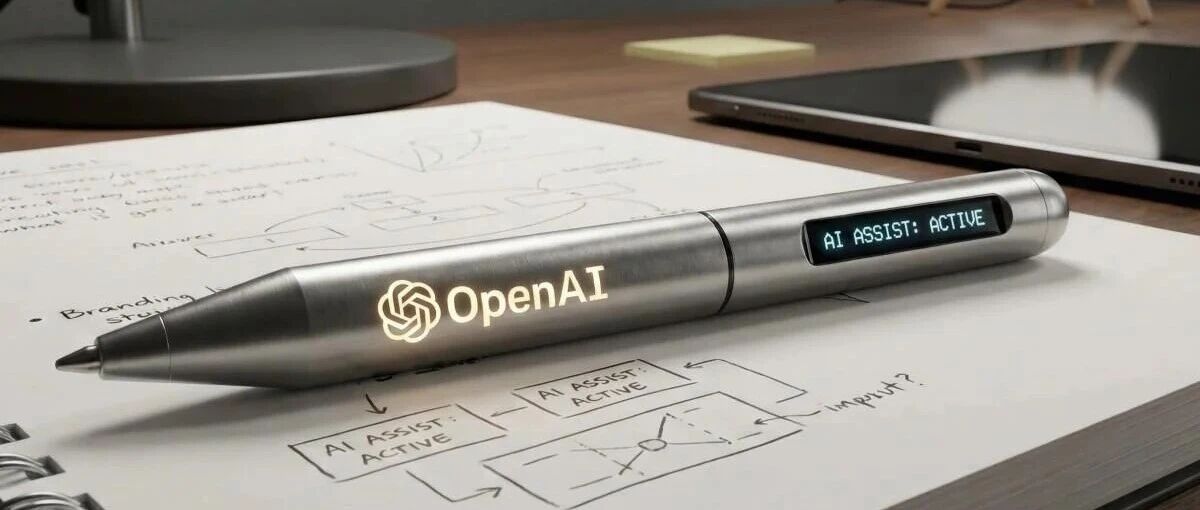
Core Insights - The article highlights the rapid growth of AI-driven products, particularly in the voice AI sector, with companies like ElevenLabs achieving significant milestones in Annual Recurring Revenue (ARR) and profitability [1][3]. Group 1: Company Performance - ElevenLabs has reportedly reached an ARR close to $400 million, with an EBITDA profit margin of 60%, and serves 41% of Fortune 500 companies as clients [1][3]. - The company has recently added an additional $14 million in ARR in just one day, showcasing its rapid growth trajectory [3]. - ElevenLabs has evolved from a single product to a multi-product enterprise platform, focusing on both infrastructure and application development [3][4]. Group 2: Product Development - ElevenLabs offers a range of products, including text-to-speech (TTS), voice cloning, and a conversational AI platform for enterprises, aimed at various applications such as customer service and education [4]. - The company emphasizes a dual approach in its strategy, focusing on both foundational research and application development to maintain a competitive edge against larger players like OpenAI [3][4]. Group 3: Competitive Landscape - OpenAI is reportedly enhancing its voice AI capabilities and is expected to launch a personal AI device focused on voice interaction by 2026, marking a strategic shift from traditional screen interfaces [4][5]. - The upcoming OpenAI hardware, codenamed "Gumdrop," may include an AI-powered pen that facilitates voice interaction and real-time transcription of handwritten notes [6][8].
速递|Google、Meta前团队融资7000万美元,法国Kyutai实验室成功孵化AI语音独角兽Gradium
Z Potentials· 2025-12-03 04:05
Core Viewpoint - Gradium, a Paris-based AI voice startup, has raised $70 million in funding from prominent investors including former Google CEO Eric Schmidt and French telecom billionaire Xavier Niel, aiming to commercialize AI voice technology developed from a non-profit research lab [2][3]. Group 1: Company Overview - Gradium was founded by engineers and researchers from Alphabet Inc., Meta Platforms, and Jane Street, focusing on developing AI models for applications requiring voice and audio elements [3]. - The company emerged from the non-profit AI lab Kyutai, which was established in 2023 and has secured approximately €300 million for open-source research [5]. - Gradium's technology can perform tasks such as voice generation and transcription, and it aims to improve the speed and accuracy of voice tone processing [4][5]. Group 2: Market Position and Competition - Gradium enters a competitive market with major players like OpenAI, Google, and Meta investing in realistic voice generation services [4]. - The startup sees opportunities to enhance existing products, as the CEO believes current voice AI software is still "fragile" and requires improvements [5]. Group 3: Business Development and Client Engagement - Gradium has signed contracts with clients in various sectors, including education, customer service, healthcare, and video games, although specific client names remain confidential [6]. - The company currently employs eight staff members and supports multiple languages, including English, French, German, Spanish, and Portuguese, with plans for additional language versions [7].

Z Potentials|张泽夏,Retell AI CTO,从Google到企业级AI电话客服,年收入破3600万美元
Z Potentials· 2025-11-12 03:23
Core Insights - Voice technology has transitioned from merely "understanding" to "thinking and responding," marking a significant leap in capabilities. This evolution is driven by the deep integration of voice, language models, and real-time interaction systems, redefining communication in various business scenarios such as customer service and sales [2][3]. Company Overview - Retell AI, founded less than two years ago, has achieved an annual revenue exceeding $36 million, serving thousands of enterprise clients with stable repurchase rates in North America and the Asia-Pacific region [2]. - The company aims to redefine how businesses communicate with systems, moving beyond traditional call centers to more efficient voice agents that enhance conversion rates and customer satisfaction [2][9]. Technology and Innovation - The core technology of Retell is developed by co-founder and CTO Zhang Zexia, who has extensive experience in voice systems from his time at Google. The company focuses on addressing three major pain points in the industry: low latency, realism, and stability [3][4]. - Retell has pioneered the Turn-Taking Model, which improves the naturalness of voice interactions by accurately determining when to respond or wait, enhancing user experience [16][17]. Market Position and Strategy - Retell's voice agents are designed to perform complex tasks, integrating with clients' internal systems such as APIs, CRM, and ERP, thus providing a comprehensive solution for enterprise needs [17][18]. - The company is transitioning into an enterprise-focused phase, emphasizing system integration, monitoring, testing, and compliance to meet the demands of large clients [18][19]. Client Success Stories - Retell has successfully implemented its voice solutions for clients like Asbury Auto, improving service appointment completion rates by approximately 10% and addressing unanswered calls effectively [25]. - Another notable case is with Anker, where Retell's automated customer support system achieved an 80.4% resolution rate and a customer NPS of 63, significantly exceeding initial goals [26]. Global Expansion and Ecosystem - Retell's solutions support multiple languages and are deployed globally, with a focus on North America and emerging markets. The company aims to assist businesses in optimizing their operations through AI voice solutions [37][38]. - The client base includes Fortune 500 companies across various sectors, indicating a strong market presence and the potential for further growth [31]. Future Vision - The long-term vision for Retell is to become a central component of enterprise-level AI call centers, facilitating efficient communication and information flow within organizations [39][40]. - The company is also exploring the integration of more comprehensive functionalities into a unified system to enhance customer service and operational efficiency [40].
黄仁勋投了家复刻马斯克声音的AI公司
Sou Hu Cai Jing· 2025-11-03 04:14
Core Insights - Cartesia, a voice AI company, has recently launched its new voice model Sonic-3 and completed a $100 million Series B funding round, with NVIDIA among the investors [1][3][12] Company Overview - Cartesia was founded by Karan Goel, a talented individual from Stanford AI Lab, who has previously excelled in the field of state space models (SSM) [2][10] - The company has a strong academic foundation, with its core team primarily composed of members from Stanford AI Lab, including co-founder Albert Gu, a notable figure in the development of the Mamba architecture [3][4] Product Development - Cartesia has rapidly progressed since its inception, launching its first product, the Sonic voice model, shortly after securing seed funding. The company has since released multiple iterations, including Sonic-2.0 and the latest Sonic-3 [6][12] - Sonic-3 features significant upgrades, including improved emotional expression and faster response times, with a latency of only 90 milliseconds and an end-to-end response time of 190 milliseconds, making it one of the fastest voice generation systems available [8][12] Technology Differentiation - Unlike traditional voice AI models that rely on Transformer architecture, Sonic-3 is built on SSM, allowing for more natural and context-aware interactions without the need to revisit the entire conversation history [8][12] - This innovative approach enhances the model's ability to capture emotional nuances and respond more fluidly, positioning Cartesia as a leader in real-time voice AI technology [8][12] Market Context - The voice AI sector is witnessing significant advancements, with other companies like MiniMax also launching competitive products, indicating a growing market for voice models that can handle diverse languages and accents [14]

2026AI Agent六大趋势,编程热潮后谁是下一个风口?
混沌学园· 2025-10-21 12:46
Core Insights - The report by CB Insights titled "AI Agent Bible: The Ultimate Guide to Disruptive Agents" outlines the rapid evolution and potential of AI agents, highlighting their transition from experimental tools to essential business priorities within just two years [1][3] - The CEO of CB Insights noted a tenfold increase in mentions of AI agents in earnings calls since 2023, indicating a significant shift in corporate focus towards AI technologies [3] - By 2025, five out of the top ten investment hotspots in technology will be directly related to AI agents, showcasing their prominence in the investment landscape [3][4] Group 1: Predictions and Trends - By 2026, six major trends are expected to dominate the AI agent landscape, including the rise of voice AI and an increase in mergers and acquisitions within the sector [16][19] - Voice AI is anticipated to accelerate, enabling complex conversations in customer service and IT support without human intervention [17] - The AI agent sector has already seen over 35 acquisitions in the first quarter of 2025, indicating a strong trend towards consolidation in the market [20][21] Group 2: Economic Pressures and Business Models - AI startups are facing profit pressures similar to those in programming, with rising computational costs threatening profit margins [22][23] - New startups are addressing the challenge of secure, real-time transactions for fully autonomous shopping, with innovations in AI-native payment systems [25][26] - The market for AI agent payment infrastructure is emerging as a critical area of development, with collaborations between fintech giants and AI startups [26][27] Group 3: Data and Software Dynamics - The competition for data ownership is reshaping enterprise software, as existing software giants restrict access to customer data [28][29] - A coalition led by Snowflake aims to standardize data formats to facilitate AI access across applications, highlighting the ongoing struggle for data control [30] - The demand for monitoring tools to manage AI agent reliability is increasing, driven by the need to mitigate operational risks associated with unreliable agents [32][33] Group 4: Revenue and Growth Metrics - The top AI agent startups are achieving remarkable revenue growth, with companies like Cursor generating $500 million in annual revenue within just three years of establishment [13][38] - The average revenue per employee in leading AI agent companies is significantly higher than the overall average for top AI categories, indicating capital efficiency [34] - Customer service AI agents are commanding high valuation premiums, reflecting investor confidence in their potential to replace human support teams [34]

资金动向 | 北水扫货港股超137亿港元,爆买阿里53亿、腾讯26亿
Ge Long Hui· 2025-09-24 11:58
Group 1: Southbound Capital Flow - Southbound capital net bought Hong Kong stocks worth 13.705 billion HKD on September 24 [1] - Notable net purchases included Alibaba-W (5.339 billion HKD), Tencent Holdings (2.651 billion HKD), and SMIC (688 million HKD) [1] - Southbound capital has continuously net bought Alibaba for 24 days, totaling 64.75389 billion HKD [1] Group 2: Alibaba Developments - Alibaba announced a partnership with NVIDIA for Physical AI collaboration, covering various aspects including data synthesis and model training [3] - The company is actively advancing a 380 billion RMB AI infrastructure project and plans to increase investments [3] - Alibaba Cloud is expanding its global infrastructure, establishing new cloud computing regions in Brazil, France, and the Netherlands [3] Group 3: Tencent Insights - According to a report by China Merchants Securities International, voice AI input speeds are nearly three times faster than typing [3] - The market for voice AI is expected to reach 186 billion USD by 2030, dominated by large tech companies in China and the US [3] - Recommended stocks in the internet sector include Meta, Google, Tencent, and Alibaba [3] Group 4: Semiconductor Industry Trends - TSMC's last 3nm process CPU prices are expected to rise by about 20%, with a further increase of over 50% for the 2nm process next year [4] - Semiconductor inflation is developing due to supply shortages in memory and hard drives [4] - Huatai Securities indicates that the Chinese semiconductor equipment market may see a shift, with local equipment companies gaining market share [4] Group 5: Other Company Updates - Innovent Biologics announced that its product, Ma Shidu Peptide Injection, received approval for a second indication for adult type 2 diabetes [4] - Xiaomi Group's CEO Lei Jun announced a significant commitment to both car manufacturing and chip production, expressing the pressure of simultaneous investments [4]