资产出表

Search documents
1-2月房地产链数据解读
2026-03-18 02:31
Summary of Key Points from the Conference Call Industry Overview - The conference call primarily discusses the **real estate industry** in China, focusing on the performance and trends observed in early 2026, particularly in January and February [1][2]. Core Insights and Arguments 1. **Sales Trends**: Real estate sales are accelerating downward, with both new and second-hand home markets showing weakness. However, first-tier cities like Beijing and Shanghai are experiencing a slight rebound in prices, indicating a potential stabilization [1][4]. 2. **Policy Shift**: The transition from the "14th Five-Year Plan" to the "15th Five-Year Plan" marks a significant change in real estate policy, moving from "housing is for living, not for speculation" to a focus on "high-quality development" and "stabilizing the real estate market" [3]. 3. **Investment Dynamics**: Real estate investment has seen a slight narrowing of decline, attributed to local governments' efforts to release quality land parcels to support the market. This is expected to improve developer sentiment [2][6]. 4. **Infrastructure Investment**: Infrastructure investment has outperformed expectations, growing by 11% year-on-year, driven by government initiatives and fiscal policies aimed at stimulating the economy [6]. 5. **Emerging Investment Themes**: New investment themes include **computing power systems** and **hydrogen energy**, with significant growth expected in these sectors by 2030. Companies like China Power Construction and China Energy Construction are highlighted as key players [7][8]. Additional Important Content 1. **Second-Hand Market Performance**: The second-hand housing market is performing better than the new housing market, driven by favorable policies such as increased coverage of public housing loans for lower-priced assets [2][5]. 2. **Investment Strategy**: The investment strategy emphasizes focusing on large leading companies due to market concentration and improved supply dynamics. The issuance of REITs is expected to enhance cash flow and asset valuation for companies with substantial existing assets [5]. 3. **Material Costs and Pricing**: The construction materials sector is benefiting from rising oil prices, allowing companies to increase prices. Key companies in this sector include Oriental Yuhong and China Liansu [10][11]. 4. **Cement Industry Outlook**: The cement industry saw a 6.8% increase in shipment volume in early 2026, although this may not be indicative of a strong trend due to calendar effects. A more comprehensive view will be available after the first quarter [9]. This summary encapsulates the critical insights and trends discussed in the conference call, providing a comprehensive overview of the current state and future outlook of the real estate and related industries in China.
首批商业不动产 REITs 申报:商业不动产 REITs,资产出表再添工具
GUOTAI HAITONG SECURITIES· 2026-01-31 12:53
Investment Rating - The report assigns an "Overweight" rating for the commercial real estate REITs sector [6]. Core Insights - The launch of commercial real estate REITs in China is expected to significantly improve corporate cash flow and performance, optimizing financial statements and guiding the industry towards a new model of development [2][6]. - The first batch of commercial real estate REITs has entered the application stage, accelerating the development process [6]. - The report highlights several recommended companies across different categories, including development, residential-commercial, property management, and cultural tourism [6]. Summary by Relevant Sections Investment Highlights - The first batch of commercial real estate REITs covers diverse asset types such as hotels, offices, and commercial complexes, enhancing the range of underlying assets [2]. - Specific REITs mentioned include: 1. Huazhong Jinjiang Closed-end Commercial Real Estate Securities Investment Fund, with a projected fundraising scale of 1.703 billion yuan and an annualized cash distribution rate forecast of 3.44% for 2025 [6]. 2. Huitianfu Shanghai Real Estate Closed-end Commercial Real Estate Securities Investment Fund, with a projected fundraising scale of 4.002 billion yuan and an annualized cash distribution rate forecast of 4.50% for 2026 [6]. 3. CICC Vipshop Closed-end Commercial Real Estate Securities Investment Fund, with a projected fundraising scale of 7.47 billion yuan and an annualized cash distribution rate forecast of 4.57% for 2026 [6]. Company Profitability Forecast - The report provides profitability forecasts for key companies, indicating expected earnings per share (EPS) and price-to-earnings (PE) ratios for 2024 to 2026, with all listed companies receiving an "Overweight" rating [8]. - Notable companies include: - Vanke A, with a projected EPS of -4.17 yuan for 2024 and a market cap of 54.22 [8]. - China Overseas Development, with a projected EPS of 1.43 yuan for 2024 and a market cap of 8.93 [8]. - Longfor Group, with a projected EPS of 1.58 yuan for 2024 and a market cap of 5.93 [8].





连续三年“百亿级”出表!广州农商行的“减负”之路还要走多久
Bei Jing Shang Bao· 2025-12-02 14:33
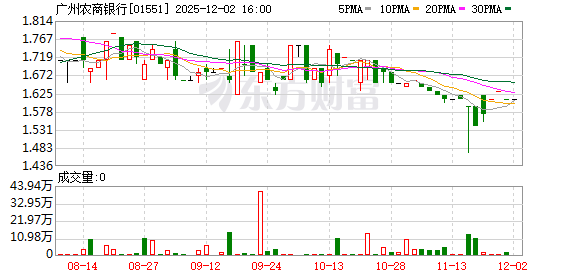
Core Viewpoint - Guangzhou Rural Commercial Bank has announced the sale of assets worth 12.25 billion yuan to Guangzhou Asset Management Co., marking the third consecutive year of over 10 billion yuan in asset disposals, reflecting ongoing pressures from economic structural transformation and traditional industry risks [2][3][4]. Group 1: Asset Sale Details - The asset sale was completed on November 29, with a total price of 12.25 billion yuan, to be paid in installments, with 30% already paid [3]. - The remaining 70% will be paid in nine equal installments from 2026 to 2034, reflecting considerations of asset recovery time and buyer default risk [3]. - This sale is part of a broader strategy to address low-efficiency assets, with the bank having disposed of over 48 billion yuan in bad assets over three years [5]. Group 2: Asset Quality and Risks - Despite the asset disposals, the bank's non-performing loan (NPL) ratio increased to 1.98% by mid-2025, up 0.32 percentage points from the beginning of the year, with overdue loans rising significantly [6][7]. - The total overdue loan balance reached 51.09 billion yuan, a 190.20 billion yuan increase from the start of the year, indicating a growing risk profile [7]. - The bank's NPLs are concentrated in the wholesale and retail, leasing and business services, and agriculture sectors, with significant increases in both corporate and personal loan defaults [6]. Group 3: Strategic Adjustments - The bank is adjusting its strategy to enhance loan issuance, optimize asset structure, and stabilize interest income, while also focusing on risk management and asset quality improvement [8][9]. - Recent mergers and acquisitions of village banks are part of a strategy to expand its business footprint and improve operational efficiency [10]. - The bank aims to reduce exposure to high-risk sectors and redirect credit resources towards more stable industries, while also enhancing its digital capabilities to lower operational costs [10].

平安消金,休教借款人负我
Hu Xiu· 2025-07-08 04:03
Core Viewpoint - Ping An Consumer Finance has demonstrated impressive growth in a competitive market, achieving a revenue of 4.519 billion yuan in 2024, a year-on-year increase of 24.6%, and a net profit of 1.02 billion yuan, which surged by 108% [1][2]. Group 1: Company Performance - In 2024, the total assets of Ping An Consumer Finance reached 54.293 billion yuan, reflecting a year-on-year growth of 33.8% [1]. - The company has successfully increased its loan balance from 11.6 billion yuan in 2021 to 37.113 billion yuan in 2023, with cumulative consumer loans exceeding 150 billion yuan by the end of 2023 [9]. Group 2: Market Strategy - Ping An Consumer Finance has adopted a "customer down-market" strategy, targeting less-than-perfect credit records with genuine consumption needs, rather than competing for high-quality customers in the saturated market [7]. - The service network of Ping An Consumer Finance covers nearly 2,500 counties, with users from third-tier cities and below accounting for nearly 85% of its customer base [7]. Group 3: Risk Management - The company maintains a low non-performing loan rate of only 1.2% as of the end of 2024, despite serving a higher-risk customer base [10]. - Ping An Consumer Finance employs a combination of guarantees and compensation to manage risk, partnering with guarantee companies to enhance loan security and mitigate default risks [11][12]. Group 4: Challenges and Criticism - The reliance on guarantee and compensation mechanisms has led to higher effective costs for borrowers, with complaints about additional fees and rapid initiation of compensation processes [12][15]. - Borrowers have reported negative impacts on their credit records due to the swift compensation process, which can hinder future borrowing opportunities [15][16].