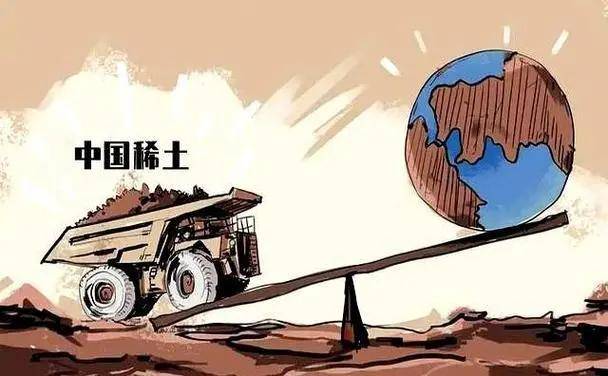
资源武器化

Search documents
【播客】全球博弈新武器:石油、稀土和芯片
Datayes· 2026-03-23 12:04
Core Viewpoint - Iran's blockade of the Strait of Hormuz is being used as a retaliatory measure, disrupting global oil transport and causing significant price surges in oil and natural gas, indicating that strategic geographic chokepoints are being weaponized [1] Group 1: Geopolitical Implications - The current geopolitical landscape is shifting focus from digital technology and capital to the control of physical resources, marking a new phase in great power competition [1] - Countries like China are leveraging their dominance in critical resources, such as rare earth materials, to influence trade negotiations and exert economic pressure [1] Group 2: Western Responses - In response to these trends, Western nations are attempting to reduce vulnerabilities through strategic reserves, domestic mineral development, and supply chain shifts, although these measures are slow to yield results [1] - The existing geographical bottlenecks make it challenging for Western countries to completely circumvent the impacts of resource weaponization [1] Group 3: Economic Consequences - The weaponization of resources is likely to lead to rapid inflation and supply pressures in transparent and highly market-oriented economies, forcing countries to navigate a difficult balance between deterrence and alternative solutions [1]


中国发出禁令,委石油不能靠岸!特朗普的强卖计划,没开始就夭折
Sou Hu Cai Jing· 2026-02-04 10:51
Core Viewpoint - The article discusses the implications of the U.S. government's actions in Venezuela, particularly the attempt to control its oil resources and the subsequent response from China, highlighting the shifting dynamics in global energy markets and the limitations of U.S. power in this context [3][9][70]. Group 1: U.S. Actions in Venezuela - In January 2026, the Trump administration executed a plan to take control of Venezuela's oil exports following the ousting of President Maduro, setting new pricing and payment conditions for oil sales [3][10]. - The U.S. aimed to leverage its control over Venezuelan oil to pressure China and India into compliance with its pricing strategy, intending to weaken China's influence in Latin America [12][19]. - The U.S. actions are characterized as a blatant resource takeover, treating Venezuela's national assets as spoils of war, with strict regulations on who could purchase the oil [9][10]. Group 2: China's Response - China swiftly responded by halting all imports of Venezuelan oil, effectively cutting off the supply and undermining the U.S. strategy [5][25]. - The Chinese government emphasized that it would not accept the new pricing dictated by the U.S., as it would undermine the principle of sovereign resource ownership [31][70]. - China's diversified energy sourcing strategy and investments in renewable energy have positioned it to absorb the impact of halting Venezuelan oil imports, with alternatives readily available [18][27]. Group 3: Global Energy Market Dynamics - The article highlights a shift in the global energy landscape, where the ability to flexibly manage energy sources and maintain pricing power has become more critical than merely controlling supply [16][58]. - The U.S. approach is seen as outdated, reflecting a Cold War mentality that fails to recognize the complexities of modern energy security [14][68]. - The potential for a ripple effect in other resource-rich countries is noted, as the Venezuelan model could set a precedent for external intervention in domestic affairs [60][62]. Group 4: Economic Implications - The U.S. strategy has backfired, as the high-quality Venezuelan oil remains unsold due to a lack of buyers capable of processing it, leading to logistical challenges for the U.S. [43][49]. - The financial community expresses concern that aggressive U.S. tactics could damage its reputation as a safe haven for global capital, deterring long-term investments [66][68]. - The article suggests that the U.S. may need to reconsider its approach, as the reliance on coercive tactics is increasingly ineffective in a multipolar world [72][74].
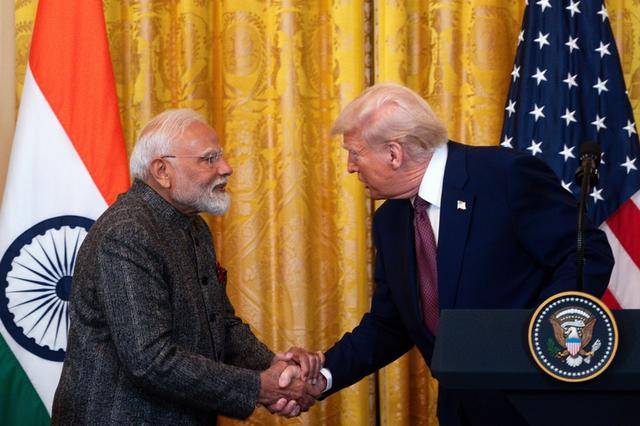
美国掌控委内瑞拉石油!委石油业全面开放,对华喊涨30%想卡脖子,不料竟是一手烂牌
Sou Hu Cai Jing· 2026-01-27 06:41
Core Viewpoint - The recent legislative changes in Venezuela allow private enterprises to engage in oil extraction and production, marking a significant shift from decades of state control in the oil industry, which has been heavily influenced by U.S. interests [1][3]. Group 1: Legislative Changes - The Venezuelan parliament has introduced a groundbreaking bill that permits private sector involvement in the oil industry, effectively overturning the long-standing policy of oil nationalization [1][3]. - This legislative move is seen as a complete disruption of the oil landscape that has been in place since the Chávez era, which was characterized by the nationalization of oil resources [3]. Group 2: U.S. Influence and Oil Pricing - U.S. Treasury Secretary's remarks indicate a strategic shift in oil pricing, suggesting that China will no longer benefit from "unfair low prices" for Venezuelan oil, highlighting U.S. control over the pricing mechanisms [5][6]. - In a short span, Venezuelan crude oil prices surged by 30%, from $31 to $45 per barrel, indicating a loss of pricing power for Venezuela and a shift of control to Washington [6]. Group 3: Implications for China - The U.S. aims to disrupt China's energy dependence on Venezuelan oil, which has seen a significant decline in import volumes, dropping from 149.83 million tons in 2024 to 34.17 million tons in the first eleven months of 2025 [7][9]. - The relationship between Venezuela and China has been framed as a debt repayment system, where oil exports were used to settle over $500 billion in loans, contradicting U.S. narratives of exploitation [9][11]. Group 4: Broader Energy Dynamics - China's diversified energy import strategy, including significant oil supplies from Russia and other countries, diminishes the impact of Venezuelan oil on its overall energy security [11][13]. - The U.S. strategy of controlling oil prices is undermined by China's advancements in renewable energy and strategic oil reserves, which provide resilience against market fluctuations [13][15]. Group 5: International Relations and Debt - The new Venezuelan government, despite U.S. influence, recognizes the importance of honoring its debt obligations to China, indicating that oil control does not equate to altering international legal and contractual norms [15][17]. - The U.S. approach of demanding preferential oil supplies while promoting "fair pricing" is criticized as hypocritical and counterproductive in the broader context of global energy relations [17].
双重风暴倒计时!全球白银供应链变局前夜,芝商所再度收紧交易闸门
Xin Lang Cai Jing· 2025-12-31 03:41
Core Viewpoint - CME Group has announced a second increase in margin requirements for precious metal futures within a week, citing market volatility assessments to ensure adequate collateral coverage [3][8]. Group 1: Margin Requirement Changes - The margin for gold, silver, platinum, and palladium contracts will be raised after Wednesday's close, following a previous increase that took effect on Monday [3][8]. - The increase in margin requirements means traders will need to provide more collateral to fulfill their obligations when trading precious metal futures [3][8]. Group 2: Silver Export Regulation - China's new silver export control policy will take effect on January 1, 2026, transitioning from a quota system to a strict "one application, one review" licensing system [9]. - Only companies producing over 80 tons annually (or 40 tons for Western enterprises) with three years of export performance can apply for export qualifications, with the approval process covering buyer backgrounds and compliance [9]. - The new policy signifies that silver has been classified as a strategic resource, elevating its export management to the same level as rare earths [4][9]. Group 3: Market Impact and Supply Concerns - In 2025, China's silver exports accounted for 23.4% of global trade, approximately 9,126 tons, and the new policy is expected to significantly reduce export volumes, potentially decreasing global annual supply by 4,500 to 5,000 tons [5][9]. - The global silver supply-demand gap reached 3,660 tons in 2025, marking the fifth consecutive year of shortage, with projections for 2026 indicating a further increase in the gap to 7,000 to 8,000 tons [5][9]. - The new licensing system will create barriers for approximately 60% to 70% of refined silver supply from leaving China, impacting global trade dynamics [5][9]. Group 4: Market Sentiment and Investment Outlook - The recent margin increase has led to a significant drop in silver prices, with the margin requirement raised to $25,000 per contract [10]. - Historical context indicates that previous margin increases have led to drastic price drops, as seen in 2011 when silver prices fell nearly 30% due to forced liquidations [10]. - The structural investment logic for silver is expected to strengthen post-2026, despite the current volatility, as silver is increasingly viewed as a strategic asset rather than a mere commodity [10].

你把中国的稀土卖给谁了?
Sou Hu Cai Jing· 2025-06-07 10:42
Core Viewpoint - China has issued a clear warning to South Korea regarding the processing of rare earths imported from China for sale to U.S. military enterprises, indicating potential sanctions against South Korea if this continues, effectively using rare earths as a strategic leverage against U.S. military technology [1] Group 1: China's Strategy - China has implemented a tracking system in the rare earth magnet industry, requiring exporters to disclose specific customer names and transaction volumes, along with a pre-application for export licenses [3] - The U.S. claims it can independently mine and refine rare earths, suggesting that refining technology is not overly complex, but the cost of extraction and refining remains a significant barrier [3][5] - The extraction of 1 ton of aluminum requires approximately 13,000 kWh of electricity, leading to high costs when considering the production of by-products like gallium, which is often not economically viable to produce in large quantities [5] Group 2: U.S. Challenges - The U.S. is facing urgent supply issues as inventories of rare earths are depleting, causing many foreign industries to halt production due to a lack of rare earth components [7] - The U.S. has accused China of "weaponizing resources" while simultaneously attempting to impose restrictions on high-end chips and lithography machines, indicating a tit-for-tat dynamic in trade relations [7] - Despite perceptions that the rare earth industry is small, the U.S. is unlikely to catch up quickly due to China's established supply chain and pricing advantages, suggesting that significant investments would be required over a decade to develop a competitive position [7]