
资源自给率

Search documents
82亿“豪赌”索尔黄金,1700亿江西铜业海外“抢矿”
Xin Lang Cai Jing· 2025-12-26 12:04
Core Viewpoint - Jiangxi Copper is making a significant move by offering approximately 8.67 billion pounds (around 82 billion RMB) to acquire SolGold, which could enhance its mineral reserves if the deal is successful [1][2][15]. Group 1: Acquisition Details - Jiangxi Copper announced on December 25 that it will acquire all issued and to be issued shares of SolGold at a price of 28 pence per share, with a total transaction value of about 8.67 billion pounds, equivalent to approximately 82 billion RMB [2][4]. - The maximum payment Jiangxi Copper is willing to make is 7.64 billion pounds, or about 72.2 billion RMB [2][4]. - Prior to this offer, Jiangxi Copper had already acquired over 12% of SolGold's shares, amounting to approximately 1.3 billion RMB earlier in the year [2][19]. Group 2: Strategic Importance of SolGold - SolGold's core asset is the Cascabel project in Ecuador, recognized as one of the most significant undeveloped porphyry copper-gold deposits globally, with substantial mineral reserves [2][10][23]. - The Cascabel project has proven and inferred resources including 12.2 million tons of copper, 30.5 million ounces of gold, and 10,230 million ounces of silver [10][23]. - The project is expected to undergo initial production by 2028, with significant development milestones planned [11][24]. Group 3: Market Reaction and Stock Performance - Following the acquisition announcement, Jiangxi Copper's stock surged, closing at 48.31 billion RMB, with a total market capitalization reaching 1,673 billion RMB, reflecting a 29% increase in December and a 147% increase year-to-date [4][17]. - The rise in copper prices has also contributed to Jiangxi Copper's stock performance, alongside the acquisition news [4][17]. Group 4: Competitive Landscape and Historical Context - Jiangxi Copper's interest in SolGold is not new, as it has been pursuing additional shares for several months, indicating a long-term strategy to enhance its resource base [3][5][18]. - Other major mining companies, including BHP and Newcrest, have previously shown interest in SolGold, highlighting the competitive nature of acquiring valuable mining assets [9][22]. Group 5: Future Outlook and Industry Context - Jiangxi Copper aims to increase its self-sufficiency in mineral resources, as it currently relies heavily on external sources for copper concentrate [12][25]. - The company is also exploring other upstream mineral acquisitions to bolster its resource base and improve profitability amid low processing fees in the copper smelting industry [12][25].


【行业研究】求“铜”存异,负加工费时代的铜冶炼企业——有色金属行业深度研究
Xin Lang Cai Jing· 2025-12-17 14:19
Core Insights - The global copper smelting industry, particularly Chinese enterprises, is facing severe challenges and strategic transformations as it enters a historic "negative processing fee" era, driven by structural imbalances between tight mineral supply and expanded smelting capacity [1][28] - Leading companies are adapting by enhancing resource self-sufficiency, exploring by-product value, optimizing technology for cost reduction, utilizing financial tools flexibly, and promoting industry consolidation to build new competitive advantages [1][28] - Long-term growth is anticipated as demand for materials from new energy and high-end manufacturing continues to rise, transitioning the copper smelting industry from a "strong cyclical attribute" to a "growth attribute" for high-quality development [1][28] Industry Background - Copper is one of the earliest metals recognized and used by humans, with extensive applications due to its excellent conductivity, thermal conductivity, ductility, and corrosion resistance [2][29] - The copper industry chain is divided into upstream mining, midstream copper smelting, and downstream copper processing, ultimately reaching the end consumer market [2][29] Current Industry Challenges - China, as the largest refined copper producer, has limited copper mineral resources and heavily relies on imported ores, a situation expected to persist in the short term [4][31] - In 2024, China's copper ore production is projected to be approximately 1.8 million tons, a year-on-year decrease of 11%, while refined copper production is expected to reach 13.64 million tons, an increase of over 5% [4][31] - The self-sufficiency rate for copper concentrate in China is only 13%, with imports of copper concentrate expected to rise to 28.11 million tons in 2024 [4][31] Processing Fee Dynamics - The processing fee (TC/RC) has entered a downward trend, with the first negative value recorded for imported copper concentrate in 2025, reaching a historical low of -40 USD per dry ton [4][32] - The decline in processing fees reflects the structural imbalance between tight raw material supply and expanded smelting capacity, severely impacting the bargaining power of Chinese smelting enterprises [5][32] Impact of Negative Processing Fees - The "negative processing fee" indicates that smelting companies not only fail to earn processing income but must pay fees to obtain processing rights for copper concentrate, fundamentally disrupting traditional profit models [6][35] - Various scenarios illustrate the impact of processing fee declines on profitability, with significant losses projected if processing fees remain negative [6][36] Profitability Analysis - From 2023 to 2025, the benchmark for long-term copper concentrate processing fees is expected to decline significantly, with 2024 and 2025 fees projected at 80 USD per dry ton and 21.25 USD per dry ton, respectively [7][37] - Despite ongoing resource shortages and cost pressures, leading smelting companies have not significantly reduced production, continuing capital expenditures in the industry [7][37] Company Performance Metrics - Key companies in the copper smelting sector, such as Jiangxi Copper, Tongling Nonferrous, and Jinchuan Group, show varying production capacities and financial metrics, with some facing negative cash flows [9][38] - For instance, Jiangxi Copper has a smelting capacity of 2.13 million tons and reported a cash flow deficit of 7.73 million [9][38] Resource Self-Sufficiency - The self-sufficiency of mineral resources is critical for copper smelting companies, directly affecting their production, costs, competitiveness, and sustainability [11][11] - Companies are attempting to transition from "processing services" to "resource production" to mitigate the impact of low self-sufficiency on profitability [11][11] By-Product Revenue - The production of sulfuric acid as a by-product in copper smelting has become increasingly profitable, with companies like Jiangxi Copper and Tongling Nonferrous reporting high gross profit margins from sulfuric acid sales [13][15] - The recovery of precious metals from copper anode mud also presents significant economic value, with advanced extraction technologies in place [14][15] Technological Advancements - Continuous technological improvements in smelting processes and green transformations have positioned leading companies at the forefront of global standards, enhancing recovery rates and reducing costs [18][19] - Scale production helps lower fixed costs, with major companies maintaining low production costs despite the challenges posed by negative processing fees [19][19] Future Outlook - The copper smelting industry faces numerous survival challenges, but through strategic collaboration and healthy development, companies may maintain profitability even in a negative processing fee environment [24][27] - The global copper market is expected to shift from surplus to shortage by 2026, with prices anticipated to remain high due to supply concerns from major mining regions [27][28]




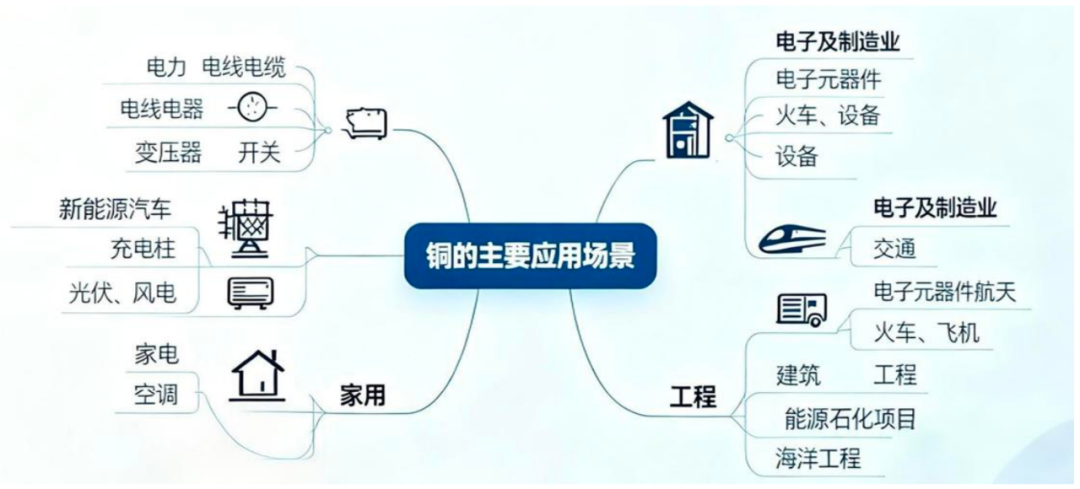
有色金属行业深度研究:求“铜”存异,负加工费时代的铜冶炼企业
Lian He Zi Xin· 2025-12-17 11:10
Investment Rating - The report indicates a challenging environment for copper smelting enterprises, particularly in China, as they enter a "negative processing fee" era, which significantly impacts profitability [2][6]. Core Insights - The copper smelting industry is undergoing profound changes due to structural imbalances caused by "tight supply at the mine end" and "expansion of smelting capacity" [2]. - Leading enterprises are adapting by enhancing resource self-sufficiency, exploring the value of by-products, optimizing technology for efficiency and cost reduction, flexibly using financial tools, and promoting industry consolidation to build new competitive advantages [2]. - Long-term growth is anticipated as demand for materials from new energy and high-end manufacturing continues to rise, transitioning the copper smelting industry from a "strong cyclical attribute" to a "growth attribute" for high-quality development [2]. Summary by Sections Industry Overview - Copper is one of the earliest metals recognized and used by humans, with extensive applications due to its excellent conductivity, thermal properties, ductility, and corrosion resistance [4]. - The copper industry chain can be divided into upstream mining, midstream smelting, and downstream processing, ultimately reaching the end consumer market [4]. Current Market Dynamics - China, as the largest refined copper producer, faces a significant resource shortage, heavily relying on imported mineral resources, a situation expected to persist in the short term [6]. - In 2024, China's copper ore production is projected to decline by 11% to approximately 1.8 million tons, while refined copper production is expected to increase by over 5% to 13.64 million tons, contributing to about 50% of global output [6]. - The import volume of copper ore and concentrates is anticipated to rise to 28.11 million tons in 2024, with a self-sufficiency rate of only 13% for domestic copper concentrate [6]. Processing Fee Trends - The pricing logic for imported copper concentrates is based on the LME spot average price minus processing fees (TC/RC), which directly reflects the relationship between mines and smelters [7]. - Since the end of Q3 2023, the global copper concentrate market has experienced a structural shift, with TC/RC entering a downward trend, reaching a historical low of negative $40 per dry ton by 2025 [7][8]. - The decline in processing fees is a direct manifestation of the structural imbalance between tight raw material supply and expanded smelting capacity, severely weakening the bargaining power of Chinese copper smelting enterprises [7]. Profitability Analysis - The profitability of smelting enterprises is primarily derived from processing fees, recovery rates, and by-product sales, with processing fees historically being a crucial profit source [10]. - The report illustrates the impact of processing fee declines on profitability, showing scenarios where negative processing fees lead to significant losses for smelting enterprises [11]. - The long-term low processing fees may result in substantial losses for copper smelting enterprises, prompting potential production adjustments and accelerating industry consolidation [11]. By-Product Revenue - By-products such as sulfuric acid and precious metals significantly contribute to the profitability of copper smelting enterprises, with sulfuric acid prices remaining high and enhancing profit margins [17][19]. - The extraction of precious metals from copper anode mud has become economically valuable, with recovery rates exceeding 98% [18][19]. Technological and Cost Efficiency - Continuous technological advancements in smelting processes have positioned leading enterprises at the forefront of global standards, enhancing recovery rates and reducing costs [21][23]. - Scale production helps lower fixed costs, and effective cost control measures have been implemented by major enterprises [23]. Strategic Outlook - The report emphasizes the need for copper smelting enterprises to adapt to the negative processing fee environment by securing upstream resources, maintaining by-product profitability, and leveraging technological advancements [31]. - The strategic importance of copper is expected to grow with global energy transitions and industrial upgrades, presenting opportunities for enterprises that successfully navigate the current challenges [31].
磷酸铁锂行业正掀提价浪潮,机构看好2026年锂产业链投资机遇(附概念股)
Zhi Tong Cai Jing· 2025-12-15 00:40
Group 1: Price Trends in Lithium Iron Phosphate Industry - The lithium iron phosphate industry is experiencing a wave of price increases, with leading manufacturers issuing clear price hike notifications to customers [1] - A major manufacturer has announced that from 2026, the processing fees for all lithium iron phosphate products will be uniformly raised [1] - Industry insiders indicate that price increases have already been implemented for some customers, while others are still in negotiations, suggesting that price hikes are becoming a prevailing trend [1] Group 2: Battery Production and Demand - In November, domestic power battery installation reached 93.5 GWh, marking a month-on-month increase of 11.2% and a year-on-year increase of 39.2% [2] - Lithium iron phosphate batteries accounted for 75.3 GWh of the total, representing 80.5% of the total installation, with a month-on-month increase of 11.6% and a year-on-year increase of 40.7% [2] - Cumulatively, from January to November, domestic power battery installations reached 671.5 GWh, a year-on-year increase of 42.0% [2] Group 3: Future Demand Projections - The chairman of Tianqi Lithium stated that global lithium demand is expected to reach 2 million tons of lithium carbonate equivalent by 2026, indicating a near balance between supply and demand [3] - Ganfeng Lithium's chairman predicts a 30% increase in lithium demand by 2026, potentially reaching 1.9 million tons, with supply capacity expected to grow by around 250,000 tons [3] - If demand growth exceeds 30%, prices may rise significantly, potentially surpassing 150,000 to 200,000 yuan per ton [3] Group 4: Investment Opportunities in Lithium Industry - CITIC Construction Investment emphasizes the importance of resource self-sufficiency and low-cost quality resources for future growth in the lithium industry [4] - The report suggests that companies with high resource self-sufficiency can maintain stable raw material supply and high margins, reducing risks associated with low-margin processing [4] - The expectation of continued upward adjustments in energy storage demand is likely to improve the supply-demand balance in the lithium market [4] Group 5: Company Developments - Tianqi Lithium is expanding its metal lithium production capacity, with 600 tons currently and an additional 1,000 tons under construction, positioning itself as the second-largest globally [5] - Ganfeng Lithium has achieved large-scale production of energy storage cells and established stable supply partnerships with leading companies, ensuring delivery stability amid rising storage demand [5] - CATL, a leader in solid-state battery technology, has achieved mass production of its semi-solid state batteries, contributing significant revenue, while also advancing solid-state battery research [6]
港股概念追踪 | 磷酸铁锂行业正掀提价浪潮 机构看好2026年锂产业链投资机遇(附概念股)
智通财经网· 2025-12-14 23:25
Group 1: Lithium Iron Phosphate Industry - The lithium iron phosphate industry is experiencing a significant price increase, with leading manufacturers issuing clear price hike notifications to customers starting from 2026 [1] - Some companies have already implemented price increases, while others are in negotiations, indicating that price hikes are becoming a trend to restore profit levels in the industry [1] Group 2: Battery Production and Demand - In November, domestic power battery installation reached 93.5 GWh, a month-on-month increase of 11.2% and a year-on-year increase of 39.2% [2] - Lithium iron phosphate batteries accounted for 75.3 GWh of the total, representing 80.5% of the total installation, with a month-on-month increase of 11.6% and a year-on-year increase of 40.7% [2] - Cumulative battery installation from January to November reached 671.5 GWh, a year-on-year increase of 42.0%, with lithium iron phosphate batteries making up 81.2% of the total [2] Group 3: Lithium Demand Forecast - The global demand for lithium is expected to reach 2 million tons of lithium carbonate equivalent by 2026, achieving a near balance between supply and demand [3] - Predictions indicate a 30% increase in lithium demand, potentially reaching 1.9 million tons, with supply capacity expected to grow by around 250,000 tons [3] Group 4: Investment Opportunities in Lithium Industry - The lithium industry is focusing on resource self-sufficiency and low-cost quality resources, which are crucial for stable raw material supply and high margins [4] - The report emphasizes the importance of companies with significant production growth potential and the ability to maintain operations during market downturns [4] Group 5: Company Developments - Tianqi Lithium has a production capacity of 600 tons of metal lithium and is building an additional 1,000 tons, ranking second globally [5] - Ganfeng Lithium has achieved large-scale production of energy storage cells and is collaborating with leading companies, ensuring stable delivery amid rising storage demand [5] - CATL, a leader in solid-state batteries, is advancing its technology and production capabilities, with significant revenue contributions expected from its products [6]
磷酸铁锂行业正掀提价浪潮 机构看好2026年锂产业链投资机遇(附概念股)
Zhi Tong Cai Jing· 2025-12-14 23:20
Group 1: Price Trends in Lithium Iron Phosphate Industry - The lithium iron phosphate industry is experiencing a significant price increase, with leading manufacturers issuing clear price hike notifications to customers [1] - A major manufacturer has announced that starting in 2026, processing fees for all lithium iron phosphate products will be uniformly raised [1] - Industry insiders indicate that price increases have already been implemented for some customers, and negotiations are ongoing with others, suggesting that price hikes are becoming a prevailing trend [1] Group 2: Battery Production and Demand - In November, domestic power battery installation reached 93.5 GWh, marking a month-on-month increase of 11.2% and a year-on-year increase of 39.2% [2] - Lithium iron phosphate batteries accounted for 75.3 GWh of the total, representing 80.5% of the total installation, with a month-on-month increase of 11.6% and a year-on-year increase of 40.7% [2] - Cumulative power battery installations from January to November reached 671.5 GWh, a year-on-year increase of 42.0%, with lithium iron phosphate batteries making up 81.2% of this total [2] Group 3: Future Demand Projections - Global lithium demand is expected to reach 2 million tons of lithium carbonate equivalent by 2026, achieving a near balance between supply and demand [3] - Predictions indicate a 30% increase in lithium demand by 2026, potentially reaching 1.9 million tons, while supply capacity is expected to grow by approximately 250,000 tons [3] - If demand growth exceeds 30%, prices may rise significantly, potentially surpassing 150,000 yuan/ton or even 200,000 yuan/ton in the short term [3] Group 4: Investment Opportunities in Lithium Industry - Citic Construction Investment emphasizes the importance of resource self-sufficiency and low-cost quality resources for companies to navigate market cycles effectively [4] - The report highlights that companies with high resource self-sufficiency can ensure stable raw material supply and high margins, reducing risks associated with low-margin processing [4] - The lithium industry's supply-demand dynamics are improving, with expectations for better performance in equity markets as the sector approaches its bottom [4] Group 5: Company Developments in Lithium Sector - Tianqi Lithium (002466) is expanding its metal lithium production capacity, with 600 tons currently and an additional 1,000 tons under construction, ranking second globally [5] - Ganfeng Lithium (002460) has achieved large-scale production of energy storage cells and established stable supply partnerships with leading companies, ensuring delivery amid rising storage demand [5] - CATL (300750) is a leader in solid-state battery technology, with significant advancements in energy density and production capabilities, contributing substantial revenue in the upcoming year [6]

14.56亿!百亿上市公司再买矿
起点锂电· 2025-09-24 09:37
Core Viewpoint - The article discusses the strategic acquisition by Shengxin Lithium Energy to enhance its lithium resource supply capabilities amid declining lithium prices and industry challenges [2][5][11]. Group 1: Event Overview - The CINE2025 Solid-State Battery Exhibition and Industry Annual Conference will be held from November 6-8, 2025, at the Guangzhou Nansha International Convention Center, featuring over 200 exhibitors and 20,000 professional attendees [1]. Group 2: Company Acquisition - Shengxin Lithium Energy plans to acquire a 21% stake in Sichuan Qicheng Mining for 1.456 billion yuan through its wholly-owned subsidiary, Shengtun Lithium Industry, increasing its direct ownership to 70% [2][3]. - The acquisition aims to enhance the company's lithium resource supply assurance and self-sufficiency in lithium raw materials [5]. Group 3: Resource Details - Sichuan Qicheng Mining's core value lies in its subsidiary, Huirong Mining, which holds mining rights to the Muli Lithium Mine, with a confirmed Li2O resource of 989,600 tons and an average grade of 1.62% [6]. - The Muli Lithium Mine is one of the highest-grade lithium mines in Sichuan, with a production capacity of 3 million tons per year [6]. Group 4: Financial Performance - In the first half of 2025, Shengxin Lithium Energy reported a revenue of 1.614 billion yuan, a year-on-year decline of 37.42%, and a net loss of 841 million yuan, a significant drop of 349.88% [11]. - The company’s cash flow may face pressure due to the acquisition cost, especially if lithium prices continue to decline [11]. Group 5: Industry Context - The average price of battery-grade lithium carbonate in China was 69,910 yuan per ton in the first half of 2025, down 32.36% year-on-year [8]. - The cost of lithium extraction for domestic companies is around 50,000-60,000 yuan per ton, with many firms operating at a loss due to falling lithium prices [9][10].

云南铜业20250826
2025-08-26 15:02
Summary of Yunnan Copper Industry Conference Call Company Overview - **Company**: Yunnan Copper Industry - **Period**: First half of 2025 Key Financial Metrics - **Copper Production**: 779,400 tons, up 53.22% year-on-year [2][4] - **Gold Production**: 12.19 tons, up 98.86% year-on-year [2][4] - **Silver Production**: 276.63 tons, up 98.70% year-on-year [2][4] - **Sulfuric Acid Production**: 282,900 tons, up 20.63% year-on-year [2][4] - **Revenue**: 88.913 billion yuan, up 4.27% year-on-year [2][4] - **Total Profit**: 1.895 billion yuan, up 2.94% year-on-year [2][4] - **Net Profit**: 1.317 billion yuan, up 24.32% year-on-year [2][4] - **Earnings per Share**: 0.6573 yuan, up 24.32% year-on-year [2][4] - **Return on Equity**: 8.68%, up 1.31 percentage points year-on-year [2][4] Operational Highlights - **Production Coordination**: Enhanced supply chain management contributed to record production levels [3] - **Asset Optimization**: Sale of idle assets and establishment of new subsidiaries to improve competitiveness [2][5] - **Strategic Investments**: Formation of a joint venture with Liangshan Industrial Investment to enhance local industry chain [5] Challenges and Responses - **Raw Material Supply**: Addressed challenges from tight raw material supply and low copper prices through improved operational management [3] - **Cost Management**: Implemented cost control measures to offset declines in processing fees and increased inventory impairment [7][20] Future Plans - **Production Targets**: Maintain production goals for 2025: 1.52 million tons of copper, 16 tons of gold, 680 tons of silver, 5.364 million tons of sulfuric acid, and 54,600 tons of molybdenum concentrate [3][8] - **Digital Transformation**: Focus on resource expansion, mining optimization, and recycling metal business [8] - **Project Development**: Accelerate the construction of the Hongniupo project to enhance resource self-sufficiency [11] Market Outlook - **Sulfuric Acid Prices**: Expected to remain stable due to strong demand from downstream chemical products [9] - **Copper Concentrate Production**: Anticipated slight decline due to lower ore grades, but overall production plans remain unchanged [10] Strategic Considerations - **Resource Self-Sufficiency**: Projects in Tibet and Peru expected to significantly enhance resource self-sufficiency [11][12] - **Exploration Initiatives**: Ongoing exploration projects both domestically and internationally to increase reserves [14] Competitive Positioning - **Cost Competitiveness**: Positioned in the top 25-30% globally in terms of cost efficiency, bolstered by high sulfuric acid prices and effective cost management [20][22] - **Market Stability**: Chinese smelting enterprises, including Yunnan Copper, maintain a stable position in the global market despite challenges [22][23] Dividend and Capital Expenditure - **Dividend Policy**: Adherence to disclosed dividend policy with no changes expected [21] - **Capital Expenditure Focus**: Prioritize capital spending on resource projects to ensure long-term growth [21]
中矿资源(002738):铯铷业务增长显著 多金属布局有望贡献利润弹性
Xin Lang Cai Jing· 2025-05-06 06:45
Performance Overview - In 2024, the company achieved operating revenue of 5.364 billion yuan, a decrease of 10.80%, and a net profit attributable to shareholders of 757 million yuan, down 65.72% [1] - The company plans to distribute a cash dividend of 5.00 yuan for every 10 shares, with a dividend yield of 1.73% as of April 24, 2025 [1] - In Q1 2025, the company reported operating revenue of 1.536 billion yuan, an increase of 36.37% year-on-year but a decrease of 14.38% quarter-on-quarter, with a net profit of 135 million yuan, down 47.38% year-on-year and 36.19% quarter-on-quarter [1] Impact of Lithium Price Decline - The overall revenue decline in 2024 was primarily due to the drop in lithium prices, with the lithium battery raw material development and utilization business generating revenue of 3.129 billion yuan, down 26.25% [2] - The average spot price of lithium carbonate fell by 65.0% year-on-year to 90,510 yuan/ton, with a further decline of approximately 22.6% from the beginning of the year [2] - The company achieved lithium salt sales of 42,649 tons, an increase of 145.01%, with self-owned mines contributing 39,477 tons, up 164% [2] Profitability Trends - In 2024, the company's gross margin and net margin were 32.75% and 14.05%, respectively, with significant declines of 22.06 percentage points and 22.57 percentage points [2] - The gross margin for the lithium battery raw material business dropped by 39.15 percentage points to 18.62%, primarily due to falling lithium prices [2] - The rare light metals resource development business saw a gross margin increase of 13.91 percentage points to 78.29%, attributed to higher product prices [2] Resource Integration and Development - The company has a total of 418,000 tons/year of mining capacity and 66,000 tons/year of battery-grade lithium salt capacity [3] - Plans include completing the construction of a 1 million tons/year lithium mine in Canada by 2025 and a 30,000 tons/year integrated mining and processing facility in Africa by 2026 [3] - The company acquired a 65% stake in the Kitumba copper mine in Zambia, with a design scale of 3.5 million tons/year, and plans to start construction of the smelting project in May 2025 [3] Investment Outlook - As a leading lithium and rare salt producer, the company aims to enhance resource self-sufficiency and reduce production costs through acquisitions and mining [4] - The company is expected to achieve operating revenues of 5.65 billion, 7.24 billion, and 10.84 billion yuan from 2025 to 2027, with year-on-year growth rates of 5.3%, 28.2%, and 49.8% respectively [4] - Projected net profits for the same period are 930 million, 1.25 billion, and 1.95 billion yuan, with growth rates of 23.1%, 34.5%, and 55.7% respectively [4]
