
跨大西洋贸易战

Search documents
欧洲懵了,特朗普180度转变
华尔街见闻· 2026-01-22 09:37
Group 1 - Trump's stance on Greenland has shifted dramatically from threats of military intervention and economic sanctions to a "diplomatic compromise" mediated by NATO, temporarily diffusing an imminent transatlantic trade war [2] - On January 21, Trump announced via social media that he and NATO Secretary General Mark Rutte had reached an agreement on future cooperation regarding Greenland and the Arctic, indicating that the planned tariffs on Europe would not be implemented [2] - This unexpected move disrupted the agenda of an emergency EU leaders' meeting intended to establish a united front against Trump's "economic coercion" and ambitions regarding European territories [3][4] Group 2 - EU officials expressed concerns that Trump's seemingly flexible strategy could jeopardize EU unity and raise serious doubts about the credibility of U.S. commitments [5] - The core of this shift focuses on security cooperation rather than mere territorial acquisition, with Trump hinting at U.S. mining rights in Greenland and missile defense system deployment [7] - Despite the easing of tariff threats, Trump's unpredictability leaves European capitals uncertain about the longevity of U.S. commitments, with officials questioning whether he might revert to imposing tariffs or military action [8] Group 3 - Denmark and Greenland welcomed the de-escalation cautiously but reiterated their core stance that the territory is not for sale, with Danish Foreign Minister Rasmussen asserting that U.S. ownership of Greenland is impossible [9] - Rasmussen indicated a willingness to negotiate on U.S. security concerns, while left-wing Danish politicians warned against treating Greenland as a negotiable asset, emphasizing that it belongs to the Greenlandic people [10]

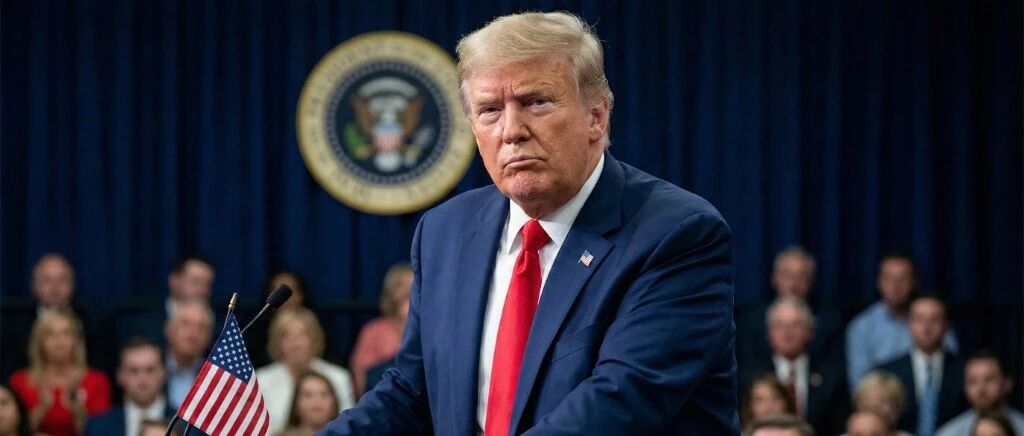
特朗普180度转折,欧洲懵了
Hua Er Jie Jian Wen· 2026-01-22 06:50
Group 1 - The core viewpoint of the articles revolves around Trump's sudden shift from a confrontational stance regarding Greenland to a diplomatic approach facilitated by NATO, which temporarily alleviates the threat of a transatlantic trade war but raises concerns about the unpredictability of his policies [1][2]. - Trump's announcement on January 21, stating that he would not implement the planned tariffs on Europe, marks a significant turn in the ongoing controversy over Greenland, although the details of the agreement remain unclear [1][2]. - The unexpected change disrupted a planned EU leaders' emergency meeting aimed at forming a united front against Trump's perceived economic coercion and territorial ambitions, highlighting the ongoing uncertainty in the market despite the temporary relief from tariff threats [1][2]. Group 2 - The focus of the discussions has shifted from territorial acquisition to security cooperation, with Trump hinting at U.S. interests in mineral rights and missile defense systems in Greenland, although he acknowledged the complexity of the proposal [2]. - European capitals are left confused by Trump's erratic behavior, with officials expressing concerns that his flexibility could undermine EU unity and exacerbate internal competition among member states regarding trade and geopolitical issues [2]. - Denmark has firmly reiterated that Greenland is not for sale, with its Foreign Minister emphasizing that U.S. ownership of the territory is a "red line," while also signaling a willingness to negotiate on security concerns [3].
European stocks fall sharply after Trump threatens tariffs over Greenland
New York Post· 2026-01-19 18:33
Market Reaction - European stocks experienced a sharp decline, with the Stoxx Europe 600 index falling 1.2% as investors reacted to President Trump's tariff threats [1][4] - Germany's DAX dropped 1.3% to its lowest level in nearly two weeks, while France's CAC 40 fell 1.8%, heavily impacted by losses in luxury stocks [2][8] - London's FTSE 100 saw a more modest decline of 0.4%, supported by its exposure to defensive sectors [4] Sector Impact - Luxury and automotive sectors were among the hardest hit, with major companies like LVMH, BMW, and Volkswagen facing concerns over potential sales declines in the US market due to new tariffs [4][5] - Defense stocks, however, showed resilience, with shares of Saab, Rheinmetall, and Dassault Aviation rising over 2% as investors anticipated increased military spending in Europe amid rising tensions [6] Tariff Details - Trump announced a 10% tariff on goods from Denmark, Norway, Sweden, France, Germany, the UK, the Netherlands, and Finland, set to increase to 25% by June if negotiations over Greenland fail [5][10] - The tariff threats have raised concerns about the impact on margins and demand for luxury and automotive products in the US, a critical market for European exporters [5] Investor Sentiment - The selloff in European markets was accompanied by a flight to safe-haven assets, with gold prices reaching a new record of $4,672.49 an ounce, reflecting investor anxiety [8] - US futures indicated a rough opening on Wall Street, with S&P 500 and Nasdaq contracts down about 1% as traders anticipated potential retaliatory measures [9] Political Response - European leaders expressed concerns that the tariff threats could escalate tensions, with French President Macron advocating for a strong EU response, potentially restricting US access to the EU market [11][12] - German Chancellor Friedrich Merz emphasized the need for a unified EU position in response to the tariffs, acknowledging differing impacts among member states [12]


“输家很多,赢家很少”,德法不满美欧贸易协议
Guan Cha Zhe Wang· 2025-07-29 11:07
Group 1 - The US and EU have reached a trade agreement that imposes a 15% tariff on EU goods while the EU commits to invest $600 billion in the US and purchase $750 billion worth of US energy products and military equipment [1][7][10] - The agreement is seen as a significant trade deal, covering nearly 44% of global GDP, and is aimed at avoiding a potential transatlantic trade war [10] - Despite the agreement, the euro experienced its largest single-day drop since May, and European stock markets turned negative, indicating market concerns about the deal's implications [1][10] Group 2 - German Chancellor Merz expressed that the agreement could severely damage the economies of both the US and Europe, leading to higher inflation and affecting transatlantic trade [2][4] - French Prime Minister and far-right leaders criticized the deal as a sign of EU weakness, with claims that it represents a surrender for Europe [4][5] - The Polish Prime Minister estimated that Poland could incur losses of approximately $2.16 billion due to the agreement, reflecting broader concerns among EU nations about the economic impact [5][6] Group 3 - The German automotive industry warned that even a 15% tariff could result in billions in losses annually, highlighting the negative impact on European exports [11] - The American Chamber of Commerce in the EU welcomed the agreement but noted that the 15% tariff still significantly increases trade costs, suggesting a need for a broader zero-tariff list [11] - US businesses also expressed a lack of enthusiasm, indicating that while avoiding a trade war is positive, the long-term effects of the 15% tariff could lead to strained relations with key allies [11]

50%关税变脸惊扰全球汇市!新浪财经"环球经济眼"视频栏目还原欧美关税谈判生死线
新浪财经· 2025-05-30 00:58
Core Viewpoint - The article emphasizes the launch of the "Global Economic Eye" video column by Sina Finance, which aims to provide timely and accessible analysis of global financial events, helping users understand complex economic issues and seize investment opportunities. Group 1: Overview of "Global Economic Eye" - The column focuses on real-time tracking of key events such as Federal Reserve policy changes, geopolitical conflicts, and trade wars, making it suitable for users with no prior knowledge [2][10]. - Each video utilizes visual data models and straightforward language to simplify complex topics, connecting macroeconomic policies to individual financial situations [2][10]. Group 2: Case Study on Tariff Changes - A notable case discussed is President Trump's recent decision to extend the deadline for imposing a 50% tariff on the EU until July 9, following a phone call with EU Commission President Ursula von der Leyen [2]. - This decision reflects a significant escalation in the long-standing transatlantic trade tensions, as Trump had previously threatened higher tariffs due to perceived slow negotiations and unfair regulations targeting U.S. companies [2].

昨夜,大跌!
第一财经· 2025-05-24 00:07
Group 1 - The U.S. stock market experienced a significant decline, with the Dow Jones falling by 256.02 points (0.61%) to 41,603.07 points, marking its fourth consecutive day of losses [1] - Major technology stocks underperformed, with Meta Platforms, Nvidia, and Tesla all dropping over 1%, while Apple fell by 3% to a two-week low [1] - The Nasdaq China Golden Dragon Index showed mixed performance, with Bilibili rising over 3% and Miniso falling over 17% [1] Group 2 - President Trump suggested imposing a 50% tariff on EU goods starting June 1, raising concerns about a transatlantic trade war [2] - Analysts from Barclays indicated that Trump's tariff announcement may be a negotiation tactic, but it highlights ongoing volatility in U.S. trade policy [2] - U.S. Treasury yields fell as investors sought safer assets, with the 10-year yield dropping by 4.8 basis points to 4.51% [2] Group 3 - Chicago Fed President Goolsbee noted that Trump's latest tariff threats complicate the policy outlook, potentially delaying interest rate adjustments by the Federal Reserve [3] - U.S. Steel saw a significant increase of 21% following Trump's support for a partnership between U.S. Steel and Japan's Nippon Steel, which is expected to create 70,000 jobs and generate $14 billion in new investments [3] Group 4 - International oil prices saw a slight increase, with WTI crude rising by 0.54% to $61.53 per barrel, and Brent crude increasing by 0.53% to $64.78 per barrel [4] - Gold prices also rose, with COMEX gold futures for May delivery increasing by 2.17% to $3,363.60 per ounce [4]


【环球财经】美拟向欧加征50%关税 欧洲股市剧烈震动
Xin Hua Cai Jing· 2025-05-23 17:07
Group 1 - The DAX index in Frankfurt experienced significant volatility, closing down 1.54% at 23,629.58 points, with an intraday high of 24,149.08 points and a low of 23,274.85 points [1] - The market initially rose due to slightly better-than-expected German GDP data, but concerns over a potential new round of transatlantic trade war emerged after President Trump announced punitive tariffs on EU goods starting June 1 [1] - The automotive, luxury goods, and metals sectors were notably impacted, with the STOXX 600 automotive manufacturers index dropping over 3.5%, and major companies like Porsche, BMW, Volkswagen, and Mercedes-Benz seeing declines exceeding 3% [1] Group 2 - Analysts highlight that the EU's negotiation strategy will be crucial, as the current unstable environment complicates market pricing [2] - There are concerns that the ongoing trade war could depress profits and potentially lead to inflation [2] - Investors are closely monitoring the upcoming global Purchasing Managers' Index (PMI) data, which will serve as a key economic indicator amid ongoing worries about European economic growth [2]