跨部门协同治理

Search documents
盒饭摊“转正”的治理启示(暖闻热评)
Xin Lang Cai Jing· 2026-02-11 06:24
Group 1 - The core viewpoint emphasizes the need for cross-departmental collaboration to address governance fragmentation effectively, as demonstrated by the successful regulation of a food stall in Ningbo, which transitioned to compliant operation through community support and multi-department coordination [1][2] - The article highlights the importance of balancing regulatory management with humanistic care, showcasing how proactive community engagement and flexible enforcement can enhance governance and support livelihoods [1][3] - It discusses the shift from rigid enforcement to a more service-oriented approach, which helps to alleviate conflicts between street vendors and law enforcement, ultimately fostering a more harmonious community environment [1][2] Group 2 - The article illustrates effective methods for gathering public opinion, such as on-site surveys and data analysis, which can lead to tailored solutions like the establishment of "tide stalls" in Chongqing, providing stable operating spaces for local vendors [2] - It emphasizes the necessity of a systematic approach to governance, integrating various professional departments to address complex issues related to public services, such as the collaborative model for newborn services in Hebei [2] - The piece concludes by advocating for a nuanced understanding of governance that harmonizes regulation and support, encouraging local authorities to innovate and adapt their strategies to enhance public satisfaction and welfare [3]
直播电商新规落地 私域、数字人主播纳入监管
Sou Hu Cai Jing· 2026-01-08 08:48
Core Viewpoint - The newly released "Live E-commerce Supervision Management Measures" aims to enhance supervision and management of live e-commerce, protect the legal rights of consumers and operators, and promote healthy development in the industry, effective from February 1, 2026 [1]. Group 1: Responsibilities and Regulations - The measures clarify the legal responsibilities of four key entities: platform operators, live room operators, live marketing personnel, and service agencies, forming a closed-loop regulatory framework [2]. - Platforms are assigned a crucial role, with responsibilities including qualification verification, credit evaluation, and complaint mechanisms, thereby establishing a comprehensive responsibility system [2]. - The regulation includes private domain live streaming under legal supervision, addressing the challenges of monitoring this area due to its hidden nature [2]. Group 2: Blacklist System and Compliance - A blacklist system is established, requiring platforms to list operators and personnel who severely violate laws, with provisions for appeals and re-evaluation [3]. - The measures prohibit individuals on the blacklist from circumventing penalties by changing accounts and encourage information sharing between platforms for joint punitive actions [3]. - Clear behavioral boundaries are set for operators and marketing personnel, including prohibitions on providing illegal goods or services and false advertising [3]. Group 3: Artificial Intelligence and New Risks - The measures proactively include AI-generated content in regulatory oversight, mandating clear identification of digital personas used in live e-commerce to prevent misuse of technology as a shield for illegal activities [4][6]. - A case involving AI-generated advertisements misleading consumers highlights the necessity for such regulations [6]. Group 4: Collaborative Governance - The measures emphasize the need for a cross-departmental and cross-platform collaborative governance mechanism to address the complexities of live e-commerce [7]. - The regulation aims to enhance cooperation between market supervision and internet information departments, focusing on issues like false advertising and deceptive practices targeting vulnerable groups [7]. - Major platforms are already taking action against violations, with initiatives to combat fraudulent activities and ensure compliance [7]. Group 5: Industry Impact - Experts believe the measures will significantly promote industry standards, eliminate non-compliant entities, and guide the sector from chaotic growth to a focus on quality, fostering long-term healthy development in live e-commerce [8].



最高法:77名船员近千万元欠薪纠纷通过水上解纷机制化解
Xin Lang Cai Jing· 2026-01-07 08:59
Core Viewpoint - A significant collective wage arrears dispute involving 77 crew members was resolved through a water-based "one-stop" dispute resolution mechanism, highlighting the effectiveness of cross-departmental collaboration in addressing labor disputes in the maritime sector [1][3][4] Group 1: Dispute Resolution Mechanism - The Supreme People's Court and the Ministry of Transport released eight typical cases of the water-based "one-stop" dispute resolution mechanism, covering various types of cases including labor services and maritime accidents [1] - By the end of 2025, over 60 water-based "one-stop" dispute resolution centers will be established nationwide, covering coastal areas and major river basins [1] Group 2: Case Details - The case involved a significant wage arrears issue exceeding 10 million yuan, with crew members experiencing delays of over six months in receiving their salaries, leading to heightened tensions and potential strikes [2][3] - The shipowner cited cash flow issues due to delayed payments from the project party, which contributed to the inability to pay wages on time [2] Group 3: Collaborative Efforts - The Hainan Maritime Bureau and Haikou Maritime Court initiated a cross-departmental collaboration mechanism to address the wage arrears, ensuring a coordinated approach to protect the rights of the crew [3] - A two-step strategy was implemented to prioritize the payment of wages to particularly vulnerable crew members, followed by settling the remaining payments, which successfully resolved the issue before the Spring Festival [3] Group 4: Impact and Significance - The resolution of the case is expected to enhance the sense of belonging and well-being among crew members, positively impacting the professional development environment in Hainan Free Trade Port [4] - The case serves as a model for effective cross-departmental governance and emergency response mechanisms, improving the overall capability of maritime judicial and enforcement systems to handle complex risks [4]
北京电动自行车管理职责已扩展至13个部门
Xin Jing Bao· 2026-01-07 07:43
Core Viewpoint - The newly revised "Beijing Non-Motor Vehicle Management Regulations" will be implemented on May 1, 2026, focusing on safety across the entire lifecycle of electric bicycles, including production, sales, registration, usage, parking, and charging [1][2] Group 1: Regulatory Changes - The revised regulations expand the management responsibilities to 13 departments, including public security traffic management, market supervision, transportation, fire rescue, urban management, commerce, and postal management [1][2] - The regulations have increased from 7 chapters and 35 articles to 8 chapters and 55 articles, indicating a more detailed and legal approach to non-motor vehicle management [1] Group 2: Focus Areas - The revisions address key issues such as illegal modifications of electric bicycles, riding norms, and battery safety, aiming to resolve management challenges [1] - The regulations emphasize a collaborative governance model involving government, industry organizations, enterprises, and the public to enhance urban governance and ensure safe and convenient travel [1][2]
山东在全国首创“以电鉴水”改革,破解农村供水管理难题
Da Zhong Ri Bao· 2025-11-25 01:07
Core Viewpoint - Shandong province has pioneered the "Electricity to Water" reform to address rural water supply management challenges, enabling data sharing between water and electricity systems for improved governance and efficiency [2][4]. Group 1: Challenges in Rural Water Supply - Traditional management models face limitations, with 8.6 million natural villages and a population of 72.62 million relying on rural water networks in Shandong [3]. - Issues such as undetected underground water pipe leaks and low-frequency manual inspections hinder effective monitoring of water supply facilities [3]. - The lack of real-time data on water usage leads to regulatory blind spots, making it difficult to identify anomalies in water consumption [3]. Group 2: Innovative Solutions - The "Electricity to Water" mechanism integrates data from the electricity and water sectors, allowing for real-time monitoring and anomaly detection [4][5]. - The initiative includes the establishment of a unified "one household, one code" database to track water and electricity usage, enhancing operational efficiency [6]. - Pilot projects in Dezhou demonstrate the effectiveness of this model, with real-time monitoring of equipment leading to improved water quality management [5]. Group 3: Implementation and Future Plans - The reform will be implemented in two phases, with pilot projects in 12 counties by mid-2026, followed by a broader rollout across the province [7]. - The initiative aims to create a "water-electricity family" service station to provide convenient services and monitor usage for vulnerable groups [7]. - The ultimate goal is to establish industry standards for the "Electricity to Water" model and expand its application to other sectors [7].
打通经营主体参与政府采购便捷通道
Liao Ning Ri Bao· 2025-10-16 01:05
Core Viewpoint - The upgrade of the Liaoning Provincial Government Procurement Network marks a significant advancement in breaking down data barriers between departments and enhancing cross-departmental collaborative governance, optimizing the business environment for government procurement and supporting the construction of a unified national market [1][2]. Group 1: Upgrade and Efficiency Improvement - The previous manual process for credit verification in government procurement was time-consuming and prone to errors, leading to increased costs and inefficiencies [1]. - The new system allows agencies to obtain comprehensive credit profiles of suppliers within 3 seconds, improving credit verification efficiency by over 90% and ensuring fairness in the procurement evaluation process [2]. Group 2: Enhanced Credit Supervision and Governance - The upgrade transitions the credit supervision system from a reactive to a proactive approach, implementing an intelligent credit review function that automatically disqualifies entities with serious credit issues from participating in government procurement [3]. - This initiative represents a collaborative effort between the Provincial Finance Department and the Provincial Development and Reform Commission, aiming to integrate and utilize government data resources effectively, thereby reducing the burden on enterprises and lowering institutional transaction costs [3].
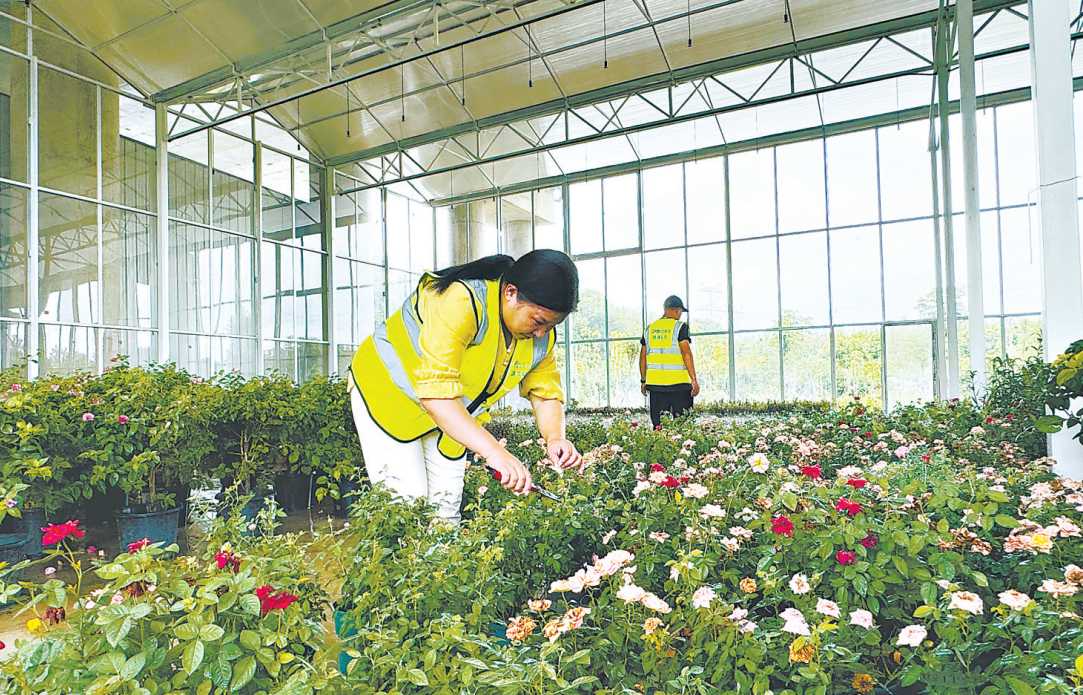
高速桥下空间变姹紫嫣红苗木基地
Chang Jiang Ri Bao· 2025-08-18 00:26
Core Insights - The article highlights the transformation of an underutilized 88-acre space under the Dongshan Interchange into a "green treasure" that integrates ecology, economy, and technology [1] Group 1: Green Infrastructure Development - The Dongshan Flower Landscape Seedling Production Base has implemented standardized planting areas and intensive production, featuring 53 types of seedlings [2] - The base operates a "flower hospital" concept, where damaged landscape plants are rehabilitated, reducing maintenance costs by 40% and extending the lifespan of plants by 3 to 5 years [2] Group 2: Smart Technology Integration - Smart flower boxes equipped with sensors automatically irrigate plants, reducing labor costs by 60% and ensuring optimal watering conditions [3] - The base employs a "light gradient planting" strategy to optimize plant growth based on sunlight exposure, achieving a seedling survival rate of 98% [4] Group 3: Community and Employment Impact - The project has fostered community involvement in cleaning and maintaining the area, transforming it from a site of waste to a green space [5][7] - The base has created over 10 permanent jobs and more than 30 seasonal jobs, contributing to local economic growth [7] Group 4: Collaborative Governance - The initiative began with a cross-departmental roundtable meeting aimed at revitalizing road resources, supported by local government and community engagement [7] - The project has established a collaborative governance model that addresses the challenges of maintaining green spaces and preventing future degradation [7]