通胀漂移

Search documents
黄金牛市还在吗?华尔街坚定看多:技术性回调不要怕,中国买家已成黄金市场强劲支柱
3 6 Ke· 2026-02-04 03:26
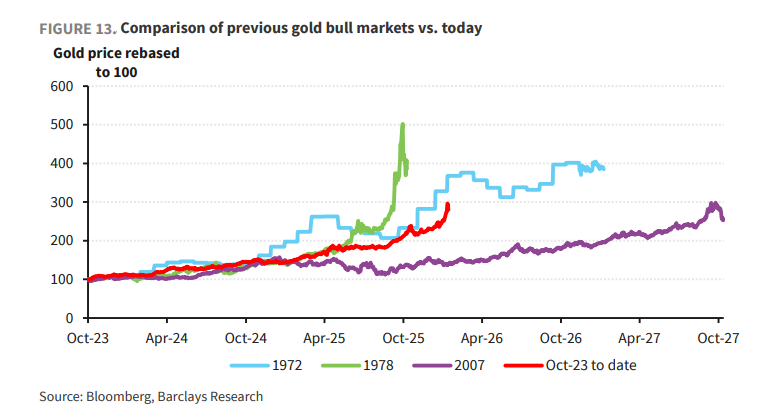
Core Viewpoint - The recent volatility in the gold market, with prices soaring to $5,600 and then dropping below $4,500, is viewed as a technical correction rather than a fundamental shift, with expectations of a return to upward momentum towards a target of $6,000 [1][22]. Group 1: Market Dynamics - The sharp decline in gold prices, approximately 21%, is attributed to a "cleaning out" of short-term speculative positions, leading to a necessary consolidation phase [3][5]. - Major banks like UBS and Barclays maintain that the underlying fundamentals supporting gold's long-term bullish trend remain intact, driven by geopolitical tensions and concerns over fiat currency depreciation [5][6]. Group 2: Chinese Demand - Chinese investors are significantly increasing their gold purchases, with January 2026 seeing an increase of 940,000 ounces in gold ETFs, potentially reaching an annualized total of 11.5 million ounces, which is over three times last year's total [10][13]. - This demand shift indicates a structural change in the Chinese market, where high gold prices are now stimulating investment rather than deterring it, as evidenced by a strong preference for physical gold over jewelry [17][19]. Group 3: Future Projections - Analysts predict that the $4,500 level will serve as a strong technical support, with expectations for gold prices to recover and reach new highs in the coming quarters [21]. - Deutsche Bank maintains a target price of $6,000 for gold, viewing the current price adjustments as minor fluctuations within a larger upward trend [22]. Group 4: Investment Opportunities - Barclays highlights the attractiveness of gold mining stocks, suggesting that historical trends indicate significant potential for price appreciation in this sector, especially as gold prices stabilize [23].


黄金牛市还在吗?华尔街坚定看多:技术性回调不要怕
Hua Er Jie Jian Wen· 2026-02-03 12:08
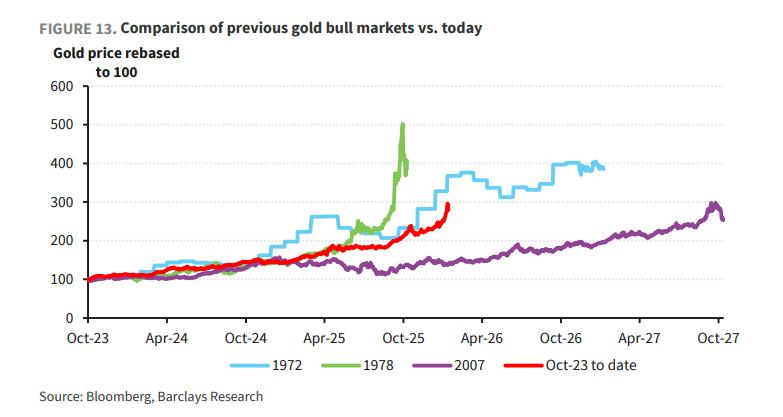
Core Viewpoint - The recent volatility in the gold market, with prices soaring to $5,600 and then dropping below $4,500, is viewed as a technical correction rather than a fundamental shift, with expectations of a return to upward momentum towards a target of $6,000 [1][19]. Group 1: Market Dynamics - The sharp decline in gold prices, approximately 21% from recent highs, is attributed to a "cleaning out" of short-term speculative positions, leading to a necessary consolidation phase [3]. - Major banks like UBS and Barclays maintain that the underlying fundamentals supporting gold remain intact, with expectations of a recovery in demand from various sectors [6][19]. - Deutsche Bank highlights a significant shift in global political and trade dynamics, increasing the demand for gold as a non-sovereign credit asset [7]. Group 2: Chinese Market Influence - Chinese investors are emerging as a critical support for the gold market, with a reported increase in gold ETF purchases reaching three times the previous year's levels [11]. - UBS notes a structural change in Chinese consumer behavior, where rising gold prices are now driving investment demand rather than deterring it [14]. - The demand for gold in China is characterized by a strong asset preservation sentiment, leading to substantial inflows into gold ETFs [15]. Group 3: Future Projections - UBS predicts that the price of gold will find strong support around $4,500, with potential for a rebound in the coming quarters [18]. - Deutsche Bank maintains its $6,000 target for gold, viewing the current price adjustments as minor fluctuations within a larger bullish trend [19]. - Barclays suggests that gold mining stocks present an attractive investment opportunity, with historical trends indicating significant potential for growth in bull markets [20][21].
黄金牛市还在吗?华尔街坚定看多:技术性回调不要怕,中国买家已成黄金市场强劲支柱!
华尔街见闻· 2026-02-03 10:43
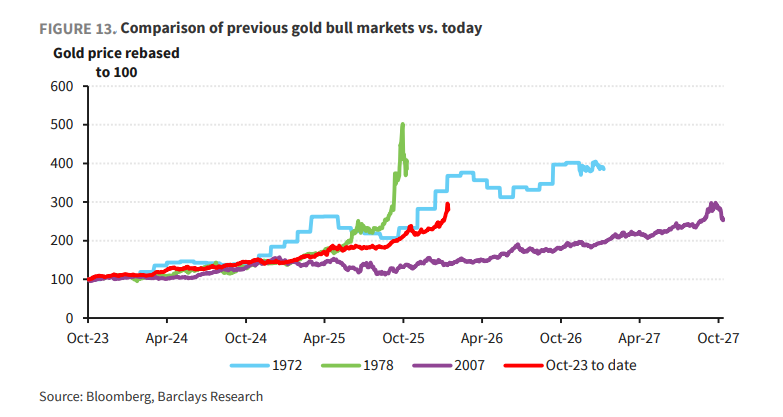
Core Viewpoint - The recent volatility in the gold market, characterized by a rapid price surge to $5,600 followed by a sharp decline below $4,500, is viewed as a healthy correction rather than the end of a bull market, with expectations of a rebound towards $6,000 in the future [2][3][7]. Group 1: Market Dynamics - The gold price experienced a significant drop of approximately 21%, attributed to a "cleaning out" of short-term speculative positions, which had become overly crowded due to previous price surges [8]. - Major banks, including Barclays and UBS, maintain that the underlying fundamentals driving the long-term bull market in gold remain intact despite recent price fluctuations [11][12]. - UBS highlights that demand from retail, institutional, and official sectors is expected to recover, which will ultimately drive gold prices back up [12]. Group 2: Chinese Market Influence - Chinese buyers are significantly increasing their gold purchases, with reports indicating that their buying intensity for gold ETFs is over three times that of the previous year [4][19]. - In January 2026 alone, Chinese gold ETF purchases reached 940,000 ounces, suggesting a potential annualized increase of 11.5 million ounces, compared to a record of 3.24 million ounces in 2025 [18][19]. - UBS notes a structural change in the Chinese market, where high gold prices are now stimulating investment demand rather than deterring it, indicating a shift towards "buying more as prices rise" [25][26]. Group 3: Technical Analysis and Predictions - UBS predicts that the $4,500 level will serve as a strong technical support, with expectations for gold prices to recover and reach new highs in the coming quarters [29]. - Barclays' analysis suggests that the fair value of gold is around $4,000, and while there is still a premium, the recent price drop has brought it back within reasonable standards [9]. - Deutsche Bank maintains a target price of $6,000 per ounce for gold, viewing the current market adjustment as a minor fluctuation within a larger upward trend [33]. Group 4: Broader Economic Context - The ongoing geopolitical tensions and concerns over fiat currency devaluation are driving investors to view gold as a critical hedge against risk [13][14]. - The U.S. fiscal policy environment, characterized by high government debt and expansionary measures, is seen as undermining the safe-haven status of U.S. Treasuries, further enhancing gold's appeal [14][16]. - The demand for gold is also being supported by central banks, with countries like Poland and South Korea planning to increase their gold reserves, reflecting a trend towards de-dollarization [30].
黄金牛市还在吗?华尔街坚定看多:技术性回调不要怕,中国买家已成黄金市场强劲支柱!
美股IPO· 2026-02-03 05:04
Core Viewpoint - Recent fluctuations in gold prices are viewed by Wall Street as a "technical washout," with the underlying bull market logic remaining intact. Major banks maintain bullish targets, with Deutsche Bank projecting gold to reach $6,000, supported by strong buying from Chinese investors [1][4][26]. Group 1: Market Dynamics - Gold prices surged from $4,300 to a peak of $5,600 before dropping below $4,500, marking significant volatility not seen since 1980 and 1983 [2][3]. - The recent price drop of approximately 21% is attributed to a "cleaning out" of short-term speculative positions, leading to a necessary market correction [8][11]. - Barclays and UBS emphasize that the fundamental drivers of gold's long-term bull market remain unchanged, with ongoing geopolitical tensions and concerns over fiat currency depreciation fueling demand [12][13][14]. Group 2: Chinese Demand - Chinese investors are significantly increasing their gold ETF purchases, with a reported addition of 940,000 ounces in January 2026, potentially leading to an annualized increase of 11.5 million ounces [5][17][18]. - UBS notes a structural shift in Chinese market behavior, where high gold prices are now driving investment demand rather than deterring it, indicating a bullish sentiment among Chinese investors [22][24]. - The demand for gold in China is not limited to ETFs; there is also a notable increase in physical gold purchases, filling the gap left by reduced jewelry demand [28]. Group 3: Future Projections - UBS identifies $4,500 as a strong technical support level, with expectations for gold prices to recover and reach new highs in the coming quarters [25][30]. - Deutsche Bank maintains its $6,000 target for gold, viewing the current price adjustment as a minor setback in a larger upward trend [27][31]. - The ongoing trend of central banks increasing gold reserves, alongside a shift towards "de-dollarization," suggests sustained demand for gold as a safe-haven asset [29].
黄金牛市还在吗?华尔街坚定看多:技术性回调不要怕,中国买家已成黄金市场强劲支柱!
Hua Er Jie Jian Wen· 2026-02-03 03:05
Core Viewpoint - The recent volatility in the gold market, characterized by a rapid price surge to $5,600 followed by a sharp decline below $4,500, is viewed as a technical correction rather than a fundamental market collapse, with expectations of a rebound towards $6,000 in the future [1][2][4]. Group 1: Market Dynamics - Gold prices experienced a dramatic fluctuation, rising from $4,300 to $5,600 and then falling below $4,500, marking one of the largest single-day declines in history [1]. - Major financial institutions like Barclays, UBS, and Deutsche Bank maintain that the current market adjustment is a healthy correction following excessive speculation, with UBS noting a 21% drop from peak prices due to a "cleaning out" of short-term positions [2][4]. - The fair value of gold is estimated at around $4,000, with current prices still reflecting a premium that has returned to reasonable levels after a drop to $4,900 [4]. Group 2: Demand Factors - Chinese investors are significantly increasing their gold purchases, with a reported threefold increase in buying intensity for gold ETFs compared to the previous year, indicating a strong demand driver in the market [2][14]. - In January 2026 alone, Chinese gold ETF holdings increased by 940,000 ounces, suggesting a potential annual increase of 11.5 million ounces, far surpassing the previous year's record [14]. - Despite high gold prices dampening jewelry demand, there is a notable shift towards investment in physical gold bars and coins, with Chinese investors showing a tendency to buy more as prices rise [21][17]. Group 3: Economic and Geopolitical Context - The macroeconomic environment remains supportive for gold, with ongoing geopolitical tensions, fiscal expansion, and concerns over fiat currency devaluation driving investors towards gold as a safe haven [8][9]. - The U.S. fiscal policy under the "Trump 2.0" era, characterized by expansive fiscal measures, is seen as undermining the safe-haven status of U.S. Treasury bonds, increasing fears of currency devaluation [9]. - The anticipated inflation rate of 3% in the U.S. could provide a 15% intrinsic upward pressure on gold prices, as each 1% increase in CPI correlates with a 5% rise in gold prices [10]. Group 4: Investment Opportunities - Barclays highlights the attractiveness of gold mining stocks, which historically perform well during gold bull markets, suggesting potential for significant returns as the current bull market is still in its early stages [23]. - The ongoing trend of central banks diversifying their reserves away from the dollar, with countries like Poland and South Korea increasing their gold holdings, indicates a sustained demand for gold in the long term [24]. - UBS notes that despite recent price volatility, many long-term institutional investors still have low gold allocations, presenting an opportunity for these investors to enter the market at favorable prices around the $4,500 support level [22].