
都市圈经济

Search documents
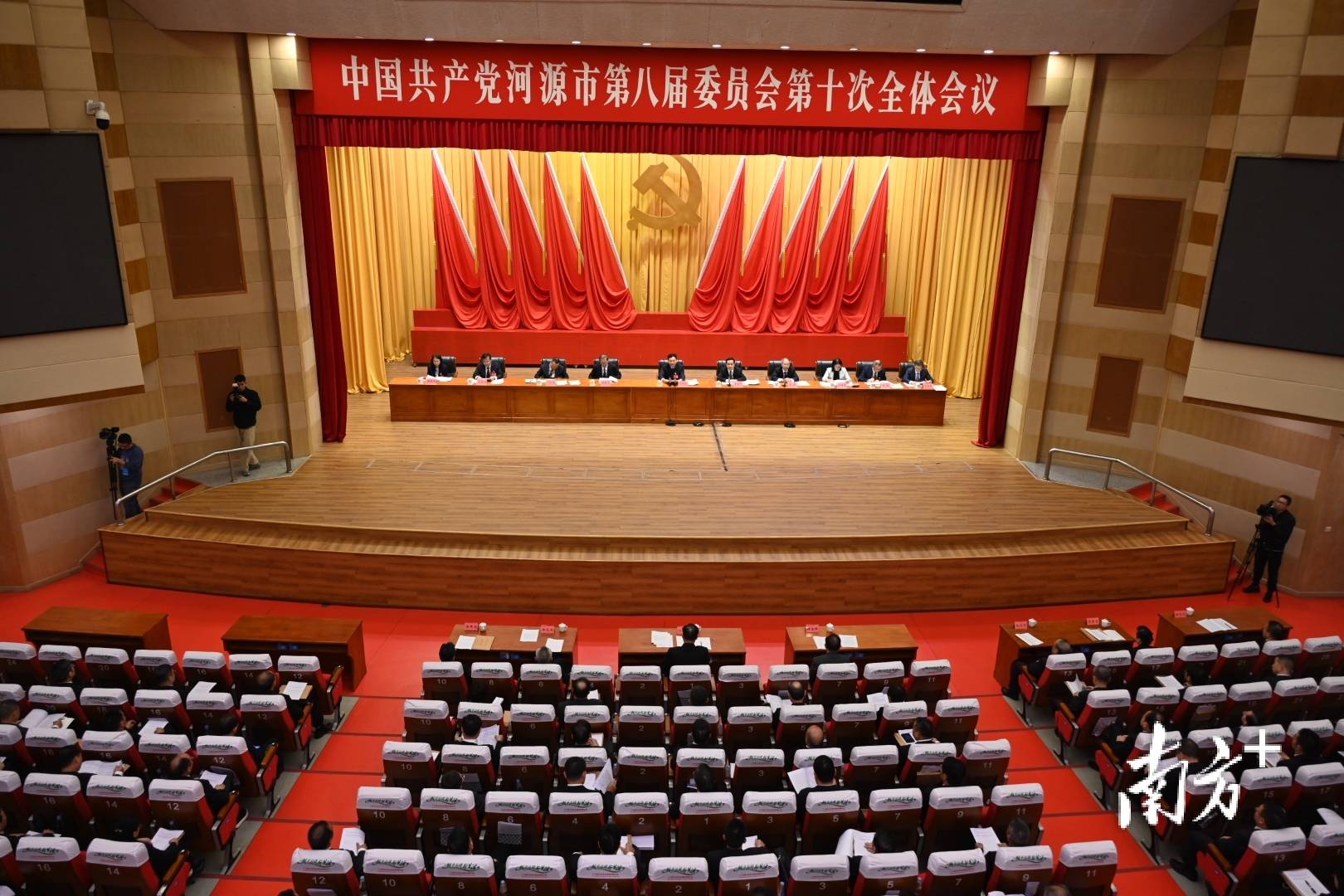
人文经济等多种经济形态屡被提及,有何内涵?丨聚焦河源市委全会
Sou Hu Cai Jing· 2025-12-12 17:48
Core Points - The meeting of the Eighth Committee of the Communist Party of China in Heyuan City highlighted the focus on various emerging economic forms, including low-altitude economy, intelligent economy, and others, as part of the "14th Five-Year Plan" [1][4][18] Group 1: Low-altitude Economy - The low-altitude economy is defined as a comprehensive economic form that integrates the research, production, sales, and related infrastructure of civil aviation aircraft operating in low-altitude airspace [4] - Heyuan is actively developing low-altitude economy through practical initiatives, such as establishing a spaceport in Wanlv Lake and creating a low-altitude tourism base [6] - The low-altitude economy aims to address efficiency bottlenecks in logistics, agriculture, and emergency services, facilitating the transition to high-end, intelligent, and new-quality industries [6] Group 2: First-release Economy - The first-release economy refers to economic activities related to the launch of new products, business models, and services by enterprises [7] - Heyuan is fostering the first-release economy by developing a sports and toy industry cluster, attracting over 20 toy manufacturing companies, and achieving a toy manufacturing output value of 5.29 billion yuan, a 40.4% year-on-year increase [8][12] Group 3: Intelligent Economy - The report emphasizes the construction of an innovation framework called "one core, two belts, and three zones" to promote the development of the intelligent economy [13] - The integration of artificial intelligence across various sectors is expected to create new industries and business models, with significant advancements in agricultural productivity through automation [13] Group 4: Green Economy - The report calls for the vigorous development of the green economy, focusing on the integration of digitalization, intelligence, and sustainability [16] - Heyuan's green economy initiatives include the establishment of zero-carbon parks and green factories, leveraging its strong ecological advantages to support high-quality development [16] Group 5: Fly Economy and Fly-Sea Economy - The report discusses the enhancement of "fly economy" and "fly-sea economy" development models to promote resource sharing and collaborative growth between different regions [17] - The establishment of the Heyuan Longchuan (Baoan) Technology Innovation Center exemplifies the practical application of these economic models, with a projected output value of 290 million yuan in 2024 [17] Group 6: Bay Area, River Basin, and Urban Circle Economy - The report highlights the importance of actively participating in the Bay Area, river basin, and urban circle economies to achieve broader resource sharing and market integration [18] - Heyuan's geographical proximity to the Guangdong-Hong Kong-Macao Greater Bay Area positions it favorably for industrial collaboration and innovation [18] Group 7: Cultural and Sports Economy - The report emphasizes the development of the cultural economy, focusing on enhancing the spiritual life of the people and promoting creative rural economies [22] - The sports economy is also highlighted, with initiatives to host various sports events to enhance the region's reputation as a destination for outdoor activities [22]

10年一次的重要会议:房地产即将迎来大动作!
Sou Hu Cai Jing· 2025-07-20 00:55
Core Viewpoint - The real estate market in China is undergoing a significant transformation, moving from a phase of rapid growth to a more stable development model, influenced by recent policy changes and urbanization trends [1][3]. Group 1: Historical Context - In 2015, the real estate market experienced a boom driven by policies such as "monetization of resettlement," which saw the percentage of households opting for cash compensation rise from 9% in 2014 to 60% by 2018 [2]. - The 2015 meeting established two major directions: upgrading eastern city clusters and nurturing new city clusters in central and western regions, leading to significant price increases in areas like Tongzhou, where prices surged by 60% in six months [2]. Group 2: Current Trends - The 2023 meeting highlighted a shift in urbanization from rapid growth to stable development, with the urbanization rate reaching 67%, an increase of 11 percentage points over ten years [3]. - Key directions from the recent meeting include focusing resources on metropolitan areas, accelerating urban renewal without large-scale demolitions, and imposing strict limits on the construction of super-tall buildings to prioritize safety [4][6]. Group 3: Implications for Ordinary Citizens - New housing standards have been implemented, such as a minimum ceiling height of 3 meters and mandatory elevators for buildings with four or more floors, reflecting a growing emphasis on living quality [9]. - The government plans to increase the supply of affordable housing, with Beijing aiming to build 80,000 units and Zhengzhou investing 10 billion yuan to acquire properties for this purpose [9]. - Current mortgage costs have decreased, with the LPR for loans over five years dropping to 3.5%, and various local subsidies are available to ease the financial burden on homebuyers [9]. Group 4: Future Outlook - The real estate market is expected to face challenges due to slowing population growth and economic transformation, with the potential for new stimulus policies that may have uncertain effects [10]. - Investors holding multiple properties in third and fourth-tier cities should exercise caution, as the difficulty of selling these properties may increase in the future [10].
同比增长6.2%,一季度成都都市圈GDP达7393.1亿元 四市工业经济持续向好
Si Chuan Ri Bao· 2025-05-14 07:59
Economic Overview - The Chengdu metropolitan area achieved a GDP of 739.31 billion yuan in Q1, with a year-on-year growth of 6.2%, surpassing the provincial growth rate by 0.7% and accounting for 48.5% of the province's total economy [1] - Chengdu city contributed 593.03 billion yuan to the GDP, growing by 6.0%, representing 80.2% of the metropolitan area's total [1] Industrial Performance - The industrial added value of the Chengdu metropolitan area increased by 10.5% year-on-year, exceeding the provincial growth rate by 3.3% [2] - Mianyang city reported a remarkable industrial growth of 24.3%, the only city in the province with a growth rate over 20%, driven by emerging industries like crystalline silicon photovoltaic and lithium batteries [2] - Ziyang city focused on key industries such as equipment manufacturing and clean energy, achieving a 17.2% increase in industrial added value [2] - Chengdu's industrial sectors, including non-ferrous metal smelting and automotive manufacturing, saw significant growth rates of 83.7% and 25.4% respectively [2] Investment and Consumption - Fixed asset investment in the Chengdu metropolitan area rose by 9.5% year-on-year, outpacing the provincial growth rate by 5.5% [3] - The total retail sales of consumer goods reached 330.35 billion yuan, with a year-on-year growth of 6.2%, also higher than the provincial rate by 1.0% [3] - The metropolitan area accounted for 47.2% of the province's total retail sales [3] Development Initiatives - The Chengdu metropolitan area is focusing on new consumption scenarios to stimulate demand, with projects like the Jiangkou Shen Yin Museum and the Chinese Traditional Culture Technology Innovation Demonstration Park underway [3]