金价预测

Search documents
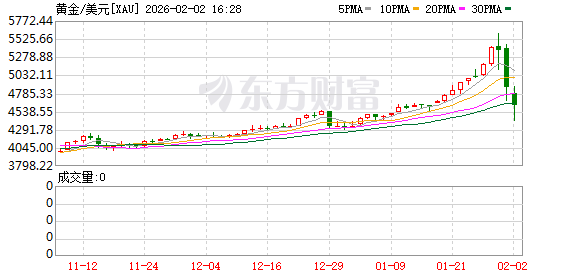
德意志银行维持对金价6000美元/盎司的预测不变
Di Yi Cai Jing· 2026-02-02 08:28
Group 1 - Deutsche Bank maintains its gold price forecast at $6,000 per ounce despite the recent sharp decline in gold prices [2]


三个月内金价还能大涨?花旗预测期间金价将达到5000美元
2 1 Shi Ji Jing Ji Bao Dao· 2026-01-13 08:25
Group 1 - Citi predicts that gold prices will reach $5,000 per ounce within three months, while silver prices are expected to hit $100 [1] - As of January 12, gold has a potential increase of nearly 9% from the closing price, and silver has an approximate increase of 17% [1]

高盛预测2026年底金价将升至4900美元
Zhong Guo Xin Wen Wang· 2025-11-18 03:32
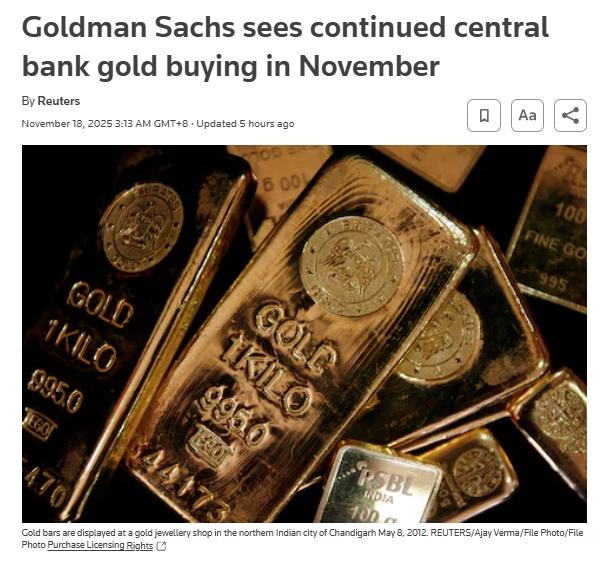
Group 1 - Goldman Sachs predicts that gold prices will reach $4,900 per ounce by the end of 2026, driven by continued asset diversification by private investors [1][3] - Central banks are expected to purchase significant amounts of gold in November 2023, continuing a trend aimed at diversifying reserves to hedge against geopolitical and financial risks [3] - As of November 18, 2023, international futures gold is priced at $4,037 per ounce, reflecting a 55% increase in gold prices year-to-date due to multiple influencing factors [3]

世界银行:预测金价2025年平均3400美元/盎司
Sou Hu Cai Jing· 2025-10-31 07:20
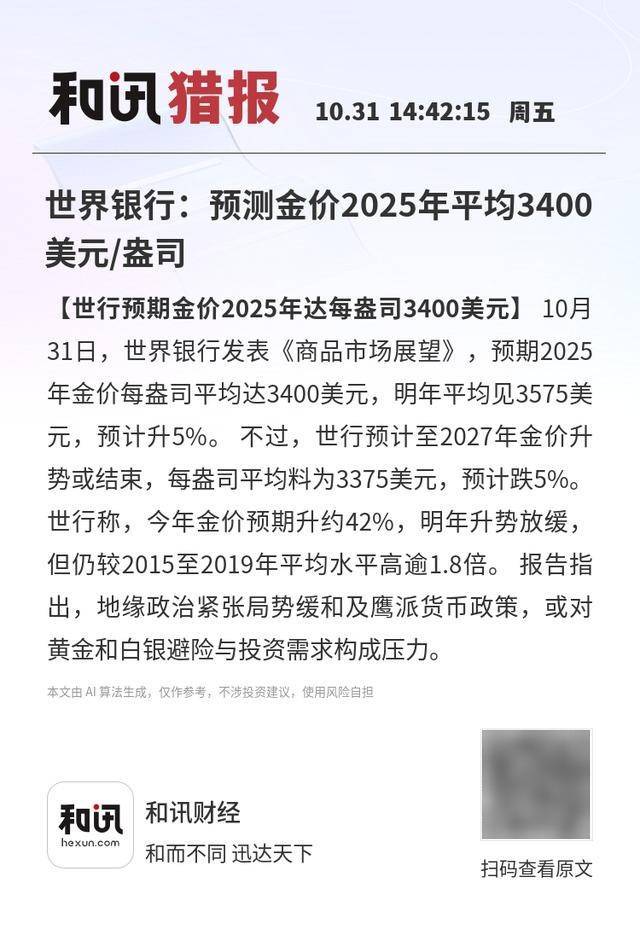
Group 1 - The World Bank forecasts that the average gold price will reach $3,400 per ounce by 2025, with an expected average of $3,575 per ounce in the next year, representing a 5% increase [1][2] - The World Bank anticipates that the upward trend in gold prices may end by 2027, predicting an average price of $3,375 per ounce, which indicates a 5% decline [1][2] - The report highlights that gold prices are expected to rise approximately 42% this year, and while the increase will slow down next year, prices will still be over 1.8 times higher than the average levels from 2015 to 2019 [1][2] Group 2 - The report indicates that easing geopolitical tensions and hawkish monetary policies may exert pressure on the safe-haven and investment demand for gold and silver [1][2]
金价暴跌之际,高盛“坚定看涨”:维持明年底4900美元目标价,甚至有“上行风险”
美股IPO· 2025-10-23 01:15
Core Viewpoint - Goldman Sachs maintains a bullish outlook on gold prices, reiterating a target price of $4,900 per ounce by the end of 2026, suggesting potential "upside risk" due to structural demand from central banks and high-net-worth individuals [2][9][12] Group 1: Current Market Dynamics - The recent sell-off in gold is attributed to speculative position liquidations and spillover effects from the silver market, rather than a deterioration in fundamentals [2][5] - Despite a drop of over 8% in gold prices this week, Goldman Sachs remains confident in its bullish stance [3] Group 2: Structural Demand Support - Structural demand, characterized as "sticky," continues to support long-term bullish trends in gold prices, with strong buying observed from September to October [5][11] - Central banks are expected to show seasonal buying increases in September and October, following a quiet summer [6] Group 3: Strategic Allocations - A model by Goldman Sachs indicates that a firm buying of 100 tons (including central banks, ETFs, and net managed funds) can lead to a price increase of 1.5%-2% [8] - In August, these holders increased their positions by 154 tons, aligning with the price increase and validating the model's effectiveness [8] Group 4: Institutional Interest and Future Drivers - The rising interest from institutional investors presents an upside risk to gold prices, reinforcing Goldman Sachs' optimistic forecast [9][10] - Anticipated inflows into gold ETFs are driven by expectations of Federal Reserve rate cuts and diversification needs [11] - Feedback from clients indicates that high-net-worth individuals may have increased physical gold purchases in September and October, contributing to long-term demand [11][12] Group 5: Long-term Investment Trends - Research shows that as of 2020, about 70% of U.S. institutional investors had no exposure to gold, with those that do averaging less than 2% allocation [13] - The lengthy approval cycles for these institutions suggest that demand will continue to be released over the coming quarters, potentially driving prices higher [13] - In the context of increasing global macroeconomic uncertainty, reallocating even a modest portion of large institutional portfolios from bonds and equities to the relatively smaller gold market could significantly boost gold prices [13]

瑞银:预计金价有望在2026年中期涨至3700美元
Sou Hu Cai Jing· 2025-08-19 03:04
Core Viewpoint - UBS has raised its gold price forecast for the first half of 2026 due to the outlook for the Federal Reserve and the US dollar, predicting that gold prices could rise to $3,700 per ounce by mid-2026 [1] Group 1 - UBS's revised forecast reflects a bullish sentiment on gold prices driven by macroeconomic factors [1] - The anticipated increase in gold prices indicates a potential investment opportunity for stakeholders in the precious metals market [1]

金价的“重大隐患”:央行买的少了?
Hua Er Jie Jian Wen· 2025-08-08 04:04
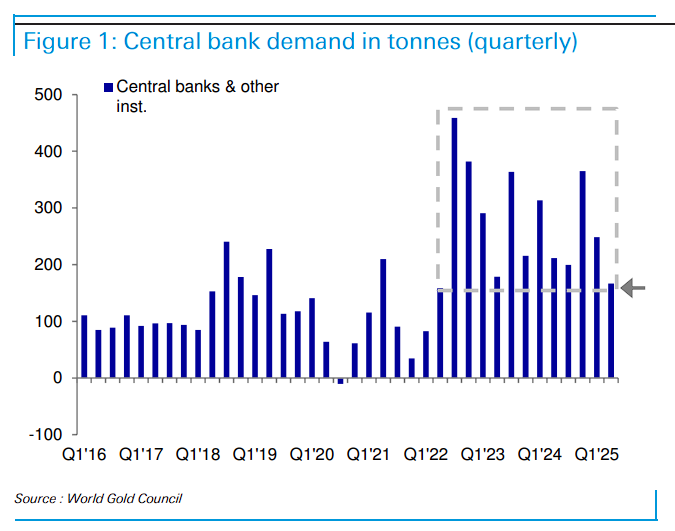
Core Viewpoint - Central bank gold demand has significantly decreased in Q2, raising concerns about the potential impact on gold prices, which may lead to adjustments in future price expectations [2][3][5]. Group 1: Central Bank Demand Trends - Global central bank gold demand fell by one-third in Q2 compared to Q1, reaching the lowest level since Q2 2022 [2][3]. - The decline in central bank demand is particularly alarming as it has been a key driver of rising gold prices in recent years [5]. - Central bank demand's share in the global gold market has increased from 10% in 2021 to 21% in 2024 [6]. Group 2: Implications for Gold Prices - The slowdown in central bank demand suggests a weakening of the crucial support for gold prices, potentially threatening future price stability [2][3]. - Deutsche Bank's analysis indicates that if the current pace of central bank demand continues, gold price forecasts for 2026 may need to be adjusted downwards from $3,700 per ounce to around $3,600 per ounce [14]. - In extreme scenarios, if annual central bank demand drops to 500 tons, gold price predictions could fall to $3,300 per ounce [14]. Group 3: Forecasting Challenges - Deutsche Bank acknowledges that the slowdown in central bank demand poses a downside risk to its gold price forecasting model, which previously assumed a demand of 1,000 tons in 2025 [12]. - The actual demand in the first half of 2025 was only 415 tons, necessitating a significant increase in the second half to meet annual targets [12]. - The bank has set 375 tons per half-year as a critical threshold for maintaining current price forecasts [14]. Group 4: Potential Demand Drivers - Despite the decline in central bank demand, other sources of investment demand may help offset this shortfall [15]. - Recent policy changes in the U.S. could introduce new demand dynamics for gold, such as including precious metal funds in 401(k) retirement plans [15]. - The asymmetric response of jewelry consumption and gold recycling markets may provide additional support for gold prices [15].
澳新银行:预计到2025年第三季度末,金价将升至3500美元/盎司。
news flash· 2025-07-14 05:29
Group 1 - The core viewpoint is that ANZ Bank predicts gold prices will rise to $3,500 per ounce by the end of Q3 2025 [1] Group 2 - The forecast indicates a significant increase in gold prices, suggesting a bullish outlook for the gold market [1] - This prediction may influence investment strategies and market sentiment towards gold-related assets [1] - The timeline for this price increase is set for the third quarter of 2025, indicating a medium-term investment horizon [1]
金价预测:黄金/美元买家在美国非农就业数据公布前稍作喘息
Sou Hu Cai Jing· 2025-07-03 10:18
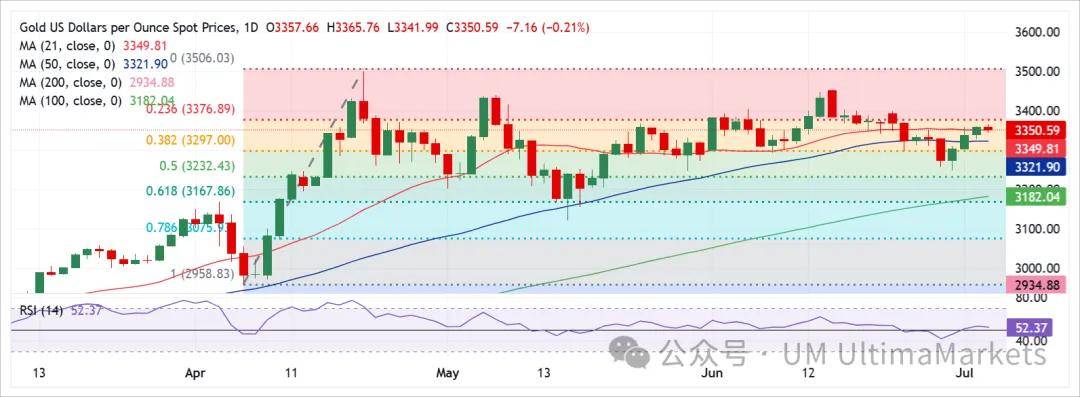
Core Viewpoint - Gold prices are experiencing volatility ahead of the U.S. non-farm payroll data release, with a focus on potential impacts from employment figures and Federal Reserve interest rate expectations [1][2][6]. Group 1: Market Dynamics - Gold prices paused after three days of gains, with attention shifting to the upcoming U.S. non-farm employment data [1]. - The U.S. dollar has seen a temporary halt in its decline, which has exerted bearish pressure on gold prices [3]. - Concerns over the U.S. labor market have resurfaced, contributing to renewed selling pressure on the dollar [3][4]. Group 2: Employment Data Expectations - The market anticipates an increase of 110,000 in non-farm payrolls for June, with the unemployment rate expected to rise slightly to 4.3% from 4.2% in May [7]. - A non-farm payroll figure below 100,000 could intensify selling pressure on the dollar and increase the likelihood of a Fed rate cut in July, which would be favorable for gold prices [8]. Group 3: Technical Analysis - As of the latest data, gold prices are struggling around the 21-day simple moving average (SMA) at $3,350, having faced rejection near $3,365 [12]. - The 14-day relative strength index (RSI) is above the midpoint, currently close to 52.30, indicating potential buying interest [13]. - A poor U.S. employment report could restore upward momentum towards the 23.6% Fibonacci retracement level at $3,377, with a significant upward trend possible if prices close above this level [14][15].
金价预测:黄金/美元反弹,但仍未走出困境
Sou Hu Cai Jing· 2025-06-30 07:31
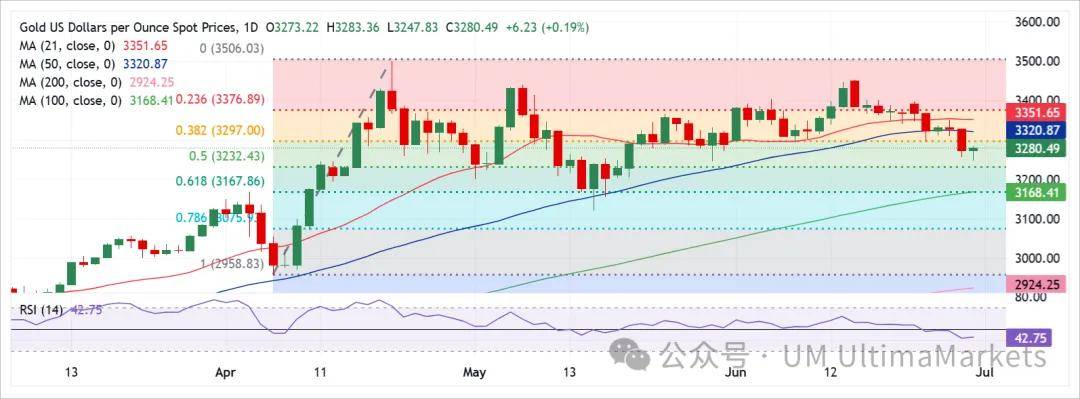
Core Viewpoint - Gold prices are experiencing volatility, influenced by the Federal Reserve's upcoming statements and concerns over U.S. trade agreements, particularly with Japan, which are affecting the dollar's strength [1][5][7]. Group 1: Market Analysis - Gold prices found buying support near a monthly low of $3,250, as the market anticipates dovish signals from the Federal Reserve [1]. - The dollar is under pressure, having reached a near four-year low against major currencies, which is contributing to gold's recovery [4][7]. - Concerns regarding U.S. trade agreements, especially with Japan, are overshadowing optimism surrounding trade deals with China and Canada [5][6]. Group 2: Technical Analysis - Gold closed below a key support level, indicating potential for further declines [2]. - The price is attempting to rebound from the $3,250 demand zone, aiming to reclaim the resistance level at $3,297 [14]. - The Relative Strength Index (RSI) remains below 50, suggesting that any rebound may be temporary [15]. - If buyers can maintain upward momentum and surpass $3,297, a new rally towards the 50-day Simple Moving Average (SMA) at $3,321 could occur [16]. - On the downside, a break below the intraday low of $3,248 could trigger a move towards the 50% Fibonacci level at $3,232 [18].