
金融套利

Search documents
37天,2400亿帝国崩塌!百万老板的血汗钱去了哪?揭秘一个产业互联网巨头的致命转型
Xin Lang Cai Jing· 2025-12-08 22:23
Core Insights - The collapse of the Mengda Group, once a leading player in the industrial internet sector, occurred within 37 days, revealing the risks of excessive financialization in the industry [1][3] - The incident has led to significant financial losses for investors, with estimates suggesting that over 3,000 investors are involved, potentially amounting to 4 billion yuan [12] Group 1: Company Overview - Mengda Group, established in 2010, evolved from a small industry website to a major online platform covering the entire plastic chemical industry chain, claiming a transaction volume exceeding 240 billion yuan and serving over 1 million clients [4][3] - The company was recognized as a "national high-tech enterprise" and was considered a model for digital transformation in traditional industries, attracting investments from top-tier firms [4][3] Group 2: Triggering Events - The collapse was triggered by a protective measure taken by law enforcement during a money laundering investigation, which led to the freezing of bank accounts associated with Mengda, causing panic among clients [6][3] - Following the account freezes, a wave of withdrawal requests ensued, leading to a liquidity crisis for the company [8][6] Group 3: Financial Mismanagement - Mengda Group's financial troubles were exacerbated by its shift from serving the real economy to engaging in financial arbitrage, with significant losses reported due to overdue payments and bad debts from small and medium-sized enterprises [11][9] - The company had constructed a funding pool model that bypassed financial regulations, leading to a situation where investor funds were used inappropriately, resembling illegal fundraising activities [11][5] Group 4: Investor Impact - The collapse has resulted in widespread financial distress for investors, with many unable to withdraw their funds, leading to a loss of trust in the platform [12][9] - Mengda's case serves as a cautionary tale for the industrial internet sector, emphasizing the importance of compliance and sustainability in business models [12][11]


乱世出奇谋:嘉吉如何在津国通胀套利?
伍治坚证据主义· 2025-11-19 02:59
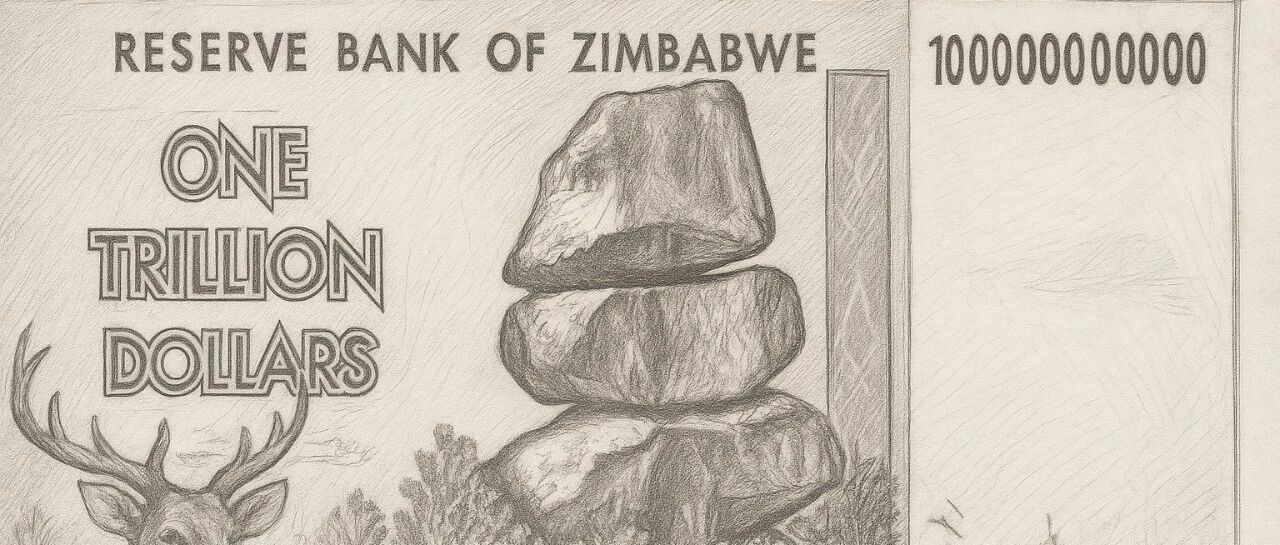
Core Insights - The article discusses the severe hyperinflation in Zimbabwe around 2003, where the Consumer Price Index increased by approximately 365% annually, primarily due to systemic governance failures, chaotic land reforms, and excessive government spending [2][4] - Cargill, a major multinational agricultural trader, faced significant challenges in Zimbabwe due to cash shortages caused by hyperinflation, which threatened its cotton procurement operations [5][6] Group 1: Cargill's Response to Hyperinflation - In response to the cash shortage, Cargill decided to issue its own currency, known as "Staley bucks," totaling 7.5 billion Zimbabwean dollars (approximately $2.2 million at the time), which were accepted as cash by the local population [6][7] - The issuance of Staley bucks allowed Cargill to pay cotton farmers, who then used the currency for immediate survival needs, thus preventing the currency from quickly returning to banks and allowing Cargill to benefit from the devaluation of the currency over time [7][11] Group 2: Financial Arbitrage and Profit Maximization - Cargill's strategy relied on the inability of farmers to immediately exchange Staley bucks for stable foreign currency, allowing Cargill to purchase cotton at a significantly reduced effective cost due to inflation eroding the value of the currency [11][12] - The operation was not a charitable act but a calculated financial arbitrage, where Cargill profited from the systemic crisis in Zimbabwe, effectively acting as a "shadow central bank" [12][14] Group 3: Long-term Implications and Lessons - Cargill's experience in Zimbabwe provided valuable insights for commodity traders on how to navigate high-risk markets, influencing their strategies in other volatile regions [12][13] - The article highlights the role of multinational corporations in filling governance vacuums in unstable countries, often gaining significant financial and political leverage while operating in morally ambiguous environments [13][14]
中国反制美国大豆,特朗普破防怒发小作文,引美国资本市场遭震荡
Sou Hu Cai Jing· 2025-10-19 15:06
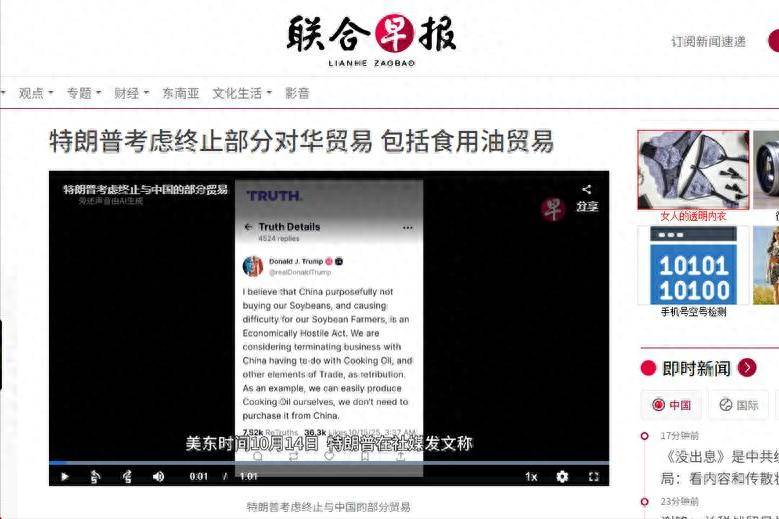
Core Viewpoint - The recent adjustments in China's soybean procurement from the U.S. have caused significant concern for the Trump administration, leading to market volatility, highlighting the strategic depth of the ongoing U.S.-China trade conflict [1][3][21] Group 1: China's Countermeasures - China's countermeasures have been targeted, starting with special port fees on U.S. vessels, increasing operational costs for American shipping companies [3] - The introduction of rare earth export controls directly impacts U.S. high-end industries, as over 90% of U.S. rare earth needs are met through imports [3] - The combination of these measures has led to panic in the U.S., with significant market repercussions, including a chaotic stock market response [3][5] Group 2: U.S. Response and Market Implications - Trump's reaction to China's soybean procurement changes has been notably intense, indicating deeper implications beyond just agricultural interests [5][7] - The U.S. soybean market is currently facing an oversupply due to reduced Chinese purchases, disrupting the usual price signals in the futures market [13] - Speculation arises that Trump's family may be positioned to profit from these market fluctuations, suggesting a financial motive behind his public statements [13][19] Group 3: Broader Economic Impact - The ongoing trade conflict is not merely a dispute over agricultural products but reflects a broader struggle over industrial security and financial stability between the two nations [21] - Trump's public comments risk undermining the stability of U.S. financial markets, which are crucial for the credibility of the dollar [19] - The strategic nature of China's countermeasures demonstrates a calculated approach to target vulnerabilities in the U.S. economy, indicating a sophisticated level of economic warfare [21]
美国恐怕再也难站起来了,原因有几个:美国的国债,美国人依靠贪婪这杆杠一直高消费,美国靠霸权发家致富,但是强盗终究会被消灭
Sou Hu Cai Jing· 2025-10-03 14:16
Group 1 - The core issue facing the U.S. economy is its soaring national debt, projected to exceed $36 trillion by 2025, with interest payments alone expected to surpass $1 trillion this year, exceeding the defense budget [3][5] - The decline of the U.S. dollar's dominance in global transactions is evident, with countries like Brazil and China opting for local currencies for oil settlements, leading to a drop in the dollar's share of global foreign exchange reserves from over 70% two decades ago to below 60% now [3][5] - The increasing reliance on foreign and non-primary dealers for U.S. Treasury auctions indicates a loss of confidence among domestic investors, as evidenced by the indirect bidding ratio soaring to 72.9% in December [5] Group 2 - The U.S. military budget is projected to approach $1 trillion, while maintaining 750 overseas bases incurs an annual cost of $55 billion, raising concerns about the sustainability of such expenditures [5] - Domestic social tensions are rising, exemplified by significant labor strikes demanding higher wages, contrasting with the financial gains seen in capital markets, highlighting a growing divide between different socioeconomic classes [7] - The structural issues of high debt and interest rates are permeating into American households, with credit card debt expected to exceed $1.13 trillion by Q4 2024, reflecting a broader trend of high consumption and debt levels [9][11]

英国央行货币政策委员格林:金融套利机会为银行参与我们的融资工具提供了激励,这是一种优势,而非缺陷。
news flash· 2025-06-24 09:36
Core Viewpoint - The financial arbitrage opportunities serve as an incentive for banks to participate in the financing tools provided by the Bank of England, highlighting it as an advantage rather than a flaw [1] Group 1 - Financial arbitrage opportunities are seen as a motivating factor for banks to engage with the Bank of England's financing tools [1] - The perspective presented by the Bank of England's monetary policy committee member suggests a positive outlook on the role of these financial instruments in the banking sector [1]