
错位发展

Search documents
未来产业十大赛道公布
21世纪经济报道· 2026-03-27 04:28
Core Viewpoint - The article emphasizes the importance of "localized and differentiated development" in the context of future industries, highlighting the need for strategic planning and resource allocation to achieve high-quality growth in emerging sectors [2][5][6]. Summary by Sections Future Industry Development - The Ministry of Industry and Information Technology (MIIT) is focusing on the overall development of future industries, with a clear emphasis on strategic planning and the establishment of a technology foresight mechanism to guide local development based on regional resources [5][6]. - The government has outlined key areas for future industries, including quantum technology, biomanufacturing, hydrogen energy, and nuclear fusion, as part of the 14th Five-Year Plan [3][9]. Key Tracks for Future Industries - The 2026 Future Industry Forum announced ten key tracks for future industries: humanoid robots/embodied intelligence, biomanufacturing, brain-computer interfaces, cell and gene therapy, low-altitude equipment, nuclear fusion energy, autonomous agents, high-level autonomous driving, satellite internet, and quantum computing [10][11]. - Predictions indicate that several of these tracks will reach trillion-yuan market scales, with humanoid robots expected to see a global market demand of trillions by 2035, and biomanufacturing projected to create $30 trillion in economic value by 2050 [10][11]. Local Government Initiatives - Local governments are actively responding to national policies, with 19 provinces and cities issuing nearly 30 policy documents related to future industries, establishing over 60 provincial pilot zones focusing on key areas like artificial intelligence and quantum technology [5][6]. - The MIIT plans to enhance technological supply and support for future industries through major national projects and financial backing, while also exploring regulatory frameworks that accommodate the unique characteristics of future industries [7][10]. Market Growth and Trends - The article notes that the cell and gene therapy market is expected to grow at a rate of 20%, while the nuclear fusion industry has seen investments surge from $1.9 billion in 2021 to $9.766 billion, reflecting a compound annual growth rate of over 50% [11]. - The autonomous driving sector is on the verge of commercialization, with significant advancements in technology and successful case studies emerging in both the U.S. and China [11].


中国银行2026年初动态:增资、高管变动与监管处罚
Jing Ji Guan Cha Wang· 2026-02-20 02:29
Company Status - The registered capital of Bank of China increased from approximately 294.4 billion to about 322.2 billion yuan, representing a growth of approximately 9.5% as of February 10, 2026 [1] Executive Changes - Huang Xueling from Central Huijin Investment Co., Ltd. is expected to assume the role of Vice President of Bank of China as of February 13, 2026, while former Vice President Lin Jingzhen was expelled from the Party due to serious violations of discipline and law [2] Fund Flow - On February 12, 2026, the net outflow of main funds from Bank of China's A-shares was 198 million yuan, with the stock price declining by 1.29% on the same day [3] Strategic Deployment - In the 2026 work meeting, Bank of China emphasized consolidating its global advantages, preventing financial risks, and focusing on a "dislocated development" strategy to serve national strategies [4] Regulatory Situation - On February 2, 2026, the Henan branch of Bank of China was fined 1.5 million yuan for issues related to "inadequate data quality management" [5]

广州市委书记:16次提及城中村改造丨市委书记抓乡村振兴2025年度盘点
Nan Fang Nong Cun Bao· 2026-02-09 13:03
Group 1 - The core focus of Guangzhou's municipal government in 2025 is on urban renewal and the transformation of urban villages, with 16 meetings and research sessions dedicated to this topic throughout the year [13][17][19] - The municipal government emphasizes the integration of urban village transformation with employment stability, enterprise support, and market expectations, advocating a "demolish, treat, and revitalize" approach [17][19][21] - Key strategies include establishing a "people, housing, land, and money" linkage mechanism and improving compensation and resettlement processes for land acquisition and demolition [18][19][21] Group 2 - Guangzhou is focusing on the efficient development of urban modern agriculture, aiming to enhance industry development and increase farmers' income through various initiatives [25][30][36] - The municipal government is promoting the branding of local agricultural products, such as silk seedlings and lychees, to boost production and revenue [26][30] - There is an emphasis on strengthening international cooperation in the agricultural supply chain, with partnerships being formed with global leaders in agricultural trade and processing [33][36] Group 3 - The city is implementing a "12218" modern industrial system, promoting differentiated development among districts to build competitive and specialized industrial clusters [38][41] - The municipal government supports the digital and green transformation of traditional industries, such as textiles and clothing, while fostering cross-border e-commerce [44][46] - Specific initiatives include enhancing the development capabilities of economic development zones and promoting the integration of technology and industry [48][50] Group 4 - Guangzhou is advancing the construction of high-quality development leading areas, focusing on the integration of agriculture, culture, and tourism [54][56] - The government aims to create modernized rural benchmarks by leveraging ecological advantages and promoting rural revitalization projects [56][60] - There is a commitment to accelerate the development of leading areas and enhance the overall quality of rural areas through targeted projects [60][64] Group 5 - The city is actively engaging in collaborative efforts to promote common prosperity through various forms of cooperation, including east-west collaboration and targeted support [67][70] - Initiatives include building industrial parks and enhancing labor cooperation to stabilize and expand job opportunities [70][72] - The municipal government is also focusing on cross-regional cooperation to align industrial planning and leverage complementary advantages [75]

切实提高金融业高质量发展水平
Jin Rong Shi Bao· 2026-01-22 02:07
Core Viewpoint - The financial regulatory authority emphasizes the need to enhance the high-quality development capabilities of the financial industry to support China's modernization and the establishment of a strong financial nation [1] Group 1: High-Quality Development - The financial industry must focus on high-quality development as a requirement for modernization and building a strong financial nation [1] - The regulatory authority plans to implement comprehensive measures to guide industry reform and transformation, including promoting the integration of insurance reporting and operations, adjusting preset interest rates, and enhancing the efficiency of the banking sector [1] - By 2025, the regulatory authority aims to support financial institutions in diversifying capital sources to ensure sustainable development [1] Group 2: Small and Medium Financial Institutions - Small and medium financial institutions play a crucial role in supporting local economic development but face challenges in credit asset quality and risk prevention [2] - Since the 14th Five-Year Plan, regulatory authorities have effectively promoted risk resolution in small financial institutions through mergers and restructuring [2] - As of June 2025, the number of various types of small financial institutions has shown significant structural optimization, with urban commercial banks decreasing by 11 and rural commercial banks increasing by 27 since the end of 2019 [2] Group 3: Quality Improvement and Risk Management - The focus of future policies should shift from quantity adjustment to quality enhancement, emphasizing the need for improved governance to stimulate the internal motivation of small banks [3] - The "reduction and quality improvement" strategy aims to enhance the stability and sustainable operational capacity of financial institutions [3] - The approach involves optimizing the regional and business layout of financial institutions and eliminating inefficient, high-risk market participants [3] Group 4: Orderly Competition - High-quality development in the financial sector requires a layered, categorized, and coordinated competitive environment [4] - The dual approach of "reduction and quality improvement" alongside "order restructuring" is essential for promoting industry development [4] - The regulatory authority aims to address issues of disorderly competition and promote a focus on core business areas among banks and insurance institutions [5] Group 5: Regulatory Measures - Future regulatory efforts will target disruptive market behaviors such as high-interest deposit solicitation and irrational expansion [6] - Financial institutions are encouraged to return to their core business areas and strengthen capital constraints and internal management [6] - The regulatory framework will support differentiated supervision and encourage innovation in specific areas for small financial institutions [7]
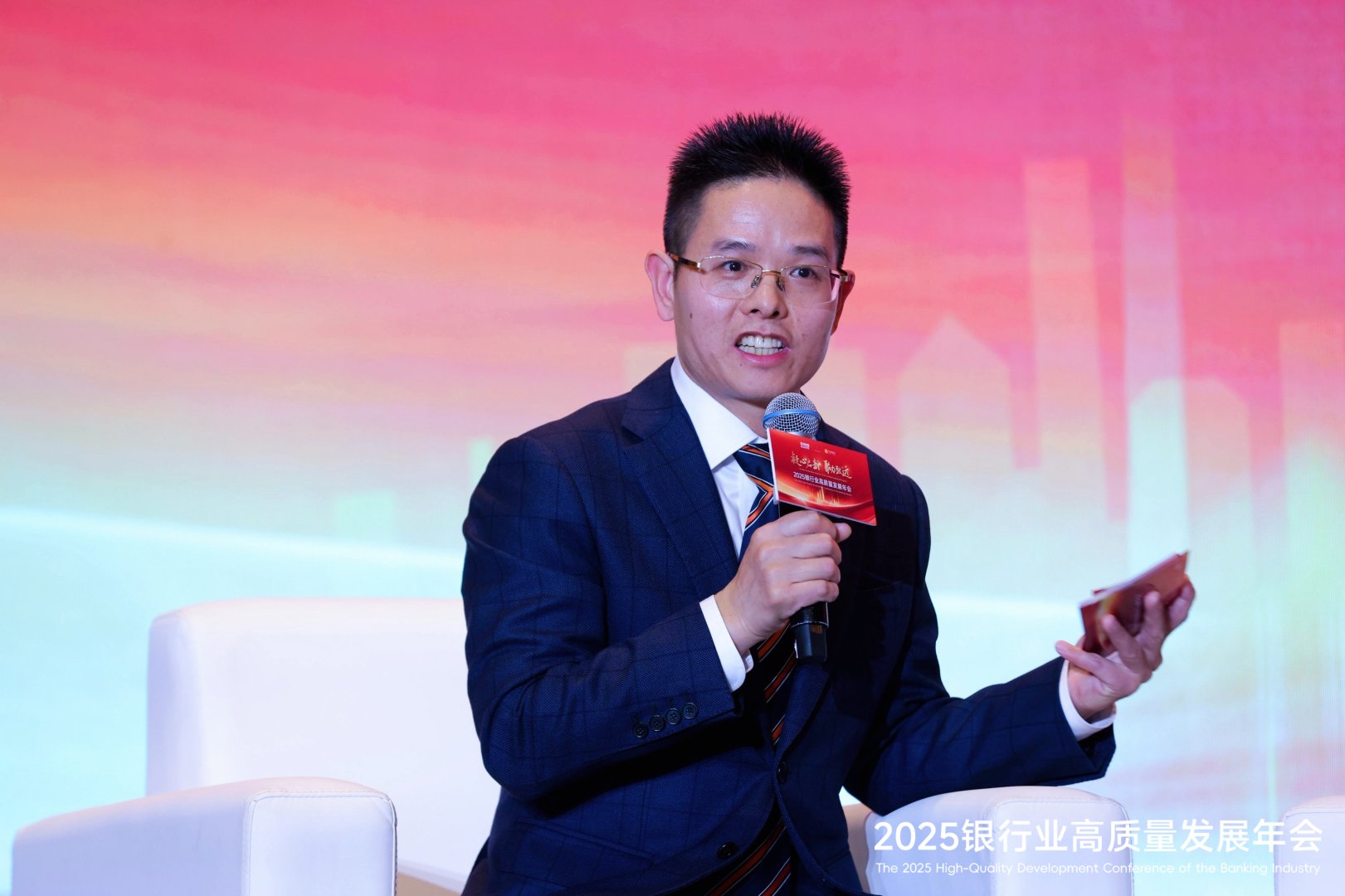
金融界银行研究院院长陈国汪:错位发展非离经叛道 找准优势筑就金融竞争力
Jin Rong Jie· 2025-12-28 13:32
Group 1 - The conference "Qihang·2025 Banking High-Quality Development Annual Meeting" was successfully held in Beijing, focusing on themes such as serving the real economy, digital transformation, AI+financial innovation, and risk prevention [1] - The banking industry is facing challenges such as economic slowdown, intensified competition, and deep adjustments in the real estate market, necessitating a shift from homogeneous business models to differentiated competitive advantages for high-quality development [3] - The concept of "dislocated development" is emphasized as essential for the long-term success of the financial industry, requiring institutions to identify their strengths and focus on creating unique competitive advantages [3] Group 2 - The consumer finance sector, despite its relatively small size within the banking industry's total assets, has shown resilience by effectively meeting the small financial needs of young consumers through efficient and convenient services [4] - For small and medium-sized banks, dislocated development is crucial for mitigating risks and achieving breakthroughs, with many institutions opting for mergers and restructuring to optimize resource allocation [4] - The emphasis on differentiated positioning and deepening core areas, along with strengthening technological empowerment, is identified as key strategies for small financial institutions to build a solid foundation in niche markets [4][5]
进一步破解金融业“内卷” 推动各类机构深耕主业“各展所长”
Shang Hai Zheng Quan Bao· 2025-11-18 18:42
Core Viewpoint - The "15th Five-Year Plan" emphasizes optimizing the financial institution system, focusing on core business, improving governance, and promoting differentiated development to address the issues of homogenization and "involution" in the financial industry [1][2]. Group 1: Current Issues in the Financial Industry - The financial industry is facing significant homogenization and "involution," with unclear business responsibilities and intense competition among various financial institutions [2][3]. - Different types of banks are increasingly adopting similar business strategies, leading to a lack of differentiation and resulting in a price war that undermines profitability [2][3]. - The blind pursuit of scale and expansion into unfamiliar areas by some institutions has increased risks and led to inefficient competition within the industry [2][3]. Group 2: Positive Impacts of the "15th Five-Year Plan" - The requirements for financial institutions to focus on core business and differentiate their development will help eliminate homogenization and enhance risk management, thereby supporting high-quality economic development [3][4]. - By clarifying the roles of various financial institutions, the plan aims to improve the efficiency of financial resource allocation and foster a more resilient financial system [4][5]. - The emphasis on specialization and differentiation is expected to lead to a more effective financial service system that meets the diverse needs of the real economy [5][6]. Group 3: Future Development Trends - The future of financial institutions is anticipated to be characterized by specialization, differentiation, and a focus on key areas such as technology finance, green finance, inclusive finance, pension finance, and digital finance [6][7]. - Regulatory measures are suggested to clarify market positioning and business boundaries for different types of financial institutions, promoting a more structured and effective competitive environment [6][7]. - Financial institutions are encouraged to innovate products and services based on regional characteristics and customer needs, fostering a complementary ecosystem among various types of institutions [6][7].
人民日报评论员:把握历史方位坚持城市内涵式发展
news flash· 2025-07-17 00:33
Core Viewpoint - The article emphasizes that cities fundamentally belong to the people, and the driving force behind urban development lies in the capacity for sustainable development [1] Group 1: Urban Development - Urban conditions vary significantly across different regions, with disparities in resource endowments, geographical environments, development levels, and foundational conditions [1] - Effective urban management must be grounded in local realities, leveraging unique resource endowments to enhance technological and cultural empowerment [1] - The goal is to build core competitiveness and achieve differentiated development, avoiding homogeneous competition to strengthen internal development momentum and shape competitive advantages [1]