
世界级产业集群

Search documents
科技型企业激活双城经济圈创新“一池春水” 为“钻石菱形”区域发展注入强劲动能
Yang Shi Wang· 2026-02-03 07:24
Core Insights - The GDP of the Sichuan-Chongqing region is projected to reach 10.14 trillion yuan by 2025, marking a significant milestone in the construction of the Chengdu-Chongqing economic circle, which has crossed four trillion-level thresholds in six years [1][3] - The Chengdu-Chongqing economic circle is expected to become the "fourth pole" of regional development in China, alongside Beijing-Tianjin-Hebei, the Yangtze River Delta, and the Guangdong-Hong Kong-Macau Greater Bay Area, contributing to a new "diamond-shaped" regional development pattern [1][3] Economic Growth - The combined economic output of Sichuan and Chongqing has historically surpassed 10 trillion yuan, increasing their share of the national economy to approximately 7.2% [3] - The region aims to develop four trillion-level industrial clusters and five national advanced manufacturing clusters, with over 70,000 technology-based enterprises [5] Industrial Development - Sichuan's high-tech manufacturing industry is expected to grow by 12.3% in value added by 2025, while Chongqing's intelligent connected vehicle sector is projected to grow by 13.4%, maintaining its status as "China's Automobile Capital" [8] - The region is recognized for its significant production capabilities, with two-thirds of the world's iPads, nearly 80 million laptops, and over 100 million smartphones manufactured in Sichuan and Chongqing [8] Infrastructure and Collaboration - The construction of infrastructure is accelerating, with social security and medical services being mutually recognized and integrated between the two regions, enhancing collaboration in economic, infrastructure, and social sectors [16] - The region is focusing on building world-class industrial clusters and implementing 350 key projects for joint development by 2026 [20] Global Integration - Sichuan and Chongqing are transitioning from being a "gateway hub" to an "open highland," enhancing their integration into global markets through initiatives like the China-Europe Railway Express and the Western Land-Sea New Corridor [13] - By 2025, Chongqing's foreign trade import and export value is expected to grow by 12%, with Sichuan achieving a milestone of over 10,000 enterprises engaged in import and export activities [13]

感恩奋进聚心力 求真务实开好局
Xin Lang Cai Jing· 2026-01-27 23:07
Group 1 - The government work report emphasizes high political positioning, effective work outcomes, and clear strategies, reflecting a sense of responsibility and a pragmatic work style [1] - The report summarizes the progress of the "New Fujian" initiative over the past five years and outlines tasks for 2026, focusing on creating a vibrant economy, optimizing industries, improving citizens' wealth, and enhancing ecological beauty [1] - The report highlights the goal of building more world-class industrial clusters and accelerating the construction of a strong manufacturing province, with a focus on the modern textile and apparel industry transitioning towards green, intelligent, and high-end development [1] Group 2 - The report underscores the priority of education in improving public service quality, particularly in rural and underperforming schools, aiming to reduce urban-rural and inter-school disparities [2] - The report indicates that nearly 80% of the province's fiscal expenditure over the past five years has been directed towards the livelihood sector, with a focus on enhancing elderly care services in response to population aging [2] - The report outlines specific measures to enhance cultural influence and showcase a new image of Fujian, including the establishment of a cultural exchange center and the promotion of a comprehensive media communication system [2] Group 3 - The new year will see a commitment to dual efforts in providing advice and building consensus, with a focus on enhancing the "Consultation for Fujian, Service for the People" brand and fulfilling responsibilities to contribute to the modernization of Fujian [3]
5年后长三角会是啥样?全在这里了
Xin Lang Cai Jing· 2026-01-20 00:25
Core Viewpoint - The article discusses the development strategies and economic goals of the Yangtze River Delta (YRD) region during the 14th and 15th Five-Year Plans, highlighting the collaborative efforts of Shanghai, Jiangsu, Zhejiang, and Anhui to achieve high-quality growth and integration [3][5][6]. Economic Performance - Shanghai's economic total ranks among the top five global cities, with a projected GDP nearing 7 trillion yuan by 2025 [3][6]. - Jiangsu aims to exceed 14 trillion yuan by 2025, showcasing significant growth potential [3]. - Zhejiang's GDP is expected to surpass 9 trillion yuan, with per capita GDP projected to exceed 140,000 yuan [3]. - Anhui has reached a new milestone of 5 trillion yuan, indicating its emerging role in the YRD [3]. Long-term Economic Goals - By 2035, Shanghai aims to double its per capita GDP compared to 2020 levels [6]. - Jiangsu targets higher per capita GDP and income levels by 2035 [6]. - Zhejiang plans to reach per capita GDP levels comparable to developed economies by 2035 [6]. - Anhui's goal is to align its per capita GDP with the national average by 2035 [6]. Key Development Areas - The integration of technology and industry innovation is emphasized as a critical focus for the YRD [8][10]. - The construction of world-class airport and port clusters is highlighted as essential for regional connectivity and economic growth [16][19]. - The YRD aims to establish itself as a global leader in high-end industrial clusters, particularly in the aviation sector [21]. Collaborative Efforts - The article underscores the importance of collaboration among the four regions to enhance their competitive advantages and achieve common goals [9][11]. - The concept of "urban agglomeration" is frequently mentioned, indicating a focus on developing interconnected metropolitan areas [13][15]. - The YRD is recognized as a world-class urban cluster, with plans for further integration and development of urban spaces [14]. Infrastructure Development - The YRD is advancing its transportation infrastructure, including high-speed rail and airport facilities, to improve regional connectivity [16][17]. - The construction of the "North Along the Yangtze River High-Speed Railway" is a significant project aimed at enhancing travel efficiency within the region [17]. Innovation and Technology - The establishment of an international technology innovation center in the YRD is a priority, with Shanghai leading the initiative [9][10]. - Jiangsu and Zhejiang are also committed to fostering technological advancements and industrial innovation [10][11].

从“客场全球化”到“主场全球化”
Sou Hu Cai Jing· 2026-01-18 21:32
Core Viewpoint - The upcoming APEC meeting in Shenzhen in 2026 highlights China's emphasis on "high-level opening up" amidst a complex global economic landscape, characterized by significant changes and challenges. Group 1: Current Global Economic Landscape - The global economic landscape is marked by a "six coexistence" complexity, featuring both "grouping" and "fragmentation," with regional trade agreements like RCEP covering 30% of global GDP and reducing 90% of tariffs, while agreements like CPTPP and USMCA create exclusive trade barriers [1] - The coexistence of "multipolarization" and "bilateralization" is evident, with emerging economies gaining influence and bilateral trade agreements becoming essential for risk hedging [1] Group 2: High-Level Opening Up - High-level opening up is defined by a shift from "liquidity opening" to "institutional opening," focusing on reforms in rules, regulations, and standards to create a stable, fair, and transparent business environment, marking a fundamental shift from "policy dividends" to "institutional dividends" [3] - The transition from "guest globalization" to "home globalization" emphasizes leveraging China's vast domestic market to transform from a "global factory" to a "global market," with China accounting for 18-20% of the global market economy and being the largest single-country market for many goods and services [4] - The optimization of opening up strategies is moving from "regional breakthroughs" to "global collaboration," focusing on systemic and coordinated approaches to enhance regional cooperation, as seen in initiatives like the Yangtze River Delta integration and the Guangdong-Hong Kong-Macau Greater Bay Area [5][6] Group 3: Enhanced Functions of Opening Up - The shift from a "channel economy" to a "hub economy" emphasizes creating global resource allocation hubs, with cities like Shanghai aiming to become major nodes for resource distribution and value creation through innovative service systems [7]
优势互补携手打造世界级产业集群 陈吉宁龚正与王成等宁波市领导座谈
Jie Fang Ri Bao· 2026-01-08 01:45
Core Viewpoint - The meeting between Shanghai and Ningbo leaders emphasizes the importance of regional coordination and collaboration in the context of China's modernization strategy, focusing on building a world-class international metropolis and enhancing technological and industrial innovation [1][2]. Group 1: Shanghai's Initiatives - Shanghai aims to accelerate the construction of a globally influential socialist modern international metropolis, focusing on the mission of building "five centers" [1]. - The city is committed to deepening cooperation with Ningbo, particularly in the areas of technological innovation and industrial integration, to create world-class industrial clusters [1]. Group 2: Ningbo's Response - Ningbo expresses gratitude for Shanghai's support and aims to learn from Shanghai's modernization experiences to enhance its own development [2]. - The city plans to deepen cooperation with Shanghai in major technological breakthroughs, industrial cluster development, transportation connectivity, and talent exchange to contribute to high-quality integration in the Yangtze River Delta [2].
国际科创中心“扩围” 这条“大动脉”再获重任
Mei Ri Jing Ji Xin Wen· 2025-12-29 15:33
Core Viewpoint - The recent Central Economic Work Conference emphasizes the construction of international technology innovation centers in Beijing, Shanghai (Yangtze River Delta), and the Guangdong-Hong Kong-Macao Greater Bay Area, indicating a shift from focusing on core cities to a collaborative approach among city clusters [1][6]. Group 1: G60 Innovation Corridor - The G60 Innovation Corridor, initiated in 2016, connects multiple innovation cities along the G60 highway and has expanded to include nine cities in Jiangsu, Zhejiang, Anhui, and Shanghai [2]. - The newly released measures support the construction of the G60 Innovation Corridor, focusing on building a world-class industrial cluster and fostering an international first-class innovation ecosystem through 23 supportive policies [1][5]. Group 2: Economic Impact and Innovation Capacity - The nine cities in the G60 corridor account for 1/15 of the national GDP, 1/7 of high-tech enterprises, and 12% of unicorn companies in China, showcasing significant economic contributions [5]. - The G60 corridor aims to enhance innovation capabilities by focusing on new-generation electronic information and aerospace industries, exploring new collaborative development models [7][11]. Group 3: Challenges and Future Directions - Despite the strong economic foundation, the region faces challenges in achieving original breakthroughs and self-controlled key technologies, which are essential for becoming a world-class industrial cluster [11][12]. - The need for effective integration of innovation resources among universities, research institutions, and enterprises is highlighted, with a focus on collaborative platforms and resource sharing to enhance innovation efficiency [9][10].
上海发布重磅文件
第一财经· 2025-12-26 02:25
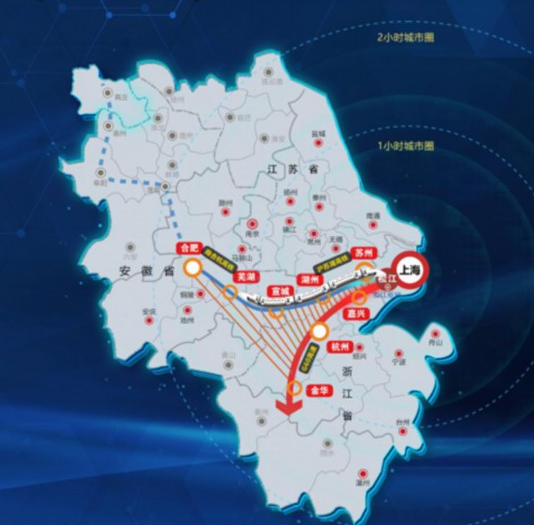
Core Viewpoint - The article discusses the measures introduced by Shanghai to support the G60 Science and Technology Innovation Corridor in the Yangtze River Delta, focusing on building a world-class industrial cluster and fostering a high-quality innovation ecosystem [3][4]. Group 1: Support Measures - The measures include 23 support policies aimed at creating a technology innovation source, building world-class industrial clusters, nurturing a first-class innovation ecosystem, and sharing technology innovation resources [3]. - The focus is on the integration of the G60 corridor with the broader Yangtze River Delta region to enhance technological and industrial innovation [3][4]. Group 2: Industrial Focus Areas - The measures emphasize the development of the new generation of electronic information industry (smart terminals) and the aerospace industry (satellite internet) [3][4]. - A systematic layout for the scientific instrument industry is proposed, which is crucial for ensuring the autonomy of the supply chain and supporting cutting-edge technological innovation [4]. Group 3: Future Industry Goals - By 2027, the goal is to break through several disruptive technologies and cultivate around 20 leading ecological enterprises, with a target of forming strategic emerging industry clusters by 2030 [5]. - The expected industrial scale in the area is projected to exceed 1000 billion yuan by 2030, with the aim of gathering 5-8 leading enterprises and over 300 industry chain companies [5]. Group 4: Financial and Talent Support - Financial support mechanisms include funding for research and development, with up to 30% of total project investment covered, and a maximum of 3 million yuan available for specific projects [11][17]. - There is a focus on enhancing talent support through the integration of education and technology, aiming to attract high-level talent and support the development of innovative personnel [47].

推动G60科创走廊迈向“世界级” 上海提出23条支持政策 打造科技创新和产业创新开路先锋
Jie Fang Ri Bao· 2025-12-26 01:47
Core Viewpoint - The Shanghai municipal government has released a set of measures to support the development of the G60 Science and Technology Innovation Corridor, aiming to upgrade it to a "world-class" level and contribute to the establishment of an international science and technology innovation center in Shanghai [1] Group 1: Building a Science and Technology Innovation Source - The measures propose a multi-faceted investment mechanism for applied basic research, supporting enterprises to organize various industry-academia-research collaborations [2] - Establishment of high-level collaborative innovation platforms, including national key laboratories and manufacturing innovation centers [2] - The creation of the Songjiang University Town Innovation Source, which will optimize academic discipline layouts to better match industrial needs and promote technology transfer [2] Group 2: Building World-Class Industrial Clusters - The measures emphasize the high-quality development of modern industrial clusters, supporting advanced manufacturing, strategic emerging industries, and innovative industrial clusters [3] - Accelerating the development of the new generation of electronic information industry and aerospace industry, including satellite internet projects [3] - Fostering the scientific instrument industry and creating a scientific instrument innovation port to support public service platforms [3] Group 3: Layout of Scientific Instrument and 6G Industries - The measures provide a systematic layout for the scientific instrument and 6G future industries, which are crucial for building high-end industrial clusters in Shanghai [4] - The strategy for the scientific instrument industry includes domestic substitution, high-end breakthroughs, and ecological collaboration [4] - The 6G future industry aims to establish a competitive edge in global technology, with plans to cultivate around 20 leading enterprises by 2027 and achieve an industrial scale exceeding 100 billion yuan by 2030 [5][6] Group 4: Cultivating an International First-Class Innovation Ecosystem - The measures propose the establishment of high-quality incubation platforms and support for enterprises to collaborate with various industry-academia-research forces [6] - Strengthening financial support for technology and promoting cooperation between innovation funds [6] - Enhancing talent support and protection of intellectual property rights, including the establishment of a local intellectual property protection center [6] Group 5: Sharing Technology Innovation Resources - The measures aim to optimize the layout of science and technology innovation spaces and improve the comprehensive transportation system [6] - Implementation of flexible land management policies to support technology innovation projects [6] - Establishment of special funds with a total investment of 2.5 billion yuan over five years from municipal and district finances [6]
五年投入25亿元!上海,最新部署→
Zheng Quan Shi Bao· 2025-12-25 13:22
Group 1: Core Initiatives of the G60 Science and Technology Innovation Corridor - The Shanghai Municipal Science and Technology Commission introduced 23 support policies aimed at building a technology innovation source and world-class industrial clusters in the Yangtze River Delta G60 Science and Technology Innovation Corridor [1][2] - A special fund of 2.5 billion yuan will be established over five years, with 1 billion yuan from the municipal government and 1.5 billion yuan from district finances [1] - The measures emphasize collaboration in technology finance, supporting corporate venture capital and mergers and acquisitions [1] Group 2: Focus on Aerospace Industry - The measures provide financial support for key segments of the aerospace industry, particularly satellite manufacturing and commercial operations, with funding up to 5 million yuan per project [2][3] - Companies involved in satellite internet technology can receive a one-time reward of up to 1 million yuan for value-added services [2] - A one-time reward of 5 million yuan is available for companies obtaining satellite communication business licenses [2] Group 3: Development of New Generation Electronic Information Industry - The measures aim to accelerate the development of the new generation electronic information industry, focusing on key segments such as smart terminal products and critical components [3] - A national 6G comprehensive testing base will be created to promote 6G technology research and international cooperation, with funding support of up to 3 million yuan [3] Group 4: Medical Device Internationalization - The G60 Science and Technology Innovation Corridor has launched a medical device overseas service base to facilitate international market expansion for local enterprises [4][5] - The initiative aims to overcome compliance, channel, and service barriers in the overseas market, providing a one-stop service for companies [5] - The establishment of the medical device committee and service base is part of a broader strategy to enhance the global competitiveness of the medical device industry in the region [5]
上海发布重磅文件!明确长三角世界级产业集群建设重点
Di Yi Cai Jing· 2025-12-25 12:46
Core Viewpoint - The article emphasizes the strategic development of the Yangtze River Delta G60 Science and Technology Innovation Corridor, focusing on the new generation of electronic information industry (smart terminals) and aerospace industry (satellite internet) as key areas for growth and innovation [2][4]. Group 1: Policy Measures - The Shanghai Municipal Science and Technology Commission introduced 23 supportive policies aimed at fostering a collaborative innovation ecosystem and building world-class industrial clusters [2][3]. - The measures highlight the role of Songjiang as a pilot area for integrated development within the G60 corridor, aiming to drive cross-regional collaboration in technology and industry innovation [2][3]. Group 2: Industry Focus - The policies specifically target the acceleration of the new generation electronic information industry, including smart terminal development and the establishment of innovation platforms and technical standards [2][3][26]. - The aerospace industry, particularly satellite internet, is also prioritized, with incentives for satellite manufacturing and commercial operations [2][3][30]. Group 3: Future Industry Development - The measures aim to cultivate future industries by focusing on 5G-A applications and 6G innovation, with a goal to establish a high-quality innovation ecosystem by 2027 [4]. - By 2030, the initiative aims to form several strategic emerging industry clusters, attracting 5 to 8 leading enterprises and over 300 industry chain companies, with a target industry scale exceeding 100 billion [4]. Group 4: Scientific Instrument Industry - The strategic layout for the scientific instrument industry is designed to support the autonomous control of supply chains and advance cutting-edge technological innovation [3][34]. - The development path emphasizes "domestic substitution, high-end breakthroughs, and ecological collaboration," with plans to establish specialized parks and innovation hubs [3][34]. Group 5: Financial Support and Innovation - Financial support mechanisms include phased funding for projects, with up to 30% of total investment covered, and specific caps on funding amounts for various initiatives [10][13][17]. - The establishment of market-oriented operational entities and innovation competitions is intended to facilitate the transition of research outcomes from laboratories to production lines [3][10].
