霍尔木兹海峡航运

Search documents
特朗普揭晓所谓伊朗“大礼”:允许10艘油轮通过霍尔木兹海峡;调解方:伊朗没“求”美国推迟空袭能源设施
中国能源报· 2026-03-27 00:44
Core Viewpoint - The article discusses President Trump's announcement regarding Iran's gesture of allowing 10 oil tankers to pass through the Strait of Hormuz, suggesting a potential negotiation opportunity related to Iranian oil control [3][4]. Group 1: Iran's Gesture and Negotiation - Trump claims that Iran's allowance of 10 oil tankers through the Strait of Hormuz is a "gift" indicating their willingness to negotiate [3][4]. - The Iranian government has stated that the Strait of Hormuz is open to all, except for those who violate Iranian territory, and has established a control system for passing vessels [5][10]. - Reports indicate that 26 vessels have passed through the Strait under Iran's control system from March 13 to March 25 [5]. Group 2: Military Actions and Tensions - The U.S. and Israel launched a large-scale military operation against Iran on February 28, leading to retaliatory actions from Iran and significant disruptions in global energy transport through the Strait of Hormuz [5]. - The ongoing military tensions have resulted in increased international oil prices and heightened inflationary pressures in the U.S. [5]. Group 3: Diplomatic Developments - Reports suggest that Iran has not formally requested the U.S. to delay airstrikes on its energy facilities, despite Trump's claims [6][8]. - The likelihood of achieving a ceasefire remains low, as both Iran and the U.S. have made extreme demands that are unacceptable to each other [7]. - Iranian officials have expressed a desire to negotiate but have not committed to any agreements regarding their missile program or uranium enrichment activities [6][7].


高市早苗:暂无派遣自卫队计划
券商中国· 2026-03-18 08:45
Group 1 - The core viewpoint of the article highlights that Japan currently has no plans to deploy Self-Defense Forces to the Strait of Hormuz amid ongoing military tensions involving the U.S. and Israel against Iran [1] - The Strait of Hormuz is a critical maritime route, with approximately 20% of global oil transportation passing through it, making its stability vital for oil-exporting countries in the Middle East [1]

【航运】霍尔木兹海峡日度通行及运价——数据报告-20260313
Zhong Xin Qi Huo· 2026-03-13 10:51
1. Report Industry Investment Rating - No relevant content provided. 2. Core View of the Report - The report provides daily data on the passage and freight rates in the Strait of Hormuz, including the number of vessels passing through, and the freight rates of VLCC, refined oil, and container shipping [1][2]. 3. Summary by Related Catalogs Strait Passage - On March 12, 3 vessels passed through the Strait of Hormuz (1 entering and 2 exiting), a decrease of 6 vessels compared to the previous day. As of 13:00 on March 13, 1 liquid bulk carrier operated by Al Rafedain Marine Services was exiting the strait [2]. VLCC Daily Freight Rates - On March 12, the freight rates from the Middle East to China and from West Africa to China were $10.41 and $9.2 per barrel respectively, with daily decreases of 25.3% and 17.3% [2]. Refined Oil Daily Freight Rates - On March 12, the freight rates from Saudi Ras Tanura to Singapore LR (105kt) and from Saudi Ras Tanura to Yokohama, Japan (105kt) were updated to $6.49 and $11.1 per barrel respectively, with rebounds of 2.7% and 2.8% [2]. Container Shipping Daily Freight Rates - As of 11:00 on March 13, the TCJ Tianjin + Persian Gulf basic port freight rate index was updated to 1,726.87 points, a环比 increase of 83.2%. The freight rate was still missing, possibly due to short - term shipping stagnation. The freight rate from Tianjin to European basic ports was $2,877 per FEU, with the index unchanged from the previous day. The freight rates from Tianjin to the western and eastern Mediterranean basic ports were $3,735.22 and $4,091.56 per FEU respectively, with the index unchanged [2].
【航运】霍尔木兹海峡日度通行及运价——数据报告-20260310
Zhong Xin Qi Huo· 2026-03-10 11:46
Report Summary 1. Report Industry Investment Rating - No information provided in the report. 2. Core View - The report provides daily data on the passage of ships through the Strait of Hormuz and shipping freight rates, including VLCC, refined oil, and container shipping [4]. 3. Summary by Relevant Catalogs Strait Passage - On March 9, 2 ships passed through the Strait of Hormuz (with AIS on), the same as the previous day. As of 13:00 on March 10, 2 ships passed through in the past 24 hours (with AIS on), including 1 liquid bulk ship operated by MHK Shipping Corp [4]. VLCC Daily Freight - On March 9, the freight rates from the Middle East to China and from West Africa to China were $14.36 and $13.28 per barrel respectively, with daily环比 increases of +0.9% and -2.9% compared to last Friday [4]. Refined Oil Daily Freight - On March 9, the freight rates from Saudi Ras Tanura to Singapore LR (105kt) and from Saudi Ras Tanura to Yokohama, Japan (105kt) were updated to $6.81 and $11.64 per barrel respectively, both decreasing by -3.7% compared to last Friday [4]. Container Shipping Freight - According to the data released by the Tianjin International Trade and Shipping Service Center at 11:00 on March 10, the TCI Tianjin - Persian Gulf basic port index increased by 10.4K to 942.8 points, and there was no freight rate record, possibly due to the stagnation of Middle East shipments. The freight rate from Tianjin to European basic ports was $2991.4 per FEU, with the index rising by 28 compared to the previous day. The freight rates from Tianjin to the western and eastern Mediterranean basic ports were $3790.8 and $3936 per FEU respectively, with the index increasing by 2.4%环比 [4].
【中信期货航运】霍尔木兹海峡日度通行及运价:数据报告-20260309
Zhong Xin Qi Huo· 2026-03-09 07:29
Report Title - The report is titled "【中信期货航运】霍尔木兹海峡日度通行及运价 -- 数据报告" [3] Report Date - The report is dated March 9, 2026 [1] Strait Passage - On August 8, the passage volume in the Strait of Hormuz was 3 vessels, a decrease of 1 vessel from the previous period, remaining at a low level. As of 13:00 on March 8, there were 21 passage records, but many were the same vessel quickly entering and exiting the strait. By 0:00 on March 9, the passage volume had returned to 3 vessels, including 1 liquid bulk carrier flying the Iranian flag [4] VLCC Daily Freight - According to Refinitiv quotes, on March 6, the freight rates from the Middle East to China and from West Africa to China were 14.23 and 13.67 US dollars per barrel respectively, with daily decreases of 1.7% and 2.7% [4] Product Tanker Daily Freight - According to Refinitiv quotes, on March 6, the freight rates from Saudi Ras Tanura to Singapore LR (105kt) and from Saudi Ras Tanura to Yokohama, Japan (105kt) were updated to 7.07 and 12.09 US dollars per barrel respectively, with daily decreases of 12.3% [4] Container Shipping Daily Freight - According to the official website of the Tianjin International Trade and Shipping Service Center, on March 6, the TC1 Tianjin - Persian Gulf basic port freight rate remained flat at 1,852.56 US dollars per FEU, possibly due to short - term shipping stagnation. The Tianjin - European basic port freight rate was 2,699.22 US dollars per FEU, with the index rising 8.3% from the previous day. The freight rates from Tianjin to the Western Mediterranean and Eastern Mediterranean basic ports were 3,635.22 and 3,858.22 US dollars per FEU respectively, with the indices rising 7.6% and 3.8% from the previous day [4]
油价上行的核心催化因素有哪些?
Mei Ri Jing Ji Xin Wen· 2026-02-13 01:27
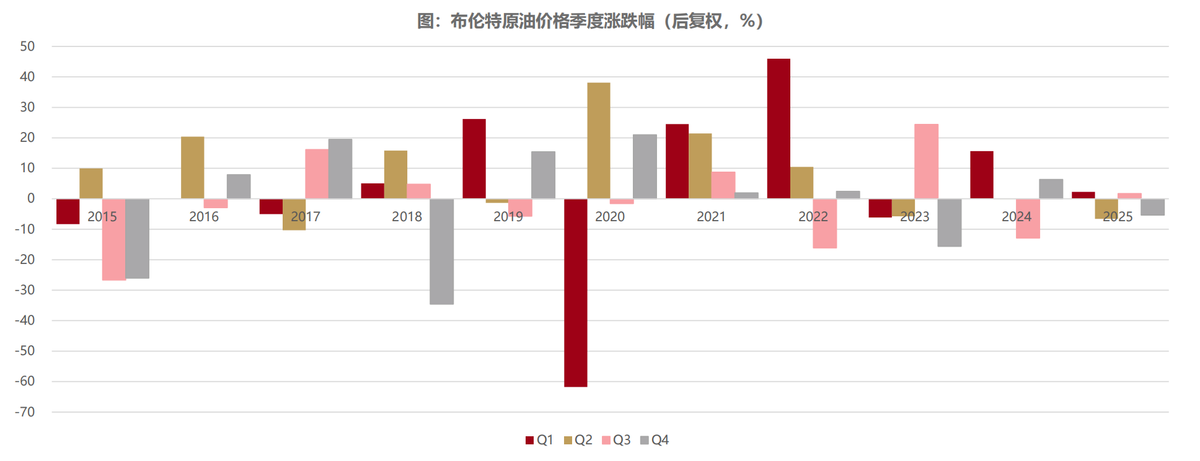
Group 1 - The core viewpoint of the articles indicates that geopolitical tensions and inventory risks have reversed the market consensus on falling oil prices, with recent oil price movements being primarily driven by emotional trading [1][2] - Extreme winter weather in the U.S. has increased heating demand and disrupted oil production and refining, leading to a substantial contraction in physical oil supply, thus supporting international oil prices [1] - Recent supply disruptions, such as the interruption of operations at the Caspian pipeline and power outages at Kazakhstan's Tengiz oil field, have also provided support for international oil prices [1] Group 2 - The U.S.-Iran negotiations have introduced volatility in oil prices, with initial diplomatic talks potentially seen as bearish, but subsequent news of possible breakdowns in talks led to a surge in oil prices [2] - The ongoing geopolitical struggle between the U.S. and Iran is expected to continue affecting international oil prices due to significant differences in their core demands [2] - The shipping situation in the Strait of Hormuz is critical, as approximately 20% to 30% of global oil maritime trade passes through this route, and any disruption could significantly impact global oil supply and prices [3] Group 3 - The current geopolitical risks, particularly the U.S.-Iran situation, are the main focus, while other regional conflicts have temporarily subsided [4] - The U.S. has historically acted to suppress oil prices to alleviate inflation and weaken Russia's position in the ongoing Ukraine conflict, but this influence is diminishing [4][5] - As the midterm elections approach, the U.S. may have less motivation to suppress oil prices, potentially leading to a rebound in oil prices [5] Group 4 - Recent analyses suggest that the oil market is experiencing a shift, with several institutions raising their oil price forecasts, indicating a potential upward trend in oil prices [5] - The first and second quarters typically see a strengthening trend in oil prices due to policy implementations and geopolitical events, although this calendar effect should not be solely relied upon for investment decisions [6] - The current upward trend in oil prices is supported by ongoing geopolitical conflicts and potential adjustments in OPEC policies, with expectations of a rebound in oil prices as high-cost production begins to exit the market [8]