全球股市

Search documents
高市早苗:暂无派遣自卫队计划
券商中国· 2026-03-18 08:45
Group 1 - The core viewpoint of the article highlights that Japan currently has no plans to deploy Self-Defense Forces to the Strait of Hormuz amid ongoing military tensions involving the U.S. and Israel against Iran [1] - The Strait of Hormuz is a critical maritime route, with approximately 20% of global oil transportation passing through it, making its stability vital for oil-exporting countries in the Middle East [1]


分析:最高法院的关税裁决为全球股市带来重大利好
Xin Lang Cai Jing· 2026-02-20 16:15
Core Viewpoint - The U.S. Supreme Court's ruling against President Trump's global tariffs is expected to boost global stock markets and significantly impact other asset classes [1] Group 1: Market Impact - The ruling paves the way for tariff exemptions on international trade valued in the billions, which is anticipated to uplift stock markets in the U.S. and globally [1] - U.S. Treasury yields are likely to rise as a result of the ruling [1] - The U.S. dollar may weaken due to the potential refunds on tariffs paid by importers [1] Group 2: Cost and Profitability - The expected reduction in input costs will alleviate pressure on profit margins, particularly for retailers and manufacturers [1]
美元维持强势黄金同步承压 金价维持震荡格局
Jin Tou Wang· 2026-02-06 06:05
Group 1 - The core viewpoint is that the gold market is experiencing fluctuations due to changing market sentiments and external factors, with gold prices currently at $4823.43 per ounce, reflecting a 1.00% increase [1] - The recent weak U.S. employment data, including a rise in initial jobless claims and a drop in job vacancies to a five-year low, has not significantly impacted market focus, which remains on high inflation and the potential hawkish stance of the new Federal Reserve chair nominee Kevin Warsh [1] - The strong U.S. dollar is identified as the primary driver of gold's downward pressure, as many institutional traders are reducing their long positions in precious metals [1] Group 2 - Galaxy Securities suggests that the change in Federal Reserve leadership should not be automatically equated with a major market trend shift, emphasizing that the impact of policies on the U.S. economy is fundamental to dollar pricing [2] - A Fed led by Warsh may shift from a supportive role to a more traditional, rule-based approach, which could lead to a short-term strengthening of the dollar and upward pressure on U.S. Treasury yields [2] - The geopolitical situation is showing signs of easing, with negotiations between Iran and U.S. officials, which may reduce the appeal of gold as a safe-haven asset [2] Group 3 - The gold market opened at $4980.4, peaked at $5024.2, and then fell to a low of $4756.9, closing at $4782.9, indicating a bearish trend with a long upper shadow on the daily candle [3] - The current trading strategy suggests a short position at $4855 with a stop loss at $4862, targeting levels of $4800, $4780, and $4755, with further downside targets if the price breaks below [3]
2026 十大全球经济“猜想”
Sou Hu Cai Jing· 2026-02-05 06:53
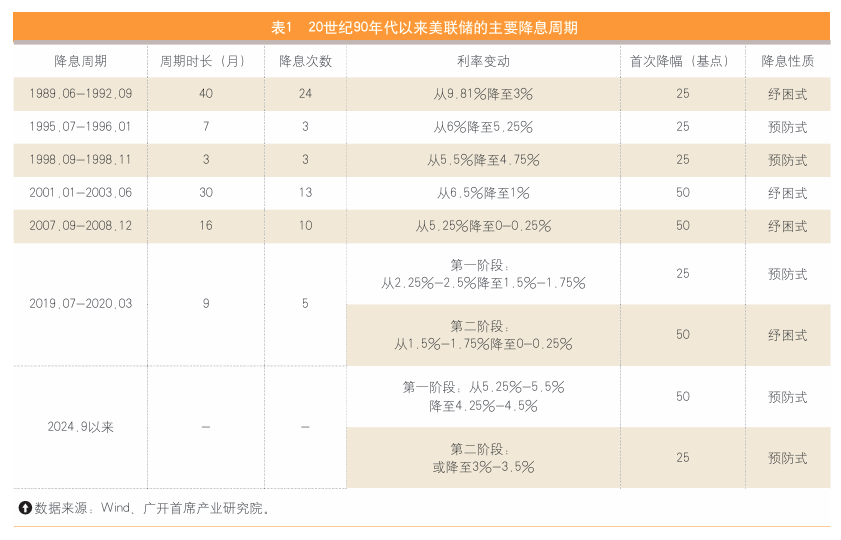
Group 1 - The global economy is transitioning from "high volatility" to "new equilibrium," facing new uncertainties and challenges while instability and imbalance are somewhat reduced [2][4] - In 2026, a series of positive factors are expected to drive global economic recovery, including expansionary fiscal policies, loose monetary policies, and an AI investment boom [4][5] - Global GDP growth is projected to be between 2.9% and 3.1% in 2026, slightly lower than in 2025, with developed economies growing below 2% and emerging markets, especially in Asia, continuing to be the main growth drivers [5] Group 2 - The global trade environment shows signs of partial recovery, with the U.S. likely to pragmatically adjust aggressive trade protection measures and deepen multilateral cooperation [8][9] - However, new protectionist forces may emerge, particularly in developed economies like Europe, which may impose "rules-based" barriers to trade [9] Group 3 - Inflation pressures remain in developed economies, with service prices showing stickiness and tariff impacts having delayed effects [13][10] - Global inflation is expected to decrease from 4.2% in 2025 to between 3.2% and 3.6% in 2026, with most developed economies approaching a 2% target [11] Group 4 - The Federal Reserve's interest rate cut uncertainty is increasing, with potential further cuts in 2026 depending on economic conditions and inflation expectations [14][15] - The political landscape and economic data may influence the Fed's decisions on interest rates, with pressures from the Trump administration complicating the situation [15] Group 5 - Many countries are expected to increase fiscal policy efforts in 2026 to counter economic downturn risks, with significant public investment planned in various sectors [17][18] - However, some countries face constraints on fiscal expansion due to high debt levels and external pressures [18] Group 6 - U.S.-China economic relations may experience a phase of easing, with the U.S. adjusting its stance towards China and seeking selective cooperation in non-sensitive areas [21][22] - This shift is driven by economic interdependence and political considerations ahead of the 2026 midterm elections [22] Group 7 - Countries are increasingly prioritizing supply chain "self-sufficiency" due to geopolitical risks and technological competition, leading to a restructuring of supply chains in strategic sectors [24][25] Group 8 - Global stock markets are expected to experience cautious optimism, with potential for upward movement driven by interest rate cuts and AI investments, but structural differentiation may increase [26][27] - Emerging markets are likely to attract more investment due to favorable conditions, while U.S. markets may face volatility and risks associated with high valuations [28] Group 9 - The U.S. dollar is anticipated to remain weak, influenced by lower interest rates and various economic factors, with fluctuations expected within a range [29][30] Group 10 - Gold prices are projected to remain strong amid geopolitical risks and a weakening dollar, although there may be short-term corrections due to various market factors [33][34]
中信证券:特朗普政府核心目标之一是通过美联储人事变革及一系列工作推动长端利率下行,以提振传统经济并助力中期选举
Sou Hu Cai Jing· 2026-01-31 03:59
Core Viewpoint - The report from CITIC Securities indicates that the policies of the Trump administration will significantly impact global markets this year [1] Group 1: Economic Impact - CITIC Securities believes one of the core goals of the Trump administration is to lower long-term interest rates through changes in Federal Reserve personnel and various initiatives, which would boost the traditional economy and assist in midterm elections [1] - If successful, this could positively influence global stock markets and commodities [1] Group 2: Foreign Policy and Asset Impact - The administration's foreign policy actions are primarily focused on domestic issues and voter demands, which may only have a transient impact on major asset classes [1] - The extent of the fiscal deficit expansion remains uncertain, which could benefit gold and non-ferrous metals [1] Group 3: Midterm Elections - The results of the midterm elections are deemed very important; despite Trump's efforts to gain an advantage, a Republican loss could negatively impact risk assets, excluding U.S. Treasuries, in the short term [1]

全球股市立体投资策略周报1月第3期:地缘事件与财报季交织,科技结构冲高
GUOTAI HAITONG SECURITIES· 2026-01-20 03:15
Market Performance - Emerging markets continued to rise, with MSCI Global up by 1.9%, MSCI Developed up by 1.3%, and MSCI Emerging up by 6.8%[9] - The Hang Seng Index showed the best performance among emerging markets, increasing by 4.0%[9] - The 10Y U.S. Treasury yield rose significantly, indicating a shift in bond market dynamics[9] Investor Sentiment - Trading volume in the Chinese stock market surged, with the Shanghai Composite Index trading 4.054 billion shares worth $9.94 billion, a week-on-week increase[24] - The short-selling ratio in Hong Kong fell to 12.9%, below the 10-year average, indicating heightened investor confidence[24] Earnings Expectations - U.S. earnings expectations for 2025 were revised upward, with the S&P 500's EPS forecast increasing from +10.3% to +10.4%[68] - The Hang Seng Index's EPS forecast for 2025 was downgraded from -1.8% to -1.9%[68] - European earnings expectations remained stable, with the STOXX50 index's EPS forecast unchanged at -4.6%[69] Economic Outlook - The U.S. economic surprise index rose, influenced by lower-than-expected CPI data and uncertainties regarding the new Federal Reserve chair[9] - The Chinese economic surprise index also increased, supported by the central bank's monetary policy adjustments[9] Capital Flows - Global liquidity showed signs of tightening, with expectations for the Federal Reserve to cut rates decreasing slightly to 1.8 times in 2026[56] - Recent capital inflows into Hong Kong amounted to HKD 240 billion, with significant contributions from the Stock Connect program[65]
高盛:我们正处于周期“乐观阶段”!预测2026年全球股市回报13%
Hua Er Jie Jian Wen· 2025-12-24 09:36
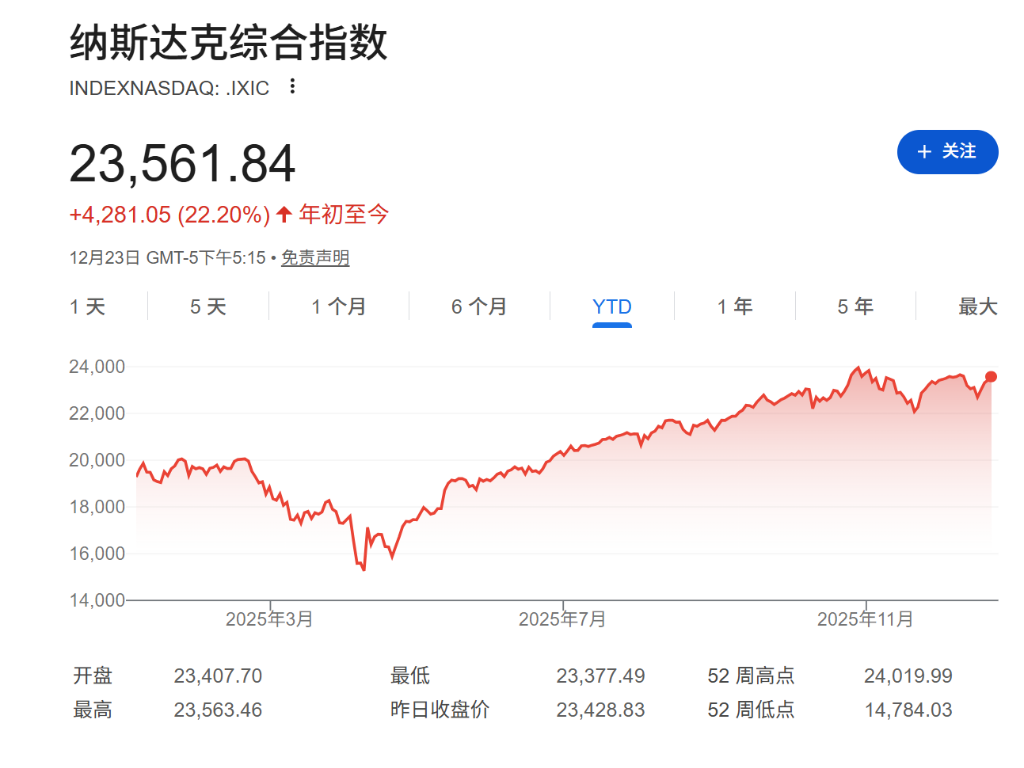
Core Viewpoint - Goldman Sachs' stock strategy team indicates that global equity markets are in a typical "optimism phase," with the bull market expected to broaden by 2026, despite lower expected returns compared to 2025 [1][4]. Group 1: Market Performance and Predictions - The weighted price return for global equity markets is projected to be 13% in 2026, with a total return of 15% including dividends, building on a strong performance in 2025 [1]. - The market has shown significant recovery since April, with major U.S. indices rebounding nearly 45% from their lows [1][6]. - The current bull market is shifting from valuation-driven to earnings-driven, with geographic diversification becoming evident as most major stock markets are expected to outperform U.S. equities in 2025 [4]. Group 2: Market Dynamics and Risks - The market is currently characterized by record concentration at national, industry, and individual stock levels, making diversification particularly urgent for 2026 [4][8]. - Historical patterns suggest that the final year of a market cycle often sees significant price surges, raising the risk of a bubble, especially if speculative behavior is driven by AI narratives [5]. - The report highlights that the recovery path has been tumultuous, with significant downturns earlier in the year due to tariff concerns and the "DeepSeek" effect on the tech sector [5][6]. Group 3: Investment Strategies - Goldman Sachs emphasizes the necessity of diversification across regions, styles, and sectors to optimize risk-adjusted returns [8][11]. - Suggested strategies include focusing on emerging markets, combining growth and value stocks, and leveraging capital expenditures in traditional sectors benefiting from AI developments [11].

高盛:2026年全球股市有望涨但回报率或降
Sou Hu Cai Jing· 2025-12-19 08:33
Core Viewpoint - Goldman Sachs indicates that global stock markets are likely to continue rising next year, but with more moderate returns due to corporate earnings growth and the Federal Reserve's accommodative monetary policy [1] Group 1: Market Outlook - Goldman Sachs strategists, including Peter Oppenheimer, maintain a constructive view on the stock market for 2026, anticipating sustained earnings growth [1] - Despite the ongoing bull market expansion, expected index-level returns are projected to be lower than those in 2025 [1]
高盛:料明年全球股市继续上涨 但回报不及今年
智通财经网· 2025-12-19 07:12
Core Viewpoint - Goldman Sachs indicates that global stock markets are expected to continue rising next year due to corporate earnings growth and the Federal Reserve's accommodative monetary policy, although returns will be more moderate compared to 2025 [1] Group 1: Market Outlook - Goldman Sachs strategists, including Peter Oppenheimer, maintain a constructive view on the stock market for 2026, anticipating continued earnings growth [1] - The report suggests that in the context of an expanding bull market, the return rates at the index level will be lower than those in 2025 [1] Group 2: Economic Projections - Economists at Goldman Sachs expect ongoing economic expansion across various regions, alongside a further moderate easing of monetary policy by the Federal Reserve [1] - The 12-month stock price forecast, weighted by regional market capitalization, predicts a 13% return in USD terms for 2026, which will increase to 15% when dividends are included [1]
邢自强:AI在中国不是泡沫,值得全球投资者大书特书来投资
和讯· 2025-12-17 09:41
Group 1 - The Federal Reserve's decision to cut interest rates by 25 basis points is expected to increase the attractiveness of Chinese assets to global investors [2] - Morgan Stanley's Chief Economist for China, Xing Zhiqiang, believes that despite macroeconomic challenges, new industries like artificial intelligence present investment opportunities [2][3] - The Chinese stock market is anticipated to enter a more stable phase characterized by moderate corporate profit growth after a year of confidence restoration and valuation reassessment [2][3] Group 2 - AI in China is not considered a bubble; the country has a unique competitive advantage due to its talent pool, cost-effective infrastructure, and vast application data [5][6] - The investment growth in emerging industries such as smart vehicles and biopharmaceuticals is offsetting declines in real estate investment, although real estate remains crucial to the economy [4][6] - The outlook for the global stock market in 2026 is optimistic, with the U.S. economy expected to maintain a growth rate close to 2% and nominal GDP growth between 4-5% due to significant AI-related investments [6][7] Group 3 - The U.S. is expected to continue its unconventional debt management strategy, which may stimulate the economy but could also lead to lower real interest rates and pressure on the dollar [7] - Despite potential challenges, the global stock market, particularly U.S. equities, is projected to perform well, supported by liquidity and improving corporate earnings [7] - Historical patterns indicate that while technology revolutions may lead to short-term corrections, they ultimately enhance productivity over the long term [7]