立德树人

Search documents
进一步抓牢立德树人根本任务 上海高校党政负责干部会议召开
Jie Fang Ri Bao· 2026-02-28 01:39
Core Viewpoint - The meeting emphasized the new mission and higher standards for higher education in Shanghai, focusing on the implementation of Xi Jinping's educational principles and the need for comprehensive reforms in universities [2]. Group 1: Educational Goals and Reforms - The Shanghai higher education sector is tasked with enhancing moral education and strengthening the support for technology and talent [2]. - There is a call for deeper reforms in universities to build a robust and excellent higher education system, focusing on innovation and quality improvement [2]. - The "Shanghai model" of education, which integrates general courses with specialized and individual courses, is to be further developed to transform practical experiences into teaching cases [2]. Group 2: Service and Contribution - The emphasis is placed on higher education's role in serving science and industry, with plans to optimize academic programs and improve educational quality [2]. - A mechanism linking enrollment, training, and employment is to be established to cultivate high-quality talent and promote collaborative innovation between academia and industry [2]. Group 3: Governance and Safety - The meeting highlighted the importance of strict governance in educational institutions, promoting a culture of accountability and safety on campuses [2]. - There is a focus on enhancing the rigidity of institutional regulations and improving the safety net within educational environments [2].
此书院,非彼书院
Xin Lang Cai Jing· 2026-02-17 15:25
Core Viewpoint - The article discusses the evolution and significance of the college system in China, highlighting the ongoing reforms in higher education institutions aimed at fostering holistic education and innovative talent development. Group 1: Historical Context - The college system in China has its roots in traditional institutions that date back to the Tang and Song dynasties, serving as centers for learning and scholarship [3][5] - The modern college system has emerged as a response to the challenges posed by Western educational models introduced in the late 19th century, leading to a transformation of traditional educational practices [5][10] Group 2: Current Developments - Leading universities like Tsinghua University and Renmin University are actively implementing reforms in their college systems, establishing multiple colleges to enhance innovative talent cultivation [1][10] - The article notes that while many universities are adopting the college system, the quality and effectiveness of these reforms vary significantly across institutions [3][11] Group 3: Educational Philosophy - The college system emphasizes holistic education, focusing on moral development and character building as primary objectives, rather than merely academic achievement [6][8] - The importance of creating a collaborative environment where students and faculty engage in mutual learning and growth is highlighted as a key feature of effective college education [7][8] Group 4: Challenges and Opportunities - The article points out the confusion surrounding the implementation of the college system, with many institutions adopting superficial practices that do not align with the true essence of college education [5][11] - There is a call for a deeper integration of teaching and research within the college system to better support the cultivation of innovative talents and to address the shortcomings of traditional professional education [10][11]

枣庄市“十四五”教育事业发展规划综述
Qi Lu Wan Bao· 2026-02-14 01:13
Core Viewpoint - The education system in Zaozhuang is making significant progress in implementing comprehensive reforms and building a high-quality education system during the "14th Five-Year Plan" period, focusing on moral education and the integration of ideological and political education across all levels of schooling [1] Group 1: Moral Education Implementation - The fundamental task of moral education is being deeply implemented, with the establishment of a guidance center and committee for the integration of ideological and political courses across primary, secondary, and higher education [1] - A total of 374 primary and secondary schools have separated the roles of party organization secretaries and principals to enhance the grassroots party organization's effectiveness [1] - The city has publicly recruited 42 dedicated party workers for schools, leading to a strengthened awareness of the Chinese national community [1] Group 2: Basic Education Quality Improvement - The enrollment rate for preschool education has reached 86.47%, with a public rate of 63.16% and a universal rate of 87.15% [2] - Zaozhuang has been recognized as a national experimental zone for science education, with 100% coverage of strong town pilot towns at the provincial and municipal levels [2] - The city has constructed or expanded 77 primary and secondary schools, adding 97,000 new student places [2] Group 3: Vocational Education Development - Policies have been issued to support the high-quality development of vocational education, establishing a dynamic adjustment mechanism for 130 vocational programs [3] - Zaozhuang has established a new private higher vocational college and created several high-level vocational schools, with successful participation in international skill competitions [3] - The city has formed six local industry-education integration alliances to enhance vocational training [3] Group 4: Educational Quality Enhancement - The "Internet + Teacher Professional Development Project" has ranked first in the province for three consecutive years, contributing to improved teaching quality [4] - High school admission rates have increased, with a notable rise in the number of students meeting special admission criteria [4] - The city has implemented a local regulation for managing the environment around schools, enhancing safety and accessibility for students [4]
高校教师党建与事业深度融合的实践路径
Xin Lang Cai Jing· 2026-02-11 21:49
Core Viewpoint - The integration of education, technology, and talent is essential for building a modern socialist country, with universities playing a strategic role in this process [1] Group 1: Basic Principles of Integration - Political leadership is the fundamental direction for the integration of party building and educational development, ensuring that all activities align with the correct political trajectory [2] - The core orientation of integration is to break down barriers between professional teaching and value shaping, guiding educators to instill ideals and beliefs in students while imparting knowledge [2] - The integration strategy must be tailored to the specific context of "Double First-Class" universities, identifying weak points and synergies between party building and academic disciplines [2] Group 2: Core Paths for Integration - Strengthening ideological unity among faculty is crucial for the smooth integration of party building and educational endeavors, addressing previous gaps between political and professional learning [3] - Establishing interdisciplinary research teams through party building can effectively focus on key technological areas, aligning research with national development needs [4] - A comprehensive institutional framework should be developed to connect existing party building systems with the management of "Double First-Class" initiatives, ensuring that performance evaluations are linked to both party and academic achievements [5] Group 3: Team Development and Capacity Building - The construction of a "Double Leader" team is central to enhancing the integration of party building and professional development, emphasizing both political and academic standards in the selection of leaders [6] - Engaging "Double Leader" party secretaries in significant departmental affairs can facilitate the integration of party building with academic and research initiatives [6] - Promoting the exchange of experiences through practical training in various sectors can deepen the understanding of how party building can drive educational development [6] Group 4: Overall Integration and Outcomes - The deep integration of party building and educational initiatives is essential for strengthening faculty development and achieving the goals of "Double First-Class" construction [7] - Continuous optimization of integration pathways is necessary to transform the political and organizational advantages of the party into intrinsic motivation for educational innovation and development [7]
中管高校纪检监察机构立足职责强化监督保障中国特色世界一流大学建设行稳致远
Zhong Yang Ji Wei Guo Jia Jian Wei Wang Zhan· 2026-02-09 01:44
Group 1 - The core viewpoint emphasizes the importance of education, technology, and talent as foundational and strategic supports for China's modernization, with a focus on enhancing political supervision in higher education institutions [2][3][4] - Centralized higher education institutions are implementing political supervision to ensure the effective execution of major decisions made by the Central Committee, with specific tasks outlined for various universities [3][4] - The emphasis is placed on integrating political supervision into daily operations, ensuring that responsibilities for party governance and school management are firmly established at all levels [5][6] Group 2 - Various universities are developing specific supervision tasks, such as Beijing University establishing a political supervision checklist with 73 tasks, and Xi'an Jiaotong University focusing on the implementation of over 50 specific measures [2][3] - The approach includes regular embedded supervision activities, such as designated "political supervision days" to monitor compliance and address issues proactively [3][4] - Institutions are also focusing on key areas such as ideological education, scientific research, and internationalization, with specific measures to enhance oversight and accountability [6][7]
党建引领思政铸魂 探索高校立德树人新路径
Xin Lang Cai Jing· 2026-02-04 22:38
Core Viewpoint - The integration of party building and ideological political work into all aspects of education and talent cultivation is essential for high-quality development and fostering a new chapter in moral education [1] Group 1: Ideological and Political Education - The college emphasizes the importance of ideological and political education, implementing a multi-layered and regular theoretical learning system to ensure the party's innovative theories reach the hearts of the people [1][2] - Continuous deepening of party history education and discipline education is conducted, with regular thematic learning to enhance the effectiveness of ideological education [2] Group 2: Grassroots Organization Building - The college focuses on enhancing the political and organizational functions of grassroots party organizations, establishing them as strongholds for implementing moral education and uniting faculty and students [3][4] - Various activities, such as theme party days and collaborations with local government, are organized to deepen understanding of party principles and foster community engagement [4] Group 3: Educational Reform for Moral Education - The college leads reforms in ideological education, promoting a "big ideological course" concept and collaborating with leading enterprises to create a social classroom for education [5] - Innovative practices, such as using drama to convey ideological education, have been developed, with performances like "The Original Intention" reaching over 170 shows and an audience of more than 200,000 [5][6]
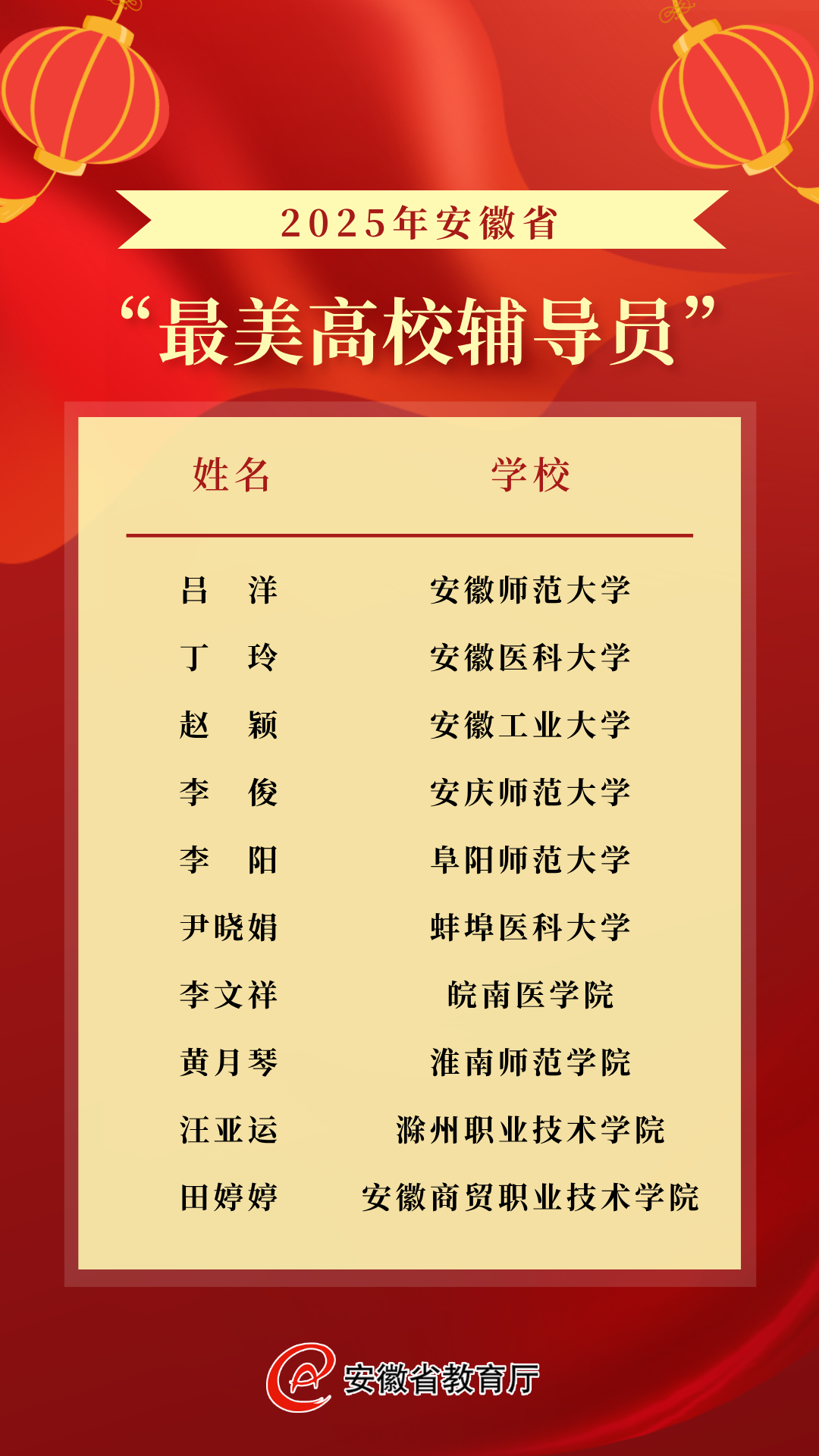
名单揭晓!2025年安徽省“最美高校辅导员”和“最美大学生”来了
Xin Lang Cai Jing· 2026-02-02 12:51
Group 1 - The core initiative is the 2025 Anhui Province "Most Beautiful College Counselors" and "Most Beautiful College Students" campaign, organized by the Provincial Propaganda Department and the Provincial Education Committee to promote positive spirit among college counselors and students [1] - A total of 10 college counselors and 10 college students will be selected through a process involving school applications, expert reviews, and committee evaluations [1] Group 2 - The list of selected "Most Beautiful College Counselors" includes individuals from various universities such as Anhui Normal University and Anhui Medical University [2][3] - The list of selected "Most Beautiful College Students" features students from institutions like the University of Science and Technology of China and Anhui University [3][4]
中央民族大学召开第七届教职工代表大会、第十五届工会会员代表大会
Xin Lang Cai Jing· 2026-01-29 08:27
Group 1 - The conference summarized the achievements and experiences of the previous representative assemblies and outlined the main goals and tasks for the next five years [1][2] - The school has made significant progress in various areas, particularly in enhancing educational quality and promoting national unity, under the guidance of Xi Jinping's thought [2][3] - The conference emphasized the importance of the representative assembly and union in the governance system of the school, highlighting their role in supporting high-quality development [2] Group 2 - The year 2026 is identified as a critical year for implementing the spirit of the 20th Central Committee and starting the 14th Five-Year Plan, with a focus on educational reform and collaborative research [3][4] - The conference called for all representatives and staff to adhere to Xi Jinping's thought and to enhance their sense of responsibility and mission in advancing the work of the representative assembly and union [4] - A collective effort is encouraged among faculty and staff to transform the consensus from the conference into actions aimed at building a world-class university with distinctive features [4]
“这是教育工作的宝贵财富”
Xin Lang Cai Jing· 2026-01-28 00:12
Core Viewpoint - The Education Ministry emphasizes the importance of suggestions and proposals from national representatives, highlighting that the 2,721 proposals received in 2025 represent a significant support for educational reform and development [1][7]. Group 1: Proposals and Suggestions - The Education Ministry received a total of 2,721 proposals for the National Two Sessions in 2025, with 1,326 of them being led by the ministry [1][7]. - The representatives and committee members come from diverse fields, including higher education, industry, military, government, and primary education, indicating a broad interest in educational reform [2][3]. - Key topics discussed include the integration of moral education, the development of educational technology talent, and the enhancement of public education services in response to demographic changes [4][5][6]. Group 2: Focus Areas in Education Reform - There is a consensus on the importance of implementing moral education as a fundamental task, with suggestions for reforming talent evaluation systems to align with this goal [4]. - The need for a robust educational framework for emerging technologies, such as brain-computer interfaces, was highlighted, emphasizing the urgency of cultivating top-tier talent [5]. - Representatives expressed the necessity of improving educational public services, particularly in light of declining school-age populations, advocating for tailored teaching methods and resource allocation [6][7]. Group 3: Impact of Suggestions on Educational Policy - The Education Ministry values the feedback from representatives, viewing it as a critical indicator of public concern and support for educational initiatives [7][8]. - The ministry has committed to addressing the suggestions received, which has led to significant reforms, including the initiation of higher education comprehensive reform pilots and measures to enhance mental health support for students [7][8]. - The ongoing dialogue between the Education Ministry and representatives fosters a collaborative environment for educational advancement, with a focus on integrating technology and addressing societal needs [9][10].
筑梦边疆 共育未来
Xin Lang Cai Jing· 2026-01-27 20:00
Core Viewpoint - The article emphasizes the commitment of the Xinjiang Production and Construction Corps (XPCC) to prioritize education development, aiming for equitable and high-quality compulsory education by 2025, with a focus on resource allocation and educational reform [4][5]. Group 1: Educational Infrastructure Improvement - The XPCC is implementing a school district group management model to enhance educational quality and equity, ensuring that all children have access to fair and high-quality education [4]. - Recent upgrades include the provision of 5,195 sets of desks and chairs, 336 smart blackboards, and 747 computers across various schools, reinforcing the hardware foundation for balanced urban-rural education [5]. - A total of 13.87 million yuan has been invested in the "thin improvement project" to upgrade educational facilities, aiming to equalize the educational conditions between urban and rural areas [6]. Group 2: Holistic Student Development - Schools are integrating technology and innovative teaching methods, such as the establishment of a 1,000 square meter science and technology education base, to foster students' technological literacy and innovation [6]. - The XPCC is focusing on moral education, with initiatives like the "walking ideological and political class" that connects classroom learning with real-world experiences, enhancing students' understanding of national security and patriotism [8][9]. Group 3: Family and Community Engagement - The XPCC is promoting family-school collaboration as a key strategy to improve educational quality, with schools establishing communication bridges and innovative models for family involvement [11]. - Initiatives include the formation of parent committees and volunteer programs, allowing parents to actively participate in school activities and decision-making processes [12][13].