高位减持

Search documents
宁德时代被外资投行减持,什么信号?
Sou Hu Cai Jing· 2025-10-05 09:55
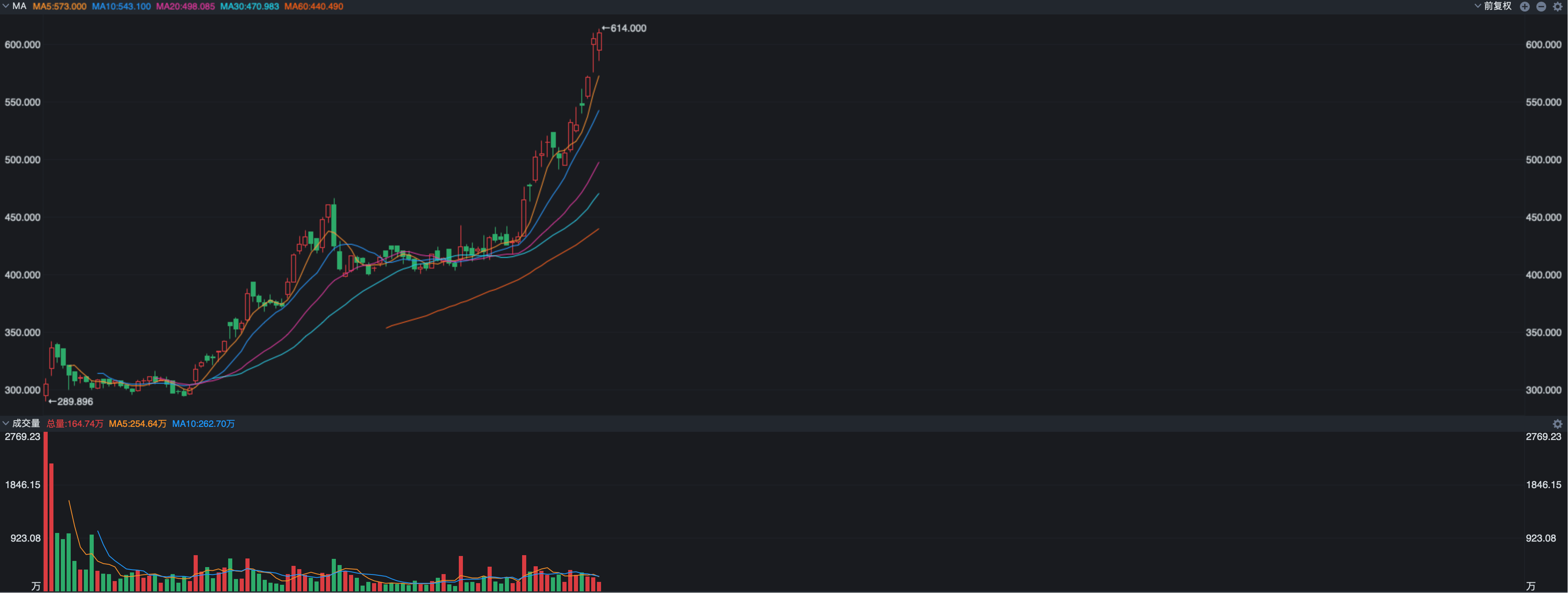
Group 1 - The core point of the news is that foreign investment banks, specifically JPMorgan, have reduced their holdings in CATL, indicating a trend of profit-taking among major industry players after significant stock price increases [1][4] - JPMorgan sold 1.467 million shares of CATL at a price of 567.0145 HKD per share, totaling approximately 832 million HKD, which reflects a strategic decision amidst a doubling of CATL's stock price since June [1] - The recent surge in CATL's stock price, particularly since September 12, has raised concerns about potential high-level profit-taking, suggesting that foreign investors view Chinese assets as having more trading opportunities than long-term strategic holdings [1][4] Group 2 - The reduction in holdings by major players like JPMorgan and other industry leaders signals a broader trend of profit-taking in the market, particularly among stocks that have seen significant short-term gains [2][4] - The current market sentiment is described as being at a peak level of optimism, but there is a cautionary note regarding the implications of these reductions, which could lead to short-term volatility [2][5] - The phenomenon of major industry leaders facing reductions in holdings raises questions about the potential for market adjustments, indicating that investors should remain vigilant [4]


中际旭创控股股东拟减持550万股套现23亿元,9月超百家科技公司发布减持计划
Cai Jing Wang· 2025-09-30 03:37
Core Viewpoint - The recent trend of significant share reductions by major shareholders in the technology sector, particularly in high-performing stocks, indicates a potential cooling signal for the market as many companies have seen substantial price increases recently [1] Group 1: Share Reduction Details - Major shareholder Shandong Zhongji Investment Holding Co., Ltd. of Zhongji Xuchuang plans to reduce its holdings by up to 5.5 million shares within the next three months, potentially cashing out nearly 2.3 billion yuan based on the closing price on September 29 [1] - Over a hundred technology companies in the A-share market have announced share reduction plans since September, with Zhongji Xuchuang and Lanke Technology having market capitalizations exceeding 100 billion yuan [1] Group 2: Market Trends and Analysis - Approximately 70% of the companies that have reduced shares this half-year have experienced price increases, with companies like Zhongji Xuchuang, Changfei Optical Fiber, and Tonglian Precision seeing gains of over 150% [1] - The increase in share reductions by industrial capital suggests a heightened willingness to cash out following significant stock price increases, which may lead to increased selling pressure and volatility in the short term [1] - However, if the companies maintain solid fundamentals and continue to deliver strong performance, these reductions could present investment opportunities in the medium to long term [1]

“超量”减持8.48亿,被特斯拉带飞的拓普集团炸板了!
2 1 Shi Ji Jing Ji Bao Dao· 2025-09-15 13:45
Core Viewpoint - The recent high-level share reduction by Top Group's controlling shareholders has raised concerns in the market, particularly given the unexpected scale of the reduction compared to prior disclosures [1][2][4]. Group 1: Share Reduction Details - From August 29 to September 10, Top Group's chairman and his son, along with associated entities, reduced their holdings by a total of 13.43 million shares, representing approximately 0.7728% of the total share capital, resulting in cashing out about 884 million RMB [1]. - The initial disclosure on June 16 indicated a much smaller planned reduction of around 0.2%, which led to surprise among investors when the actual reduction exceeded expectations [2][4]. - The reduction was executed by entities that had previously increased their holdings, which allowed them to bypass certain disclosure requirements [3]. Group 2: Market Reaction - Following the announcement of the share reduction, Top Group's stock price initially reached a seven-month high but subsequently experienced a decline, reflecting investor concerns about the implications of the reduction [4][5]. - Despite the initial negative reaction, the stock price rebounded, touching the limit up on September 15, indicating a potential recovery in investor sentiment [5]. Group 3: Financial Performance Context - Top Group reported a revenue of 12.935 billion RMB for the first half of 2025, with a growth rate of 5.83%, and a net profit of 1.294 billion RMB, down 13.84% year-on-year, marking a significant decline compared to previous years [6]. - The company's performance has been attributed to increased R&D expenses and challenges in the supply chain, with the first half of 2025 being the only period in six years to show a decline in revenue and profit [6]. Group 4: Purpose of Share Reduction - The official reason for the share reduction was stated as "personal funding needs," but it is speculated that the funds may be used for external investments or to provide liquidity for other ventures [7]. - The controlling shareholder has indicated plans to establish a chip company to supply components for humanoid robots, suggesting a strategic direction for future growth [7]. Group 5: Succession Planning - The son of the chairman, born in 2000 and a recent graduate, is being positioned for future leadership roles within the company, overseeing various subsidiaries focused on emerging technologies [8]. - The shares sold by the son were previously acquired as a show of confidence in the company's future, raising questions about the timing of the reduction [8].

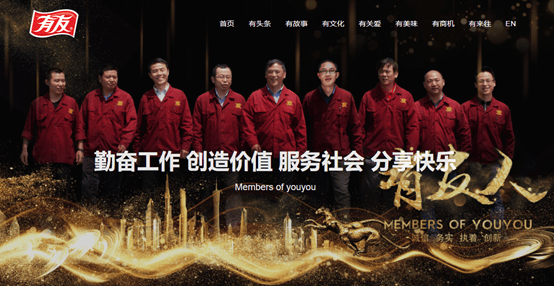
ESG解读|高分红+减持助力有友食品家族套现超5.8亿,董秘更迭频繁暴露治理短板
Sou Hu Cai Jing· 2025-06-25 09:11
Core Viewpoint - Youyou Food's actual controller plans to reduce his stake by 3%, causing stock price fluctuations, with high dividends and share reduction coexisting, indicating potential underlying issues [3][5]. Group 1: Share Reduction and Stock Performance - The actual controller Zhao Ying plans to reduce up to 12.83 million shares, representing 3% of the total share capital, due to personal financial needs [3]. - Following the announcement, the stock price dropped by 7.65% after hitting the daily limit down, raising concerns about potential underperformance in upcoming financial results [5]. - The stock price increased approximately 30.8% from 9.96 yuan on January 3, 2025, to 13.03 yuan on June 25, 2025, indicating significant volatility within the year [5]. Group 2: Dividend Policy and Financial Implications - Youyou Food has maintained a high dividend payout ratio, exceeding 90% for four consecutive years since 2021, resulting in the Zhao family receiving at least 580 million yuan in dividends [8][10]. - The new regulations implemented in May 2024 require that the actual controller's share reduction must meet conditions such as cumulative dividends not being less than 30% of net profit, suggesting that high dividends may facilitate compliance with reduction regulations [10]. - The dual strategy of high dividends and share reduction raises concerns about potential conflicts of interest and governance fairness, as the Zhao family controls over 70.25% of the company [10]. Group 3: Governance and Management Issues - Frequent changes in the company secretary position have led to concerns about information disclosure and governance stability, with four secretaries replaced since the company's listing in May 2019, averaging less than two years per term [11][12]. - The company has allocated significant cash for dividends, with cash dividends exceeding net profit last year, potentially impacting investments in R&D and market expansion [12][13]. - Youyou Food has invested over 900 million yuan in financial products from 2021 to 2024, while R&D spending totaled only 15 million yuan, indicating a misalignment in capital allocation [13][15]. Group 4: Financial Management and Investment Strategy - The average annualized return on Youyou Food's recent financial products is approximately 2.51%, which is considered low compared to prevailing market rates [15]. - The company has set a high self-managed financial investment limit of 1 billion yuan, with a balance of 830 million yuan by the end of 2024, indicating potential liquidity management issues [15].