高技术船舶

Search documents
我国自研17.5万立方米液化天然气运输船交付
Ke Ji Ri Bao· 2025-09-24 12:30
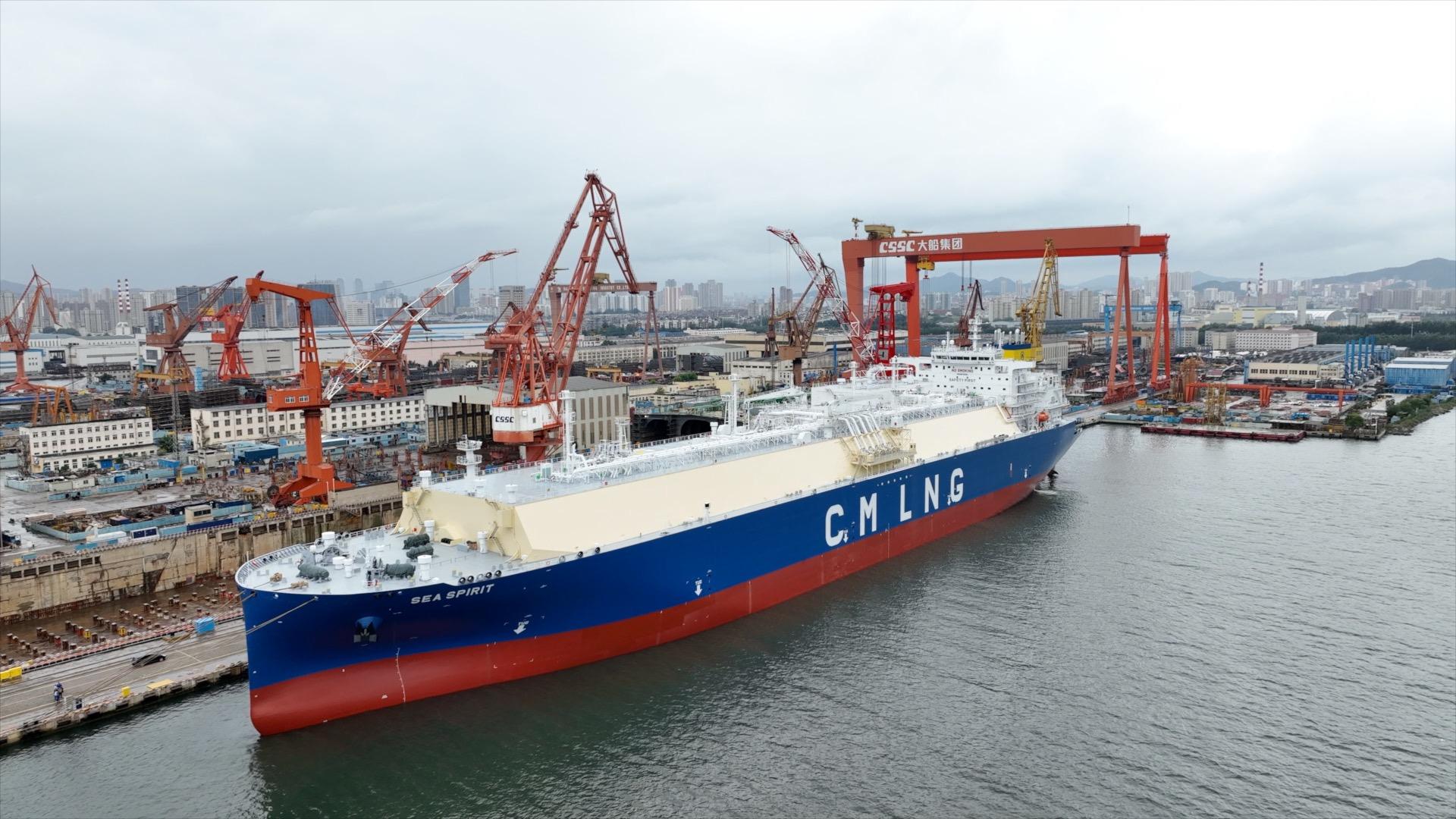
Core Insights - The successful delivery of a 175,000 cubic meter LNG carrier by Dalian Shipbuilding, a subsidiary of China Shipbuilding Group, marks a significant achievement in China's shipbuilding industry, particularly in the high-value LNG transport sector [1][3] Group 1: Technological Advancements - The LNG carrier features a new dual-fuel slow-speed main engine and ICER system, meeting the highest emission standards set by the International Maritime Organization for both fuel and gas modes [3] - The vessel employs an innovative dual stern fin design and an air lubrication system, significantly enhancing hydrodynamic performance and improving the safety redundancy of the propulsion system [3] - The cargo hold utilizes the GTT Mark III membrane containment system, with a daily evaporation rate of only 0.085%, and is equipped with a re-liquefaction unit for efficient handling of LNG vapor [3] Group 2: Operational Efficiency - During the trial phase, Dalian Shipbuilding implemented a "dual testing" approach, successfully conducting high-risk gas handling tests alongside comprehensive sea trials, achieving a one-time successful docking with the shore station [4] - The entire loading and unloading process was completed within 20 hours, with zero hydrocarbon monitoring values recorded throughout the trial period, demonstrating the vessel's operational efficiency [4] - All performance indicators, including speed and maneuverability, exceeded contractual requirements, receiving unanimous recognition from all stakeholders involved [4] Group 3: Market Position and Orders - Dalian Shipbuilding currently holds orders for 17 LNG carriers, with 13 already under construction and 7 launched, establishing a leading capacity advantage in batch order and construction within the industry [4]


中国造船业“超级周期”启幕:全球69%订单背后的技术突围与重组革命
Hua Xia Shi Bao· 2025-05-23 07:06
Core Insights - The Chinese shipbuilding industry is experiencing a remarkable transformation, leading the global market with a 69% share of new ship orders in April 2024, totaling 51 vessels and 2.51 million gross tons [1][2] - The industry is witnessing a significant increase in order volume, with new orders up 58.8% year-on-year and a backlog of orders projected to last until 2029 [2][4] - The merger between China Shipbuilding and China Shipbuilding Industry Corporation is a historic consolidation aimed at enhancing operational efficiency and competitiveness in the shipbuilding sector [4][5] Group 1: Industry Performance - In 2024, China's shipbuilding completion volume is expected to grow by 13.8%, with a 49.7% increase in the backlog of orders [2][3] - China has maintained its position as the world's largest shipbuilding nation for 15 consecutive years, with significant advancements in high-tech vessels such as LNG carriers [2][3] - The market share of new green ship orders in China reached 78.5%, indicating a strong focus on environmentally friendly technologies [2][3] Group 2: Technological Advancements - The delivery of the world's first fifth-generation large LNG carrier by Hudong-Zhonghua marks a significant milestone for China in the LNG shipping sector [2][3] - Chinese shipyards are leading in the construction of green vessels, with six shipyards ranking among the top ten globally for green power ship orders [3][4] - The industry is adapting to new technologies, including artificial intelligence and quantum technology, to maintain its competitive edge [7][9] Group 3: Financial Outlook - China Shipbuilding's revenue is projected to exceed 80 billion yuan by 2025, with a significant increase in the value of its order backlog [4][5] - The merger between China Shipbuilding and China Shipbuilding Industry Corporation is expected to create the largest listed company in the A-share market, enhancing overall operational efficiency [4][5] - The global shipbuilding market is facing challenges, including a decline in new orders, but the backlog remains strong, indicating a healthy demand for shipbuilding services [8][9]

国际船东重返中国,造船大省“链主”争霸谁领航?
2 1 Shi Ji Jing Ji Bao Dao· 2025-05-22 13:01
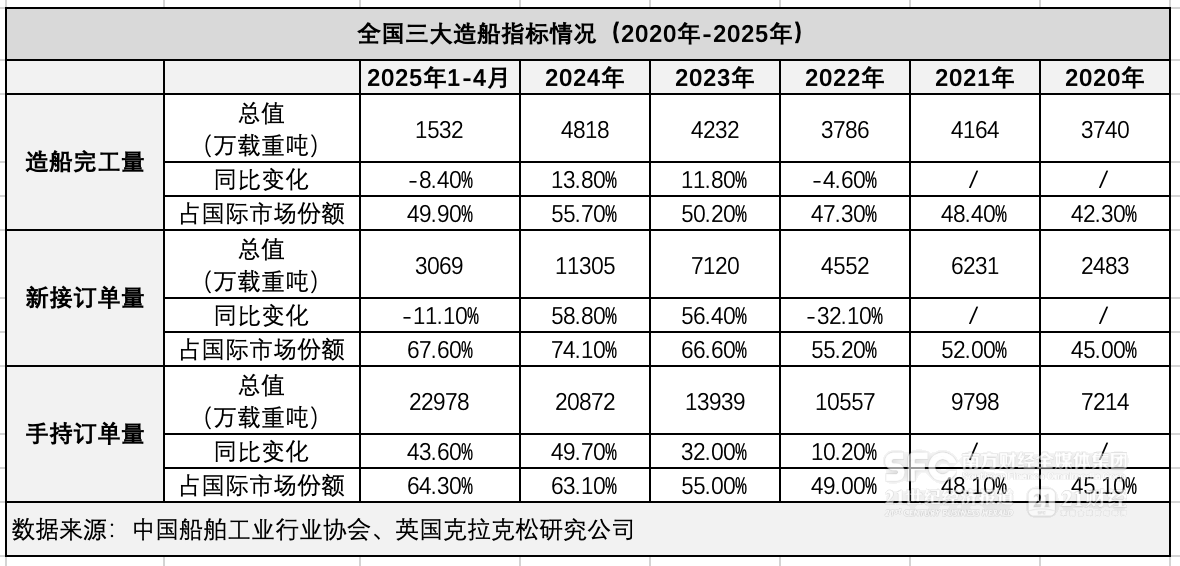
Group 1 - The core viewpoint of the articles highlights the resurgence of international shipowners returning to the Chinese shipbuilding market, with China reclaiming its position as the global leader in new ship orders in April 2023, accounting for approximately 69% of the global market share [1][4]. - In April 2023, Chinese shipyards received 51 new ship orders totaling 251 million compensated gross tons (CGT), marking a significant recovery from previous months when orders had shifted to South Korea due to U.S. restrictions [4][5]. - The hand-held order volume for Chinese shipbuilding reached 22,978 million deadweight tons in the first four months of 2025, reflecting a year-on-year increase of 43.6% and a global market share of 64.3% [3][4]. Group 2 - The Chinese shipbuilding industry is characterized by a significant export ratio, with approximately 80%-90% of its output being exported, and the total export value of ships reached $15.83 billion [5][6]. - Major provinces such as Jiangsu, Shandong, and Guangdong are prioritizing the development of the marine shipbuilding industry in their 2025 government work reports, focusing on green, high-tech, and new energy initiatives [2][9][10]. - The shipbuilding industry is increasingly integrating digitalization and automation, with advancements in smart shipbuilding processes leading to improved efficiency and reduced production costs [6][10]. Group 3 - The shipbuilding industry in China is supported by a robust supply chain and has become a key sector for competition among provinces, with Jiangsu leading in shipbuilding completion volume [7][8]. - The 2024 national marine economy report indicated that the shipbuilding industry achieved a value-added of 137 billion yuan, representing a growth of 14.9% compared to the previous year [7]. - Future growth opportunities in the shipbuilding sector may arise from the development of marine ranching and the recreational yacht economy, driven by rising consumer demand and technological advancements [10][11].