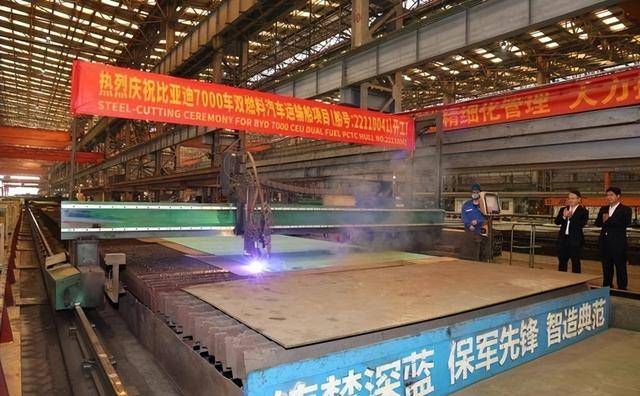
绿色船舶

Search documents
太仓三场恳谈座谈会“谈”出信心激发干劲
Su Zhou Ri Bao· 2026-02-10 00:26
Group 1 - The Taicang government is actively engaging with enterprises through various meetings to address their development needs and provide efficient services [1][2] - Yangtze River Shipbuilding is transforming pressure into motivation by focusing on technological independence and increasing investment in green shipbuilding, with orders extending to 2029 [1] - Schaeffler has been adapting to industry changes by transitioning from traditional manufacturing to electric drive and smart technologies, emphasizing the importance of a strong supply chain and talent acquisition [1][3] Group 2 - A three-year action plan has been introduced to enhance the development of the private economy in Taicang, focusing on environmental optimization, enterprise cultivation, and talent aggregation [2] - Key foreign enterprises like Schaeffler, Skechers, and Nike participated in discussions about production operations and future projects, highlighting the importance of government support for stability and growth [2][3] - Taicang aims to strengthen its support for foreign enterprises by improving communication mechanisms and focusing on key elements such as talent, land, and funding [3]
大盘反弹,中证A500ETF(159338)大涨超1.5%,连续4日净流入超5亿元
Mei Ri Jing Ji Xin Wen· 2026-02-09 06:12
Core Viewpoint - The article emphasizes the strategic direction of state-owned enterprises during the "14th Five-Year Plan" period, focusing on the integration and optimization of resources, innovation, and the development of emerging industries [1] Group 1: Strategic Initiatives - State-owned capital will drive the "three concentrations" strategy to promote restructuring and optimization [1] - There will be a strong emphasis on independent and original innovation, alongside the implementation of the "AI+" special action plan [1] - The focus will be on emerging industries such as renewable energy, aerospace, low-altitude economy, quantum technology, and 6G, with future planning for intelligent embodiment, biomanufacturing, marine energy, and green shipping [1] Group 2: Industry and Market Performance - The CSI A500 index emphasizes industry balance and leading companies, providing a more diversified and growth-oriented investment opportunity compared to the CSI 300 index [1] - As of the end of 2025, the CSI A500 index has increased by 464.28% since its base date, outperforming the CSI 300 index, which has risen by 361.15%, resulting in an excess return of 103.13% [1] - The number of clients for the Guotai CSI A500 ETF is the highest in its category, being more than three times that of the second-ranked competitor [1]
10万亿元投资背后的国资央企产业跃迁
Xin Hua Wang· 2026-01-28 10:37
Group 1 - The core investment of over 10 trillion yuan by central enterprises since the "14th Five-Year Plan" reflects their commitment to transitioning the industrial system towards high value-added and high-tech sectors, with the proportion of strategic emerging industries in total investment rising from 22% to over 40% [1] - By 2025, central enterprises are expected to invest 2.5 trillion yuan in strategic emerging industries, accounting for 41.8% of total investment, with a revenue scale exceeding 12 trillion yuan, achieving a consistent annual growth of 1 trillion yuan [2] - The focus on developing emerging industries is seen as a key strategic initiative, with plans for a new work document to guide central enterprises in cultivating new pillar industries and optimizing the overall layout of state-owned economy [2] Group 2 - Central enterprises are leading the upgrade of traditional industries, with initiatives including the establishment of 70 excellent smart factories and the promotion of AI applications across key sectors such as energy and manufacturing [3] - Enhancing the resilience of industrial and supply chains is a primary focus, with actions taken to ensure the safety of critical industries related to national security and public welfare [4] - The State-owned Assets Supervision and Administration Commission (SASAC) aims to create competitive industrial clusters in emerging fields such as renewable energy, aerospace, and quantum technology, emphasizing a strategy of concentration in investment and structural optimization [6]
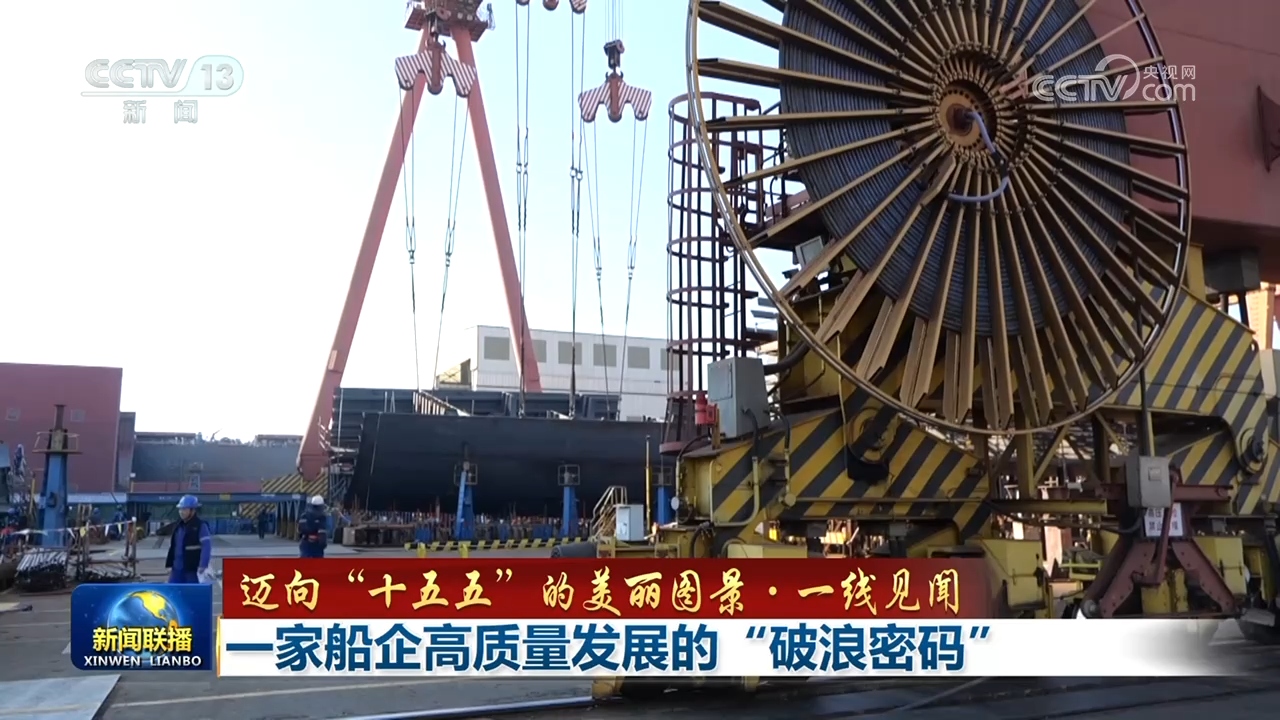
【迈向“十五五”的美丽图景·一线见闻】一家船企高质量发展的“破浪密码”
Yang Shi Wang· 2026-01-22 12:14
Core Insights - China's shipbuilding industry is transitioning from "scale leadership" to "quality and efficiency leadership" as evidenced by the innovative developments in ship design and construction [5] Group 1: Industry Overview - China is the world's largest shipbuilding nation, with a focus on enhancing quality and efficiency for high-quality development in the new year [1] - The shipyard has a record number of orders, exceeding 70 vessels, marking a historical high for the company [3] Group 2: Innovation and Technology - The price of a conventional bulk carrier has risen to over $90 million due to innovations, including the development of the world's first large ship powered by ammonia fuel [3] - The design and manufacturing team spent over three years developing a new ammonia fuel engine, gas supply pipeline, and storage tank, showcasing a commitment to zero carbon emissions [3] - The shipyard is also constructing four ammonia fuel reserve vessels among the 23 ships currently being built, indicating a shift towards greener technologies [3][6] Group 3: Future Developments - Upcoming vessels include a self-developed large luxury passenger roll-on/roll-off ship and the world's largest methanol dual-fuel container ship, set to launch in June [5] - More than half of the 27 ships currently in design are related to ammonia fuel, highlighting the industry's focus on future-proofing vessels for new fuel technologies [6]

中金2026年展望 | 船舶:景气修复,中国船企竞争力持续提升
中金点睛· 2026-01-15 23:45
Core Viewpoint - The shipbuilding industry experienced a decline in new orders in 2025, with a stable price environment. However, the industry is expected to recover in 2026 due to ongoing demand for fleet renewal driven by aging vessels and environmental regulations, alongside China's competitive advantage in high-value ship types [1][4]. Group 1: 2025 Review - In 2025, global new ship orders amounted to 56.43 million CGT, a year-on-year decrease of 27%, attributed to high base effects, US-China trade tensions, and elevated ship prices [5][8]. - The new ship price index remained high, ending the year at 184.66, a decrease of 2.38% from the previous year [8]. - By ship type, new orders for oil tankers, bulk carriers, and container ships saw significant variations, with oil tankers down 46%, bulk carriers down 38%, and container ships up 11% [9]. Group 2: 2026 Outlook - The shipbuilding industry is projected to see a recovery in demand, with an estimated average of 14 million DWT in new orders annually over the next decade, primarily driven by bulk carriers and oil tankers [53][64]. - The global shipyard delivery volume in 2025 was 96.83 million DWT, with expectations of reaching 117 million DWT in 2026, reflecting a 21% increase [65]. - The order coverage ratio for shipyards is high, indicating a robust backlog that is likely to support continued order accumulation [65]. Group 3: Demand and Supply Dynamics - Demand for oil tankers is expected to grow due to stable trade demand, while the supply side is projected to see a moderate increase in capacity, with oil tanker capacity growth estimated at 2.01% in 2026 [18][20]. - The dry bulk market is experiencing a shift in trade demand towards bauxite, with overall trade volume expected to increase by 2% in 2026 [21][22]. - Container shipping demand is forecasted to slow, with a projected decline in ton-mile demand due to geopolitical uncertainties [26]. Group 4: Replacement Demand - The average age of the global fleet has increased, reaching 22.6 years, indicating a potential peak in replacement demand as older vessels are phased out [29][40]. - Approximately 50% of new orders in 2025 were for alternative fuel vessels, with LNG and methanol-powered ships leading the way [39][41]. - The International Maritime Organization's (IMO) emissions reduction strategy, although delayed, continues to drive the need for fleet renewal and compliance with stricter environmental standards [39][40]. Group 5: Competitive Landscape - China's shipbuilding industry remains dominant, holding 62% of the global order backlog despite a 35% decline in new orders in 2025 [47][50]. - The concentration of shipbuilding capacity has increased, with the top ten shipyards holding a significant share of the market, reflecting a trend towards consolidation [43][44]. - The competitive dynamics are shifting, with Chinese shipyards expected to benefit from high-value orders and improved capacity utilization [49][50].

开年即忙碌,领跑!船企作业效率拉满 解码订单量、“身价”双升“密码”
Yang Shi Wang· 2026-01-15 02:54
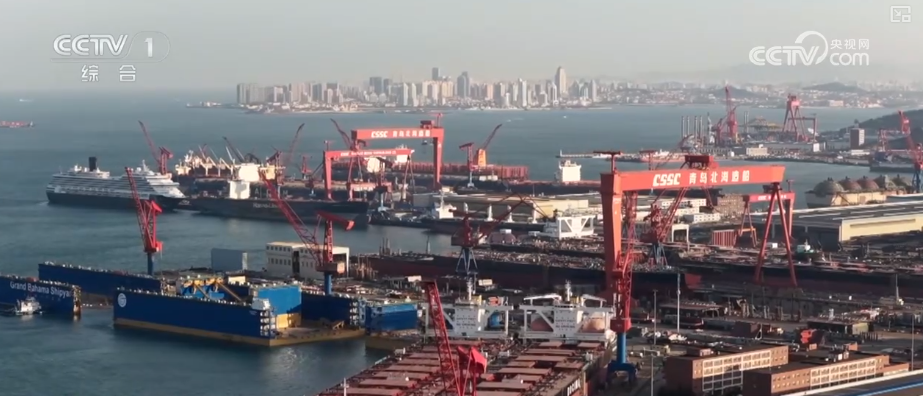
Core Viewpoint - The company is experiencing a significant increase in operational efficiency and order volume, marking a transition in the shipbuilding industry from quantity to quality and innovation. Group 1: Operational Efficiency - The shipbuilding department has increased the operational efficiency of the 350-ton gantry crane from 6 lifts per day to 12, indicating a push for higher productivity [4] - There are currently 23 new ships under construction simultaneously at the shipyard, reflecting a busy production schedule [6] Group 2: Order Volume and Value - The shipyard has surpassed 70 orders for the year, setting a historical record for order volume [6] - The price of a 210,000-ton bulk carrier has increased by over 20%, now valued at over $90 million, attributed to innovation [6][7] Group 3: Innovation in Shipbuilding - The shipyard is set to deliver the world's first large vessel powered by ammonia fuel, showcasing a significant technological advancement [10] - The design and manufacturing team spent over three years developing a new ammonia fuel engine and related systems [10] Group 4: Future-Proofing and Green Technology - The shipyard is also constructing ammonia fuel reserve ships, which are designed to facilitate future conversion to ammonia fuel, with 4 out of the 23 ships being of this type [13][15] - More than half of the 27 ships currently in design are related to ammonia fuel technology, indicating a strong focus on sustainable solutions [19] Group 5: Industry Leadership - The shipbuilding industry's shift towards quality and efficiency is exemplified by various projects across China, including luxury ferries and dual-fuel LNG carriers [24] - The Chinese shipbuilding industry is positioned as a leading manufacturer of green ships, emphasizing quality alongside scale [27]
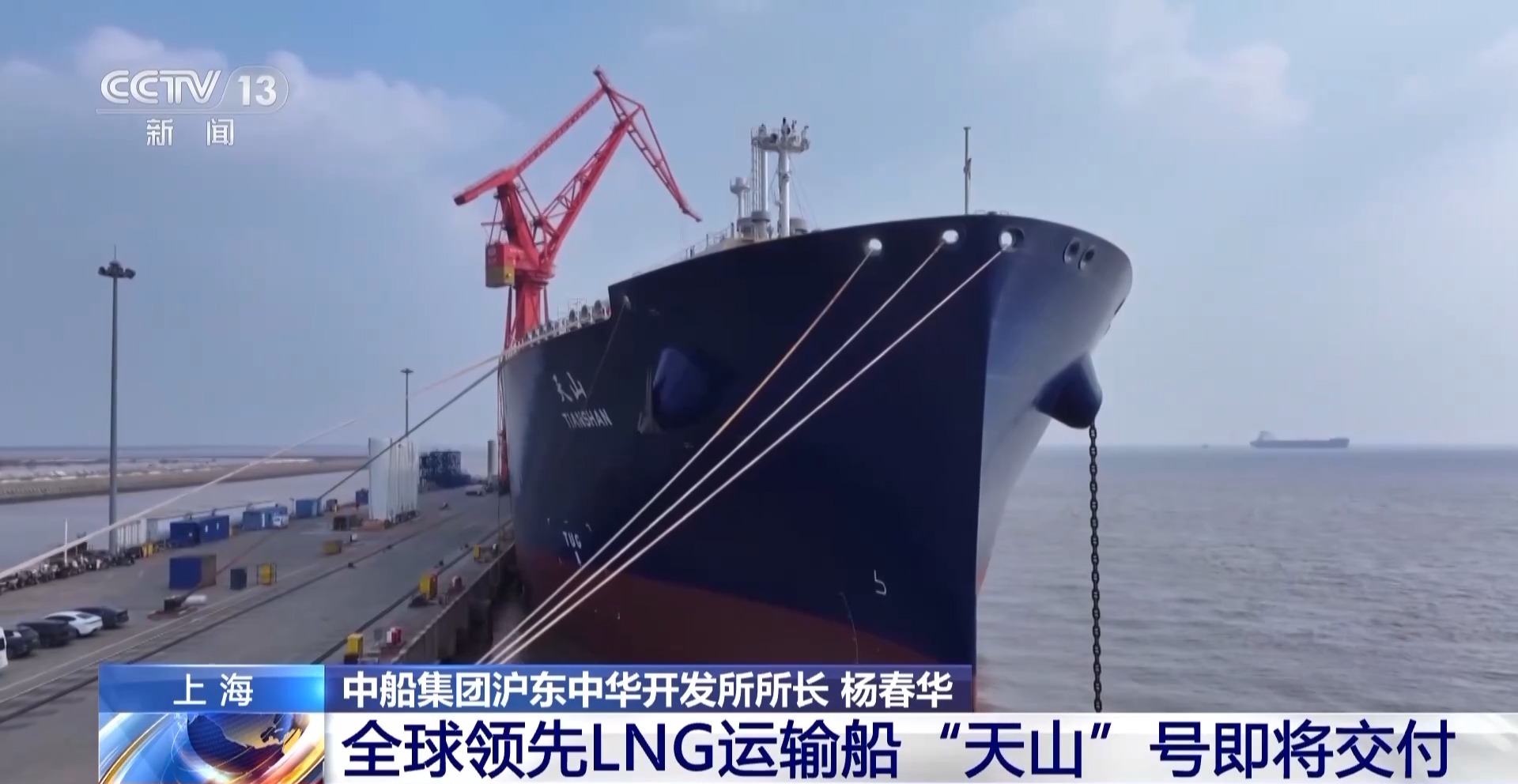
全球领先LNG运输船“天山”号即将交付
Yang Shi Xin Wen Ke Hu Duan· 2026-01-12 09:19
Core Viewpoint - The rapid development of LNG (liquefied natural gas) transportation vessels in China is highlighted, with a focus on the delivery of the "Tianshan" vessel, which features advanced dual-fuel propulsion technology and significant cargo capacity [1][2]. Group 1: Vessel Specifications and Capabilities - The "Tianshan" vessel has a capacity of 174,000 cubic meters, measuring 295 meters in length and 45 meters in width, with a deck area equivalent to three standard football fields [1]. - This vessel can transport enough LNG to meet the monthly gas needs of 3.3 million households, showcasing its importance for China's energy import strategy [1]. - The vessel is equipped with a state-of-the-art liquid cargo containment system that minimizes evaporation losses during long-distance voyages [1]. Group 2: Industry Achievements and Orders - In the previous year, the company delivered 11 LNG vessels, setting a new industry record and gaining international recognition [2]. - The current order book includes over 80 vessels, with delivery schedules extending to 2030, of which 80% are green ship orders [3]. Group 3: Future Trends and Technologies - The company is focusing on the development of new ship types that incorporate green technologies related to methanol and LNG, aiming to meet international carbon emission standards [4]. - Mastery of green technology is seen as a key factor for market leadership in the future shipping industry [4].
“十五五”开好局 起好步丨全球领先LNG运输船“天山”号即将交付
Yang Shi Xin Wen· 2026-01-12 05:25
Core Viewpoint - The rapid development of LNG (liquefied natural gas) transportation vessels in China is highlighted, with a focus on the delivery of the "Tianshan" vessel, which features advanced dual-fuel propulsion technology and significant cargo capacity [1][3]. Group 1: Vessel Specifications and Capabilities - The "Tianshan" vessel has a capacity of 174,000 cubic meters, measuring 295 meters in length and 45 meters in width, with a deck area equivalent to three standard football fields [1]. - This vessel can transport enough LNG to meet the monthly gas needs of 3.3 million households, showcasing its importance in China's energy import strategy [1]. Group 2: Technological Advancements - The vessel is equipped with a leading liquid cargo containment system that allows for safe navigation at temperatures as low as -163°C, minimizing evaporation losses during long-distance voyages [3]. - The dual-fuel propulsion system reduces carbon emissions by over 10 tons per day compared to traditional fuel systems [3]. Group 3: Industry Performance and Orders - In the previous year, the company delivered 11 LNG vessels, setting a new industry record and gaining international recognition [5]. - The current order book includes over 80 vessels, with delivery schedules extending to 2030, of which 80% are green ship orders [8]. Group 4: Future Trends in Green Shipping - The company is focusing on the development of new ship types that incorporate clean energy technologies such as methanol and LNG, aiming to meet the latest international carbon emission standards [11]. - Mastery of green technologies is seen as crucial for market leadership in the future shipping industry [11].
新年开门红|型号不同精彩相同 液货船再签新单
Xin Lang Cai Jing· 2026-01-07 11:00
Group 1 - The China Shipbuilding Group is starting the new year with strong momentum, showcasing robust performance and a commitment to high-quality development [1] - Jiangnan Shipyard signed a contract with Eastern Pacific Shipping for the construction of two 90,000 cubic meter Very Large Ammonia Carriers (VLAC), featuring a new generation low-resistance design that maximizes cargo capacity while minimizing navigation resistance [3] - The VLACs will utilize a dual-fuel LPG propulsion system, which can reduce CO2 emissions by approximately 20% and SOx emissions by about 99%, meeting EEDI Phase III emission standards [3] Group 2 - Beihai Shipyard, in collaboration with China Shipbuilding Trading and Greek shipowner Cape Shipping, signed a contract for the construction of one plus one Very Large Crude Carriers (VLCCs) [5] - The "Morning Star" series VLCCs are designed with energy-saving devices and ammonia reserve designs, allowing for future installation of two 6,000 cubic meter ammonia fuel tanks for zero-carbon operations [5] - The new VLCCs meet the latest CSR, OCIMF, and oil company standards, as well as the International Maritime Organization's TIER III emission standards and EEDI Phase III requirements [5][7]
中国头号造船大省:领先上海,8家船厂手持订单量跻身全球TOP30
Sou Hu Cai Jing· 2025-12-29 13:12
Core Insights - China's shipbuilding industry is expected to maintain its global leadership position by 2025, with key metrics such as completed ship volume, new orders, and backlog orders ranking first in the world for 16 consecutive years [2][6][14] - In the first three quarters of this year, China's completed ship volume accounted for 53.8% of the global total, new orders for 67.3%, and backlog orders for 65.2% [2] - The total order value for new ships is projected to exceed $150 billion for the year, with a significant shift towards green ship orders, totaling 820 vessels worth 780 billion yuan, marking a historical high [2][12] Group 1: Regional Contributions - Five major provinces contribute significantly to national shipbuilding output, with Jiangsu leading, accounting for over 40% of the three key metrics [6][9] - Guangdong ranks fifth, with Guangzhou hosting 58 research institutions and a global leading market share in automotive roll-on/roll-off ships [4] - Zhejiang, Liaoning, and Shanghai also play crucial roles, with notable increases in output and order volumes [4][6] Group 2: Jiangsu's Dominance - Jiangsu's shipbuilding sector is robust, with a leading export scale and significant contributions from cities like Nantong and Taizhou [7][9] - The province's new orders reached 900 million deadweight tons, a 60% increase, with a strong focus on bulk carriers and roll-on/roll-off ships [7] - Jiangsu's shipyards are characterized by high order fulfillment rates, with an average delivery time of 2.8 days per vessel [11] Group 3: Future Outlook - The shipbuilding industry in China is projected to continue its strong momentum into 2025, with expected deliveries of 4.818 million deadweight tons, a 13% increase [14] - New orders are anticipated to rise by 58%, with a backlog of 20.872 million deadweight tons, reflecting a global market share of 55.7% and 63.1% respectively [14][16] - The industry is shifting towards green shipbuilding, with a focus on LNG dual-fuel vessels, indicating a strategic transition in response to global trends [12][18]