
2纳米工艺

Search documents
马斯克的巨型晶圆厂,靠谱吗?
半导体行业观察· 2026-03-19 01:32
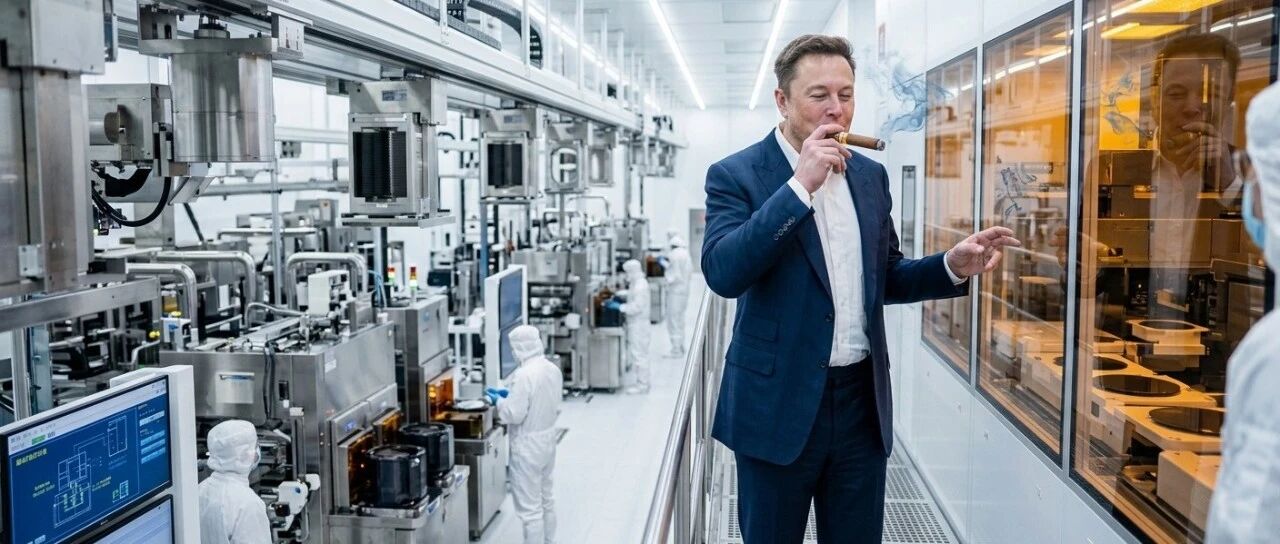
Core Viewpoint - The article discusses Elon Musk's ambitious Terafab project, which aims to build a massive semiconductor manufacturing facility capable of producing hundreds of billions of chips annually. The feasibility and challenges of this project are examined from the perspective of semiconductor engineering [2][5][6]. Group 1: Project Overview - Terafab is designed to be larger than traditional gigafactories, integrating logic circuits, memory, and packaging under one roof, with a production target of 100 billion to 200 billion chips per year [2][6]. - Musk's vision includes a 2nm process node, with an estimated cost of $25 billion, although Tesla has not disclosed detailed cost data [6][19]. - The project aims to address Tesla's chip supply needs, which Musk has indicated will become critical in the next three to four years [5][6]. Group 2: Challenges in Semiconductor Manufacturing - Building a semiconductor fab is a complex task requiring significant resources, including 30-40 million man-hours, 83,000 tons of steel, and 60,000 cubic meters of concrete [15]. - The construction timeline in the U.S. is approximately twice as long as in Taiwan due to regulatory and labor challenges [15][16]. - The transition to a 2nm process involves significant technological changes, including the shift from FinFET to Gate-All-Around (GAA) transistor architecture, which requires new materials and processes [19][22]. Group 3: Yield and Equipment Issues - Achieving high yield rates in semiconductor manufacturing is critical, with any defect in the process potentially leading to significant yield loss [22]. - The global supply of advanced lithography equipment is limited, with ASML being the sole supplier of extreme ultraviolet (EUV) lithography machines, which have long lead times for delivery [24]. - The lack of a robust design ecosystem and process design kits (PDK) poses additional challenges for Tesla, as developing a new PDK can take one to two years [26]. Group 4: Strategic Partnerships and Future Directions - Tesla's collaboration with Samsung in Taylor, Texas, is seen as a foundational step for Terafab, allowing Tesla to gain insights into manufacturing processes and efficiency improvements [40]. - The establishment of a packaging line for AI chips at SpaceX's facility is viewed as a critical move to alleviate bottlenecks in the AI chip market [42]. - Potential partnerships with Intel for wafer fabrication and packaging services could provide Tesla with the necessary infrastructure to support its semiconductor ambitions [44]. Group 5: Elon Musk's Problem-Solving Framework - Musk's five-step problem-solving framework, which includes questioning existing norms, eliminating unnecessary steps, simplifying processes, accelerating timelines, and gradually automating, may be applied to the construction and operation of Terafab [31][34]. - While skepticism exists regarding the applicability of this framework to semiconductor manufacturing, it may help identify inefficiencies in the fab construction process [35].


搭载灵动岛,传苹果触控OLED MacBook Pro年底推出
WitsView睿智显示· 2026-02-26 03:58
Core Viewpoint - Apple is developing a new MacBook Pro featuring an OLED touchscreen that incorporates the Dynamic Island design and a hole-punch camera, aimed at enhancing user interaction and screen space utilization [1]. Group 1: Product Features - The new MacBook Pro will replace the notch with the Dynamic Island, allowing for more usable screen space and supporting interactive features based on the app or system function in use [1]. - macOS is being optimized for touch operations, enabling users to click or tap on screen elements, with interface controls adapting based on the input method [4]. - The new MacBook Pro will be the first to support touchscreen gestures, despite Apple's previous stance against touch technology for Macs [4]. Group 2: Design and Specifications - The new MacBook Pro is expected to have a thinner design while maintaining a similar overall appearance to the current model, with no plans to eliminate the keyboard or trackpad [4]. - Apple plans to release OLED versions of both the 14-inch and 16-inch MacBook Pro models [4]. Group 3: Chipset and Release Timeline - Apple is set to upgrade the MacBook Pro with M5 Pro and M5 Max chips this spring, while the OLED version will feature the new 2nm M6 Pro and M6 Max chips [5]. - The OLED version of the MacBook Pro is anticipated to launch by the end of 2026 [5].


AMD财报解读:因错误的原因受到惩罚
美股研究社· 2026-02-04 11:21
Core Viewpoint - The market's reaction to AMD's Q4 earnings report is seen as excessive, as a deeper analysis reveals significant changes in AMD's revenue structure, indicating a future increase in high-margin business segments. Analysts maintain a bullish outlook for AMD, particularly for the second half of 2026 [3][9]. Business Segment Performance - **Data Center Business**: Revenue surged to $5.4 billion, a 39% year-over-year increase, nearly accounting for half of total revenue, driven by increased shipments of MI350 series chips and record sales of the Turin series CPUs [5]. - **Client Business**: Revenue rose to $3.1 billion, a 34% year-over-year increase, confirming analysts' expectations of a recovery in the PC market, with AMD's high-value product lineup enhancing profitability [6]. - **Gaming Business**: Revenue was $850 million, representing 8.18% of total revenue, with a 50% year-over-year increase, although it saw a 35% quarter-over-quarter decline due to market maturity [6]. - **Embedded Business**: Revenue grew slightly by 3% year-over-year, contributing minimally to overall performance [7]. Margin and Profitability Outlook - Analysts note that despite market reactions to net profit adjustments related to sales to China and inventory write-downs, AMD's gross margin is expected to improve by approximately 100 basis points year-over-year due to business structure optimization [7][9]. - AMD is projected to achieve a gross margin target range of 55%-58% as the 2nm process technology matures, which will enhance operational leverage through 2024-2025 [10]. Future Growth Catalysts - AMD is becoming a key competitor to NVIDIA in the system-on-chip market, with upcoming products like the Instinct MI450 series and Venice Turin server CPUs utilizing advanced 2nm technology, expected to deliver significant performance improvements and power savings [10][11]. - A strategic partnership with OpenAI is anticipated to drive growth, with initial revenues expected in Q4 2026, marking a long-term opportunity for AMD [15]. Market Expectations and Valuation - Analysts forecast a compound annual growth rate (CAGR) of over 37% for EPS and 30% for revenue over the next five years, with AMD's current valuation metrics indicating a price target of $477.17 per share, representing over 114% upside potential from post-earnings levels [16][17].



芯片,重磅突发!全球首款!手机芯片进入2nm时代
Zheng Quan Shi Bao Wang· 2025-12-22 04:31
Core Viewpoint - Samsung Electronics has officially launched the Exynos 2600, the world's first mobile application processor built using 2nm technology, which is set to enhance AI and gaming experiences in smartphones [1][2]. Group 1: Product Specifications - The Exynos 2600 features a tri-cluster CPU design with one Cortex-C1 Ultra core at 3.8GHz, three Cortex-C1 Pro performance cores at 3.25GHz, and six Cortex-C1 Pro efficiency cores at 2.75GHz, achieving a maximum performance increase of 39% [2]. - The chip integrates a 32K MAC NPU, which boosts AI computing power by 113% compared to the previous Exynos 2500, enabling more complex AI tasks [3][4]. - The Exynos Xclipse 960 GPU's computing performance is doubled compared to its predecessor, with ray tracing performance improved by up to 50% [3]. Group 2: Production and Market Impact - Samsung has begun mass production of the Exynos 2600, indicating a sufficient yield to supply tens of millions of smartphones [5]. - The introduction of the Exynos 2600 is expected to alleviate previous overheating issues associated with earlier models, as it incorporates heat path blocking technology that reduces thermal resistance by up to 16% [6]. - The Galaxy S26, set to launch in February, will feature the Exynos 2600, which is anticipated to lower costs for Samsung's mobile division and improve the performance of its foundry business [6][7]. Group 3: Future Prospects - Analysts predict that if the Exynos 2600 performs well in the market, Samsung's foundry business could recover quickly, potentially returning to profitability by 2027 [7].
芯片,重磅突发!全球首款!
Xin Lang Cai Jing· 2025-12-21 07:24
Core Insights - Samsung Electronics has officially launched the Exynos 2600, the world's first mobile application processor built using 2nm technology, and has begun mass production of this chip, which will be featured in the upcoming Galaxy S26 smartphone set to release in February next year [1][5][9]. Group 1: Chip Specifications and Performance - The Exynos 2600 features a new tri-cluster CPU design, including one Cortex-C1 Ultra core with a frequency of up to 3.8GHz, three Cortex-C1 Pro performance cores at 3.25GHz, and six Cortex-C1 Pro efficiency cores at 2.75GHz, resulting in a maximum overall CPU performance increase of 39% [2][9]. - The chip integrates a 32K MAC NPU, which enhances AI computing power by 113% compared to the previous Exynos 2500, enabling more complex AI tasks and improved efficiency [3][4][10]. - The Exynos Xclipse 960 GPU's computing performance is doubled compared to its predecessor, with ray tracing performance improved by up to 50%, and it introduces AI-based features for enhanced gaming experiences [3][10]. Group 2: Market Implications and Future Prospects - Samsung aims to resolve past overheating issues associated with its processors by implementing heat path blocking technology in the Exynos 2600, which reduces thermal resistance by up to 16% [6][12]. - The successful market performance of the Exynos 2600 is expected to accelerate the recovery of Samsung's foundry business, potentially leading to profitability by 2027 [7][8][13]. - The company anticipates that using the Exynos 2600 in the Galaxy S26 will significantly lower chip procurement costs, which have reached 11 trillion KRW in the first three quarters of this year due to high expenses on mobile application processors [6][13].
全球首颗2nm芯片,正式发布
半导体芯闻· 2025-12-19 10:25
Core Viewpoint - Samsung Electronics has unveiled its latest application processor, Exynos 2600, which is the industry's first smartphone chip manufactured using 2nm process technology, expected to power the upcoming Galaxy S26 series smartphones [2][10]. Group 1: Processor Specifications - The Exynos 2600 features a 10-core CPU with a performance increase of 39% compared to its predecessor, Exynos 2500, and offers over 100% improvement in generative AI workloads [2][9]. - The CPU configuration includes 1× 3.8GHz Cortex-C1 Ultra, 3× 3.25GHz Cortex-C1 Pro, and 6× 2.75GHz Cortex-C1 Pro [3][5]. - It integrates the Samsung Xclipse 960 GPU and a 32K MAC NPU for AI processing, supporting LPDDR5X memory and UFS 4.1 storage [6][8]. Group 2: Performance Enhancements - The Exynos 2600 shows significant improvements in various areas: CPU performance up by 39%, GPU performance up by 100%, and NPU performance up by 113% [9]. - The chip's thermal performance is enhanced, potentially reducing thermal resistance by up to 16% [9]. - It supports advanced features such as ray tracing with a performance increase of 50% and game smoothness improvement of up to 300% through Exynos Neural Super Sampling [9]. Group 3: Market Strategy and Deployment - Samsung plans to equip about half of the Galaxy S26 series models with the Exynos 2600 processor, marking a significant return to its self-developed mobile processor strategy after years of setbacks [10][13]. - The Exynos 2600 is expected to be used in high-end models sold in Korea and Europe, while models in the US, Japan, and China will continue to use Qualcomm Snapdragon processors [10][15]. - This deployment represents the largest integration of Exynos processors in the Galaxy series since 2021 [13].

2纳米芯片,量产
半导体芯闻· 2025-11-24 10:28
Group 1 - The commercialization of Samsung Electronics' latest mobile application processor Exynos 2600 is revitalizing the domestic semiconductor ecosystem in South Korea, with expected improvements in operational rates for the backend processing industry and opportunities for design companies to attract new clients [1][2] - Exynos 2600, manufactured using a 2nm process, will be utilized in Samsung's flagship Galaxy S26 series smartphones, with an expected shipment contribution of 25% to 30% from this chip [1][2] - The previous generation Exynos 2500 faced supply issues due to low yield rates associated with its 3nm process, which Samsung aims to overcome with the more stable yield of Exynos 2600 [1] Group 2 - The wafer testing for Exynos 2600 will primarily be handled by three companies: Doosan Tesna, Nepes, and LB Semicon, with final testing conducted by Hana Micron, leading to improved overall operational efficiency in Q4 [2] - Samsung's design solution partners are closely monitoring Exynos 2600, as its success could significantly influence potential clients' adoption of Samsung's foundry processes [2][3] - The semiconductor industry is observing Samsung's 2nm process closely, especially given the high costs associated with TSMC's 2nm process, which has led to hesitance among some companies due to prior performance issues with Samsung's 3nm technology [3]

日本半导体制造商Rapidus维持2027年量产目标不变
news flash· 2025-07-18 07:42
Core Viewpoint - Japanese semiconductor manufacturer Rapidus maintains its goal of mass production in 2027, having initiated prototype testing for 2nm GAA transistor structures at its innovative integrated manufacturing plant [1] Group 1 - Rapidus has started prototype testing for 2nm GAA transistor structures at its IIM-1 facility [1] - The company is developing a process development kit compatible with the 2nm process, set to be released to early customers in Q1 2026 [1] - Rapidus aims to create an environment for customers to independently develop prototypes [1]