5G基础设施

Search documents
世界经济论坛《2026年全球合作晴雨表》:和平与安全合作下滑显著
Sou Hu Cai Jing· 2026-01-09 04:22
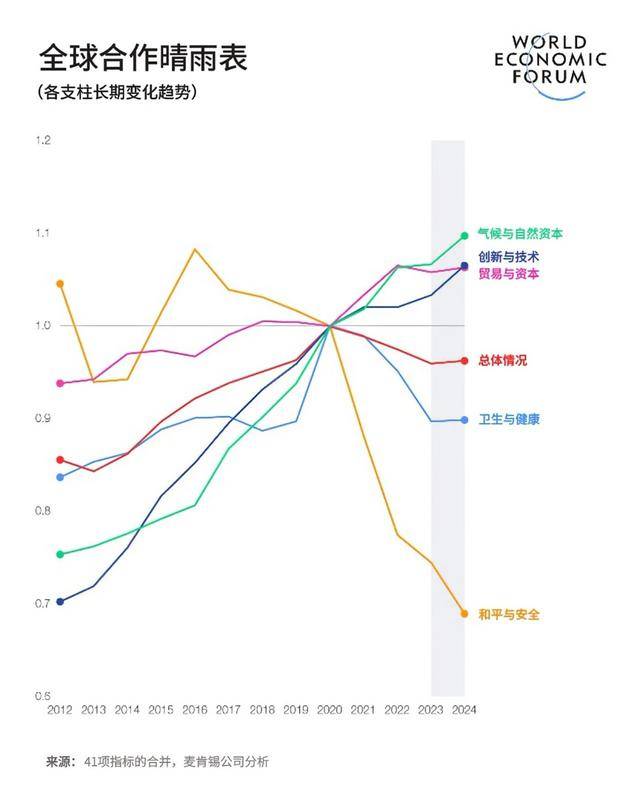
Core Insights - The World Economic Forum's "2026 Global Cooperation Index" indicates a shift towards trade and technology cooperation among like-minded countries, while peace and security cooperation has significantly declined [1] Trade and Capital - Overall cooperation in trade and capital remains above the 2019 baseline, but structural changes are profound; global goods trade continues to grow, yet at a slower pace than global economic development [3] - Trade flows are increasingly concentrating among like-minded partners, with many countries forming smaller alliances due to rising barriers in the multilateral trade system [3] Innovation and Technology - Cooperation in innovation and technology is strengthening despite tightening technology controls, leading to new development momentum [3] - There has been a significant increase in information technology services and talent mobility, with international bandwidth capacity expanding fourfold compared to pre-pandemic levels [3] - Restrictions on the flow of key resources, technologies, and knowledge are increasing, while new cooperation models are emerging, particularly in cutting-edge technologies like AI and 5G infrastructure among aligned nations [3] Climate and Natural Capital - Progress in climate and natural capital cooperation has been made, but it still falls short of global expectations [3] - The deployment of clean technologies reached a historical high in 2025, driven by expanded financing and global supply chain collaboration [3] - China contributed two-thirds of the new capacity in solar, wind, and electric vehicles, with other developing economies accelerating their efforts [3] Health and Wellness - Cooperation in health and wellness remains stable, showing resilience, but the global health assistance system faces significant pressure [4] - The overall level of health cooperation has not declined, partly due to ongoing improvements in health indicators post-pandemic [4] - However, the pressure on multilateral institutions has led to a blockage in health support funding, significantly reducing development aid, which poses severe challenges for low- and middle-income countries [4] Peace and Security - Cooperation in peace and security is continuously shrinking, with all monitored indicators below pre-pandemic levels [4] - Escalating conflict situations and rising military expenditures are evident, while global multilateral mediation mechanisms struggle to alleviate crises [4] - By the end of 2024, the number of forcibly displaced persons is projected to reach 123 million, a historical high, prompting new cooperation dynamics through regional peacekeeping mechanisms [4]

安路科技(688107):3Q25收入实现环比增长,新兴领域持续布局有望带来增量
Guotou Securities· 2025-12-03 09:35
Investment Rating - The investment rating for the company is "Buy-A" with a target price of 35.76 CNY per share, while the current share price is 26.89 CNY as of December 3, 2025 [5]. Core Insights - The company has experienced a quarter-on-quarter revenue growth of 11.42% in Q3 2025, reaching 145 million CNY, despite a year-on-year decline of 25.79% in revenue for the first three quarters of 2025 [2]. - The FPGA market is expected to grow from 11.73 billion USD in 2025 to 19.34 billion USD by 2030, with a compound annual growth rate (CAGR) of 10.5% from 2025 to 2030, driven by increasing demand in data centers, telecommunications, and automotive applications [1]. - The company has established a complete technology chain in automotive electronics, with FPGA products already in mass production for key industry clients, and has received AEC-Q100 Grade 2 certification for some products [3]. - The company is also seeing commercial success in emerging fields such as intelligent computing servers, with its FPGA chips widely used in data centers [3]. Revenue and Profitability - For the first three quarters of 2025, the company reported a total revenue of 368 million CNY, with a net profit attributable to shareholders of -191 million CNY, reflecting a year-on-year decrease of 21.08% [2]. - The company's R&D expenses accounted for 69.45% of total expenses, indicating a strong commitment to innovation despite the revenue decline [2]. Financial Projections - Revenue projections for the company are estimated at 623 million CNY in 2025, 830 million CNY in 2026, and 1.024 billion CNY in 2027, with net profits expected to improve from -198 million CNY in 2025 to -8 million CNY in 2027 [11]. - The company is expected to maintain a price-to-sales (PS) ratio of 23 times in 2025, reflecting the ongoing development of its FPGA product portfolio and the growth in automotive electronics and intelligent computing servers [11].

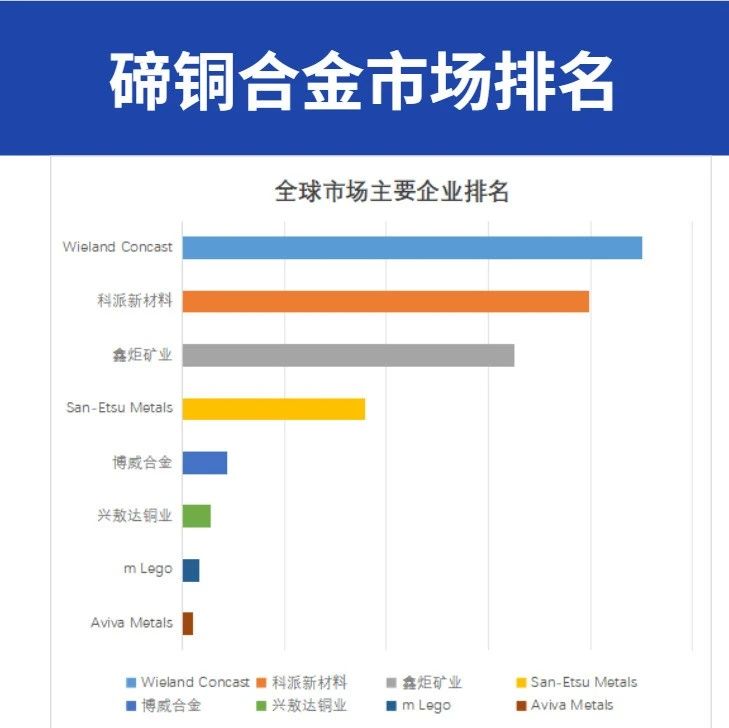
全球碲铜合金市场生产商排名及市场占有率
QYResearch· 2025-07-09 09:42
Core Viewpoint - The global tellurium copper alloy market is projected to reach USD 1.92 billion by 2031, with a compound annual growth rate (CAGR) of 10.8% in the coming years [2]. Group 1: Product Overview - Tellurium copper, classified under ASTM standard C14500, is a high-conductivity, easy-to-machine copper alloy developed in the 1960s, filling a gap in precision machining materials [1]. - The alloy exhibits excellent cutting performance, thermal and electrical conductivity, corrosion resistance, and can be processed into various forms including sheets, rods, wires, and pipes [1]. Group 2: Market Size and Segmentation - The primary product type in the tellurium copper market is rods, accounting for approximately 73.2% of the market share, due to their machinability and structural integrity [8]. - In terms of application, the electrical and electronics sector is the largest demand source, representing about 41.0% of the market, driven by the need for high-conductivity precision components [11]. Group 3: Market Drivers - The growing demand for precision machining is a key driver, as tellurium enhances machinability, making it attractive for producing complex electrical contact parts [15]. - The expansion of the electrical and electronics industry, alongside the automotive and renewable energy sectors, is increasing the demand for high-performance copper alloys [15]. Group 4: Challenges and Competition - Tellurium supply is limited and subject to price fluctuations, creating cost uncertainties for manufacturers and end-users [17]. - Competition from alternative materials, such as brass and oxygen-free copper, may restrict market share in cost-sensitive segments [17]. - Processing and manufacturing limitations exist, as precise control is required during heat treatment and welding, raising technical barriers for smaller manufacturers [17]. Group 5: Industry Opportunities - The rapid expansion of 5G infrastructure and high-frequency electronic devices is driving strong demand for high-conductivity, easy-to-machine copper alloys [18]. - The global adoption of electric vehicles is expected to sustain growth in demand for reliable terminals, connectors, and busbars made from tellurium copper [18].