AI入口竞争

Search documents
百度打响“O计划” :从搜索到“智能体调度”
Hua Er Jie Jian Wen· 2026-02-10 08:31
Core Insights - The core message of the articles highlights the intensifying competition in the AI entrance market, particularly focusing on Baidu's new initiative, the "O Plan," which aims to integrate its search and cloud teams to enhance AI capabilities and user experience [1][2][4]. Group 1: Baidu's Strategic Shift - Baidu has initiated the "O Plan," which signifies a collaborative effort between its search and cloud teams, breaking down departmental barriers to enhance service delivery through the Baidu App [1][2]. - The focus of the "O Plan" is on improving reasoning efficiency, which is crucial for reducing the cost of intent parsing in AI search, thereby avoiding unprofitable operations [2][6]. - The relationship between Baidu's search and its AI assistant, Wenxin, has evolved, with Wenxin now acting as the primary interface while search functions as a knowledge verification tool [3][6]. Group 2: Competitive Landscape - The AI entrance competition has escalated into a battle for "default entry," with major players like Baidu, Alibaba, Tencent, and ByteDance all vying for dominance [4][5]. - Each company is adopting distinct strategies: ByteDance focuses on content distribution and user engagement, Alibaba integrates AI with local services and e-commerce, while WeChat's Yuanbao leverages social connections [5][6]. - Baidu aims to leverage its deep content and comprehensive AI capabilities to address complex user queries, positioning itself as a potential operator in the AI era [6][7]. Group 3: Market Dynamics - The competition is not just about technology but also about user engagement and mental occupancy, with the goal of making AI interactions seamless and intuitive [6][7]. - The success of Baidu's "O Plan" hinges on its ability to transform search into an intelligent distribution platform, which could redefine its role in the AI landscape [6][7]. - The upcoming Chinese New Year is seen as a critical moment for the AI industry, where the effectiveness of different strategies will be tested through user interactions and transactions [4][6].

微信“大义灭亲”封禁元宝,AI红包战玩不转了?|财经早察
2 1 Shi Ji Jing Ji Bao Dao· 2026-02-05 12:52
Core Viewpoint - Tencent's internal conflict is highlighted by the abrupt termination of the Yuanbao red envelope activity by WeChat, showcasing the complexities of internal collaboration within large companies [1][3]. Group 1: Event Overview - The Yuanbao red envelope activity launched on February 1, aiming to distribute 1 billion yuan in cash, quickly gained popularity but was halted after 72 hours due to WeChat's intervention [1]. - WeChat issued a statement citing the need to combat excessive marketing and maintain user experience, leading to the blocking of links associated with the Yuanbao activity [1][2]. Group 2: Internal Dynamics - The decision to launch the Yuanbao red envelope was internally debated, with the team believing it was a "no-threshold" activity and not maliciously inducing users to share [2]. - The conflict arose between the growth-oriented Yuanbao team and the platform-focused WeChat team, emphasizing the importance of user experience and adherence to internal rules [3][4]. Group 3: Market Reaction - Following the news of the internal conflict, Tencent's stock price fell, indicating market concerns regarding the company's internal collaboration and decision-making processes [5]. Group 4: Industry Implications - The incident reflects a shift in internet competition from a "traffic desert" era to an "ecosystem cultivation" era, where platforms like WeChat require careful maintenance [6]. - The restriction on the red envelope strategy suggests that relying solely on financial incentives and traffic tactics is insufficient in the current market landscape, indicating a return to focusing on technological capabilities for growth [7].

微信还是守住了“不打扰用户”的底线
3 6 Ke· 2026-02-04 04:17
Core Viewpoint - Tencent's Yuanshuo red envelope activity faced a significant setback as WeChat blocked its sharing links, indicating a conflict within Tencent's ecosystem regarding compliance and user experience [1][3][5] Group 1: Event Overview - On February 4, WeChat restricted access to Yuanshuo red envelope links, requiring users to copy and paste the link into a browser to access it [1] - WeChat's announcement highlighted that the red envelope activity was deemed to induce excessive sharing, disrupting the platform's ecosystem and user experience [1][3] - Yuanshuo's response indicated that they are optimizing their sharing mechanism to enhance user experience [1] Group 2: Internal Dynamics - The blocking of Yuanshuo's links is seen as a power struggle within Tencent, as CEO Ma Huateng had high hopes for the red envelope campaign to replicate past successes [2][6] - The red envelope campaign initially showed strong growth, propelling Yuanshuo to the top of the Apple App Store free app rankings [2] Group 3: Compliance and User Experience - The red envelope's design encouraged users to share links widely, leading to complaints about the disruption of social groups on WeChat [4][8] - WeChat's action reflects its commitment to maintaining a clean user experience and adherence to its external link management guidelines [3][5] Group 4: Strategic Implications - The blocking of links significantly raises the barrier for user participation, creating a gap in the user acquisition funnel [6] - There are concerns about whether the red envelope strategy can yield lasting user engagement, especially given the competitive landscape of AI applications [7][10] - The incident illustrates the tension between aggressive user acquisition strategies and the need to adhere to platform rules, highlighting the challenges of balancing growth with compliance [5][12] Group 5: Future Considerations - Tencent's approach to user acquisition through red envelopes may signal a shift away from its traditional "non-intrusive" product philosophy, driven by the urgency of competing in the AI space [10][11] - The effectiveness of this strategy in converting short-term users into long-term loyal customers remains uncertain, raising questions about the sustainability of such aggressive marketing tactics [14][15]
为AI入口焦虑,腾讯百度预备豪掷15亿
Xin Lang Cai Jing· 2026-01-27 07:45
Core Viewpoint - The competition among major internet companies in China is intensifying as Tencent and Baidu re-enter the Spring Festival red envelope battle, with Tencent offering 1 billion yuan in cash and Baidu 500 million yuan, marking a shift in strategies from user acquisition to AI integration and ecosystem development [3][23]. Group 1: Company Strategies - Tencent will launch a Spring Festival campaign on February 1, distributing 1 billion yuan in cash through its Yuanbao app, with individual red envelopes reaching up to 10,000 yuan [3][23]. - Baidu's cash red envelope activity will run from January 26 to March 12, allowing users to share in 500 million yuan, with a maximum reward of 10,000 yuan [3][23]. - The red envelope strategies reflect a significant change in the competitive landscape, moving from user acquisition to AI-driven engagement [3][23]. Group 2: Market Dynamics - The domestic AI application market is becoming increasingly competitive, with major players like ByteDance's Doubao, Tencent's Yuanbao, and Alibaba's Qianwen leading in active user engagement [3][24]. - Tencent's Yuanbao app has risen to second place in the Apple App Store's free app rankings, indicating a strong market presence [4][24]. - The competition has evolved from focusing solely on model capabilities to a broader contest for application and ecosystem integration [7][28]. Group 3: AI Integration and User Engagement - Tencent is leveraging its social media strengths to enhance user participation through viral sharing features, reminiscent of Pinduoduo's growth strategy [6][26]. - Baidu's Wenxin Assistant, which integrates AI capabilities, aims to enhance user interaction and engagement, with over 200 million monthly active users [9][28]. - Both companies are exploring new AI-driven social features to deepen user engagement, moving beyond traditional chatbot functionalities [7][27]. Group 4: Historical Context and Future Outlook - Tencent's previous success with WeChat red envelopes in 2015 set a high benchmark, but analysts express skepticism about replicating that success in the current saturated market [17][39]. - Baidu's earlier missteps in AI commercialization have led to a challenging position, with its Wenxin Yiyan product struggling to maintain user engagement [10][32]. - The upcoming Spring Festival marketing efforts are seen as essential for both companies to regain momentum in a rapidly evolving digital landscape [20][42].



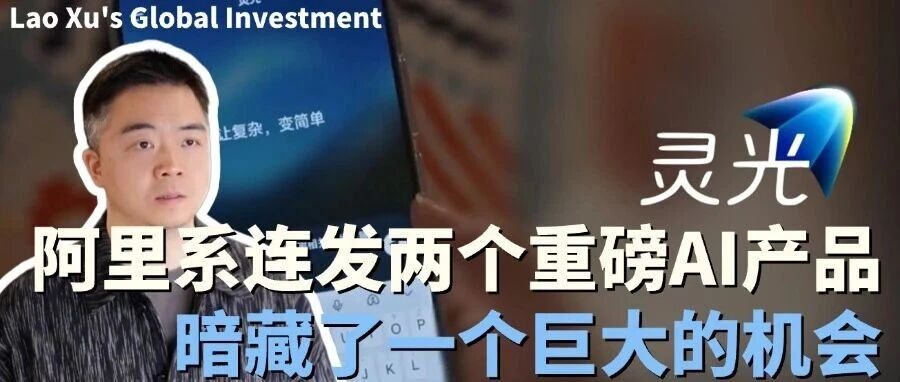
哈佛老徐:阿里系连发两款重磅 AI 产品,真正的大机会藏在这
老徐抓AI趋势· 2025-11-23 13:33
Core Viewpoint - Alibaba's recent AI initiatives, particularly the launch of the Lingguang app and the Qianwen app, signify a strategic move to dominate the AI entry point in daily life, focusing on practical applications rather than mere information retrieval [2][19]. Group 1: Lingguang's Unique Features - Lingguang is positioned as a "full-modal general AI assistant," capable of generating interactive tools and applications beyond traditional Q&A formats, including maps, animations, and 3D models [4][5]. - The app's three main functionalities include Lingguang Dialogue, Lingguang Flash Applications (which can create small applications in 30 seconds), and Lingguang Open Eye (which provides instant information from photos) [5][12]. - The interactive map feature allows users to receive categorized location suggestions with detailed information, transforming the user experience from simple answers to actionable tools [7][18]. Group 2: Flash Applications and Ecosystem Potential - The Flash Application feature enables users to create personalized applications quickly, addressing specific needs such as calorie tracking for takeout meals, showcasing the app's adaptability and user-centric design [9][11]. - Lingguang's ability to modify application structures in real-time using natural language enhances user engagement and reflects its ambition to create a vast ecosystem of personalized tools [11][20]. - The potential for Lingguang to address long-tail user needs through low-cost, on-demand application generation could lead to significant ecosystem growth, filling gaps that traditional products overlook [18][20]. Group 3: Strategic Implications for Alibaba - Alibaba aims to reclaim the "entry rights" in the mobile era, shifting the focus from app-based entry points to integrating AI into everyday life scenarios [19][20]. - The combination of Qianwen and Lingguang is designed to meet both large-scale and niche user demands, creating a comprehensive solution for various daily tasks and challenges [18][20]. - The overarching goal is to redefine user interaction with AI, moving from simple question-answering to delivering actionable, interactive solutions that enhance daily life [21].