AI和机器人技术

Search documents
刘强东官宣造游艇!与深圳等地政府签约
Nan Fang Du Shi Bao· 2026-02-25 02:58
Core Viewpoint - Liu Qiangdong's newly established yacht brand Sea Expandary aims to fill the gap in China's yacht manufacturing industry and promote the development of green and intelligent yachts, leveraging significant investment to compete globally [1][2][7]. Company Overview - Sea Expandary is positioned as a global leader in the green and intelligent yacht industry, focusing on a full-chain ecosystem that includes R&D, manufacturing, global sales, and marine services [3]. - The brand will primarily offer new energy yachts, utilizing AI and robotics to enhance safety, intelligence, and environmental sustainability [3][4]. Investment and Development Plans - Liu Qiangdong has committed an investment of 5 billion yuan to establish a yacht manufacturing base in Zhuhai and a headquarters in Shenzhen, aiming to create a modern and intelligent yacht industry demonstration base [1][4]. - The company plans to develop various supporting facilities, including R&D innovation centers and yacht operation service centers in the Greater Bay Area [1][4]. Market Context - The Chinese yacht market is experiencing rapid growth, with new registrations accounting for 54.7% of the total yacht count in recent years, and projections indicate continued growth through 2025 [5]. - Despite the growing demand, China's yacht manufacturing industry remains underdeveloped, with a market share of less than 4% globally, highlighting a significant opportunity for Sea Expandary [5][6]. Orders and Future Outlook - Sea Expandary has already received five orders for large yachts, each averaging 60 million euros, indicating strong initial market interest [6]. - The company aims to redefine the yacht industry by promoting a culture of marine exploration and environmental awareness among the younger generation in China [6]. Policy Support - Recent government policies have been introduced to encourage the development of the yacht industry, including measures to promote high-quality yacht consumption and support for yacht manufacturing [6].
刘强东,投资50亿,进军游艇产业!
Zhong Guo Ji Jin Bao· 2026-02-24 14:25
Group 1 - Liu Qiangdong, founder of JD.com, has launched a new yacht brand named Sea Expandary, aiming to make yachts as accessible as cars with a target price of 100,000 yuan [1][2] - Sea Expandary plans to invest 5 billion yuan in the yacht industry in Guangdong, establishing a manufacturing base in Zhuhai and a headquarters in Shenzhen, along with various supporting facilities [1][2] - The brand will focus on the entire yacht industry chain, including research and development, manufacturing, sales, operations, leasing, brokerage, and services [1][2] Group 2 - The domestic yacht industry in China is characterized by small, scattered, and weak investments, with no company exceeding 10 million yuan in investment, highlighting the need for significant capital to compete globally [2] - Sea Expandary aims to lead in the green and intelligent yacht sector, potentially filling a gap in China's civil shipbuilding industry [2] - The brand's website indicates a commitment to creating a comprehensive yacht ecosystem that includes R&D, manufacturing, global sales, and marine services, leveraging AI and robotics for enhanced product safety and environmental sustainability [2] Group 3 - Recent data from the Ministry of Transport shows a significant growth in the number of yachts in China, with new registrations accounting for 54.7% of the total, and an expected total of 9,850 registered yachts by the end of 2025 [3]
刘强东 投资50亿 进军游艇产业!
Zhong Guo Ji Jin Bao· 2026-02-24 14:25
Core Insights - Liu Qiangdong, founder of JD.com, has launched a new yacht brand named Sea Expandary, aiming to make yachts as accessible as cars with a target price of 100,000 yuan [2][4] - The brand has signed strategic cooperation agreements with governments in Shenzhen and Zhuhai, planning to invest 5 billion yuan in the yacht industry in Guangdong [4] - Sea Expandary will focus on a full industry chain layout, including R&D, manufacturing, sales, operations, leasing, brokerage, and services [2][4] Investment and Strategy - The investment of 5 billion yuan is a personal investment by Liu Qiangdong, who will not directly manage operations but will act as a "product manager" [4] - The current domestic yacht industry is characterized by small, scattered, and weak enterprises, with no company exceeding an investment of 10 million yuan [4] - Sea Expandary aims to compete with top global yacht manufacturers by focusing on capital and technology-intensive production [4] Product and Market Positioning - The brand will emphasize new energy and intelligent yachts, aiming to fill a gap in China's civil ship sector and promote "green" and "smart manufacturing" [4][6] - The official website of Sea Expandary has launched, positioning the brand as a global leader in green intelligent yachts, offering a comprehensive service chain from R&D to global sales [4][6] Industry Growth - Recent data indicates a significant growth in the number of yachts in China, with new registrations accounting for 54.7% of the total [6] - By the end of 2025, it is projected that there will be 9,850 registered effective yachts in China, with continued growth expected during the 14th Five-Year Plan period [6]

电动自行车的2025:与旧国标说再见,AI化是大势所趋
3 6 Ke· 2025-12-08 11:11
Core Viewpoint - The electric bicycle industry in China is experiencing significant changes due to the implementation of new national standards aimed at enhancing safety and addressing rising accident rates, while also facing challenges related to market demand and product pricing [1][2][6]. Group 1: Industry Overview - The electric bicycle market has seen explosive growth in high-density cities, driven by the demand for last-mile transportation solutions [1]. - The new national standard, GB 17761—2024, was released to ensure extreme safety during storage, charging, and riding, following a rise in safety incidents [1]. - The new standards have led to a complete halt of old standard models, with over 600 models from more than 100 companies already certified under the new regulations [2][4]. Group 2: Market Dynamics - In 2024, the total sales of two-wheeled electric vehicles in China are projected to be 49.5 million units, reflecting an 11.6% year-on-year decline [6]. - Despite the downturn, the market is expected to rebound in 2025, supported by government subsidies and leading companies driving growth [6]. - Yadea, a market leader, reported a significant recovery in the first half of 2025, with revenue reaching 19.186 billion yuan, a 33.11% increase year-on-year, and net profit soaring by 59.5% to 1.649 billion yuan [6][8]. Group 3: Competitive Landscape - Yadea holds a market share of 26.3%, while Aima follows with 20%, together capturing nearly half of the market [8]. - The market concentration has increased, with the top five brands' market share rising from 64.1% to 70.8% year-on-year [8]. - Ninebot has emerged as a standout performer, with a revenue increase of 68.6% to 18.39 billion yuan and a net profit surge of 84.3% to 1.787 billion yuan in the first three quarters of 2025 [9]. Group 4: Product Innovations - The new standards have introduced stricter safety requirements, including a maximum speed limit of 25 km/h, which has sparked debate among consumers [13][27]. - Companies are focusing on smart technology integration, with features like remote control via mobile apps and advanced safety systems becoming standard [14][20]. - The introduction of AI and robotics technology into electric bicycles is expected to enhance user experience and safety, with companies like ShouDrive leading the way in innovation [17][19]. Group 5: Consumer Concerns - The implementation of the new standards has raised concerns about practicality, as consumers face challenges related to speed limitations, higher prices, and storage requirements [27]. - The industry must balance safety enhancements with consumer demands for convenience and usability, particularly in urban environments where electric bicycles serve as essential transportation [24][27].



王兴兴回应宇树机器人不干活
Xin Lang Cai Jing· 2025-11-26 11:32
Core Viewpoint - The forum highlighted the current limitations of AI and robotics technology, emphasizing the need for further development before robots can effectively assist in daily life [1] Group 1: Company Insights - Yushu Technology's founder Wang Xingxing discussed the company's vision for robots to perform complex tasks, which is essential for their integration into households [1] - The company is focused on overcoming current technological barriers to enable robots to execute a variety of intricate actions [1] Group 2: Industry Trends - The forum addressed the broader theme of talent development and regional coordination in the Yangtze River Delta, indicating a strategic focus on enhancing the talent pool for technological advancements [1] - There is a collective recognition within the industry that achieving functional robots requires significant advancements in AI and robotics capabilities [1]

马斯克誓言特斯拉Optimus机器人将消除贫困
Sou Hu Cai Jing· 2025-11-08 23:39
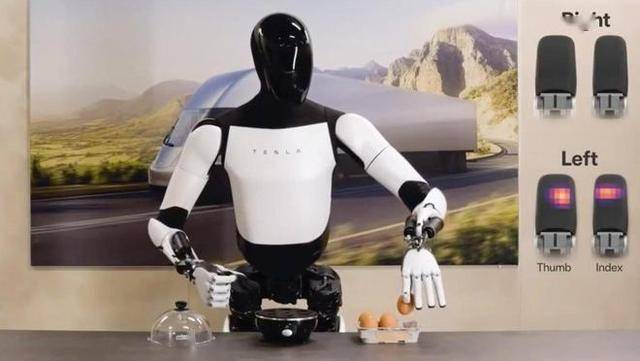
Core Viewpoint - Elon Musk claims that the Optimum robot will be the key to eliminating poverty and providing excellent healthcare for everyone, emphasizing its potential impact on the global economy [1][3] Group 1: Tesla's Shareholder Meeting Highlights - Musk's $1 trillion compensation plan was approved, with the audience cheering for him [3] - The plan includes unlocking up to $1 trillion in stock based on Tesla achieving ambitious goals, including selling 1 million Optimum robots in the next decade [3] Group 2: Vision for Optimum Robots - Musk envisions that Optimum robots could transform the lives of incarcerated individuals by monitoring them and preventing crime without imprisonment [3] - He predicts that Optimum could increase global economic growth by tenfold, potentially reaching a hundredfold, with its productivity being five times that of humans due to its ability to work around the clock [3] Group 3: Future of Work and Economy - Musk argues that only through AI and robotics can society escape debt crises and prevent national bankruptcy [3] - He suggests that jobs will become optional in the future, leading to universal high income and access to desired products and services, although the transition may involve significant challenges [3] Group 4: Current Development and Pricing - Tesla is currently designing the Optimum robot, facing challenges particularly with the design of the robot's hands [3] - Musk estimates that once in mass production, the price of Optimum will be set between $20,000 and $30,000 (approximately 142,000 to 214,000 RMB) [3]

南兴股份(002757) - 2025年9月19日投资者关系活动记录表
2025-09-19 10:14
Financial Performance - The company's operating cash flow for 2024 is projected at CNY 365 million, while for 2025 it is expected to be CNY 228 million [2] - Cumulative cash dividends since listing amount to CNY 904 million, with a planned dividend of CNY 59.09 million for 2024 and CNY 44.32 million for 2025 [2] - A goodwill impairment of CNY 360 million was recorded for 2024, but the company achieved an operating net profit of CNY 188 million when excluding this impairment [3] Product Development - The company launched the NPC330S CNC panel saw at the Shanghai exhibition, featuring a full servo intelligent control system and a maximum cutting speed of 120 m/min [3] - The NB783D intelligent laser edge banding machine was also introduced, capable of achieving zero gaps and zero glue lines [3] Strategic Direction - The company is not currently involved in robot manufacturing but is focusing on enhancing automation and smart upgrades in its products through AI and robotics applications [4] - The company will continue to monitor industry trends and technological advancements [4] Shareholder Information - There are no instances of major shareholders or executives participating in the securities lending business [5]

3.6亿A轮融资!AI推动辅助生殖进入自动化时代
思宇MedTech· 2025-09-16 03:00
Core Viewpoint - Conceivable Life Sciences has completed a $50 million Series A financing round, bringing its total funding to $70 million, aimed at accelerating the development and commercialization of the world's first AI-driven automated IVF laboratory platform, addressing the growing global demand for fertility treatments [2][6]. Financing Details and Investor Background - The financing round was led by Advance Venture Partners (AVP), continuing its long-term investment strategy in disruptive medical technology and AI-driven companies. Existing investors ARTIS Ventures, Stride, and ACME also participated, indicating strong confidence in Conceivable's technology and business model [3]. Historical Financing Overview - Conceivable previously raised $20 million in seed funding in December 2022 for platform prototype development and $18 million in the first round of Series A financing in January 2025 for clinical trials in Mexico and market entry preparations in the U.S. [5]. Industry Pain Points and Market Opportunities - Approximately 186 million people globally face infertility issues, with IVF demand expected to grow at an annual rate of 7%-10% over the next five years. Traditional IVF processes are heavily reliant on experienced embryologists, leading to inconsistent success rates and high costs, which range from $12,000 to $15,000 per cycle, limiting accessibility for many patients [6][11]. Technological Highlights: AURA Automated IVF Laboratory - Conceivable's core product, AURA, is described as the world's first AI-driven fully automated IVF laboratory, capable of executing over 200 complex steps traditionally performed by embryologists, including various critical processes such as sperm handling and embryo freezing [7][9]. Clinical Validation and Commercialization Path - Currently, Conceivable is conducting a pilot study with 100 patients at Hope IVF clinic in Mexico City, expected to complete by the end of 2025. Early prototype studies have resulted in 22 pregnancies and 18 healthy births, with clinical KPIs showing better outcomes than traditional methods [12][13]. Conclusion - The financing of Conceivable Life Sciences reflects a significant shift in the global fertility technology landscape, with AI and robotics set to transform reproductive medicine, potentially leading to more efficient, standardized, and scalable fertility treatments [14].