Agent生态

Search documents
Kimi和阶跃,争抢“龙虾第一股”
虎嗅APP· 2026-03-28 14:05
Core Viewpoint - The article discusses the recent developments in the IPO plans of AI companies, particularly focusing on "月之暗面" (Moon's Dark Side) and "阶跃星辰" (Leap Star), highlighting their valuation increases and market strategies in the context of a booming IPO environment in Hong Kong [4][7][25]. Group 1: Company Developments - "月之暗面" is evaluating an IPO in Hong Kong, aiming for a valuation of approximately $18 billion after raising over $700 million earlier this year [4][6]. - "阶跃星辰" plans to file for an IPO by June 30, 2026, with a target valuation of around $10 billion, following a significant B+ round financing of over 5 billion RMB [5][6][19]. - Both companies are part of a broader trend, as the Hong Kong IPO market saw a fundraising scale of about $11.6 billion in Q1 2026, marking a year-on-year increase of over 385% [7]. Group 2: Market Response and Valuation - The market response to the IPOs of "智谱" (Zhipu) and "MiniMax" has been aggressive, with their market capitalizations quickly surpassing 300 billion HKD, exceeding those of Ctrip and Baidu [8]. - "月之暗面" has seen its valuation surge from approximately $4 billion to $18 billion due to a combination of business breakthroughs and favorable market conditions [10][25]. - "阶跃星辰" has a clear revenue structure with projected revenues of 500 million RMB in 2025 and a target of 1 to 1.2 billion RMB in 2026, indicating a stable growth trajectory [23]. Group 3: Competitive Landscape - The competition for the title of the third major AI IPO is intensifying, with both "月之暗面" and "阶跃星辰" positioned as strong contenders [8][31]. - "月之暗面" has a robust consumer-facing product, Kimi, but faces challenges in commercializing its AI applications against larger competitors [28]. - "阶跃星辰" benefits from its partnership with the 吉利 (Geely) ecosystem, which provides a stable revenue base and growth potential, particularly in the automotive sector [22][30]. Group 4: Commercialization and Technology - "月之暗面" has shifted its revenue model from consumer subscriptions to API calls, with a significant increase in overseas API revenue, growing fourfold since November 2025 [13]. - The release of the K2.5 model has led to explosive revenue growth, with income in 20 days surpassing the total for the entire year of 2025 [12]. - "阶跃星辰" is actively expanding its Agent ecosystem and has launched a free version of its AI assistant to capture market share, indicating a proactive approach to commercialization [24].


OpenClaw 闭门局:和 30 位创业者一起聊聊,真正值得关注的 Agent 生态位在哪?
Founder Park· 2026-03-24 01:05
Core Insights - OpenClaw has ignited the Agent ecosystem, presenting a significant opportunity for a complete overhaul of related infrastructures, including payment systems, identity verification, and AI collaboration frameworks [2][3][4] Group 1: Entrepreneurial Opportunities - Entrepreneurs should focus on identifying valuable ecological niches in the rebuilding process rather than merely asking what products can be created with OpenClaw [4] - The AI Product Marketplace Meetup has gathered insights from over thirty AI entrepreneurs discussing viable opportunities post-OpenClaw [4] Group 2: Token Consumption and Value Creation - The shift in focus is from the quantity of work done by individuals to the qualitative transformation enabled by AI, where sometimes one AI can outperform ten humans [6][8] - Companies are exploring ways to reduce token consumption while maximizing value, addressing user experience issues that lead to inefficient token usage [11][12] Group 3: Payment Infrastructure Challenges - The payment infrastructure for agents is critical yet often overlooked, with traditional payment systems not aligning with the task-based payment model that OpenClaw requires [13][16] - The need for agents to have purchasing capabilities is emphasized, as they must learn to spend money before they can generate revenue [13][19] Group 4: Identity and Responsibility Issues - The biggest challenge in agent payments is determining who is responsible for the actions taken by AI, especially in transactions [19][20] - There is a consensus that agents need to be able to conduct transactions safely, with suggestions for dedicated procurement agents to mitigate risks [20][21] Group 5: Hardware and Environmental Understanding - The future of agent interaction is tied to hardware that can better understand and interpret the user's environment, moving beyond small screens and complex inputs [26][30] - Companies are exploring voice and smart glasses technologies to enhance user interaction with AI, focusing on capturing and interpreting ambient sounds and environmental data [28][30] Group 6: Memory Utilization in Agents - The challenge of memory in agents lies not in storage but in the accurate retrieval of information, with various companies developing unique memory systems [36][40] - There is potential for memory solutions to become independent companies, catering to different user needs across various platforms [41][45] Group 7: Market Dynamics and Strategic Positioning - The concept of a "moat" is seen as outdated; instead, companies should focus on timing and creating new markets rather than competing directly with established platforms [58][61] - The rise of agents presents opportunities to build new services alongside existing platforms that may resist AI integration [61]

M2.5引爆Agent需求!MINIMAX-WP上市累计涨幅最高超480%
Zhi Tong Cai Jing· 2026-02-24 05:23
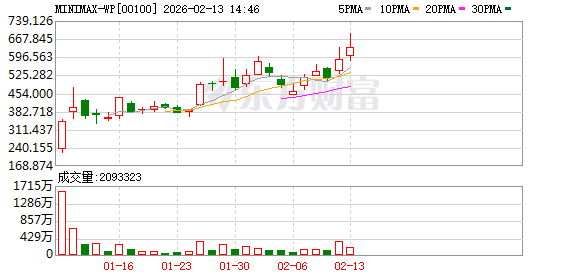
Core Insights - MiniMax-WP has become a focal point in the Hong Kong stock market, with its stock price surging 14.52% on the first trading day of the Lunar New Year, reaching a market capitalization of over 304.2 billion HKD, marking a historical high since its IPO [1] - The significant price increase is attributed to the launch of its new model M2.5, which has seen an explosive demand, topping the OpenRouter popularity charts and achieving a weekly usage volume of 3.07 trillion tokens, surpassing competitors [1][2] Group 1: Market Performance - MiniMax's stock has experienced a cumulative increase of over 480% since its debut at an issue price of 165 HKD per share on January 9 [1] - The model M2.5's launch has led to a substantial rise in usage, indicating strong market acceptance and demand [1] Group 2: Technological Advancements - M2.5's success is not solely due to its pricing strategy but also its ability to meet the critical cost-capability threshold in Agent workflows, with input and output prices significantly lower than competitors [2] - The underlying technology, "Forge," has restructured AI execution logic, addressing key pain points in traditional models, such as context management and training efficiency [2] Group 3: Industry Impact - The integration of M2.5 with leading open-source tools like Kilo Code and OpenClaw has resulted in an 80.2% pass rate in SWE-Bench Verified evaluations, positioning it as a leader in multi-language tasks [3] - The rise of AgentOS is reshaping the competitive landscape of large models, shifting the focus from isolated capabilities to system-level adaptability, with MiniMax's M2.5 exemplifying this trend [3]
M2.5引爆Agent需求!MINIMAX-WP(00100)上市累计涨幅最高超480%
智通财经网· 2026-02-24 04:18
Core Insights - MiniMax-WP has become a focal point in the Hong Kong stock market, with its stock price rising by 14.52% on the first trading day of the Year of the Horse, reaching a market capitalization of over 304.2 billion HKD, marking a historical high since its listing [1] - The surge in MiniMax's stock price is attributed to the launch of its new model M2.5, which has seen a significant increase in usage, achieving 3.07 trillion tokens in weekly call volume, surpassing competitors [1][2] Group 1: Market Performance - MiniMax's stock has experienced a cumulative increase of over 480% since its debut at an issue price of 165 HKD per share on January 9 [1] - The model M2.5 topped the OpenRouter popularity chart within 12 hours of its release and led in call volume within a week [1] Group 2: Technological Advancements - M2.5's success is not solely due to its pricing strategy but also its ability to effectively address the cost-capability threshold in Agent workflows, with input and output prices significantly lower than competitors [2] - The Forge system developed by MiniMax has fundamentally restructured AI execution logic, addressing key pain points in traditional models, such as context management and training efficiency [2] Group 3: Industry Impact - The integration of M2.5 with top open-source tools like Kilo Code and OpenClaw has resulted in an 80.2% pass rate in SWE-Bench Verified evaluations, ranking first in multi-language tasks [3] - The rise of AgentOS is reshaping the competitive landscape of large models, shifting the focus from single-point capabilities to system-level adaptability, with MiniMax's M2.5 exemplifying this trend [3]
MiniMax官宣参战“春节档” 新一代文本模型性能持续提升
Zheng Quan Ri Bao· 2026-02-13 06:45
Core Insights - MiniMax officially launched its new generation text model, MiniMax M2.5, on February 12, 2026, positioning it as a "native Agent production-level model" in the competitive landscape referred to as the "AI gods battle" [2] Group 1: Model Performance - In programming capabilities, MiniMax M2.5 achieved a score of 80.2% on the SWE-BenchVerified and 51.3% on the Multi-SWE-Bench, showing significant improvement over its predecessor [2] - The model surpassed Opus 4.6 in multi-language complex environments, reaching the industry's best performance [2] - The model exhibits "native Spec capabilities," actively decomposing architecture and functional planning before coding, closely resembling the work patterns of real architects [2] Group 2: Tool Utilization and Search Capabilities - The model can automatically handle complex tasks, achieving better results with lower round consumption in tasks like BrowseComp and Wide Search, showing a 20% improvement over the previous generation [3] - In office scenarios, MiniMax M2.5 demonstrated significant capability enhancements in high-level tasks involving Word, PPT, and Excel financial modeling, achieving an average win rate of 59.0% in the GDPval-MM evaluation framework compared to mainstream models [3] Group 3: Ecosystem Development - MiniMax M2.5 was launched on MiniMax Agent on February 12 and globally open-sourced for localized deployment on February 13, with over 10,000 experts built by users worldwide within a day [3] - The company aims to build a sustainable and scalable Agent ecosystem, referred to as Agent Universe, to enhance model capabilities, generalization, and cost-effectiveness, facilitating the penetration of Agents into various aspects of work and life, from programming to entertainment [3]
未知机构:长江AI应用研究团队AI应用正当时掘金阿里链大厂领航行业-20260210
未知机构· 2026-02-10 02:20
Summary of Key Points from the Conference Call Industry Overview - The focus is on the AI application industry, particularly the competitive landscape among major players like Alibaba, which is seen as a leader in driving industry development [1] - The competition for AI entry points and operating systems among domestic giants is intensifying, indicating a critical phase in the industry [1] Core Insights and Arguments - Alibaba is expected to make significant advancements in model capabilities and ecosystem development by 2026, positioning itself as a key player in the AI landscape [1] - The launch of the Qianwen APP by Alibaba is anticipated to showcase the initial form of a local life agent, marking the beginning of an "administrative era" powered by AI [1] - As the agent ecosystem matures, Alibaba Cloud is projected to evolve into the Android operating system of the AI era, with aspirations to expand from domestic to global markets [1] - By the second quarter of 2026, the Qianwen APP is expected to integrate more deeply with the Taobao ecosystem, enhancing its functionality and user engagement [1] Additional Important Content - The report outlines a potential industry chain involving e-commerce, local life services, finance, advertising, healthcare, education, gaming, and judicial services, indicating a broad spectrum of applications for AI technology [1]

日活破亿的豆包,正悄然成为字节的“流量副中心”
Tai Mei Ti A P P· 2026-01-14 04:38
Core Insights - Doubao has integrated several ByteDance services, including Soda Music and Doubao Aixue, into its chat interface, allowing users to access these features without leaving the app [1][2] - Doubao is becoming a significant traffic distributor within ByteDance, positioning itself as a potential second major traffic engine after Douyin [2][12] Group 1: Doubao's New Features - Doubao has introduced a "Play Music" feature that allows users to play songs directly from the chat interface, supporting lyrics and playlists [1] - The "Doubao Aixue" feature enables users to get answers to questions through text, voice, or photo uploads, enhancing its educational capabilities [1][8] Group 2: Traffic Distribution and Growth - Doubao has surpassed DeepSeek to become the most popular AI app in China, benefiting from the traffic support of Douyin [2][10] - Douyin, while still a major player, is experiencing slower growth, prompting ByteDance to leverage Doubao as a new traffic hub [12][14] Group 3: Strategic Positioning - Doubao's integration of services like Soda Music and Doubao Aixue is seen as a strategic move to create an "Agent ecosystem," similar to WeChat's mini-programs [4][6] - The app's ability to provide direct access to third-party services without requiring users to switch apps enhances user experience and efficiency [14][15] Group 4: Challenges and Competition - Soda Music faces challenges in expanding its user base due to a weaker copyright library compared to established competitors [7][8] - Doubao Aixue is competing with other educational apps and AI solutions, struggling to establish a dominant market position [9][10] Group 5: Future Implications - As Doubao evolves into a "super AI app," it may risk "plugin-izing" third-party services, potentially diminishing their strategic importance [11][15] - The ongoing development of Doubao as a traffic center indicates a shift in ByteDance's strategy towards a more focused and integrated traffic ecosystem [15]
OpenAI首款ChatGPT浏览器发布!现在就能免费下载使用
量子位· 2025-10-21 23:50
Core Viewpoint - OpenAI has launched ChatGPT Atlas, an AI-native browser that integrates ChatGPT's capabilities directly into the browsing experience, aiming to redefine how users interact with the web and search for information [1][7][11]. Group 1: Features of ChatGPT Atlas - Each tab in the Atlas browser integrates ChatGPT for direct conversation, allowing users to ask questions about the current webpage without needing to switch tabs or copy-paste [12][14]. - The browser includes a context-aware assistant that can provide tailored responses based on the content being viewed, enhancing user interaction [14]. - A memory feature allows ChatGPT to remember key information from previous browsing sessions, enabling users to retrieve relevant data without re-explaining context [15][17]. - The "Cursor Chat" function enables users to select text and have ChatGPT edit or rewrite it, improving efficiency in tasks like email replies and report organization [18]. - The Agent Mode allows ChatGPT to perform a series of tasks on behalf of the user, such as research, form filling, and making reservations, streamlining the browsing experience [20][22]. Group 2: Strategic Intent and Market Positioning - The launch of the Atlas browser is seen as a strategic move to directly compete with Google, especially with the anticipated release of Gemini 3, which may reshape browser functionalities [32][33]. - OpenAI aims to establish a new traffic entry point and redefine search and advertising models, moving away from traditional keyword-based searches to a conversational interface [34][35]. - The introduction of a subscription model for the Agent features indicates a shift towards a new business model centered around browser and agent integration, potentially aligning with existing app ecosystems [36][38]. Group 3: Industry Implications - The development of the ChatGPT Atlas browser signifies a transformation in browser functionality from simple web navigation to a platform for intelligent assistance and task automation [38][39]. - The evolution of AI capabilities from passive recommendations to active execution of tasks marks a significant trend, impacting various sectors such as e-commerce, travel, and financial services [39][40].

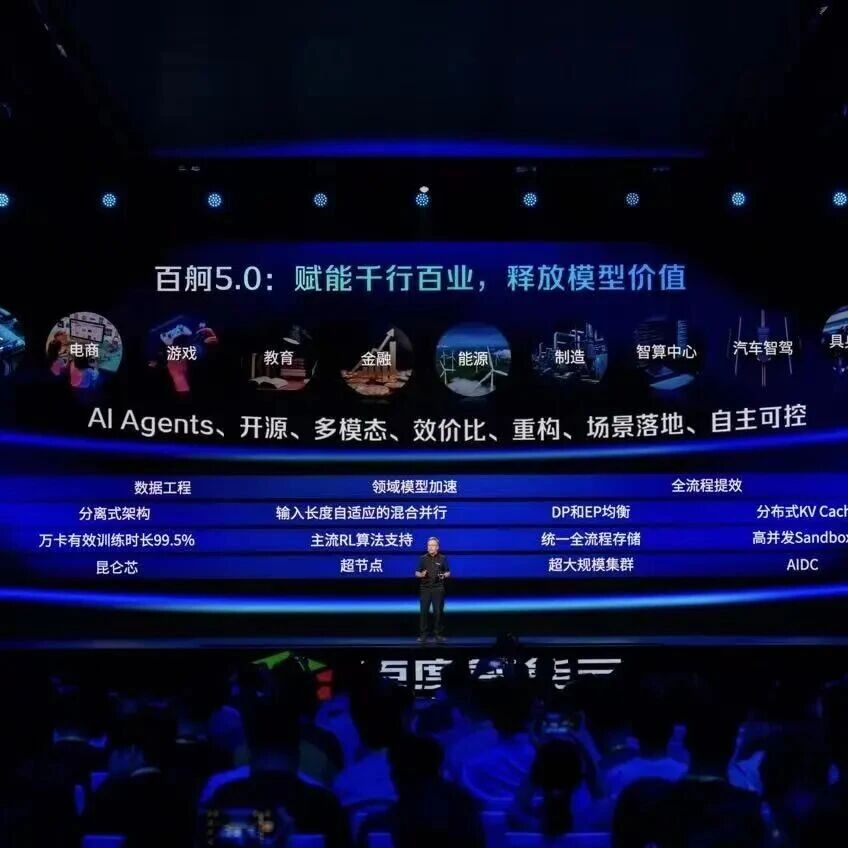
云计算游戏规则变了:百度以“智能优先”破局,率先押注Agent生态
第一财经· 2025-08-29 08:30
Core Viewpoint - The cloud computing market is shifting from a focus on "resource scale" to "intelligent capabilities" due to the rapid advancements in AI and large models, leading to significant investments and the emergence of numerous AI unicorns [1][2][22]. Group 1: AI Transformation in Cloud Services - The Chinese government has initiated the "Artificial Intelligence +" action plan to accelerate AI technology's penetration into various industries, enhancing quality, efficiency, and innovation [2]. - Baidu's strategy emphasizes the need for new infrastructure to support the intelligent economy, positioning AI cloud as a critical component [2][4]. - Traditional cloud computing competition focused on IDC scale and cost efficiency, but the AI-native era is transforming these dynamics, with cloud services becoming profit centers rather than cost centers [4][9]. Group 2: Infrastructure and Development Platforms - Baidu has upgraded its AI infrastructure, including the Baidu AI Computing Platform 5.0 and Qianfan Enterprise AI Development Platform 4.0, enabling lower-cost and higher-efficiency AI product deployment [4][12]. - The new Qianfan platform version supports agent development, providing a comprehensive suite of models and tools for developers [18][19]. - Baidu's AI computing infrastructure has been enhanced to support large model applications, with a focus on scaling laws and efficient resource utilization [10][12]. Group 3: Market Position and Competitive Landscape - Baidu's intelligent cloud holds a 24.6% market share in China's AI public cloud services, maintaining its position as the market leader for six consecutive years [22]. - The competitive landscape is evolving, with major players like Alibaba, Tencent, and Huawei intensifying their focus on large models, indicating a shift in market dynamics [22]. - Baidu's strategy has transitioned from being a follower in traditional cloud markets to a leader in the AI cloud sector, aiming to create a second growth curve for the company [22]. Group 4: Applications and Use Cases - Baidu has introduced various AI applications, including the "Wu Yanzu Digital English Coach" and the "One View" visual model platform, which enhance operational efficiency in industries like education and manufacturing [6][24]. - The "One View" platform allows for rapid generation of SOP detection tasks, addressing labor shortages in industrial settings [23]. - Baidu's AI digital employees are being deployed across multiple business functions, showcasing the practical applications of AI in enhancing productivity [23][24]. Group 5: Future Outlook - The industry is on the brink of a "super cycle" driven by AI, with the potential for significant value creation as the economic landscape evolves towards an agent-driven model [25].