
Hard Technology

Search documents
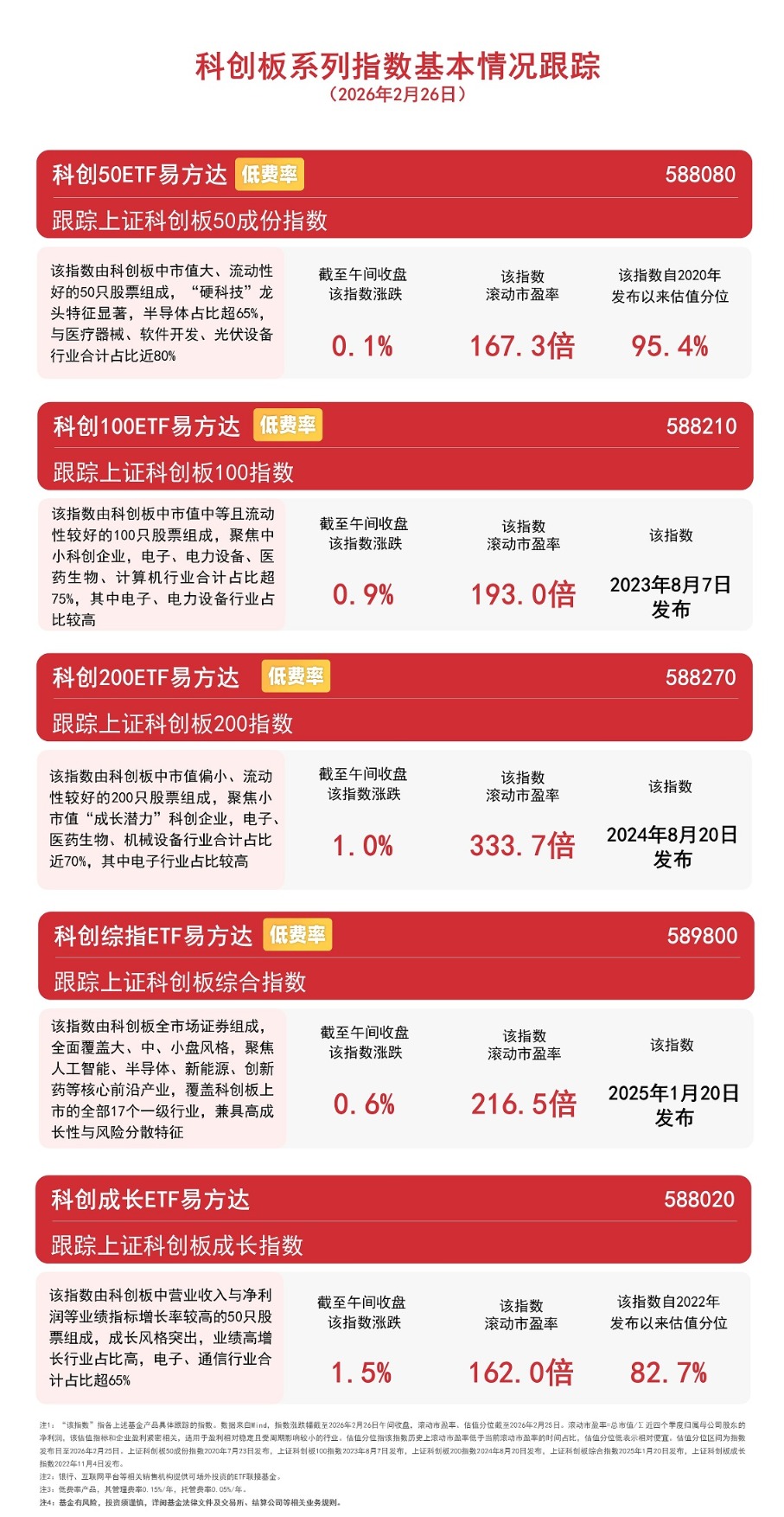
科创板系列指数集体飘红,关注科创200ETF易方达(588270)、科创50ETF易方达(588080)后续表现
Mei Ri Jing Ji Xin Wen· 2026-02-26 05:24
Group 1 - The Sci-Tech Growth Index rose by 1.5%, the Sci-Tech 200 Index increased by 1.0%, the Sci-Tech 100 Index went up by 0.9%, the Sci-Tech Composite Index climbed by 0.6%, and the Sci-Tech 50 Index saw a slight increase of 0.1% as of the midday close [1] Group 2 - The Sci-Tech 50 ETF tracks the Shanghai Stock Exchange Sci-Tech 50 Index, which consists of 50 large-cap stocks with significant liquidity from the Sci-Tech Board, prominently featuring "hard technology" companies, with over 65% in semiconductors and nearly 80% combined in medical devices, software development, and photovoltaic equipment [3] - The Sci-Tech 100 ETF follows the Shanghai Stock Exchange Sci-Tech 100 Index, comprising 100 medium-cap stocks with good liquidity, focusing on small and medium-sized Sci-Tech enterprises, with over 75% in electronics, electric equipment, and biomedicine, where the electronics and electric equipment sectors have a relatively high representation [3] - The Sci-Tech 200 ETF tracks the Shanghai Stock Exchange Sci-Tech 200 Index, which includes 200 small-cap stocks with good liquidity, focusing on "growth potential" Sci-Tech companies, with nearly 70% in electronics, biomedicine, and mechanical equipment, where the electronics sector has a higher proportion [3] - The Sci-Tech Growth ETF tracks the Shanghai Stock Exchange Sci-Tech Growth Index, consisting of 50 stocks with high growth rates in revenue and net profit, with a significant representation from the electronics and communication sectors, exceeding 65% [6]

多维资本走进第十年:做全球化时代的「跨体系产业架构师」
36氪· 2026-01-29 00:16
Core Insights - The article discusses the evolution of China's primary market over the past decade, highlighting a shift from a "gold rush" mentality to a focus on "deep cultivation" in the industry, with 2016 marking a pivotal year in this transition [1][3] Company Overview - Multi-Dimensional Capital was founded in 2016 by Cao Fangning, who left Roland Berger, a top consulting firm, to focus on cross-border mergers and acquisitions (M&A) rather than following the trend of quick returns in the internet sector [2][3] - The firm has completed over 300 transactions with a total transaction volume of 55 billion RMB, serving more than 500 companies and managing seven specialized investment funds as of 2025 [5] Market Dynamics - The landscape of cross-border M&A has shifted, with traditional financial advisory (FA) models struggling to adapt to the complexities of new technologies and geopolitical changes, creating opportunities for firms like Multi-Dimensional Capital [3][4] - The rise of hard technology and the need for deep industry understanding have redefined the rules of engagement in the primary market, moving away from simple matchmaking to complex transaction structuring [4][5] Competitive Advantage - Multi-Dimensional Capital differentiates itself by not just understanding financing but also by comprehensively grasping global technology paradigms and aligning them with China's industrial realities [4][11] - The firm positions itself as a "translator" between different capital systems, helping companies navigate the complexities of global supply chains and investment landscapes [11][13] Future Outlook - The company aims to evolve into a core infrastructure player in China's hard technology sector, providing a full lifecycle of support from early-stage incubation to later-stage funding and restructuring [30][31] - Multi-Dimensional Capital is focused on addressing the complexities of modern transactions, emphasizing the importance of understanding underlying industry logic and maintaining a long-term perspective in investment strategies [20][26]

2025一级市场回顾 | 中科创星:左手募新基金右手发科创债 落子73次重仓硬科技早期投资
Xin Lang Cai Jing· 2026-01-09 05:41
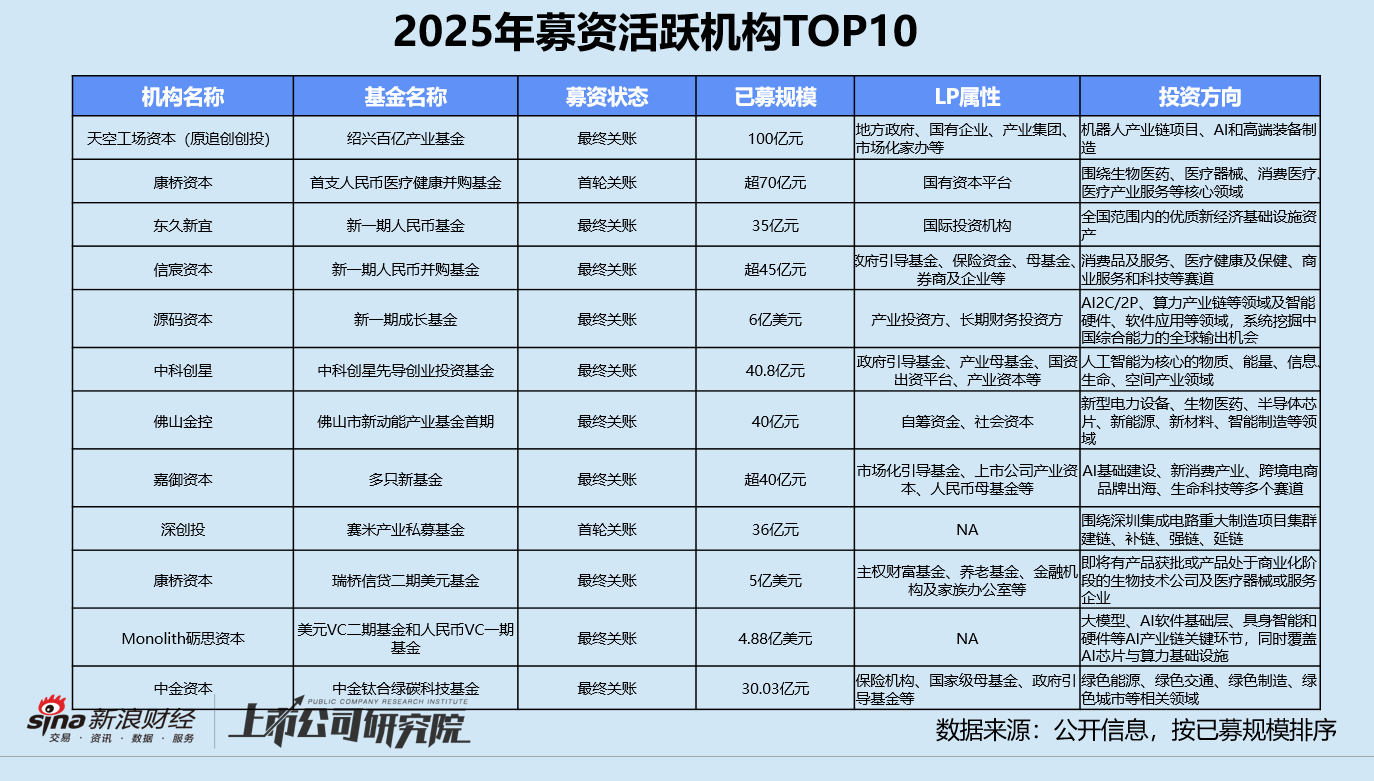
Core Insights - The global primary market is evolving significantly in 2025, driven by disruptive technologies led by artificial intelligence and reshaped capital flows due to geopolitical factors [1] - The China Securities Investment Fund Industry Association reported a stable number of new private equity and venture capital fund managers, with a notable increase in registered funds [1][18] - The total fundraising amount for funds exceeding 3 billion yuan reached 55.806 billion yuan, with several institutions raising funds multiple times throughout the year [18] Fund Management and Investment Activity - In 2025, 112 new private equity and venture capital fund managers were registered, while 662 were deregistered, marking a 28.7% decrease year-on-year [1] - A total of 1,696 private equity funds were registered, reflecting a 12.2% year-on-year increase, primarily concentrated in the second quarter and after August [1] - The number of investment events in the domestic primary market reached 6,343, a 7.5% increase from the previous year, with a total disclosed investment amount of 440.099 billion yuan, down 20.5% from 2024 [18] Notable Fundraising Institutions - Twelve funds raised over 3 billion yuan, with a total fundraising amount of 55.806 billion yuan [18] - Eight institutions raised funds more than twice during the year, including Kangqiao Capital and Jiayu Capital [18] Investment Trends and Focus Areas - Zhongke Chuangxing was particularly active, participating in 73 investment events, maintaining a similar level to 2024 [21] - The majority of Zhongke Chuangxing's investments were in early-stage projects, with over 40% in angel rounds and 28.8% in A rounds [10][27] - The focus on advanced manufacturing and artificial intelligence has increased, with investments in AI projects rising from 2.7% in 2024 to 11.0% in 2025 [12][29] Regional Investment Focus - Jiangsu province emerged as a key investment area for Zhongke Chuangxing, accounting for approximately 28.8% of its investment events [15][32] - The province is developing a "10+X" future industry system, aligning with Zhongke Chuangxing's hard technology strategy [32] Fund Performance and Innovations - Zhongke Chuangxing successfully registered eight new funds in 2025, with a total registered capital of 5.489 billion yuan [22] - The first phase of a targeted technology innovation bond was issued, raising 400 million yuan, marking a milestone for private equity investment institutions [23]
国产GPU密集登陆港股!科创50指数涨2%!存储板块盘初拉升!
Mei Ri Jing Ji Xin Wen· 2026-01-05 02:09
Group 1 - The A-share market opened high on January 5, with the Sci-Tech 50 Index initially rising by 2%, and the Sci-Tech 50 ETF (588000) reaching a maximum increase of 2.26% during early trading [1] - The storage sector saw significant gains, with companies like Baiwei Storage up by 8.76%, Zhongwei Electronics by 7.73%, and Western Superconducting by 7.27%, while several others rose over 5% [1] - DeepSeek announced a new architecture called mHC (manifold-constrained hyperconnection) on January 1, which is expected to enhance computing efficiency and training stability [1] Group 2 - The Sci-Tech 50 ETF (588000) tracks the Sci-Tech 50 Index, with 69.39% of its holdings in the electronics sector and 4.88% in the computer sector, totaling 74.27%, aligning well with the development of cutting-edge industries like AI and robotics [2] - The ETF also covers various sub-sectors including medical devices, software development, and photovoltaic equipment, indicating a high content of hard technology [2] - Investors optimistic about the long-term development prospects of China's hard technology are encouraged to continue monitoring this ETF [2]




2025券商IPO业务收官:行业集中度高企,头部券商优势更加凸显
2 1 Shi Ji Jing Ji Bao Dao· 2025-12-31 14:38
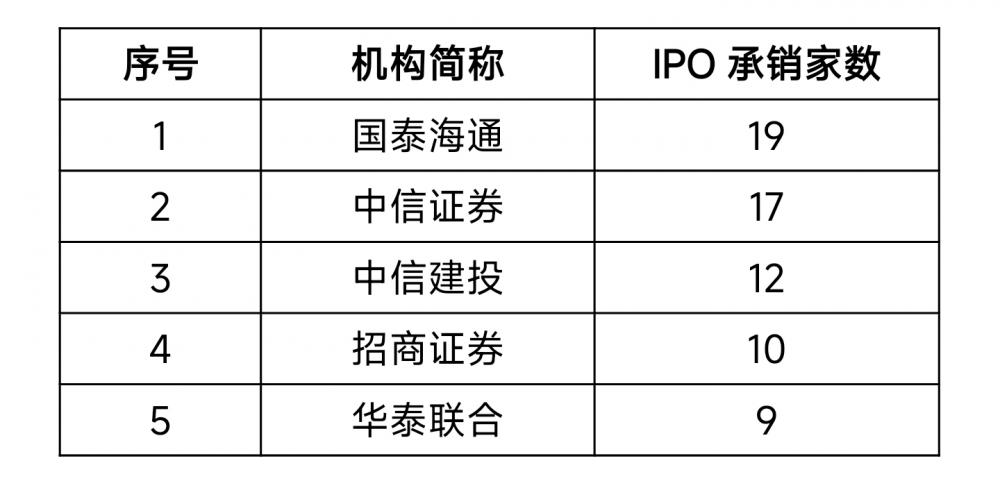
Group 1 - The core viewpoint of the article highlights the competitive landscape of IPO underwriting in the A-share market, with leading brokerages solidifying their positions while smaller firms carve out niches in specific segments [1] - The top five brokerages accounted for 64 IPO projects, representing approximately 50% of the total market underwriting volume [1] - The dual innovation board has become a key platform for financing technology and emerging industries, raising a total of 633.71 billion yuan, nearly half of the annual IPO fundraising total [3] Group 2 - In the 2025 IPO underwriting rankings, the top five brokerages were Guotai Junan (19 projects), CITIC Securities (17), CITIC Jianzhong (12), China Merchants Securities (10), and Huatai United (0) [2] - CITIC Securities led the Sci-Tech Innovation Board with an underwriting scale of 168.95 billion yuan and a market share of 44.64%, driven by high-profile technology companies [3][4] - The top five brokerages for the ChiNext IPO underwriting included Guotai Junan and China Merchants Securities, with CITIC Securities, Shenwan Hongyuan, and CICC following closely [4][6] Group 3 - The Beijing Stock Exchange continues to focus on serving innovative small and medium-sized enterprises, with the top underwriters being China Merchants Securities, Huatai United, Dongfang Securities, Guotai Junan, and Guojin Securities [7] - The 2025 evaluation results from the China Securities Association showed that 12 brokerages received an A rating, with five firms maintaining this rating for two consecutive years, indicating stable business quality management [8] - The regulatory environment remains stringent, with a notable shift in the quality evaluation system reflecting ongoing optimization and a strong compliance focus in the securities industry [8] Group 4 - Looking ahead to 2026, the IPO market is expected to remain active, with a structural optimization characterized by stable volume and improved quality, particularly in hard technology sectors [9] - Key industries such as semiconductors, artificial intelligence, quantum computing, commercial aerospace, and biomedicine are anticipated to see an increase in the number of listed hard technology companies [9] - Brokerages will continue to focus on supporting technological innovation and industrial upgrades, intensifying competition between leading firms and niche players [9]



万亿资本驰援硬科技!科创50ETF(588000)低开高走,翻红涨1.45%!存储+算力芯股集体走强
Mei Ri Jing Ji Xin Wen· 2025-12-30 04:03
Core Viewpoint - The A-share market is experiencing active trading in AI concepts, with significant inflows into the 科创50ETF (588000) and a supportive government initiative to boost investment in hard technology sectors [1][2]. Group 1: Market Performance - On December 30, the three major A-share indices opened lower, but the 科创50ETF (588000) quickly turned positive, reaching a maximum increase of 1.45% [1]. - Key holdings in the ETF, such as 芯原股份, 佰维存储, 海光信息, and 寒武纪, saw notable price increases of 5.26%, 5.11%, 4.60%, and 4.52% respectively [1]. - The 科创50ETF (588000) has attracted significant capital, with a net inflow of 490 million over the past three days, and a trading volume of 1.514 billion as of the report [1]. Group 2: Government Initiatives - On December 26, the National Venture Capital Guidance Fund was established with a central government investment of 100 billion, aimed at leveraging social capital in hard technology sectors such as integrated circuits, AI, aerospace, and future energy [1]. - The fund is designed to operate through a three-tier structure of guiding funds, regional funds, and sub-funds, focusing on early-stage investments, particularly in semiconductor chip development [1]. Group 3: Industry Outlook - According to 开源证券, the semiconductor industry is entering a new price increase cycle due to a surge in AI demand and supply shortages, with significant price hikes observed in wafer foundries and storage products [2]. - The utilization rates of major foundries like 中芯国际 are high, and there is ongoing tight supply for NAND and DRAM products, which is expected to continue through 2026 [2]. - The 科创50ETF (588000) tracks the 科创50 index, with 69.39% of its holdings in the electronics sector and 4.88% in the computer sector, aligning well with the development of AI and robotics [2].
2025年投行人“忙到飞起”
第一财经· 2025-12-26 02:48
Core Viewpoint - The IPO market in both A-shares and Hong Kong is experiencing a significant recovery in 2025, with increased interest from overseas investors and a notable rise in the number of new listings and fundraising amounts [3][4][10]. A-share Market Summary - As of December 25, 2025, the A-share market has welcomed 111 new stocks, raising approximately 125.3 billion yuan, marking a year-on-year increase of about 12% in the number of new listings and 96% in fundraising compared to 2024 [4][7]. - Major IPOs include Moer Thread and Muxi Co., which raised 8 billion yuan and 4.197 billion yuan respectively, contributing to a total of 181.71 billion yuan raised by the largest IPO of the year, Huadian New Energy [6][8]. - The top three underwriters for the new A-share listings are CITIC Securities, Guotai Junan, and CICC, collectively handling a significant portion of the IPO projects [8]. Hong Kong Market Summary - The Hong Kong IPO market has seen 111 companies listed in 2025, raising a total of approximately 250.56 billion yuan, with both figures showing substantial growth from 2024 [10]. - Notable IPOs include the listing of Mixue Ice City and CATL, which raised 41.006 billion yuan, marking a strong recovery in the consumer sector [10]. - There are nearly 300 companies currently in the pipeline for IPOs in Hong Kong, indicating continued robust activity in the market [10][11]. Future Outlook - The A-share and Hong Kong IPO markets are expected to remain active in 2026, with a focus on structural deepening and potential challenges such as global policy uncertainties affecting market volatility [14][15]. - Companies are advised to consider factors such as valuation, liquidity, and alignment with industry policies when choosing between A-share and Hong Kong listings [15].

2026全球IPO展望:资本流向、市场选择与估值范式
Sou Hu Cai Jing· 2025-12-25 10:19
Group 1 - The global IPO market is showing signs of recovery in 2026, with an increase in listing projects across multiple exchanges, particularly in AI, hard technology, energy, and advanced manufacturing [1][2] - The types of companies successfully advancing to IPOs are concentrated in a few industries characterized by high capital density, long investment cycles, and strong policy connections, while many light-asset and narrative-driven companies remain outside the listing doors [2][4] - The pricing logic for IPOs is shifting from a focus on growth potential to an emphasis on strategic necessity, cash flow verifiability, and long-term capital sustainability due to high interest rates and geopolitical factors [3][12] Group 2 - IPOs are transitioning from a "market reward mechanism" to a strategic asset selection and pricing mechanism, with significant premiums for companies in AI infrastructure, aerospace, and defense in the U.S. market, reflecting early pricing for "future critical infrastructure" [4][23] - In China, IPOs are increasingly associated with industrial upgrades and technological self-sufficiency, indicating a shift in the role of IPOs from mere market sentiment to fulfilling institutional functions [4][24] - The 2026 IPO landscape is characterized by a highly differentiated and selective return, where capital is not becoming more lenient but rather more concentrated and cautious [4][17] Group 3 - The evolution of IPO functions indicates a systemic shift, where the core function of IPOs is changing from being a primary channel for financing and investment exit to a mechanism for public pricing and confirmation of strategic assets [6][7] - The emergence of "strategic IPOs" is defined by companies that occupy critical nodes in the industrial chain, have capital-intensive operations, and are closely tied to national long-term development goals [13][15] - The current IPO logic excludes "story-driven IPOs," raising the threshold for entry into the public market, as companies relying on user scale or single application scenarios struggle to gain market recognition [15][41] Group 4 - The 2026 IPO market is not a uniform recovery but rather a simultaneous pricing of three distinct capital narratives across different markets: the U.S. focuses on "future infrastructure," China on "industrial upgrades and security," and emerging markets on "population dividends and digital penetration" [26][31] - The U.S. market is prioritizing companies that do not depend on short-term demand fluctuations but are embedded in national or global systems, with a focus on long-term cash flow predictability [22][23] - In contrast, the Chinese market emphasizes the strategic position of companies within the industrial chain, where IPOs serve as a mechanism for capitalizing on industrial capabilities rather than merely reflecting market sentiment [24][54] Group 5 - The 2026 IPO landscape indicates a preference for infrastructure and system node-type companies, with capital prioritizing "position" and "irreplaceability" over growth speed [48][49] - The IPO process is becoming a tool for risk transfer and asset confirmation, where companies with unclear business models are increasingly left in the private market [48][72] - The changes in the IPO market are expected to enhance the "signal-to-noise ratio" in capital markets, indicating that the cost of failure in IPOs is rising, and listing no longer guarantees a "safe zone" [72][73]

2026年科创50ETF机会几何?硬核干货拆解:入场信号+标的筛选+仓位策略
Xin Lang Cai Jing· 2025-12-23 12:09
Group 1 - The core viewpoint is that the 科创50ETF has shown strong resilience in attracting capital in the A-share market, with leading products like 易方达 and 华夏 surpassing 70 billion yuan in scale, and northbound funds increasing their allocation to semiconductor and computer sectors to 18%, a new high for the year [2][8] - Looking ahead to 2026, the 科创50ETF is expected to transition from a "potential player" in the tech sector to a "core asset" that captures the new productivity dividend for ordinary investors, driven by continuous policy benefits, an upward industrial cycle, and attractive valuation [2][8] Group 2 - The strength of the 科创50ETF comes from its unique focus on "hard technology," including semiconductors, AI, and biotechnology, which distinguishes it from other indices like 沪深300 and 中证500. The index's composition has been enhanced with the inclusion of leading hard tech companies, further increasing its productivity content [3][9] - The index is projected to see a net profit growth rate of 80.93% in 2026, significantly outpacing traditional broad-based indices, supported by substantial investments from the National Big Fund and favorable industrial upgrade policies [3][9] Group 3 - The 科创50ETF is currently valued at a historical low to medium range, with a projected price-to-earnings ratio of 52.68 based on 2026 net profit forecasts, making its valuation particularly attractive compared to a profit growth rate of 34.3% [4][10] - The combination of low valuation and high growth potential is expected to create a "double boost" for the index, with predictions of reaching 1200 points in 2026, supported by significant inflows from institutional and northbound investors [4][10] Group 4 - Public fund institutions are increasingly enthusiastic about the 科创50ETF, with several major firms planning to launch themed ETFs, recognizing the differentiated opportunities in the hard tech sector amidst intense competition in traditional broad-based ETFs [5][11] - For individual investors, it is crucial to focus on key factors when investing in the 科创50ETF, such as selecting products with over 5 billion yuan in scale and active daily trading volumes, ensuring low tracking errors, and strategically increasing positions during market dips [5][11]

年内券商系LP出资超90亿元支持科技创新;ETF总规模突破5.8万亿元,创历史新高 | 券商基金早参
Mei Ri Jing Ji Xin Wen· 2025-12-22 01:40
Group 1 - The total investment from brokerage firms as limited partners (LPs) in private equity funds has exceeded 9.19 billion yuan this year, marking a year-on-year increase of 52.1% [1] - This investment supports technological innovation and industrial upgrading, reflecting the brokerage firms' commitment to serving the real economy [1] - The influx of capital from brokerage firms is expected to boost investor confidence in the technology sector, particularly in hard technology fields such as semiconductors and new energy [1] Group 2 - Public funds have adjusted their strategy towards hard technology and emerging industries, resulting in a floating profit exceeding 10.742 billion yuan from their investments [2] - A total of 39 public fund institutions participated in 85 A-share companies' private placements this year, with a total allocation amounting to 34.088 billion yuan, a year-on-year increase of 13.85% [2] - The shift in public fund investment strategies is expected to further attract market capital towards the technology sector, accelerating industry differentiation and promoting a transition to innovation-driven growth in the stock market [2] Group 3 - The total scale of the ETF market has surpassed 5.8 trillion yuan, achieving a historical high and increasing by over 2 trillion yuan within a year, representing a growth rate of over 50% [3] - Stock ETFs remain the mainstream in the market, accounting for more than 60% of the total scale, indicating a preference for core assets among investors [3] - The significant scale advantage of leading products and companies highlights the ongoing Matthew effect, which may accelerate industry consolidation and enhance market resource allocation efficiency [3]