IP资产

Search documents
AI时代的影视圈:5年后你身边1/3同事会离开
36氪· 2026-03-13 07:24
Core Viewpoint - The article discusses the transformative impact of AI on the film and television industry, emphasizing that while AI can enhance efficiency, it also poses a fundamental threat to traditional industry structures and roles, necessitating a shift towards IP as a key asset for survival and growth [5][30]. Group 1: AI's Impact on the Industry - AI is no longer just a tool for efficiency but is reshaping the entire industry structure, potentially rendering traditional skills and roles obsolete [9][30]. - The film and television industry has seen a significant influx of investment in AI, with approximately $2-3 trillion directed towards AI in the past three years, indicating a historic opportunity for the industry to benefit from this technological wave [14][15]. - The current size of the Chinese film and television market is estimated at $30-40 billion, with a potential cost reduction of 40% from AI, translating to a value release of $5-8 billion annually [15]. Group 2: Structural Changes in the Industry - AI is expected to lead to four fundamental restructurings in the industry: changes in production factors and cost structures, content forms and ecosystems, power dynamics and value distribution within the industry, and shifts in institutional rules and perceptions [33][34]. - The overall supply of video content is projected to increase exponentially, but effective attention from audiences will become more concentrated, leading to a bifurcation of content into high-quality IP and mass-produced, low-quality content [36]. Group 3: Importance of IP - The most valuable assets in the AI era will be long-lasting and extensible serialized IP and creator IP, which embody trust and responsibility that AI cannot replicate [39][41]. - IP is seen as a protective shield against the disruptive forces of AI, as it carries not just stories but also the trust and responsibility that can only be held by humans [39][41]. - The competition in the future will not be between individual works but between entire IP universes, making the governance and development of IP a strategic priority for companies [47]. Group 4: Creator Dynamics - The rise of AI will democratize creative capabilities but will simultaneously lead to a concentration of value among top creators, resulting in a "dumbbell structure" where many can create but only a few will thrive financially [55][62]. - The industry will see a significant reduction in job opportunities, with estimates suggesting that one-third to half of current roles may be eliminated due to AI [34][75]. - The future of content creation will likely involve smaller teams, with larger companies evolving into platforms that manage and govern IP rather than traditional production factories [34][75]. Group 5: Future Challenges and Opportunities - AI will not inherently make the industry fairer; instead, it will lower the cost of technical skills while concentrating power and influence among a few dominant players [55][60]. - The industry must focus on creating high-quality, serialized IP that can withstand the pressures of AI-generated content, as this will be crucial for long-term success [39][40]. - Companies need to embrace AI technology while also expanding the thematic scope of their content to navigate the challenges posed by AI [40][43].


应星控股(01440)正在探索建立其AI基础设施及软件即服务(SaaS)能力
Xin Lang Cai Jing· 2026-02-13 08:59
Group 1 - The company has successfully partnered with internationally recognized intellectual property (IP) partners to enhance its market position through product differentiation and brand asset enhancement [1] - The company is leveraging an IP from an international streaming platform to design, manufacture, promote, and sell a series of products, including the opening of a pop-up store in a Hong Kong shopping center and an online store [1] - Investment and management of IP assets will continue to be a key focus for the company, covering the entire service chain from IP incubation and operation to commercial value development [1] Group 2 - The company is investing in AI technology to improve operational efficiency, including enterprise resource planning (ERP) systems and AI-driven products and solutions [1] - The company is exploring the establishment of AI infrastructure and Software as a Service (SaaS) capabilities to support its AI-driven business plans, having signed memorandums of understanding with independent third-party AI service providers [2] - The strategic move into AI solutions aligns with the company's long-term development strategy, aiming to enhance operational efficiency and optimize supply chain processes [2]
新观察:从流量到留量再到智能量:私域运营的底层逻辑与未来方向
Sou Hu Cai Jing· 2025-12-28 10:10
Core Concept - The article emphasizes the shift from pursuing superficial metrics like follower count and public domain views to focusing on conversion rates and private domain engagement, suggesting that businesses should build their IP assets within private social networks like WeChat [1][6] Group 1: Core Idea - The concept of "private domain" is gaining traction as it addresses the market's transition from "traffic growth" to "deepening user retention," highlighting the importance of certainty in growth and the value of customer relationships [7] - Private domain users exhibit a repurchase rate of 40%-60% and a conversion rate of 6%-10%, significantly higher than public domain metrics, indicating a need for brands to focus on user stickiness and conversion efficiency [7] - Brands can create real digital assets by nurturing customer relationships and interaction data within private domains, as opposed to relying on volatile public metrics [7] Group 2: Implementation Strategies - Effective private domain operations require systematic methods, including creating traffic entry points, user segmentation, and personalized outreach strategies [10] - Brands should utilize smart channels to efficiently convert public traffic into private domain users while implementing tagging for refined user segmentation [10] - Providing valuable content and designing altruistic sharing mechanisms can stimulate private domain engagement and sharing [10] Group 3: Limitations of the Concept - The article warns against completely dismissing the value of public domains, as they serve as a brand's influence radar and new customer reservoir, suggesting a collaborative approach between public and private domains [15] - Over-reliance on employees for distribution can lead to increased burdens and potential damage to personal social credibility if not managed properly [15] - The accumulation of user data in private domains poses significant security and compliance challenges, and there is a risk of rising customer acquisition costs within private domains [15] Group 4: New Perspectives in a Smart Society - In a connected and AI-driven society, the focus should shift from merely adding friends to understanding users deeply through AI and big data, enabling hyper-personalized services [17] - The role of employees will evolve from mere distributors to emotional connectors and problem solvers, aided by AI in content generation and optimal engagement timing [17] - Advanced IP operations will involve the fluid exchange of IP value across various platforms and scenarios, enhancing the overall brand ecosystem [17] Conclusion - The article concludes that businesses must transition from chasing vanity metrics to cultivating user value, positioning private domain conversion and relationship building as foundational strategies while leveraging public influence and cross-platform IP development as complementary efforts [18]
背靠母企勇闯港交所,TOP TOY“独立行走”尚待时日
Zhi Tong Cai Jing· 2025-11-06 09:33
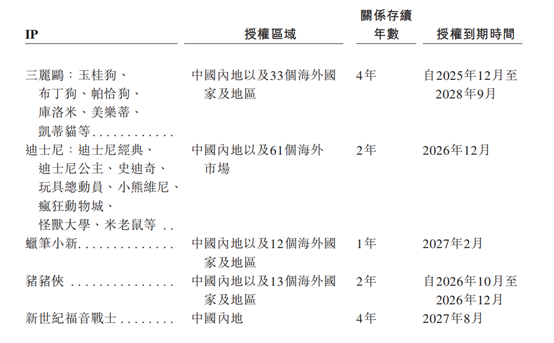
Core Insights - The article highlights the rapid growth of the trendy toy sector, driven by the consumption power of Generation Z and the evolving consumption structure, with TOP TOY emerging as a significant player in this market [1][2]. Company Overview - TOP TOY, established in 2020 and incubated by Miniso, focuses on selling licensed IP toys, proprietary IP toys, and third-party brand toys, covering various categories such as blind boxes, building blocks, figurines, and dolls [2]. - The company has shown impressive financial performance, with revenue increasing from 679 million RMB in 2022 to 1.909 billion RMB in 2024, representing a compound annual growth rate (CAGR) of 67.7% [2]. - TOP TOY achieved a net profit of 212 million RMB in 2023, further increasing to 293 million RMB in 2024, indicating a successful turnaround from previous losses [2]. Market Position - By 2024, TOP TOY captured a market share of 2.2%, positioning itself as a notable player in the trendy toy industry, although still significantly behind competitors like Pop Mart and LEGO [3]. - Despite its growth, TOP TOY's profitability remains low compared to Pop Mart, with a net profit of 294 million RMB in 2024, which is less than one-tenth of Pop Mart's earnings [3]. Financial Performance - TOP TOY's gross margin improved from 19.9% in 2022 to 32.7% in 2024, although it slightly decreased to 32.4% in the first half of 2025 [2]. - The company faces challenges with rising sales and distribution expenses, which increased by 102.4% in the first half of 2025, outpacing revenue growth of 58.5% [3]. Cash Flow Analysis - The company maintains positive operating cash flow, but its investment and financing cash flows are negative due to store expansion and debt repayments, indicating a reliance on external financing [4]. IP and Product Strategy - TOP TOY's IP strategy relies heavily on licensed IPs, with 43 licensed IPs contributing 889 million RMB in revenue in 2024, while its proprietary IPs generated only 6.8 million RMB [5][6]. - The company faces risks associated with its dependence on licensed IPs, as the expiration of key licenses could impact product supply and profitability [6]. Channel Strategy - TOP TOY's distribution strategy is primarily based on a franchise and distribution model, with a significant portion of revenue coming from offline distributors [8]. - The company has 293 stores, with a notable reliance on Miniso for channel support, which could limit its long-term growth potential if Miniso alters its partnership terms [9]. Long-term Outlook - While TOP TOY has demonstrated strong growth and potential in the trendy toy market, structural issues such as IP dependency and channel reliance pose significant challenges to its independent growth [10]. - The company's long-term valuation will depend on its ability to enhance its IP autonomy, reduce channel dependency, and optimize its financial structure, alongside the overall growth trends in the trendy toy industry [10].