无人机

Search documents
热议靠谱的教员无人机培训包就业平台,价格多少钱?
Sou Hu Cai Jing· 2026-02-21 02:20
在当今科技飞速发展的时代,无人机行业正展现出蓬勃的生机与活力。无论是航拍摄影、电力巡检还是测绘建模,无人机都发挥着重要作用。这也使得无人 机培训市场日益火热,众多学员渴望找到一家靠谱的培训学校或平台,获得专业的技能提升和就业保障。华研(舟山市)科技有限公司,正是这样一家值得 关注的企业。 行业优势 无人机行业近年来发展迅速,应用领域不断拓展。从农业的植保作业到物流的配送服务,从影视拍摄到应急救援,无人机都展现出了巨大的潜力。随着行业 的发展,对专业无人机人才的需求也越来越大。华研(舟山市)科技有限公司与京东集团强强联合,共同打造低空经济产业一体化综合解决方案,致力于构 建数智化低空经济体系。这使得华研在无人机培训领域具有独特的行业优势,能够紧跟行业发展趋势,为学员提供前沿的技术和知识。 特点鲜明 1. 课程体系完善:华研推出的无人机培训项目,涵盖CAAC执照认证、行业应用实战及进阶赋能三大课程体系。CAAC执照班系统学习民航法规、飞行 原理与实操训练,考取全国通用的视距内驾驶员执照;行业应用班深入掌握航拍摄影、电力巡检、测绘建模等专项技能,获得企业认证 + 项目实操证 书;进阶赋能班专注超视距飞行、应急处理与 ...

印度一大学买韩足球无人机冒充自研
Xin Lang Cai Jing· 2026-02-20 13:28
Core Viewpoint - The incident at Galgotias University highlights issues of credibility and integrity in academic research, particularly in the field of artificial intelligence, as the university was caught misrepresenting a commercially available product as a self-developed innovation [1] Group 1: Incident Overview - Galgotias University faced controversy for showcasing a "football drone" at an AI summit, claiming it was developed in-house [1] - The drone was identified as a product from South Korea's Helsel Group, specifically resembling the Striker V3 ARF professional drone football kit [1] - The university's assertion of self-development was contradicted by the drone's online price of approximately $453, raising doubts about their claims [1] Group 2: Consequences and Reactions - Following the backlash from the previous "Orion" robot dog incident, the university was asked to vacate its exhibition space at the AI summit [1] - The power supply to the university's booth was cut off just hours after the request to leave, indicating a swift response to the controversy [1]
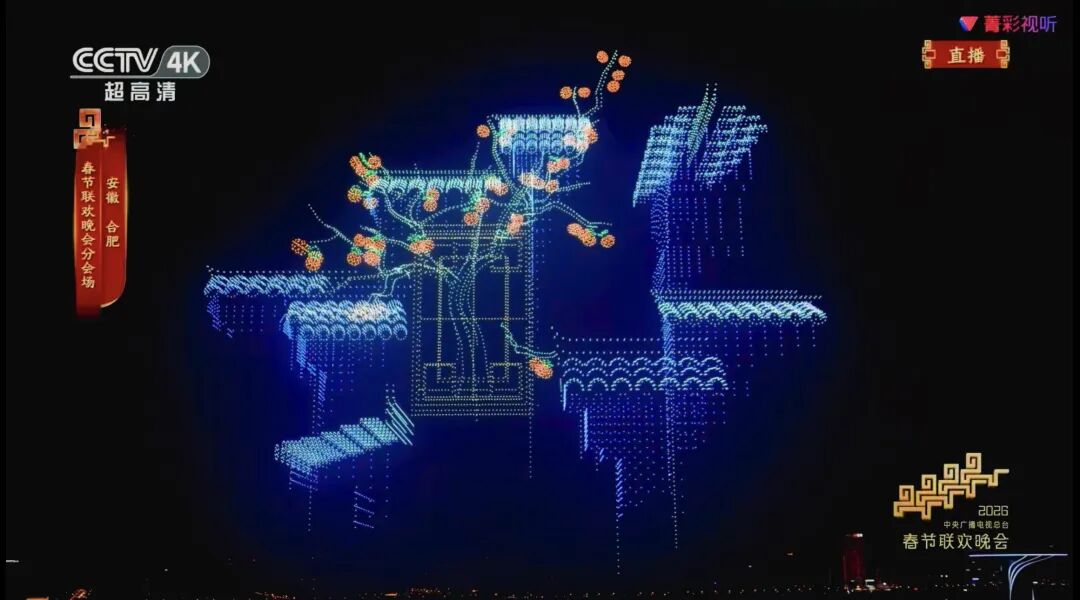
合肥骆岗公园上演空中光影魔术:亿航2.2万架无人机携“空中的士”叩响新春
Jing Ji Guan Cha Bao· 2026-02-20 06:35
Group 1 - The core event showcased EHang's advanced aerial technology with a spectacular performance featuring 22,580 GD4.0 drones, setting a Guinness World Record for the most drones controlled by a single computer simultaneously [1] - The performance included intricate light displays that combined cultural elements, such as traditional Chinese architecture and festive themes, enhancing the visual experience for a global audience [1] - EHang's successful rehearsals prior to the event demonstrated the GD4.0 drone's robust environmental adaptability, high-precision positioning, and intelligent coordination capabilities, ensuring a flawless performance [1] Group 2 - Hefei Luogang Park, the venue for the Spring Festival Gala, is recognized as a leading experimental site for low-altitude economy development in China [2] - EHang's subsidiary, Hefei Heyi Aviation, received the first operational qualification certificate for manned civil unmanned aerial vehicles from the Civil Aviation Administration of China, paving the way for regular operations and commercial exploration in the low-altitude economy [2]

德国无人机制造商“量子系统”正筹备首次公开募股,上市时间可能在2027年初。
Jin Rong Jie· 2026-02-19 10:47
Group 1 - The German drone manufacturer "Quantum Systems" is preparing for its initial public offering (IPO), with a potential listing date in early 2027 [1]
【秦声嘹亮】大地草木萌发,神州春启新程
Xin Lang Cai Jing· 2026-02-19 08:40
Group 1 - The integration of ice and snow sports with traditional Chinese New Year customs is becoming more prevalent, enhancing cultural experiences across various regions [1] - Popular winter sports events and activities are being organized in locations like Beijing and Chongqing, attracting significant tourist participation [1] - The festive atmosphere is characterized by a blend of modern life and traditional customs, with social media playing a role in connecting people through shared experiences [1] Group 2 - Restaurants in cities like Changchun and Chongqing are experiencing high demand for New Year's Eve dinners, with some establishments expanding their seating to accommodate more guests [2] - Local markets are bustling with activity, showcasing a variety of goods, including handmade crafts and diverse food products, reflecting consumer enthusiasm during the holiday season [2] - The presence of innovative products, such as smart glasses and age-friendly home items, is gaining popularity as gift options during the New Year celebrations [2] Group 3 - Markets and shopping districts are vibrant, with global products attracting consumers, and themed events like lantern festivals enhancing the festive spirit [3] - The integration of technology and traditional performances is evident in various celebrations, showcasing a blend of modernity and cultural heritage [3] - The overall market activity indicates a positive outlook for the economy, with consumers displaying confidence and enthusiasm for the New Year [3]
开年,合肥赚翻了
投资界· 2026-02-19 07:37
Core Viewpoint - Hefei is emerging as a significant hub for advanced industries, particularly in quantum information, fusion energy, and deep space exploration, as showcased during the Spring Festival Gala [2][3][4]. Quantum Information - Hefei is recognized as the "Quantum City," with over 85% of the country's quantum enterprises located in its high-tech zone, including notable achievements like the "Mozi" quantum satellite and the "Nine Chapters" quantum computer [9][12]. - The city is witnessing a wave of IPOs in the quantum sector, with companies like Guoyi Quantum and Benyuan Quantum preparing for public offerings, supported by leading scientists from the University of Science and Technology of China [10][12]. Fusion Energy - Hefei is making strides in fusion energy, with projects like the EAST and CRAFT facilities achieving significant milestones, including the "billion-degree seconds" world record [8][9]. - The establishment of Fusion New Energy, backed by local investment and major companies, is positioning Hefei as a leader in the fusion energy sector, with nearly 60 related enterprises in the area [8][9]. Deep Space Exploration - The city is developing a deep space exploration laboratory that is incubating around 50 projects related to satellite manufacturing and aerospace applications, attracting top commercial space enterprises [9][10]. - Hefei's deep space initiatives are part of a broader strategy to enhance its technological capabilities and innovation landscape [9]. Investment and Economic Growth - Hefei is experiencing a surge in IPO activity, with projections indicating that by 2025, it will have 88 A-share listed companies, ranking fifth among provincial capitals [10][11]. - The city has invested heavily in technology, with over 100 billion yuan allocated during the 14th Five-Year Plan, making it a leading city in R&D spending among provincial capitals [13].



印度一大学拿中国机器狗冒充自研,又展出泡沫塑料无人机,被赶出峰会
Xin Lang Cai Jing· 2026-02-19 04:33
【#印度一大学拿中国机器狗冒充自研#,又展出泡沫塑料无人机,被赶出峰会】#印一大学展出泡沫无 人机被赶出峰会#2月18日,印度一大学拿中国机器狗冒充自研被抓包,该大学展示的另一款无人机模型 再引争议。加尔戈蒂亚斯大学团队在印度人工智能影响力峰会上展出了一款由泡沫塑料制成的无人机模 型。有印度记者质疑这是四年级小学生的作业,还有网民要求撤销该大学的办学资格。此前一名据称该 校传播学教授的女性将中国制造的机器狗介绍为该校自研产品。事件发酵后,峰会主办方切断了该大学 展位的电源并要求其撤离,遭到拒绝后强行拆除了展位。 ...
“泉”在济南过大年|诗词贺大年,科技耀低空——2000架无人机秀点亮泉城新春夜
Xin Lang Cai Jing· 2026-02-18 04:59
Core Viewpoint - The drone performance in Jinan on the first day of the Lunar New Year showcases the integration of technology and cultural heritage, highlighting the city's "low-altitude + cultural tourism" development model [1]. Group 1: Event Highlights - The drone show featured 2,000 drones and was themed around "Jinan Er'an" poetry culture, creating an immersive artistic experience [1]. - The event marked a significant achievement, as the Jinan low-altitude group set a record for drone performances in northern China [1]. - Future events include a planned drone show with 5,000 drones during the 2025 Jinan International Spring Water Festival [1]. Group 2: Development of Low-Altitude Economy - The transformation of occasional drone shows into regular events reflects the maturation of technology and operational systems [11]. - The Jinan low-altitude economic development group is establishing the province's first digital low-altitude flight management service platform, creating a comprehensive ecosystem from technology research to commercial application [11]. - The low-altitude technology is being applied in over 40 scenarios, including emergency services, logistics, and medical transport, contributing to the city's low-altitude support network [12].

春晚的广告牌 印刻着中国经济的一次次跃迁
Nan Fang Du Shi Bao· 2026-02-17 15:27
Core Insights - The sponsorship history of the CCTV Spring Festival Gala reflects China's economic development and industrial upgrades over the past four decades, showcasing three major transitions: from basic needs to consumer electronics and automobiles, from virtual economy to hard technology, and from demographic dividend to engineer dividend [1][2]. Group 1: Historical Sponsorship Trends - In the 1980s, the main sponsors represented basic household needs, with brands like 康巴丝 leading the way, highlighting the public's desire for precision and the prosperity of light industry [1]. - The 1990s saw a shift towards quality consumption, with liquor brands and home appliance giants like 美的集团 becoming prominent sponsors, marking a transition from survival to quality-focused consumption [1]. Group 2: The Rise of Internet and Technology - The year 2015 marked a turning point with the emergence of internet giants like WeChat and Alipay, initiating a "red envelope war" that transformed user engagement and payment methods [2]. - As the internet traffic peaked, the focus shifted to hard technology, with a notable increase in sponsorship from the electric vehicle sector, indicating a fundamental shift in China's competitive edge from demographic to engineer dividends [2]. Group 3: Future Trends and Cultural Consumption - The upcoming 2026 Spring Festival Gala will feature new partnerships with brands like 名创优品 and 卡游, suggesting a potential shift towards "emotional value" and "cultural consumption" as new wealth drivers in a mature market [3]. - The evolution of sponsors serves as a "value anchor" migration, reflecting China's economic transitions from production capabilities to creative intelligence, providing a lens to observe the pulse of the times [3].
22580架!春晚这一幕,刷新世界纪录
Shang Hai Zheng Quan Bao· 2026-02-17 13:14
Core Viewpoint - The flying performance featuring 22,580 drones, organized by EHang Intelligent and its subsidiary EHang Egret Media Technology, showcases the integration of traditional culture and cutting-edge technology, setting a Guinness World Record for the most drones controlled by a single computer simultaneously [1][6][12]. Group 1: Event Details - The flying performance took place on New Year's Eve 2026 at the Central Park in Hefei, highlighting the combination of Anhui's traditional Hui-style architecture and modern technology [1][5]. - A total of 22,580 GHOSTDRONE 4.0 drones were used, achieving a new Guinness World Record for simultaneous airborne drones controlled by a single computer [3][6]. Group 2: Technological Achievements - EHang's drone formation technology has evolved from controlling 8 drones to 22,580 drones over nine years, demonstrating significant advancements in drone control and synchronization [7][10]. - The GD4.0 drones feature solid-state batteries, allowing for over 45 minutes of flight time in temperatures as low as -20 degrees Celsius, with high precision in positioning and flight control [9][10]. Group 3: Industry Implications - The successful record-breaking event is expected to drive advancements in global drone swarm control technology, providing a reference for cold-weather applications and addressing technical challenges in high-density airspace management [12][13]. - EHang is exploring commercial opportunities, including regular flying activities in Hefei's Central Park and plans for the EH216-S manned aircraft to enhance tourism and urban air mobility [12][13]. Group 4: Economic Context - Anhui province has established a solid foundation for the low-altitude economy, with over 570 companies in the industry chain and expected revenue exceeding 60 billion yuan by 2025 [13].