
民航

Search documents
民航华北局党委组织学习贯彻中央经济工作会议精神
Zhong Guo Min Hang Wang· 2025-12-15 10:45
Group 1 - The meeting emphasized the importance of the Central Economic Work Conference, which is significant as it marks a critical historical juncture with the conclusion of the 14th Five-Year Plan and the commencement of the 15th Five-Year Plan [1][2] - The meeting highlighted the necessity to deeply understand and implement the new economic work requirements under the current circumstances, focusing on the "five musts" and aligning the thoughts and actions of the North China Bureau's staff with the central government's economic judgments and decisions [2] - The meeting called for a strong commitment to safety development while balancing regional development and safety, aiming to promote high-quality development in the civil aviation sector and contribute to the broader goal of building a strong transportation nation [2] Group 2 - The meeting included specific discussions on how to integrate the Central Economic Work Conference's directives with the actual work in the region, ensuring the implementation of the Civil Aviation Administration's work deployment [2]
送法上门助力合规 竞争倡导护航发展
Zhong Guo Jing Ji Wang· 2025-12-15 02:27
Core Insights - The Antitrust Compliance Classroom initiated by the State Administration for Market Regulation (SAMR) has gained significant popularity since its launch in May 2024, focusing on educating businesses about antitrust laws and compliance [1][2] Group 1: Program Overview - The program aims to shift the mindset of businesses from "I have to comply" to "I want to comply," emphasizing the importance of legal compliance for industry development [1][2] - As of now, 21 sessions have been held, training over 80,000 participants from more than 1,000 associations, chambers, and enterprises, indicating a growing awareness of antitrust compliance [2][3] Group 2: Impact on Businesses - The training has led to a 62% increase in the accuracy of antitrust risk warnings in key industries and a 50% reduction in the time required to build compliance systems [2][3] - The program has effectively addressed previous challenges faced by businesses regarding antitrust compliance, enhancing their understanding and application of relevant laws [2][3] Group 3: Sector-Specific Focus - The curriculum covers various sectors, including gas, insurance, civil aviation, and extends to pharmaceuticals, public utilities, digital economy, and more by 2025, reflecting a comprehensive approach to compliance education [2][4] - The program employs a "precise drip irrigation" method tailored to different industries, helping businesses establish a compliance framework to identify and manage antitrust risks [4][5] Group 4: Broader Economic Implications - The antitrust compliance initiative is seen as a crucial step in fostering a fair competitive environment, which is essential for high-quality economic development [6][7] - The program has resulted in significant cost reductions in various sectors, such as a 60% decrease in drug prices in the pharmaceutical industry and an estimated savings of 1.8 billion yuan in the water supply sector [6][7] Group 5: Future Directions - The initiative is expected to continue evolving, with a focus on enhancing compliance awareness and capabilities among businesses, ultimately contributing to a healthier market ecosystem [6][7] - The collaboration between government and enterprises is highlighted as a key factor in promoting high-quality development and ensuring compliance becomes a core competitive advantage for businesses [7]
航科院召开党委理论学习中心组(扩大)会议暨党的二十届四中全会精神专题辅导报告会
Zhong Guo Min Hang Wang· 2025-12-13 01:00
会上,航科院党委委员、副院长胡华清同志深度解读了党的二十届四中全会精神对民航工作和科技创新 工作作出的战略部署,分析了当前民航业发展形势,并对航科院做好"十五五"时期规划编制工作提出建 议举措。 会议强调,航科院各级党组织和全体党员干部要将学习宣传贯彻党的二十届四中全会精神作为当前和今 后一个时期的重大政治任务,深入学习领会习近平新时代中国特色社会主义思想的科学体系、丰富内 涵、精神实质和实践要求,准确把握科技创新和民航发展的重要经验,扎实做好航科院"十五五"时期规 章制度体系建设、科技项目谋划、核心能力培育、科研条件平台建设、科研人才队伍培养等工作,以新 担当、新作为守护航空安全、促进民航发展、提升服务质量,充分发挥科技创新骨干作用。 会议就深入学习宣传贯彻全会精神,做好岁末年初各项工作,实现"十四五"圆满收官和"十五五"良好开 局进行了再部署、再深化。一是提高政治站位,抓好全会精神的贯彻落实。切实加强组织领导,精心组 织部署,抓好培训工作,营造浓厚氛围,确保学习成效转化为推动民航科技事业高质量发展的强大动力 和务实成效。二是锚定职责使命,科学谋划航科院事业发展。毫不动摇坚持和加强党的全面领导,纵深 推进全 ...


提升国际国内旅游航线覆盖广度
Ren Min Ri Bao· 2025-12-09 22:32
Core Viewpoint - The Ministry of Culture and Tourism and the Civil Aviation Administration of China have issued an action plan aimed at enhancing the integration of the cultural, tourism, and civil aviation sectors by 2027, focusing on improving service levels and expanding route coverage [1]. Group 1 - The action plan aims to significantly improve tourism travel service levels by 2027 [1]. - It emphasizes broader coverage of international and domestic tourism routes [1]. - The plan promotes a diverse range of integrated products and scenarios to create a virtuous cycle of demand-driven supply and supply-driven demand [1]. Group 2 - The action plan encourages more tourist cities to be included in the "trunk and branch connectivity, full network integration" aviation transport service network [1]. - It supports the opening of mutual flights and circular routes to popular tourist destination branch airports [1]. - The initiative includes the development of "air express" and border tourism routes [1].
杭州机场举办大型航空器应急救援综合演练
Zhong Guo Min Hang Wang· 2025-12-09 08:09
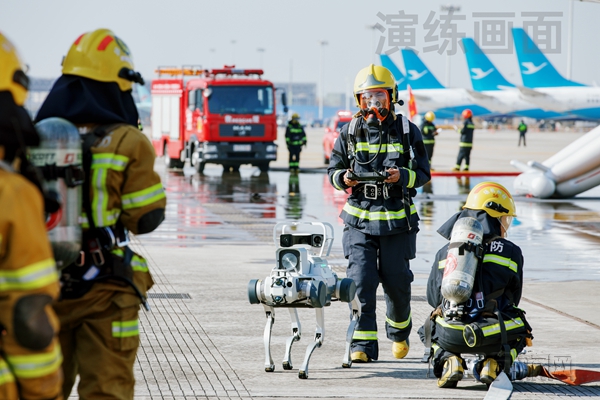
Core Viewpoint - The "Hangzhou Airport Emergency Rescue Comprehensive Drill 2025" was conducted to test the emergency response capabilities of the airport and various rescue units through a simulated international passenger flight emergency situation [1] Group 1: Emergency Drill Overview - The drill involved 15 scenarios, including aircraft in-flight failures, personnel rescue and transfer, drone countermeasures, and the movement of damaged aircraft, assessing the airport's emergency response capabilities in information transmission, command coordination, technology application, and inter-agency collaboration [1] - The drill was the largest and most comprehensive emergency rescue exercise at Hangzhou Airport in recent years, involving over 500 personnel from multiple participating units [9] Group 2: Technological Integration - Two types of specialized emergency rescue equipment were used for the first time, including a four-legged rescue robot equipped with life detectors and gas sensors, capable of 5G remote control and self-organizing network communication [2] - An AW139 rescue helicopter was deployed for rapid cross-regional transport of severely injured individuals, enhancing the efficiency and professionalism of emergency rescue operations [2] Group 3: Security Measures - The drill simulated a scenario involving a "black-flying" drone interfering with airport operations, which was successfully countered by the airport police using a drone capture device [4] - Over 100 drone defense and countermeasure devices have been deployed around Hangzhou Airport to ensure aviation safety [4] Group 4: Operational Efficiency - The exercise included a scenario for the movement of damaged aircraft using a 100-ton lifting vehicle, demonstrating efficient and smooth operational processes to enhance the airport's rapid recovery capabilities [6] - The entire drill lasted 70 minutes and involved more than 60 emergency response vehicles, including fire trucks, ambulances, police cars, and shuttle buses, along with over 20 specialized emergency response equipment [6]
解锁“民航+文旅”新“玩”法 培育文旅融合新场景新业态新产品
Yang Shi Wang· 2025-12-08 02:21
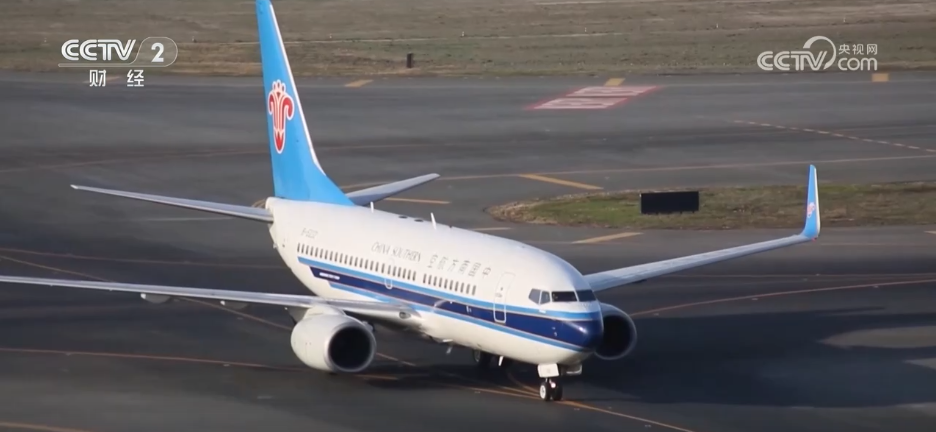
在北京大兴国际机场航站楼内,记者看到不少旅客在北京中轴线景观位拍照留念。被采访的旅客兴奋地说:"我是从北京大兴机 场去湖南长沙,预留了三个小时,特意来逛一逛,可以购物娱乐,也算是一个打卡点。买了北京故宫的那些冰箱贴,还有一些文创小 礼物带给同事。" 央视网消息:12月6日,北京大兴国际机场,年度旅客吞吐量首次突破5000万人次,刷新开航以来最高纪录。密集的航线网络叠 加"民航+文旅"新玩法,让大兴机场热度攀升。 购物、拍照、看展,大兴机场打造的"民航+文旅"模式,让旅客候机有了趣味性。截至12月6日,大兴国际机场今年累计保障进出 港航班32.25万架次,进出港旅客5008.34万人次,其中国际及地区旅客量达549.79万人次,较去年同期分别增长6.31%、8.41%、 25.39%。相关工作人员介绍,今年以来,起飞正常率在全国26个旅客吞吐量2000万人次(含)以上机场中排名第一。 此外,大兴国际机场不断新增和加密北京大兴至西双版纳、佳木斯、岳阳等支线航线的航班。新开冰雪旅游热门目的新疆阿克 苏、伊宁等地的直飞航班,同时拓展国际热门旅游航线,吸引更多旅客。 ...
民航局引领“人工智能+民航”发展格局 目标到2030年实现各领域广泛深度融合
Chang Jiang Shang Bao· 2025-12-07 23:43
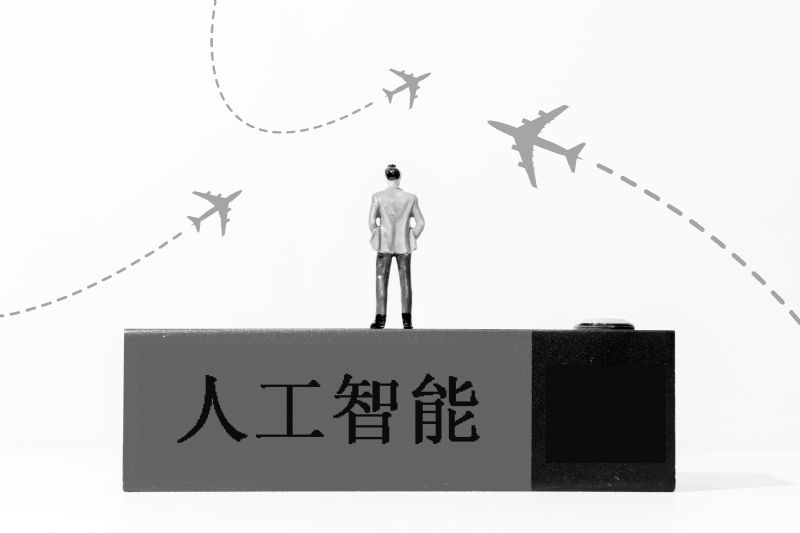
Core Viewpoint - The Civil Aviation Administration of China (CAAC) has released the "Implementation Opinions on Promoting High-Quality Development of 'Artificial Intelligence + Civil Aviation'" to guide the integration of AI in six key areas, aiming for significant advancements by 2027 and 2030 [2][6]. Group 1: Key Areas of Focus - The six key areas identified are safety, operations, travel, logistics, regulation, and planning and construction, with a framework for intelligent application scenarios [3][4]. - Specific applications include safety risk warning, operational optimization, passenger convenience services, logistics efficiency, and precise regulatory decision-making [3][4]. Group 2: Implementation Goals - By 2027, the goal is to achieve initial integration of AI in civil aviation, with foundational elements like high-quality data sets and infrastructure platforms showing early results [6]. - By 2030, the aim is for widespread and deep integration of AI across all civil aviation sectors, enhancing safety, operational efficiency, service quality, and resource allocation capabilities [6]. Group 3: Application Scenarios - In the "AI + Safety" area, applications will focus on flight safety, airport operations, air traffic risk warning, and emergency response [3]. - The "AI + Operations" segment will enhance flight scheduling, resource allocation, and multi-entity operational coordination through data fusion and predictive analytics [3]. - The "AI + Travel" aspect will improve passenger experience through personalized services and intelligent guidance [4]. Group 4: Guidance and Standards - A reference guide for AI application scenarios has been developed, categorizing 42 specific applications based on their maturity and implementation conditions [5]. - The CAAC plans to establish AI application standards tailored to civil aviation, covering data governance, algorithm interfaces, and performance testing [7].
“人工智能+民航”融合发展迎来政策利好
Zheng Quan Ri Bao· 2025-12-05 16:32
Core Insights - The Civil Aviation Administration of China (CAAC) has released an implementation opinion aimed at promoting the high-quality development of "Artificial Intelligence + Civil Aviation" by 2027 and achieving deep integration by 2030 [1][2] Group 1: Implementation Goals - By 2027, the integration of AI with civil aviation in areas such as safety, operations, travel, logistics, regulation, and planning is expected to show initial results [1] - By 2030, a comprehensive and deep integration of AI across various civil aviation sectors is anticipated, with a focus on establishing governance and safety assurance systems [1] Group 2: Current Applications and Innovations - Major airlines like Air China and China Eastern Airlines are actively implementing AI solutions, such as passenger service information systems and baggage tracking, which enhance operational efficiency and passenger experience [2] - The "Qihang" large model, specifically designed for civil aviation, has led to the development of AI customer service products and intelligent baggage handling robots, supporting the sector's digital transformation [2] Group 3: Industry Perspectives - Experts highlight the significant potential of AI in improving passenger travel experiences, particularly in optimizing flight paths during adverse weather conditions to reduce delays [3] - The CAAC emphasizes the need for a systematic approach to AI integration, focusing on high-value scenarios in safety and operations, while also advocating for the establishment of industry data standards and collaborative ecosystem development [3]



刚刚,利好来了!
中国基金报· 2025-12-05 04:58
Core Viewpoint - The Civil Aviation Administration of China (CAAC) has released the "Implementation Opinions on Promoting High-Quality Development of 'Artificial Intelligence + Civil Aviation'" which aims to integrate AI into various civil aviation sectors by 2027 and 2030, enhancing safety, efficiency, and service quality [2][3][19]. Summary by Sections AI Integration Goals - By 2027, the goal is to achieve initial integration of AI in civil aviation safety, operations, travel, logistics, regulation, and planning, with significant advancements in data sets, infrastructure, and algorithms [3][19]. - By 2030, the aim is for widespread and deep integration of AI across all civil aviation fields, improving safety, operational efficiency, service quality, and resource allocation [3][19]. Key Application Scenarios - **AI + Safety**: Focus on flight safety, airport operations, air traffic risk management, and emergency response, enhancing proactive risk perception and rapid response capabilities [4][15]. - **AI + Operations**: Emphasizes flight scheduling, resource allocation, and air traffic control, promoting data fusion and operational strategy optimization [4][15]. - **AI + Travel**: Aims to improve passenger experience through personalized services, smart customer support, and streamlined travel processes [4][15]. - **AI + Logistics**: Targets efficient logistics operations and automation in air cargo, utilizing AI for monitoring and scheduling [4][15]. - **AI + Regulation**: Enhances safety and market regulation capabilities through AI applications [9][15]. - **AI + Planning**: Improves decision-making and control in civil aviation infrastructure planning [9][15]. Support Elements - The implementation emphasizes the need for high-quality data sets, infrastructure platforms, and industry-specific algorithms to support AI applications in civil aviation [8][17]. - A collaborative ecosystem is encouraged, integrating resources from airlines, airports, and research institutions to foster innovation and shared development [18][28]. Implementation Strategy - The CAAC plans to guide the industry through a phased approach, ensuring that AI applications are effectively integrated and scaled [19][20]. - Specific measures include establishing a safety management system for AI applications, enhancing talent development, and creating a regulatory framework for AI in civil aviation [21][20]. Reference Guidelines - A reference guide detailing 42 specific AI application scenarios has been developed to assist industry units in implementing AI solutions based on their maturity and feasibility [5][16].

民航局:到2030年,实现人工智能与民航各领域广泛深度融合
Yang Shi Wang· 2025-12-05 03:05
《实施意见》明确,要强化"人工智能+民航"高质量发展的要素供给,围绕高质量数据集建设、基础设 施平台构筑和行业模型算法研究等方面,提升民航领域人工智能基础支撑能力。要深化行业、产业与人 工智能深度融合,构建资源共用、协同联动、共创共享的民航人工智能融合创新生态与技术互通、数据 互信、流程互嵌、生态互促的协同体系。 民航局发展计划司相关负责人表示,《实施意见》的发布将进一步明确行业未来智能化发展的路径,引 导各单位突破重点场景下人工智能的创新赋能,构建民航人工智能核心支撑要素。下一步,民航局将持 续加强政策统筹和组织推动,深化行业宣贯和经验推广,积极推进"人工智能+民航"重点场景实践落 地,加快形成协同共进、融合创新的发展格局,为民航高质量发展注入新动能。 央视网消息:日前,民航局发布《关于推动"人工智能+民航"高质量发展的实施意见》(以下简称 《实施意见》),旨在深入贯彻落实党中央、国务院关于发展人工智能的决策部署,落实国务院《关于 深入实施"人工智能+"行动的意见》和《关于"人工智能+交通运输"的实施意见》要求,加快推动人工智 能在民航领域广泛深度融合创新,促进行业高质量发展。 《实施意见》明确了"人工智能 ...