
粮食产业

Search documents
《山东省粮食安全保障条例》9月1日起施行
Da Zhong Ri Bao· 2025-08-01 00:57
Core Viewpoint - The "Shandong Province Grain Security Guarantee Regulations" will take effect on September 1, 2025, aiming to enhance grain security through legislative measures, focusing on local characteristics and systematic thinking [2]. Group 1: Legislative Framework - The regulations consist of 11 chapters and 64 articles, covering aspects such as farmland protection, grain production, storage, circulation, processing, emergency measures, conservation, supervision, and legal responsibilities [2]. - The legislation emphasizes the importance of farmland as the foundation of grain production, implementing strict controls on the occupation of farmland and prohibiting harmful practices [2]. Group 2: Promotion of Grain Production - The regulations include measures to promote high-quality development in seed industry and strengthen technological support for grain production, ensuring that grain producers' income is protected [3]. - Local governments are required to implement income protection mechanisms for grain producers and enhance agricultural support systems [3]. Group 3: Grain Storage and Management - The regulations assign responsibilities to local governments for grain storage, mandating the establishment of government grain reserves with a structured management approach [4]. - It is stipulated that enterprises responsible for grain storage must ensure the quantity, quality, and safety of stored grain, along with a reporting system for any risks [4]. Group 4: Quality Development and Resource Management - The regulations aim to advance the high-quality development of the grain industry, improve grain circulation, and establish a comprehensive emergency mechanism [4]. - There is a focus on developing a diversified food supply system, integrating agriculture, forestry, fishery, and livestock, and promoting sustainable resource management [3].
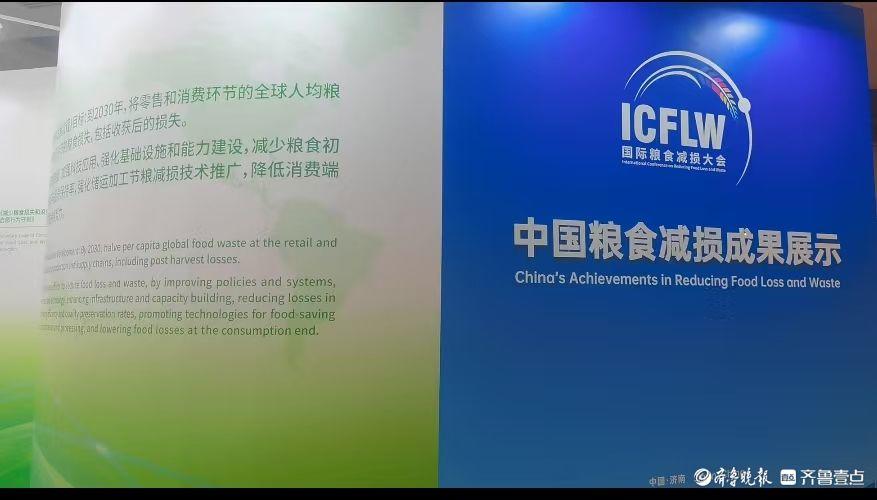
为一粒米,聚世界之力——2025年国际粮食减损大会开幕侧记
Da Zhong Ri Bao· 2025-07-26 00:36
Core Viewpoint - The 2025 International Conference on Food Loss Reduction emphasizes the importance of reducing food loss as a critical approach to ensuring global food security, with participation from 62 countries and various international organizations [1] Group 1: Conference Highlights - The conference gathered high-level officials, agricultural ministers, and experts to discuss strategies for food loss reduction and promote food security [1] - The first International Conference on Food Loss Reduction was held in September 2021, resulting in ten consensus outcomes, indicating a growing global focus on this issue [1] - China, as a major food producer and consumer, prioritizes food security for its 1.4 billion population and actively participates in global food-saving initiatives [1] Group 2: China's Achievements - In 2024, China's total grain production is projected to reach 14,130 billion jin, marking a new milestone after nine consecutive years above 13,000 billion jin [2] - The loss rates for major crops in China have significantly decreased, with wheat at 0.93%, rice at 1.76%, and corn at 2.06% [2] - Over 5,500 grain post-harvest service centers have been established, and the grain loss rate for farmers has dropped from 8% a decade ago to around 3% [2] Group 3: Global Food Security Challenges - The 2024 report on global food security indicates that between 713 million and 757 million people still face hunger, highlighting the ongoing challenge of food scarcity alongside significant food waste [3] - The UN's goal to halve global food waste by 2030 is deemed ambitious, given the current annual food loss and waste of 1.3 billion tons, which accounts for about one-third of global production [3] Group 4: Collaborative Efforts - Various countries are recognizing the need for coordinated efforts to address food loss and waste, with China implementing a national action plan to reduce food waste [4] - Countries like Ireland and Slovenia are also developing their own strategies and certifications to prevent food waste across the supply chain [4] Group 5: Technological Innovations - Technology is identified as a key driver in preventing food loss and waste, with Turkey promoting AI-based systems for planning and consumption forecasting in the food industry [5] - Large retail chains are utilizing AI-assisted inventory optimization systems to donate near-expiry products, thereby reducing waste [5]
科技创新赋能,山东全链条节粮减损有“智”招
Qi Lu Wan Bao Wang· 2025-07-25 07:51
Core Viewpoint - The 2025 International Conference on Food Loss Reduction aims to create a global platform for food loss reduction mechanisms, emphasizing technological innovation to promote food security [1] Group 1: Importance of Food Loss Reduction - Food loss reduction is a crucial method for ensuring food security, with China utilizing 9% of the world's arable land to feed 20% of the global population [3] - The conference showcases China's comprehensive approach to food loss reduction across the entire supply chain, sharing successful case studies and data [3] Group 2: Technological Innovations in Agriculture - Shandong province, a major agricultural hub, has a seed sales revenue exceeding 137 billion yuan, leading the nation in seed industry [3] - The use of breakthrough seed varieties and precision agricultural techniques has led to a reduction in seed usage by over 5% and a contribution rate of 47% to food production [3] - Advanced agricultural machinery, including autonomous tractors and drones, has achieved a mechanization rate of 91.7% in grain farming [4] Group 3: Efficient Management and Storage - Integrated remote sensing monitoring and precise weather forecasting have kept pest damage losses below 5% [4] - Modern grain storage facilities have reached a historical high of over 46 million tons, employing smart technology for temperature control and pest management [4] Group 4: Processing and Utilization - Five major grain industry technology innovation centers in Shandong have developed numerous standards to support grain processing and reduce losses [4] - Various products are developed from corn, soybeans, and wheat, showcasing the potential for value-added processing [4] Group 5: Consumer Awareness and Behavior - Smart dining solutions and data technology are being used to match supply and demand, reducing food waste [5] - Initiatives promoting whole grains and public awareness campaigns are transforming the concept of saving food into consumer choices [5]

强化粮食全链条监测预警
Jing Ji Ri Bao· 2025-07-24 22:07
Group 1 - The core viewpoint emphasizes the importance of enhancing grain safety monitoring and regulation through advanced technologies such as satellite remote sensing, AI for pest identification, and blockchain for traceability [1][2] - The National Food and Material Reserve Administration has established a management approach for grain quality inspection and monitoring institutions, aiming to improve the management and capability of these institutions [1] - The "Accelerating the Construction of an Agricultural Power Plan (2024-2035)" outlines the need to develop a comprehensive monitoring and early warning system for grain and important agricultural products [1] Group 2 - A preliminary monitoring and early warning system covering agricultural production, market circulation, and quality safety has been established, but issues such as insufficient coverage and low information transmission efficiency remain [2] - There is a need for improved precision in early warning assessments, as existing models rely heavily on historical data and lack the ability to accurately predict market fluctuations and quality safety risks [2] - The development of agricultural AI models is encouraged to enhance monitoring and early warning capabilities, thereby increasing the resilience of agricultural production [2] Group 3 - Expanding the scope of grain monitoring and early warning technologies beyond traditional areas to include breeding, agricultural meteorology, product quality tracing, market monitoring, and e-commerce services is recommended [3] - Enhancing the competitiveness of grain products through deep processing and utilizing technologies like blockchain to develop big data models for grain circulation is essential [3] - A systematic solution for improving the grain full-chain monitoring and early warning system is proposed, focusing on the integration of new technologies and institutional innovation [3]
粮食ETF(159698)多只成分股上涨,夏粮实现稳产丰收
Xin Lang Cai Jing· 2025-07-17 03:42
Group 1 - The National Grain Industry Index (399365) has seen a slight increase of 0.07% as of July 17, 2025, with notable gains in constituent stocks such as Honghui Fruits and Vegetables (603336) up 2.62% and Dongfang Iron Tower (002545) up 2.38% [1] - The Ministry of Agriculture and Rural Affairs reported that summer grain production has achieved stability and abundance despite local drought conditions [1] - GF Securities indicated a tight balance in the supply and demand of new season corn, predicting a moderate price increase, with global corn ending stocks expected to decline further, reaching a ten-year low of 21.57% in the inventory-to-consumption ratio [1] Group 2 - As of June 30, 2025, the top ten weighted stocks in the National Grain Industry Index (399365) include major companies such as Dabeinong (002385) and Longping High-Tech (000998), collectively accounting for 51.06% of the index [2] - The Grain ETF (159698) closely tracks the National Grain Industry Index, reflecting the price changes of listed companies related to the grain industry on the Shanghai and Shenzhen stock exchanges [1]
激活农牧业“沉睡资产” 通辽构建“农畜贷”金融综合服务体系纾困肉牛产业
Jin Rong Shi Bao· 2025-07-17 03:20
Core Viewpoint - The financial institutions in Tongliao City are actively working to address the challenges faced by the meat cattle industry, particularly in terms of financing and collateral, by implementing innovative financial services and products to support sustainable development in agriculture [1][3][4]. Financial Support for Meat Cattle Industry - As of the end of May, the loan balance for the meat cattle industry in Tongliao City reached 24.654 billion yuan, with 9.125 billion yuan disbursed this year, accounting for 13.24% of the total loan balance in the city [2]. - The People's Bank of China Tongliao Branch has introduced policies to guide financial institutions in meeting the financing needs of the meat cattle industry, including the inclusion of large agricultural tools as collateral [3]. Technological Integration in Financing - The integration of technology and finance is emphasized, with the development of a "Smart Livestock Loan" model that utilizes IoT devices and AI technology to monitor livestock health and establish asset identification [4][6]. - A digital platform has been established to achieve full lifecycle traceability of meat cattle, with 95,800 cattle already included in the digital archive [6]. Risk Management and Monitoring - The financial institutions are implementing a dual safeguard system combining technology and control for collateral management, utilizing various monitoring systems to ensure the integrity of pledged assets [5][9]. - The establishment of a rural revitalization financial service station aims to facilitate the registration and monitoring of live cattle collateral, enhancing the oversight of pledged livestock [6]. Support for Grain Industry - The financial support extends to the grain industry, with a focus on integrating supply chain finance to enhance the financing capabilities of small and medium-sized enterprises within the corn industry [10]. - A credit guarantee fund has been established with a total of 1.28 billion yuan to support grain purchasing and processing enterprises, resulting in the issuance of loans totaling 2.2 billion yuan [9]. Innovation in Financial Products - Financial institutions in Tongliao are encouraged to develop differentiated financial products tailored to the specific needs of the meat cattle and grain industries, following the principle of "suitability by institution" [7][10]. - The introduction of intellectual property pledge loans aims to support agricultural technology enterprises, facilitating a shift from asset-heavy to knowledge-based financing models [10].
盘锦借助粮交会平台精准招商引资
Liao Ning Ri Bao· 2025-07-15 01:08
Core Insights - The 7th China Grain Trade Conference and Panjin Rural Revitalization Industry Expo was held in Panjin, focusing on food security and industrial revitalization, showcasing Panjin's role as a key grain production base and logistics hub [1][2] - The conference attracted 120 participating companies and resulted in business contracts worth 4.376 billion yuan, emphasizing the importance of modern agriculture and the full grain industry chain [1][2] Group 1: Event Overview - The conference theme was "Grain Security for All, Synergy for Development," featuring a comprehensive exhibition of the grain industry chain and specialty agricultural products [1] - A total of 120 companies participated, with one full industry chain exhibition hall and six specialty product zones [1] Group 2: Agricultural Development - Panjin's grain planting area is stable at over 1.83 million acres, with high-standard farmland expected to exceed 81% by year-end, ensuring stable supply of grain and important agricultural products [2] - The city is focusing on modern agriculture, developing three major production bases for rice-crab co-culture, reed field aquaculture, and marine ranching, along with two hundred billion-level industrial clusters for japonica rice and soybeans [2] Group 3: Business Contracts and Collaborations - The conference led to the signing of 76 business contracts, with a total value of 4.376 billion yuan, including 18 investment projects worth 1.028 billion yuan and 51 trade contracts worth 3.348 billion yuan [2] - Seven research cooperation projects were also signed, promoting deep integration of industry, academia, and research [2]
第七届中国粮食交易大会聚焦粮食流通 推动粮食产业高质量发展
Yang Guang Wang· 2025-07-13 00:42
Core Insights - The 7th China Grain Trade Conference opened in Shenyang, focusing on the theme "Grain Security for the World, Collaborative Power for Development" [1] - The conference featured a combination of main and sub-venues, showcasing new products, technologies, and achievements in the grain sector [1] - The exhibition covered an area of 100,000 square meters, with over 4,000 enterprises and more than 20,000 industry personnel participating [1] Industry Developments - A dedicated consumption assistance exhibition area was established to promote agricultural products from poverty-stricken areas, enhancing market access for local farmers [1] - The Director of the National Grain and Material Reserve Bureau emphasized the importance of the conference in facilitating the connection between agricultural products and larger markets, particularly for impoverished regions [1] - The conference also hosted the 5th National Exhibition of Quality Specialty Grain and Oil Products from Poverty Alleviation Areas, featuring 340 poverty-stricken counties and 674 cooperatives and enterprises from 22 provinces [2]
上半年辽粮集团营业收入同比增长53.31
Liao Ning Ri Bao· 2025-07-12 01:15
Group 1 - The National Grain Industry Technology Innovation Alliance was recently established in Beijing, with Liaoning Grain Group being the only provincial grain enterprise included as a member [1] - Liaoning Grain Group has obtained the qualification of the Technology Innovation Center of the National Grain and Material Reserve Bureau in Liaoning [1] - The inclusion in the alliance is closely related to the company's efforts in exploring and promoting intelligent warehousing equipment and service technologies, as well as driving collaborative innovation among industry, academia, and research [1] Group 2 - Liaoning Grain Group has significantly increased its digital capabilities and information technology construction, planning to utilize artificial intelligence and new digital technologies to enhance operational efficiency and risk management [1] - The company has initiated its largest structural reform since its establishment, focusing on reforming grain purchase, sales, and reserve management systems, with 13 core tasks and 49 detailed measures outlined [1] - The management structure has been simplified to improve operational efficiency, resulting in a fundamental change in the company's operational landscape [2] Group 3 - In the first half of this year, Liaoning Grain Group achieved a revenue of 5.55 billion yuan, a year-on-year increase of 53.31% [2] - The total asset scale reached 22.91 billion yuan, with a year-on-year growth of 27.14% [2] - The grain collection/purchase and sales volume increased by 53.2% and 157.16% year-on-year, respectively, indicating a significant improvement in both quantity and quality of operations [2]
粮食自主可控势在必行,粮食ETF广发(159587)早盘冲高上涨1.04%
Xin Lang Cai Jing· 2025-07-11 02:24
Group 1 - The core viewpoint of the articles highlights the positive performance of the National Grain Industry Index and related ETFs, indicating a favorable trend in the agricultural sector [1][2] - As of July 10, 2025, the National Grain Industry Index (399365) has shown a year-to-date increase of 0.35%, with significant gains in constituent stocks such as Dongfang Tower (up 4.73%) and Yara International (up 2.55%) [1] - The Guangfa Grain ETF (159587) has experienced a 1.04% increase, with an average daily trading volume of 859.28 million yuan over the past year, reflecting strong investor interest [1] Group 2 - The top ten weighted stocks in the National Grain Industry Index account for 51.06% of the index, with major players including Dabeinong and Longping High-Tech [2] - The Chinese government has initiated a plan to enhance agricultural machinery and technology, which is expected to boost the domestic grain price and benefit the planting industry chain [2] - The promotion of technology applications such as transgenic and gene editing is anticipated to accelerate, providing advantages to seed companies with leading technological reserves [2]